
Iceland sits directly on the boundary between two tectonic plates, which is why the country is dotted with geothermal areas, places where heat from below the surface reaches ground level as geysers, boiling mud pools, steam vents and hot springs. For a self-drive traveller based in Reykjavik, several of the best-known geothermal areas are within comfortable reach on a day trip, whether you have a few hours or a full day to spare.
This guide covers the geothermal areas most commonly visited from Reykjavik, Geysir, Gunnuhver, Seltún, Hengill and Deildartunguhver, what makes each one different, and what to know before you drive there.
Short answer
The Geysir geothermal area in Haukadalur, part of the Golden Circle route, is the most visited geothermal area near Reykjavik and the reason the word "geyser" exists at all. If you're short on time, this is the one to prioritise. For something quieter and closer to Keflavik Airport, Gunnuhver and Seltún on the Reykjanes Peninsula are strong alternatives, and Hengill and Deildartunguhver suit travellers who want to combine geothermal sights with hiking or a hot spring soak.
Geothermal areas near Reykjavik compared
| Geothermal area | Region | Known for | Good to combine with |
|---|---|---|---|
| Geysir (Haukadalur) | Golden Circle | Strokkur erupting every few minutes | Gullfoss, Þingvellir National Park |
| Gunnuhver | Reykjanes Peninsula | Iceland's largest mud pool, steam vents, folklore | Keflavik Airport pickup/drop-off, Reykjanes lighthouse coast |
| Seltún | Reykjanes Peninsula, near Lake Kleifarvatn | Colourful mineral ground, bubbling mud pools | A wider Reykjanes loop, Krýsuvík area |
| Hengill | Just outside Reykjavik | 100 km² volcanic area with hiking trails | Hellisheiðarvirkjun geothermal exhibition, day hikes |
| Deildartunguhver | Borgarfjörður, west Iceland | Highest flow-rate hot spring in Europe | Krauma geothermal baths |
Geysir geothermal area, the one on the Golden Circle
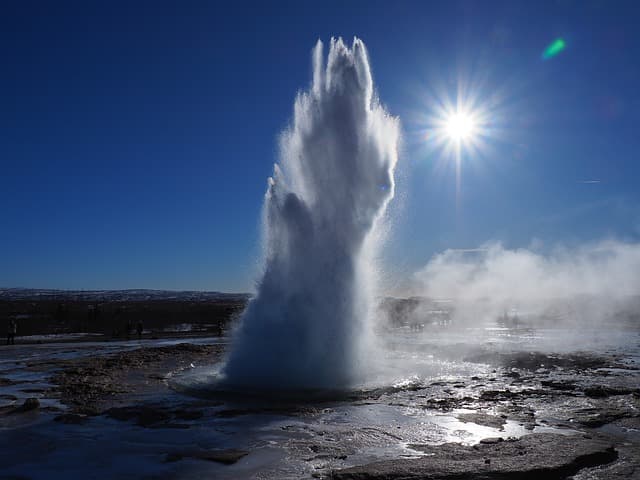
Geysir, in the Haukadalur valley, is the geothermal area most travellers picture when they think of Iceland, and it's the one the English word "geyser" is named after. The original Geysir itself erupts rarely these days, but its neighbour Strokkur reliably shoots boiling water several metres into the air every few minutes, making it one of the more predictable natural sights in the country.
Because Geysir sits on the Golden Circle, alongside Þingvellir National Park and Gullfoss waterfall, it's easy to combine into a single day route from Reykjavik using paved roads year-round, which makes it a practical first stop for anyone new to driving in Iceland. Boardwalks keep visitors at a safe distance from the boiling pools; staying on marked paths matters here, since the ground temperature and water beneath the surface can cause serious burns.
Gunnuhver on the Reykjanes Peninsula
Gunnuhver is one of the best-known geothermal areas on the Reykjanes Peninsula, known for Iceland's largest mud pool and clouds of steam that drift across the boardwalks depending on the wind. The name comes from a local ghost story about a witch called Gunna, and the area has its share of folklore attached to it.
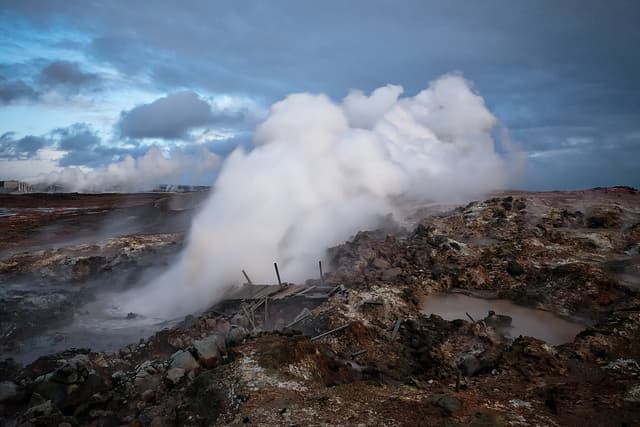
Because Reykjanes is the peninsula where Keflavik Airport sits, Gunnuhver is a realistic stop on the way into or out of Reykjavik, particularly if you're picking up your car with online check-in and want an easy first or last stop of the trip. The ground here is genuinely active and unstable in places, so this is one area where staying behind the ropes and on the boardwalk isn't optional, sections are closed off precisely because the crust can be thin.
Seltún geothermal area on the Reykjanes Peninsula
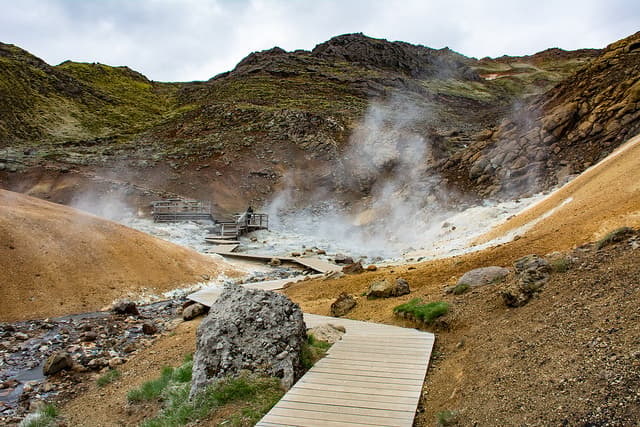
Seltún, near Lake Kleifarvatn, is worth the detour if you're already exploring Reykjanes, it's less crowded than Gunnuhver but just as visually striking, with orange, yellow and grey mineral deposits surrounding bubbling mud pools. A short boardwalk loop lets you see most of the area without much walking.
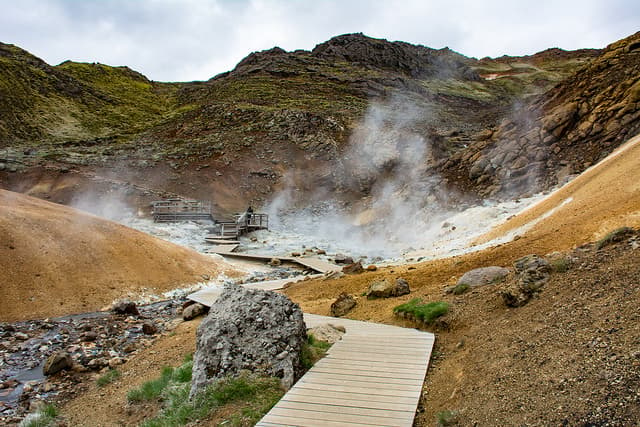
Seltún pairs naturally with a wider Reykjanes Peninsula loop, and since much of this route runs on paved roads, a standard rental car is generally sufficient outside winter storms. If you're deciding what kind of vehicle makes sense for a Reykjanes day trip versus a longer highland route, our guide on choosing between 2WD and 4x4 in Iceland breaks down when each is appropriate.
Hengill
Hengill is a volcano just outside Reykjavik that covers roughly 100 square kilometres, with several distinct geothermal spots and hiking trails rather than a single defined "area." It's less of a quick photo stop and more of a half-day outing for travellers who enjoy walking.
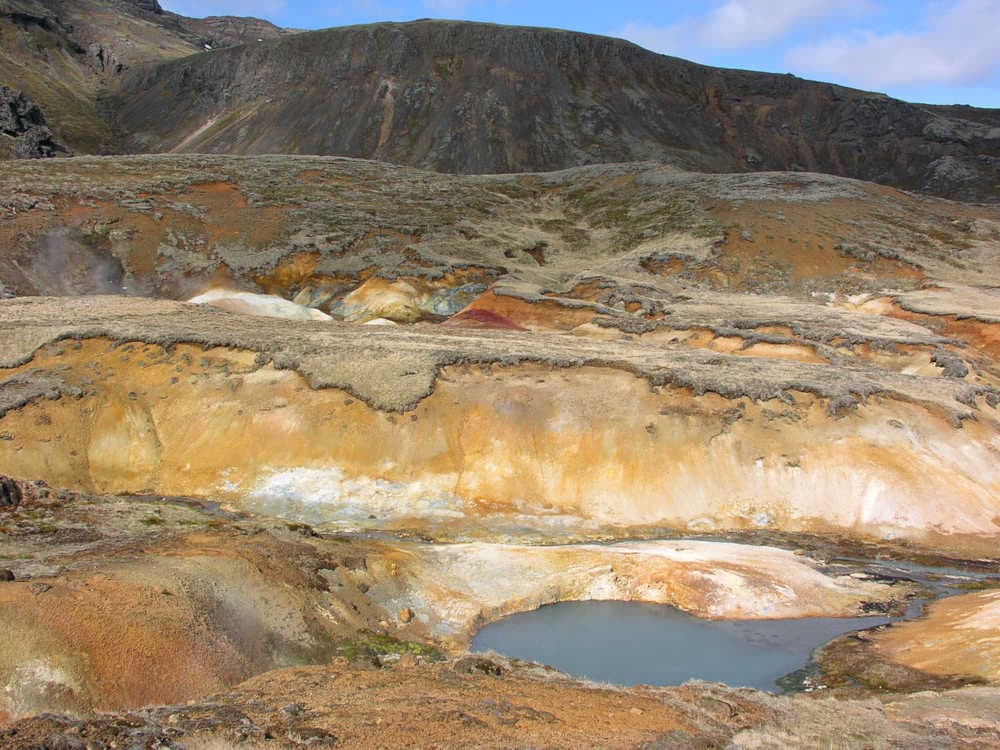
A good starting point is the geothermal exhibition at Hellisheiðarvirkjun power station, which explains how Iceland turns this heat into electricity and hot water before you head out onto the trails. Because Hengill involves more independent hiking than the other areas on this list, it's worth checking current trail conditions before you go, especially outside the summer months, our winter driving guide has useful context on how road and weather conditions shift once summer ends.
Deildartunguhver in Borgarfjörður
Deildartunguhver isn't a sprawling geothermal area so much as one dramatic hot spring, but it's worth the detour into Borgarfjörður in west Iceland. It's Europe's highest flow-rate hot spring, discharging around 180 litres (about 47.5 gallons) of near-boiling water every second, and the sight and sound of it up close is genuinely striking.
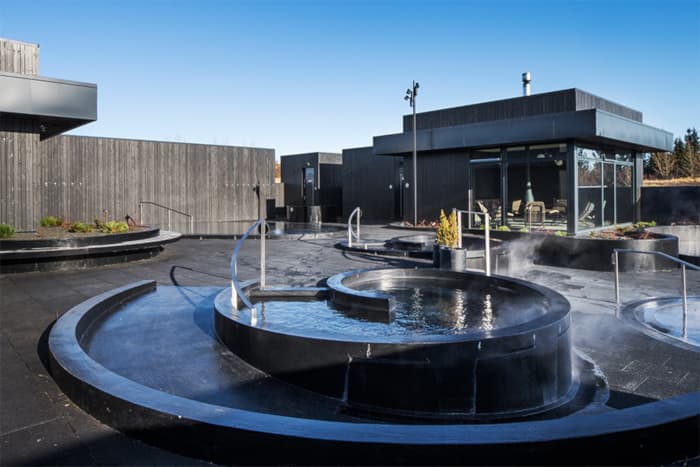
The landowners have since opened Krauma, a geothermal spa fed by this spring, mixed with cold water from a nearby glacial river to reach bathing temperature. It's a natural way to end a day of sightseeing if your route takes you through Borgarfjörður rather than back toward Reykjavik.
Staying safe around geothermal ground
Geothermal areas look solid but often aren't, the ground can be a thin crust over boiling water or steam, and the water in pools and mud pits can cause severe burns almost instantly. Stay on marked paths and boardwalks, keep children and pets close, and never step over ropes or barriers around closed-off sections, which are closed for a real safety reason rather than as a formality. This applies at every area listed here, from the well-boardwalked Geysir site to the more exposed ground at Gunnuhver and Seltún.
Do you need a 4x4 to visit these geothermal areas?
No, all five geothermal areas covered here are reached on paved or well-maintained roads and don't require a 4x4 in normal summer conditions. A standard 2WD car is generally sufficient for the Golden Circle, Reykjanes Peninsula and Borgarfjörður routes.
Winter is a different matter. Snow, ice and wind can affect these same roads between roughly October and April, and a 4x4 becomes a sensible choice for stability and ground clearance even though it isn't a legal requirement on these particular routes. If you're weighing this up for your specific trip dates, our guide to deciding on a 4x4 rental in Iceland walks through the questions worth asking yourself, and our vehicle range covers everything from small 2WD cars to 4x4 SUVs. For current road conditions before any trip, checking umferdin.is (Vegagerðin/Icelandic Road Administration) and vedur.is (Icelandic Met Office) is the most reliable way to plan.
Mistakes to avoid when visiting geothermal areas
The most common issues aren't about the driving, they're about the site itself. Walking off marked paths for a better photo, letting children run ahead near mud pools, and underestimating steam and heat at close range are the main causes of minor injuries at these sites each year. On the driving side, the main mistake is treating a paved Golden Circle or Reykjanes route in winter the same as in summer; conditions can change quickly, and it's worth building extra time into your day rather than rushing between stops. If you're new to Iceland's roads generally, our natural wonders collection and Reykjavik parking guide are useful companions when planning a first self-drive itinerary.
 CAN YOU DRINK TAP WATER IN ICELAND?