Iceland has dozens of natural hot springs reachable by road, ranging from polished geothermal spas near Reykjavik to remote pools tucked into fjords and mountainsides. This guide covers five that are genuinely worth building into a self-drive itinerary, what kind of road or trail leads to each one, and how to decide which ones suit your route, season and vehicle.
Short answer: which hot springs should you prioritise?
If your time is limited, the Blue Lagoon is the easiest to combine with a Keflavik Airport pickup or drop-off, since it sits close to the airport road. If you're driving the south coast, Seljavallalaug and Reykjadalur are worth a detour, though both involve some walking. In the north, Geosea in Húsavík pairs well with a whale-watching stop, and if your route takes you into the Westfjords, Krossneslaug is a quieter, less-visited option. Which combination makes sense depends on how much driving and hiking you want to do on a given day, and whether you're in a 2WD or a 4x4.
Blue Lagoon: the most accessible hot spring near Keflavik
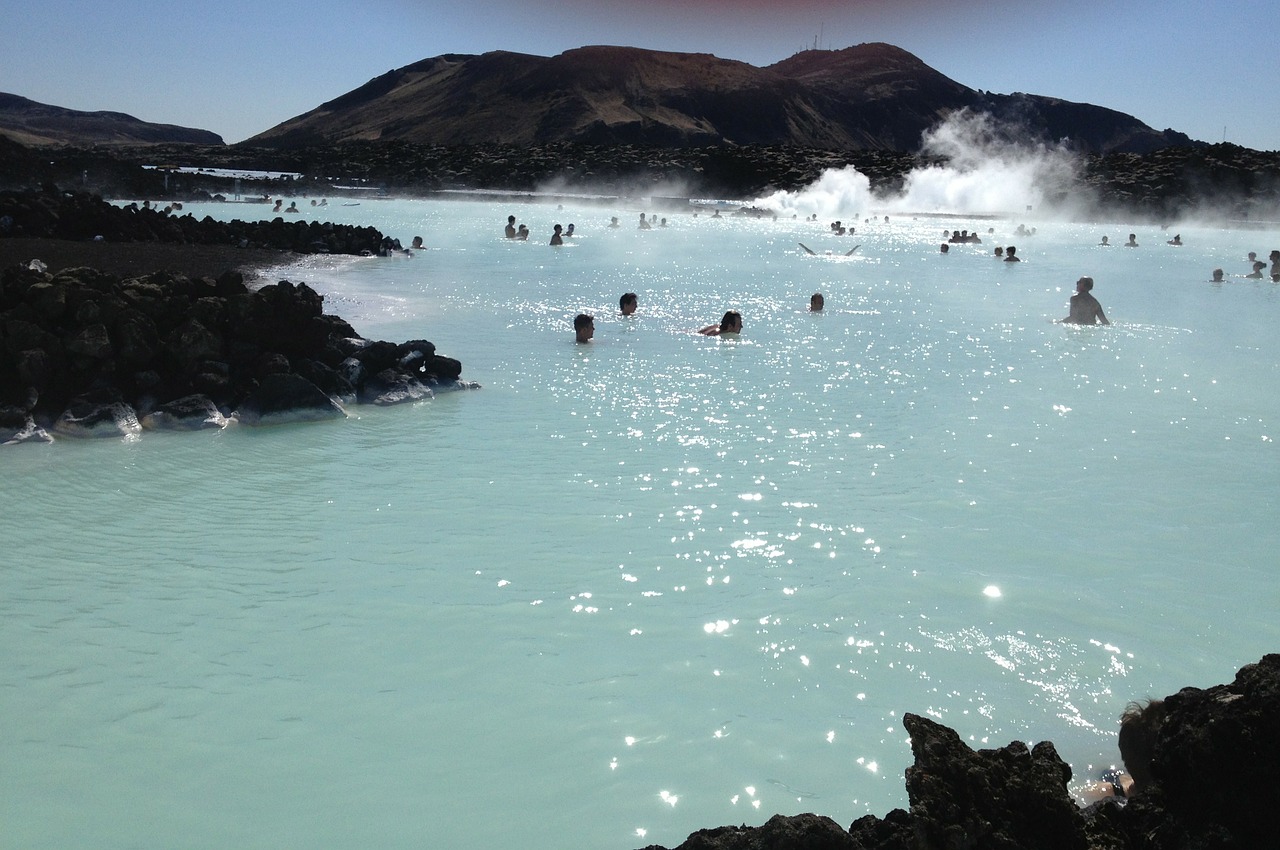
The Blue Lagoon is one of the easiest hot springs to reach in Iceland, since it's less than 20 minutes by car from Keflavik Airport. That makes it a practical stop right after landing or just before a flight home, rather than something that needs a dedicated day of driving.
The lagoon's milky-blue water was formed as a by-product of a neighbouring geothermal power plant, which is part of why the mineral content and colour are so distinctive compared with other pools on this list. Because it sits directly off the main road between the airport and Reykjavik, it doesn't require any hiking or gravel-road driving to reach, which makes it a good first or last stop for travellers picking up a rental car with online check-in at Keflavik Airport.
Geosea Sea Baths: geothermal water with an ocean view
Geosea, in Húsavík in North Iceland, is worth the longer drive if your route takes you around the north coast. The baths overlook Skjálfandi Bay, so you can soak while watching the water below, the same bay where many of Húsavík's whale-watching tours operate.
Compared with the Blue Lagoon, Geosea has a quieter, more local feel, and it works well as a stop on a Ring Road loop through North Iceland rather than as a standalone day trip from Reykjavik. The drive there is on paved roads for most travellers, but as with anywhere in the north, it's worth checking conditions on road.is or safetravel.is before setting off outside summer.
Seljavallalaug: a hot spring you have to hike to
Seljavallalaug, in South Iceland, rewards a short walk with one of the more atmospheric settings on this list. The pool sits in a narrow valley in the mountains, and reaching it involves a brief, scenic hike rather than a drive right up to the water.
The pool itself is older and more rustic than the developed spas further north, there are no changing facilities to speak of, and the water isn't filtered the way a commercial lagoon's would be. Some travellers find that part of the appeal; others prefer a more polished setup like Blue Lagoon or Geosea. Either way, sturdy footwear for the walk in matters more here than at any of the car-accessible spots.
Reykjadalur: a hot river instead of a pool
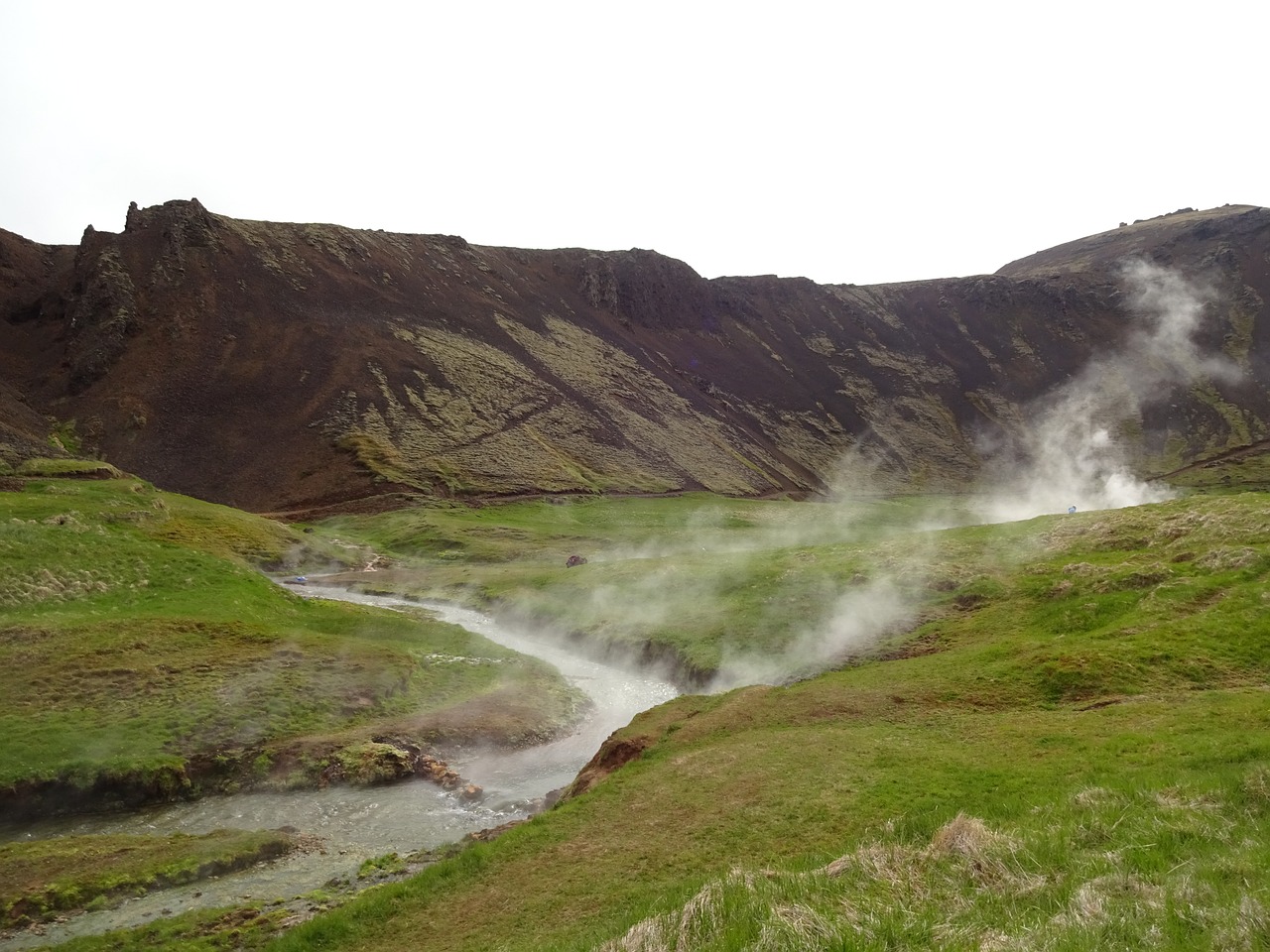
Reykjadalur, near Hveragerði, is a hot spring in the literal sense that it's a flowing river rather than a still pool. Getting there means parking and hiking for roughly an hour each way, so it suits travellers who don't mind a proper walk as part of the experience.
Because the warm water moves rather than sits still, Reykjadalur has become popular with photographers, and the valley setting is genuinely one of the more memorable parts of a south Iceland itinerary, see also our notes on hiking to some of Iceland's canyons if you want to build a full day of trails around it. This isn't a spot for anyone short on time or mobility, though; budget the better part of a morning or afternoon for the round trip.
Krossneslaug: a remote pool in the Westfjords
Krossneslaug, on the north-eastern side of the Westfjords, is for travellers who are already committed to the longer drive into that part of the country. It's more developed than Seljavallalaug, there's an actual pool structure, but far less visited than anything near Reykjavik, which is much of its appeal.
The water here runs notably hot, which some visitors find intense, and the surrounding coastal views are part of the draw. Roads into the Westfjords include stretches of gravel and can be affected by weather outside summer, so it's worth checking current conditions on road.is before committing to the drive, and thinking through whether a 4x4 makes more sense than a 2WD for that leg of the trip.
Comparing Iceland's top hot springs
| Hot spring | Region | Access | Effort | Best for |
|---|---|---|---|---|
| Blue Lagoon | Southwest, near Keflavik | Paved road, drive right up | None, no hiking | Airport transfers, first/last day |
| Geosea Sea Baths | Húsavík, North Iceland | Paved road | None | Ring Road loop, ocean views |
| Seljavallalaug | South Iceland | Short hike from parking | Light hike | Travellers who like a rustic setting |
| Reykjadalur | Near Hveragerði, South Iceland | Hike from trailhead | Moderate, roughly an hour each way | Hikers, photographers |
| Krossneslaug | Westfjords | Drive, partly on gravel roads | None once you arrive, but a longer drive | Travellers already in the Westfjords, quieter visits |
Do you need a 4x4 to reach Iceland's hot springs?
For most of the hot springs on this list, no, a 2WD is fine for the Blue Lagoon, Geosea and the parking areas for Seljavallalaug and Reykjadalur, since these are reached on paved roads. The Westfjords route to Krossneslaug is the exception, where gravel sections and variable weather make a 4x4 the more comfortable choice for many travellers, particularly outside the summer months.
If your itinerary mixes easy, paved-road hot springs with a Westfjords or highland detour, it's worth reading through our 4x4 vs 2WD comparison before booking, since the right vehicle depends on your full route rather than any single stop.
Mistakes to avoid when planning a hot spring day trip
A few small planning errors account for most of the disappointment travellers report:
- Underestimating the hike. Reykjadalur and Seljavallalaug both require walking in, and rushing the trail in the wrong footwear is a common regret.
- Not checking opening hours or access. Facilities and access can vary by season; confirm details before driving any distance, especially for less-visited spots like Krossneslaug.
- Ignoring road conditions on longer drives. For the Westfjords or North Iceland routes, check road.is and safetravel.is rather than assuming a road is open or paved.
- Parking without a plan in Reykjavik. If your loop starts or ends in the capital, it helps to understand the city's parking zones before you leave your car for a soak, our Reykjavik parking guide covers the basics.
- Skipping a towel and dry bag. None of this is Blue Car Rental-specific, but it's the detail most travellers forget on their first hot spring stop.
Why a self-drive suits hot spring hopping
Driving yourself is the most flexible way to string together two or three of these stops around a longer route, rather than being tied to a single tour departure time. A wider vehicle choice also helps: a compact 2WD is enough for Blue Lagoon or Geosea, while a 4x4 from our fleet gives more comfort on the gravel stretches toward the Westfjords. Every rental includes CDW, SCDW, Gravel Protection, Theft Protection and Third-Party Liability as standard, which is worth knowing about before a day that mixes paved roads with rougher tracks, tyre and underbody cover on gravel requires the optional Liability Waiver, and full details are in our insurance overview.
For more on the geology behind these pools and Iceland's other landscapes, our natural wonders section has further reading.
 CAN YOU DRINK TAP WATER IN ICELAND?