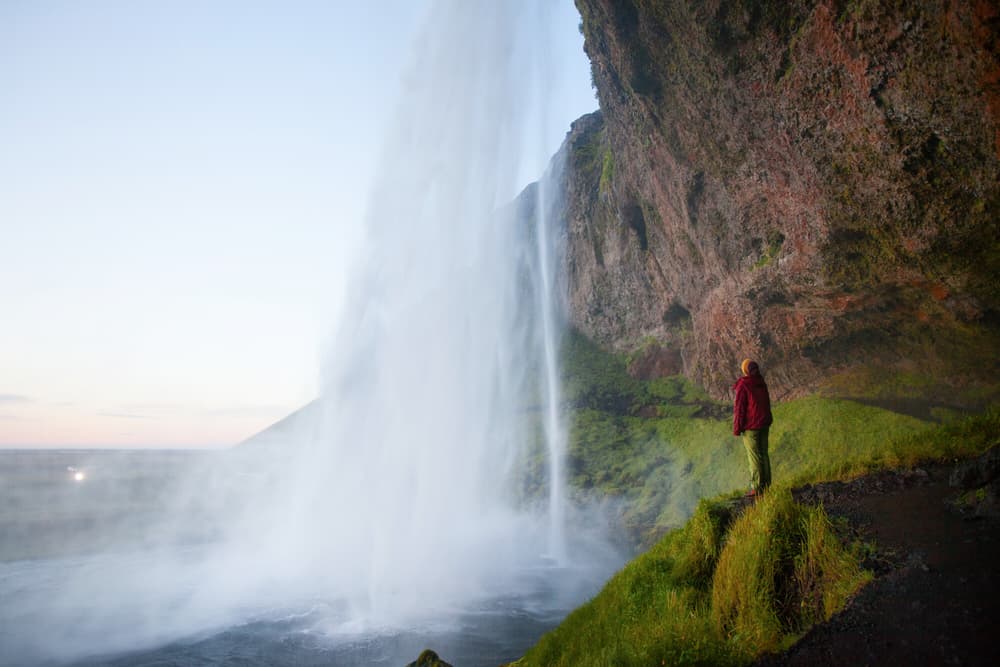

Seljalandsfoss is one of the easiest waterfalls in Iceland to reach by rental car, and it stays open all year. This guide covers what changes at the site once winter sets in, how the drive from Reykjavik holds up in snow and ice, and what to pack so the visit is comfortable rather than a scramble on frozen rock.
Is Seljalandsfoss open and accessible in winter?
Yes. Seljalandsfoss is open year-round and is a straightforward stop on the Ring Road (Route 1) roughly 120 km, or about 1.5 to 2 hours' drive, southeast of Reykjavik. The main viewing area and the short path toward the waterfall are usually accessible in winter, but the walkway behind the falls and the steps leading up to it often ice over and can be closed or restricted depending on conditions. Always check current road status on umferdin.is before you drive, and look at vedur.is for weather.
Unlike some south coast sites, Seljalandsfoss doesn't require an F-road detour. The waterfall sits directly beside Route 1, visible from the car park, so you don't need to plan around highland tracks to reach it, those are a separate consideration reserved for places like Þórsmörk via F249, not for Seljalandsfoss itself.
Seljalandsfoss in winter vs summer
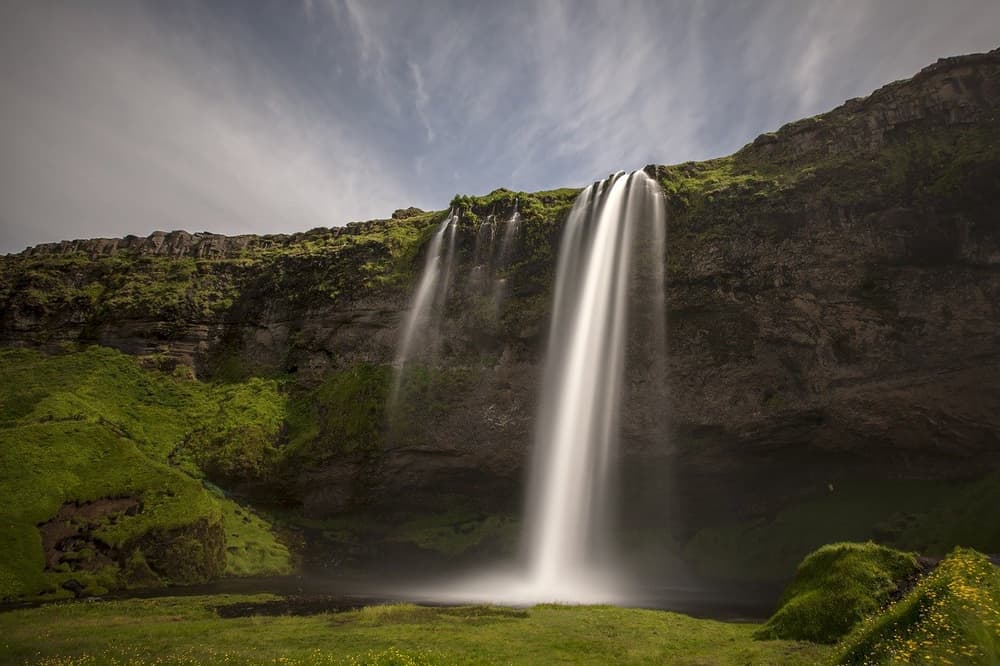
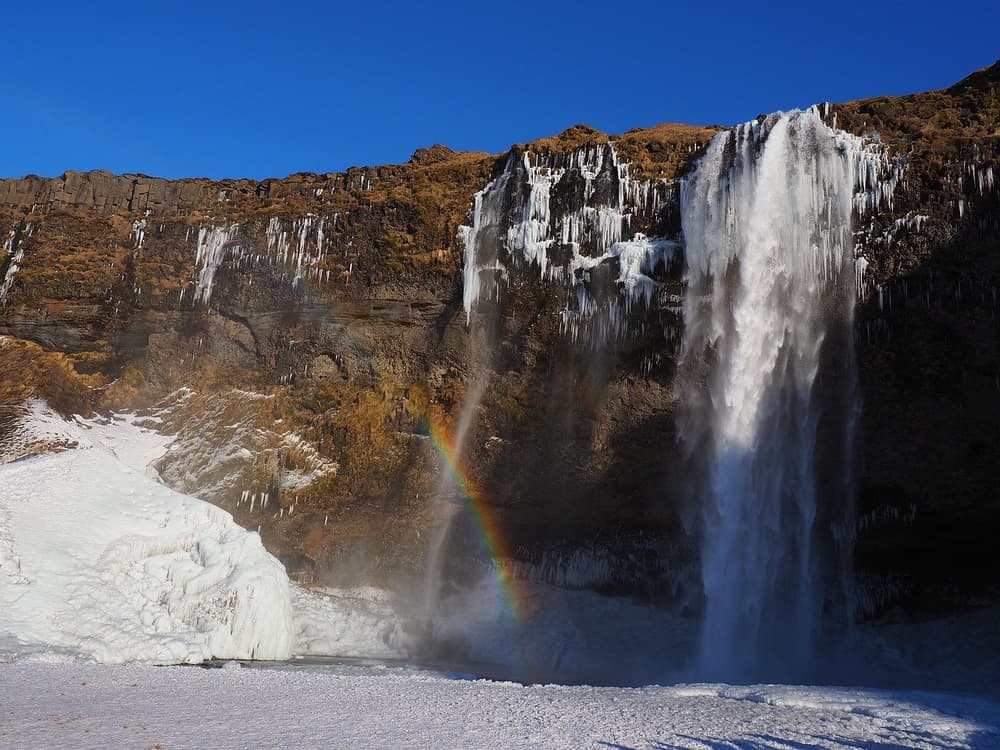
The waterfall looks dramatically different depending on the season, and knowing what to expect helps you plan the rest of your south coast day around it.
| Summer (June–August) | Winter (October–April) | |
|---|---|---|
| Daylight | Up to ~20 hours | As little as 4–7 hours |
| Typical high temperature | Around 13–14°C (57°F) | Around 0°C (32°F) or below |
| Path behind the falls | Usually open | Frequently closed or icy, check on site |
| Ground conditions | Wet, muddy in places | Icy, packed snow, spray freezes on rock |
| Crowds | Busiest, especially midday | Noticeably quieter, especially early morning |
| Northern Lights chance | None | Possible on clear, dark nights |
Whatever the season, weekday mornings tend to be the quietest time to visit, since tour buses cluster around midday.
Driving to Seljalandsfoss in winter
The drive from Reykjavik follows Route 1 the whole way, and it's a well-maintained stretch of the Ring Road, but winter conditions can still turn a simple drive into a slower one. Snow, black ice, and sudden wind gusts across open farmland near Hvolsvöllur are the main things to plan around, not steep terrain or gravel.
A well-maintained 4x4 with winter tyres is the more comfortable choice for a south coast trip between October and April, though a 2WD can still manage the Ring Road itself in reasonable conditions, the difference matters more on side roads and in changeable weather than on the highway stretch to Seljalandsfoss. If you're unsure which category fits your plans, our guide on whether you need a 4x4 in Iceland walks through the real trade-offs, and our driving in Iceland in winter guide covers the specifics of ice, wind, and daylight planning.
Blue Car Rental's fleet includes both 2WD and 4x4 options, including SUVs like the Nissan X-Trail Makoto, which is a common pick for travellers doing the south coast run in winter, a mid-size 4x4 with enough ground clearance and stability for Route 1's winter conditions without being oversized for parking at roadside stops. You can browse the current lineup on our cars page and see what's available for your travel dates.
What to pack for a winter visit
Winter visitors need gear that summer visitors can mostly skip, and the difference is entirely about ice, not distance. The single most useful item is a pair of ice cleats or crampons that fit over your boots, the paths and steps near the falls develop a glassy coating from the constant spray freezing on rock, and regular hiking boots alone are often not enough grip.
Beyond that:
- Waterproof, windproof outer layers, the spray reaches further than it looks, and Icelandic wind makes wet clothing feel colder fast
- Warm base layers, gloves, and a hat, even on a clear day
- A headlamp or phone torch if you're visiting in the darker months, since daylight can be limited to a few hours around midday
- Snacks and water for the drive, since options directly at the site are limited and vary by season
How long to spend at Seljalandsfoss
Most travellers spend 30 to 45 minutes at Seljalandsfoss, enough time for the short walk from the car park, photos from the main viewpoint, and the path toward the base of the falls if it's open. The loop that continues behind and around the waterfall, when accessible, adds another 15 minutes or so at a relaxed pace.
It's a stop, not a destination for a full day, most people pair it with Skógafoss (about 30 minutes further along Route 1) and Gljúfrabúi, a smaller, partly hidden waterfall reached by a short walk from the same car park as Seljalandsfoss.
Other waterfalls near Seljalandsfoss in winter
Seljalandsfoss is one entry point into a stretch of Route 1 that's dense with waterfalls, and it's worth building a few extra stops into the day rather than treating it as an isolated visit, especially in winter, when shorter daylight makes it worth planning stops in advance rather than deciding on the fly.
- Gljúfrabúi, a short walk from the same parking area, partially tucked into a canyon; wading in shallow water is sometimes needed to see it fully, which is less appealing in winter cold
- Skógafoss, roughly 30 minutes further southeast on Route 1, a wide 60-metre drop with a staircase to a viewing platform at the top
- Kvernufoss, a quieter alternative near Skógafoss, reached by a short unmarked trail
For a broader look at Iceland's waterfalls and other natural sites worth building into a south coast itinerary, see our natural wonders collection.
Mistakes to avoid
A few recurring issues show up with winter visits to Seljalandsfoss:
- Skipping proper footwear. Regular sneakers on icy stone near the falls is the most common cause of slips, crampons are cheap insurance.
- Driving straight from the airport without adjusting expectations for daylight. In deep winter, daylight can run out by mid-afternoon; check sunset times before setting a schedule.
- Ignoring closed sections. If the path behind the falls is roped off, it's because of ice risk, not caution for its own sake, treat it as a hard stop, not a suggestion.
- Not checking road conditions before leaving Reykjavik. Route 1 is generally well maintained, but wind and black ice can close sections temporarily; umferdin.is is updated regularly.
Planning the rest of your winter south coast trip
Seljalandsfoss works well as the first major stop on a south coast day trip or as part of a longer Ring Road route, and the same winter planning applies to whatever comes after it. Picking up your car with online check-in at Keflavik Airport means you can head straight for Route 1 without losing time at the counter, which matters more than usual in winter when daylight hours are limited. Choose a vehicle that fits both the season and the rest of your route, and check road and weather conditions the morning you set out.
 CAN YOU DRINK TAP WATER IN ICELAND?