
Iceland's midnight sun is one of the main reasons travellers plan a summer self-drive trip around June and July rather than any other season. If you're wondering what the midnight sun in Iceland actually looks like, when it happens, and where to experience it best, this guide answers all of that directly, with practical notes for anyone driving the Ring Road or exploring further afield.
Short answer: The midnight sun in Iceland refers to the period, roughly from late May through July, when the sun stays above or just below the horizon through the night, keeping the sky bright around the clock. The peak is the summer solstice on 21 June, when many parts of the country get close to 24 hours of daylight. There's no single "best" spot, coastal areas, glacier lagoons, and quiet countryside all offer a different version of the same phenomenon.
What is the midnight sun in Iceland?
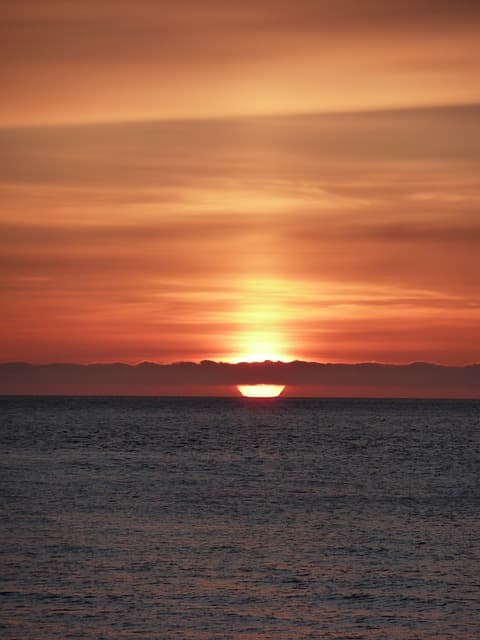
The midnight sun happens because of Iceland's high northern latitude, which means that in the weeks around the summer solstice, the sun doesn't dip far enough below the horizon for full darkness to fall. Instead of a sunset followed by night, the sky moves through a long, soft twilight before the sun climbs again.
This isn't unique to Iceland, it happens across the Arctic and near-Arctic, but in Iceland it's especially dramatic because of the landscape it lights up. Glaciers, black-sand beaches, and fjords all take on a different character at 11pm than they do at midday, often with fewer people around to share the view.
Iceland midnight sun dates: when to expect it
The midnight sun is at its most intense around the summer solstice on 21 June, but the effect is noticeable for weeks on either side of that date. You don't need to time a trip to the exact day to experience genuinely long, bright evenings.
| Period | What to expect |
|---|---|
| Late May, mid-June | Nights are already very short; the sky stays bright well past 11pm |
| Around 21 June (solstice) | The sun barely dips below the horizon in much of the country; near round-the-clock daylight |
| Late June, July | Still very light through the night, with a gentle, glowing twilight rather than true darkness |
Cloud cover can make the effect feel less dramatic on a given evening, but the underlying daylight is still there, it's just diffused rather than golden. As a concrete anchor, Reykjavík sees the sun set around 00:04 and rise around 02:55 on 21 June, giving close to 21 hours of daylight with only a brief twilight in between (approximate; last checked on vedur.is, May 2026). For current sunrise and sunset times on any given date, the Icelandic Met Office (vedur.is) is a reliable reference if you want to plan an evening drive or hike around it.
Best place to see the midnight sun in Iceland
There isn't one single best place, the midnight sun is visible almost everywhere in Iceland, so the better question is which setting suits the kind of evening you want. A short drive from Reykjavík can get you somewhere quiet within an hour; a longer route opens up bigger landscapes.
| Location | Approx. drive time from Reykjavík | What makes it distinct |
|---|---|---|
| Reykjavík / Grótta lighthouse | None, in town | Easy, no driving required; sun skims the sea horizon |
| Snæfellsnes Peninsula | ~2–2.5 hours | Coastal cliffs, Kirkjufell, black beaches |
| South coast / Jökulsárlón | ~4.5–5 hours | Glacier lagoon and icebergs in shifting light |
| Westfjords | ~5–6 hours | Remote, quiet, longer and more variable roads |
| Þingvellir / Golden Circle | ~45 minutes | Close to the capital, easy evening trip |
- Reykjavík and Grótta lighthouse, no driving required, and a popular, easy spot to watch the sun skim the horizon over the sea. Good if you don't want to plan a late-night drive.
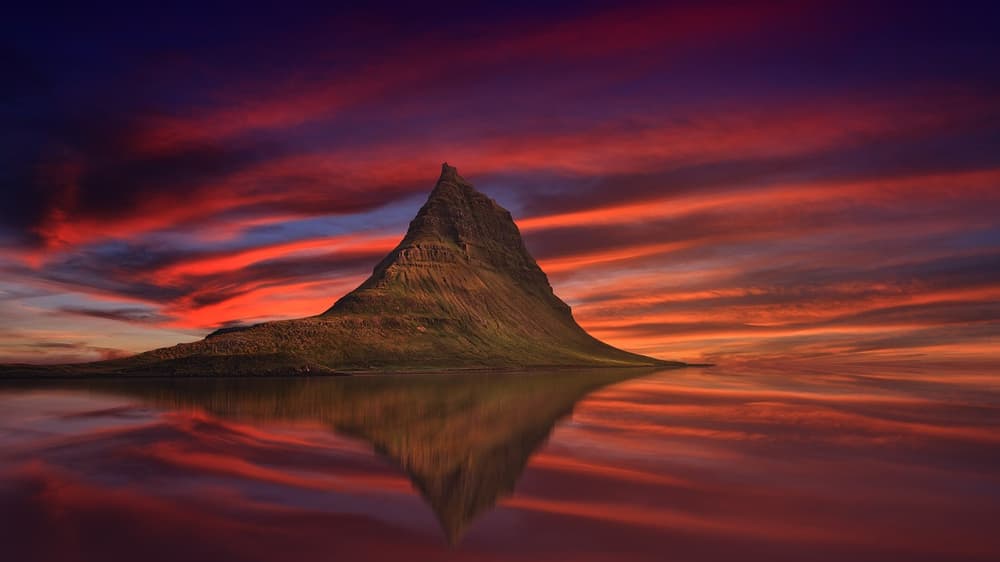
- Snæfellsnes Peninsula, coastal cliffs, Kirkjufell mountain, and black beaches lit in low, golden light. Worth combining with a full day trip since the drive from Reykjavík takes a few hours each way.
- South coast, toward Jökulsárlón, the glacier lagoon and its icebergs take on a different colour palette in midnight light, though this is a longer drive and better suited to a multi-day route rather than a one-evening trip.
- The Westfjords, remote, sparsely populated, and among the quietest places to experience the phenomenon, but distances are longer and roads more variable, so check conditions before heading out this way.
- Þingvellir and the Golden Circle, close enough to the capital for an evening out without an early start the next morning.
If you're building an evening around one of Iceland's natural wonders, going later in the day rather than at midday often means smaller crowds and softer light for photos, one of the quieter upsides of the midnight sun that many first-time visitors don't plan for.
Things to do during the midnight sun
Beyond simply being outside later than usual, there are a few ways travellers tend to make the most of the long daylight without disrupting the rest of a trip.
- Visit popular sights in the evening instead of midday. Waterfalls, canyons, and coastal viewpoints are noticeably quieter after dinner. If you enjoy hiking, the extended daylight is well suited to routes like those covered in our Iceland canyons guide, without the pressure of racing a sunset.
- Go somewhere quiet with birch woods or moss-covered lava fields. The stillness, combined with the pale light, is a different experience from daytime sightseeing, many travellers describe it as the most memorable part of a summer trip.
- Have a late evening out in town. Reykjavík's evenings feel different when it's still bright at midnight; cafés and bars stay lively later than visitors often expect.
- Plan a longer summer road trip around it. Long daylight hours mean more flexibility for driving distances between stops. If you're considering a full loop, our summer road trip guide has route pacing ideas that work well with extended daylight.
Driving in July: what the extra daylight changes (and what it doesn't)
Long daylight makes evening and even late-night driving genuinely comfortable in July, since visibility is rarely an issue. That said, daylight doesn't change road conditions, and a handful of practical points are still worth planning around.
Most of the Ring Road (Route 1) is paved and manageable in a standard 2WD car through summer. Some Highland F-roads open only for a limited window in summer, typically requiring a proper 4x4; some may involve river crossings, which should only be attempted if you're confident, or you should turn around and check umferdin.is (Vegagerðin) / safetravel.is, opening dates also vary year to year depending on snowmelt, so always check current status before planning a route that includes them. If you're unsure which vehicle class fits your planned route, our comparisons on 2WD vs 4x4 and F-roads in a rental car go through this in more detail.
A few common mistakes travellers make around the midnight sun period:
- Assuming bright skies mean fewer people at popular sites. Midday crowds do thin out in the evening, but midsummer is also peak tourist season, so parking and accommodation still book up, see our Reykjavík parking guide if you're staying in the city.
- Underestimating driving fatigue. Just because it's light doesn't mean it's a good idea to drive very late after a full day of sightseeing, tiredness affects you the same way regardless of daylight.
- Skipping the F-road check. Bright evenings can make Highland routes look inviting, but legal access still depends on official opening dates, not how the road looks.
If your trip involves an odd-hours arrival at Keflavík thanks to long flights and long days, online check-in and key-box pickup (for customers who add the Liability Waiver and complete online check-in) can make that first evening simpler, letting you collect your car and get on the road without waiting around at a counter.
The sleep mask issue
Bright nights are a genuine adjustment for many visitors, and it's worth planning for before you land rather than after a few rough nights. Even good curtains often don't fully block the light in Icelandic summer, and waking at 4am to full daylight is a common surprise for first-time visitors.
A simple sleep mask solves most of this, and it's worth packing one rather than assuming your accommodation will have suitable blackout curtains. If you're renting a car for a multi-day loop, factoring in a proper wind-down routine matters more than usual, the light won't tell your body it's time to stop for the day, so you have to.
 CAN YOU DRINK TAP WATER IN ICELAND?