
Iceland's churches range from a candy-colored wooden chapel in a fishing village to a striking black church on a lava field to the tallest building in Reykjavik. Most are small, free to visit, and set in landscapes that are worth the drive on their own. This guide covers the churches travellers ask about most, including the so-called "black church," and how to fit them into a self-drive route around the country.
Short answer
Iceland has several churches worth a stop, but the ones travellers search for most are Hallgrímskirkja in Reykjavik (the country's best-known landmark church), Búðakirkja on the Snæfellsnes Peninsula (the black church most people mean when they search "black church Iceland"), Bláa Kirkjan in Seyðisfjörður, Hofskirkja's turf-roofed church near Skaftafell, and the black church at Rauðasandur in the Westfjords. Most are easy to reach by rental car on paved roads; a couple sit down gravel or unsealed roads where a 4x4 is worth considering depending on season.
Why does Iceland have so many churches?
Iceland has a church in almost every small town and rural parish because of its history as a Lutheran state church country and its scattered farming settlements. When the population lived spread across fjords and valleys rather than in towns, each community built its own church rather than travelling long distances to a shared one.
The Church of Iceland (Þjóðkirkjan) has been the country's national church since the Reformation, and many rural churches still standing today date from the 18th and 19th centuries. Some are turf-roofed, built the same way as traditional Icelandic farmhouses, using timber frames and turf insulation against the cold. Others were built in wood or stone as fishing villages grew wealthier. The result is a country where churches are as much a marker of local geography as they are places of worship, which is why so many appear on road trip itineraries even for travellers who aren't visiting for religious reasons.
What is the black church in Iceland?
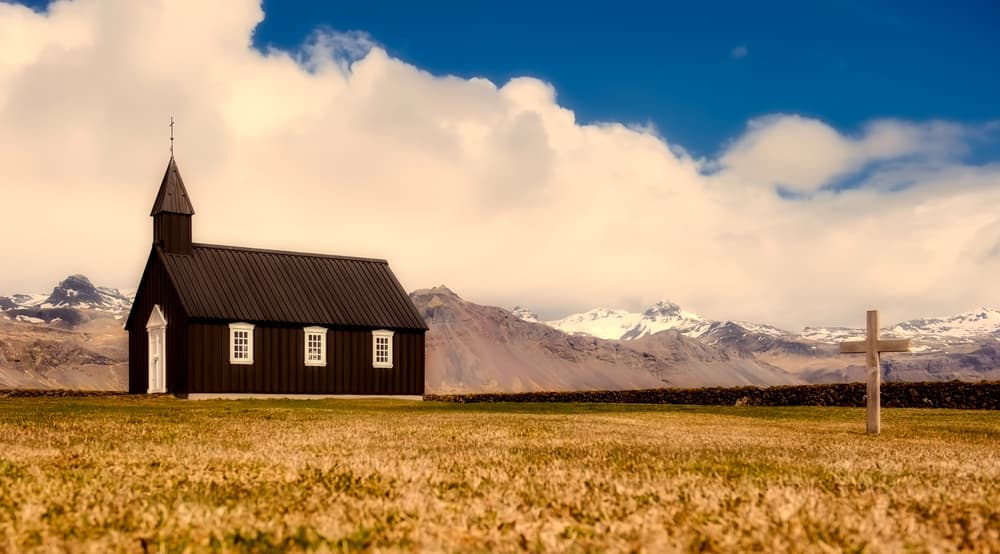
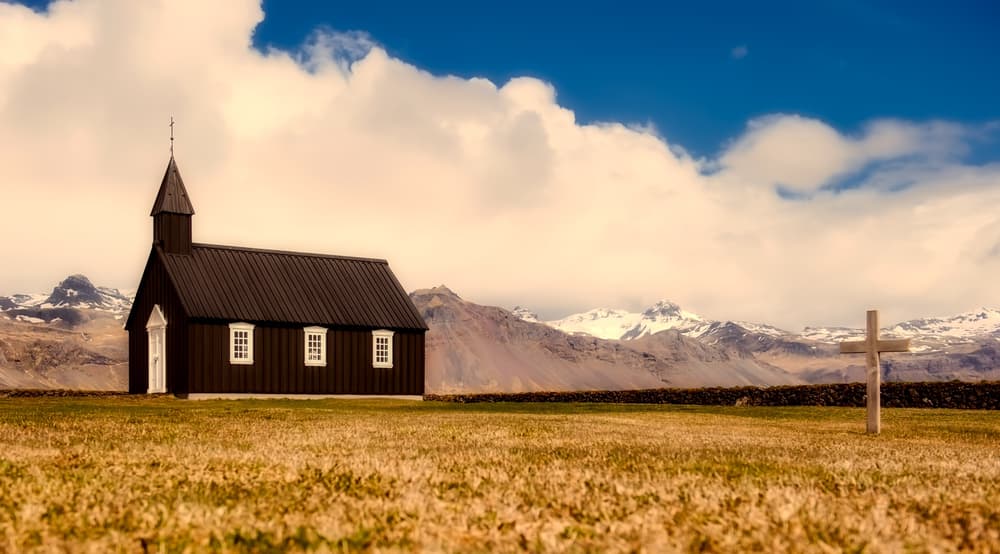
The "black church" most people are searching for is Búðakirkja, a small wooden church on the Snæfellsnes Peninsula, sometimes called the Búðir Black Church. It's painted entirely black with white trim around the windows, and it sits alone on a stretch of grass near the shoreline, which is part of why it's so photographed.
Búðakirkja is easy to reach by rental car, it's a straightforward stop on a Snæfellsnes loop, doable in a 2WD car in summer conditions. It's about a 2.5–3 hour drive (roughly 200 km) from Reykjavik via Route 54. The chapel itself is small and usually viewed from outside, with no fixed public opening hours, though it's most easily reached from May through September. Weddings are held here fairly regularly, so if photographing the exterior matters to your plans, it's worth checking that no ceremony is scheduled the day you visit.
There's a second black church worth knowing about: the church at Rauðasandur in the Westfjords (covered below), which is black with a red roof and sits on one of Iceland's most distinctive beaches. Travellers sometimes conflate the two when searching "black church Iceland," so it's worth knowing there are two separate ones on opposite sides of the country.
Bláa Kirkjan, the Blue Church of Seyðisfjörður
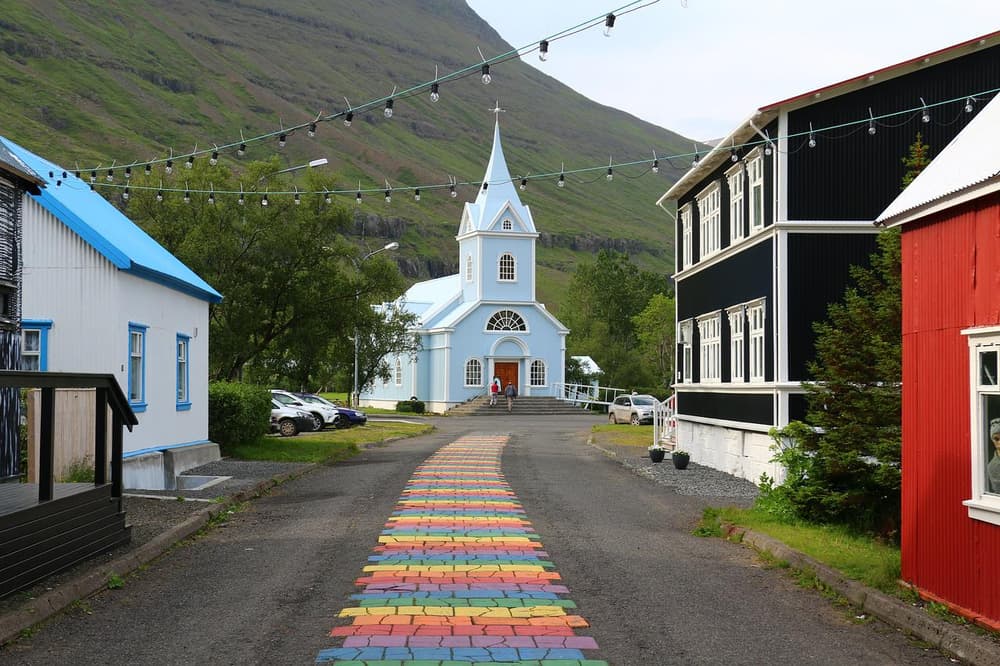
Bláa Kirkjan sits in Seyðisfjörður in East Iceland and is one of the most photographed churches in the country, despite being small. Its pastel-blue exterior stands out against the fjord's mountains, especially in the wooden-house streetscape of the town below.
It's open to visitors mainly in summer and doubles as a venue during the LungA Arts Festival. It's roughly an 8–9 hour drive (around 650 km) from Reykjavik via the Ring Road, or about 30 minutes from Egilsstaðir if you're flying in. It's generally open to visitors from June through August, with more limited access outside the festival season. Seyðisfjörður is a worthwhile detour if you're driving the Ring Road through the East, though the road down into the fjord involves a mountain pass that can hold snow later into spring than lower-lying routes, worth checking conditions if you're travelling outside peak summer.
Hofskirkja, a turf church near Skaftafell
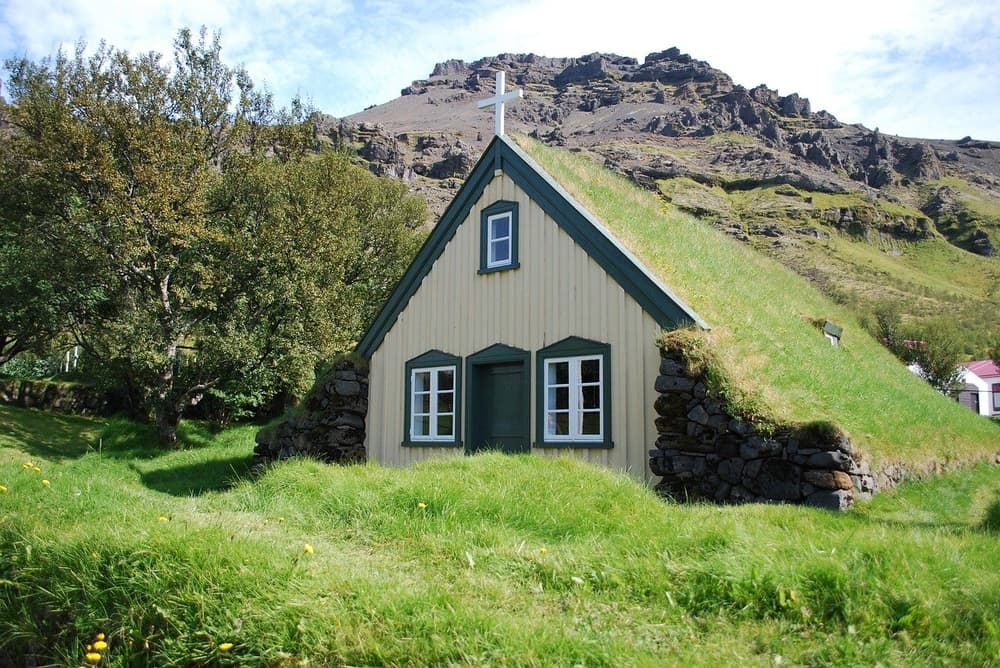
Hofskirkja is one of Iceland's remaining turf churches, built with a timber frame and a turf roof that blends into the hillside behind it. It sits near Skaftafell, in the same area as Vatnajökull National Park, with a small cemetery beside it.
Because turf construction was the traditional building method for Icelandic farmhouses as well as churches, Hofskirkja gives a sense of what rural buildings looked like before imported timber and corrugated iron became common. It's about a 4-hour drive (roughly 330 km) from Reykjavik along the Ring Road. The exterior and cemetery are viewable year-round, though the interior typically keeps summer-only hours. It's a short stop along the South Coast route, easily combined with a day that includes Skaftafell's hiking trails, see our guide to Iceland's canyons and hikes if you're building out that leg of the trip.
Hallgrímskirkja, Reykjavik's landmark church
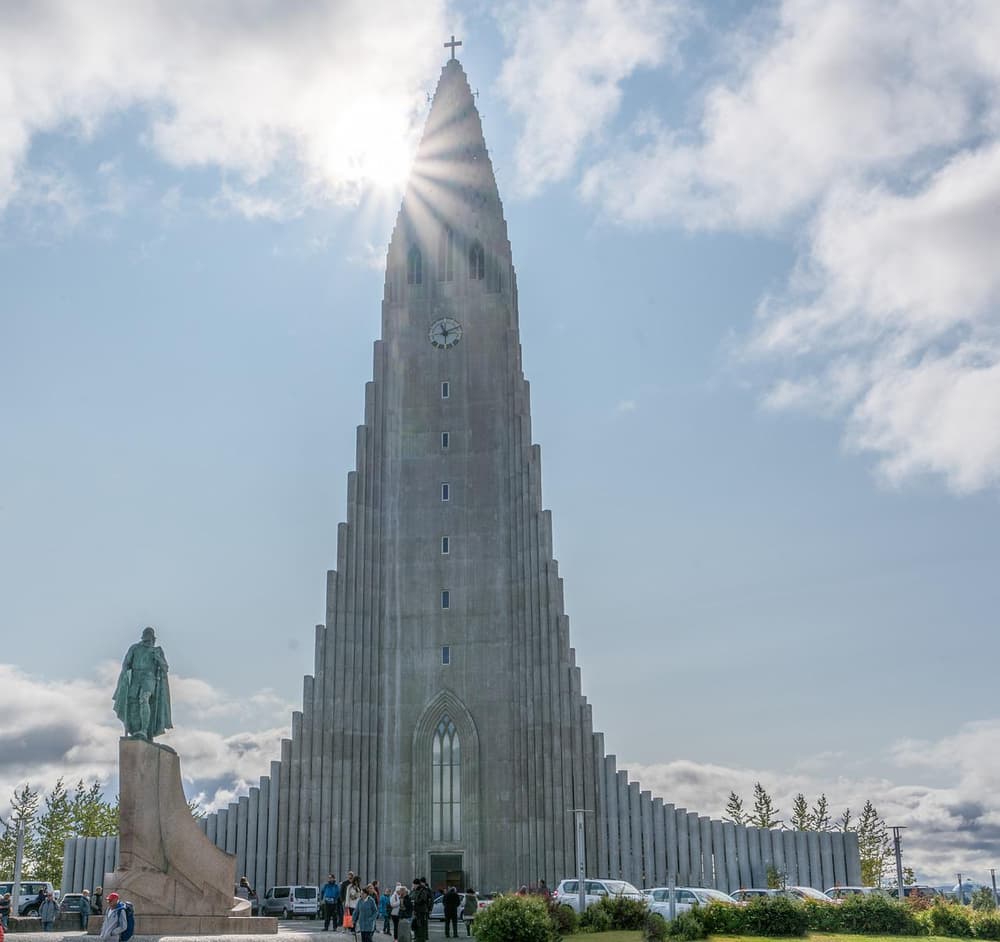
Hallgrímskirkja is the church most visitors see first, since it's visible from much of central Reykjavik and is one of the tallest structures in the city. It was designed by architect Guðjón Samúelsson, who drew on Iceland's basalt rock formations and glacier shapes for the building's columnar concrete facade.
It's usually the easiest church on this list to fit into a trip, since it requires no driving at all if you're staying in Reykjavik, it's centrally located, so there's no drive time to speak of. The church is typically open daily, with hours running roughly 9am–9pm in summer (May–September) and 10am–5pm in winter (October–April), though the tower may close earlier for the last elevator ride. If you're picking up a rental car nearby, it's worth reading our parking guide for Reykjavik before you head into the city centre, as parking near Hallgrímskirkja runs on the same paid-zone system as the rest of downtown.
Rauðasandur, the black church on the red beach
The church at Rauðasandur is a small black building with a red roof, part of the Patreksfjörður parish in the Westfjords. It sits above Rauðasandur Beach, which is unusual for Iceland because its sand is golden and reddish rather than black, and the cliffs nearby draw large numbers of seabirds, it's also a spot where seals are commonly seen.
The road down to Rauðasandur is unsealed for a stretch, which is fairly typical for the Westfjords. It's roughly a 6-hour drive (about 400 km) from Reykjavik via Route 60, with the final stretch down to the beach unsealed. The church itself is generally viewable from outside year-round, though the surrounding area is most accessible from late spring through early autumn. In dry summer conditions a well-driven 2WD can usually manage it, but the region's gravel roads and mountain passes are a different matter once autumn weather sets in. If you're planning a Westfjords loop, it's worth reading through whether a 4x4 makes sense for your route before deciding on a vehicle, and checking current conditions on umferdin.is and safetravel.is regardless of season.
Comparing the churches at a glance
| Church | Region | Known for | Road type | Best season | Approx. distance from Reykjavik | Typical opening |
|---|---|---|---|---|---|---|
| Hallgrímskirkja | Reykjavik | Tallest landmark church, city views | Paved, city streets | Year-round | In Reykjavik (no drive) | Daily, roughly 9am–9pm (summer), 10am–5pm (winter) |
| Búðakirkja (black church) | Snæfellsnes Peninsula | All-black wooden exterior | Paved/gravel loop road | Summer, accessible most of the year | ~200 km / 2.5–3 hrs | Exterior viewable year-round; no fixed hours |
| Bláa Kirkjan | Seyðisfjörður, East Iceland | Pastel-blue exterior, arts festival venue | Paved, mountain pass access | Summer | ~650 km / 8–9 hrs (or ~30 min from Egilsstaðir) | Generally open June–August |
| Hofskirkja | Near Skaftafell, South | Turf roof and timber frame | Paved (Ring Road) | Year-round, weather dependent | ~330 km / ~4 hrs | Exterior year-round; interior summer only |
| Rauðasandur church | Westfjords | Black with red roof, above red-sand beach | Partly unsealed | Summer | ~400 km / ~6 hrs | Exterior viewable year-round; area most accessible late spring–early autumn |
Fitting churches into a self-drive itinerary
Most of these churches work well as short stops rather than full destinations, which makes them easy to weave into a Ring Road or peninsula loop without adding much driving time. Hallgrímskirkja needs no rental car at all if you're staying in Reykjavik; Búðakirkja and Hofskirkja sit directly on well-travelled routes; Bláa Kirkjan and the Rauðasandur church require a slightly longer detour off the main road.
Because a few of these stops involve gravel roads or seasonal mountain passes, it's worth choosing a vehicle that matches your planned route rather than defaulting to the smallest available option. Blue Car Rental's fleet covers 2WD, 4x4, and EV options, and completing online check-in before you land shortens pickup at Keflavik Airport, useful if a church detour is part of a tighter first-day itinerary. If you're still deciding between vehicle types, our comparison of 4x4 versus 2WD walks through which routes genuinely need four-wheel drive.
Mistakes to avoid when visiting Iceland's churches
Most issues travellers run into are about timing and access rather than the churches themselves.
- Assuming every church is open. Many rural churches, including turf churches like Hofskirkja, keep limited or seasonal hours, and some are only viewable from outside unless a service is happening.
- Not checking for weddings. Búðakirkja in particular hosts weddings regularly in summer; arriving during one means limited or no access to the building.
- Underestimating gravel and mountain-pass roads. The road to Rauðasandur and the pass down into Seyðisfjörður are not difficult in good summer weather, but conditions change quickly outside peak season, always check umferdin.is and safetravel.is before setting out.
- Driving off marked roads for photos. Iceland's terrain is fragile, and off-road driving is illegal even for a better angle on a church or beach.
 HOW BLUE CAR RENTAL SUPPORTS LOCAL COMMUNITIES IN ICELAND