The Reykjanes Peninsula is the stretch of lava fields, volcanoes and coastline that surrounds Keflavik International Airport, which makes it the easiest part of Iceland to explore on your arrival or departure day. Most visitors only see the Blue Lagoon here and drive straight past everything else, but the peninsula has enough geothermal areas, coastal formations and small museums to fill a half-day or full day without ever joining the traffic into Reykjavik.
Short answer: the main things to do on the Reykjanes Peninsula are the Blue Lagoon, the Gunnuhver geothermal area, the Bridge Between Continents, the Brimketill lava pool, Reykjanesviti lighthouse, Garðskagi, and the Icelandic Museum of Rock 'n' Roll. Most of these sit within a 30–40 minute loop drive of each other along Route 425 and Route 44, so a rental car lets you cover several in one day, either right after landing or on your way back to the airport at the end of the trip.
Why Reykjanes works well for your first or last day
Reykjanes is the part of Iceland closest to the airport, so it suits travellers who don't want to lose a day to driving before or after a long flight. Rather than heading straight to Reykjavik, you can pick up your car, spend a few hours on the peninsula, and still check in to your accommodation at a reasonable hour.
The landscape here is different from the rest of the country, black lava fields, low geothermal steam, and open coastline rather than waterfalls and glaciers. Because it's less visited than the Golden Circle or South Coast, sights like Gunnuhver or Brimketill are usually quiet even in peak season.
If you're renting through Blue Car Rental, this is also a practical use of the online check-in process, completing it in advance means you can collect your car and be on the peninsula sightseeing within a short time of landing, rather than spending your first hour of daylight in a rental office queue.
What to see on the Reykjanes Peninsula
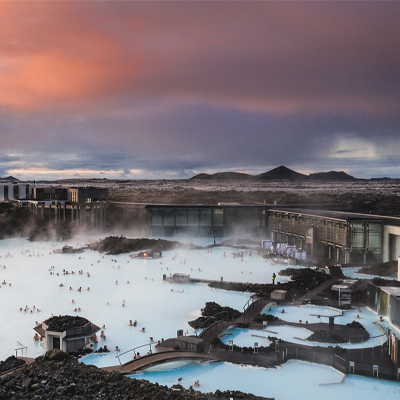
Blue Lagoon
The Blue Lagoon is a geothermal spa with mineral-rich, milky-blue water set among black lava fields, and it's the most visited single attraction in Iceland. It's about a 15-minute drive from Keflavik International Airport and roughly 45 minutes from Reykjavik, which makes it an easy stop straight off the plane or on the way back for a departure-day flight. Booking ahead is generally recommended, since entry is ticketed and capacity-limited.
Gunnuhver geothermal area
Gunnuhver is a field of bubbling mud pools and steam vents named after a ghost in Icelandic folklore, and it's one of the most active geothermal areas on the peninsula. Boardwalks let you get close to the steam without stepping onto unstable ground, stay on them, since the crust around hot springs can be thin and the water beneath is genuinely dangerous.
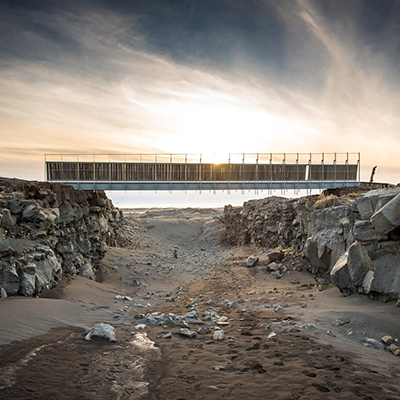
Bridge Between Continents
This short footbridge near Sandvík symbolically joins the North American and Eurasian tectonic plates, which are slowly drifting apart across the Reykjanes fissure zone. It's less a hike than a quick photo stop, but it's a tangible way to see the geology that shapes this part of Iceland.
Brimketill lava rock pool
Brimketill is a natural pool carved into the lava shore by wave erosion, close to Grindavík and not far from Gunnuhver. It looks calm and inviting in photos, but swimming here is not recommended, the surrounding rocks are sharp and slippery, and waves can break over the pool without warning, even on days that look mild. Treat it as a viewpoint, not a place to get in the water.
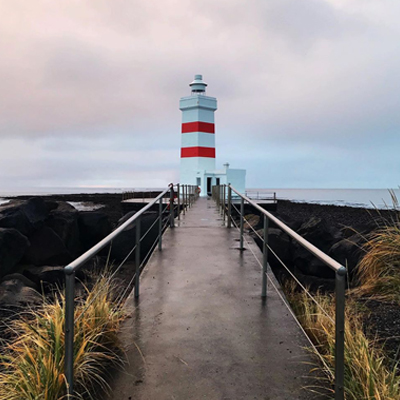
Reykjanesviti and Valahnúkamöl
Reykjanesviti is Iceland's oldest lighthouse, standing on a headland above steep, dramatic cliffs at Valahnúkamöl. The coastline here is raw and often windy, with birdlife along the cliffs in summer. It pairs naturally with a stop at nearby Gunnuhver, since both sit at the southwestern tip of the peninsula.
Garðskagi
At the northern tip of the peninsula, Garðskagi has a long stretch of open beach, two lighthouses, a small museum, and a café with sea views. It's one of the better spots on the peninsula for watching the northern lights in winter, since there's little light pollution and a wide, unobstructed sky over the water.
Icelandic Museum of Rock 'n' Roll
For a change of pace from lava and geothermal steam, this museum in Reykjanesbær traces the history of Icelandic popular music from the 1830s to today, with a small cinema and a "sound lab" where visitors can try instruments themselves. It's about a 5-minute drive from Keflavik International Airport, making it a good option if you land with time to spare before your accommodation check-in.
How much time to plan for Reykjanes
| Sight | What it is | Good for | Note |
|---|---|---|---|
| Blue Lagoon | Geothermal spa | Relaxing after a flight, or before departure | Book entry in advance |
| Gunnuhver | Mud pools, steam vents | Photography, geology | Stay on marked boardwalks |
| Bridge Between Continents | Symbolic footbridge over the fissure zone | A quick stop, families | Combine with Reykjanesviti |
| Brimketill | Lava-carved sea pool | Coastal views, photos | Do not attempt to swim |
| Reykjanesviti / Valahnúkamöl | Lighthouse and cliffs | Coastal walks, birdlife in summer | Can be windy year-round |
| Garðskagi | Beach, lighthouses, café | Northern lights (winter), museum | Open, exposed location |
| Museum of Rock 'n' Roll | Music history museum | Rainy days, arrival/departure gaps | Close to the airport |
Because most of these sights sit close together along Route 425 and Route 44, a loop covering four or five of them typically takes a half-day; adding the Blue Lagoon and a relaxed lunch stretches it into a full day. Exact timing depends on how long you linger at each stop and on conditions, so build in some flexibility rather than a tight schedule.
Driving conditions on the Reykjanes Peninsula
The main routes connecting these sights, Route 41, Route 425 and Route 44, are paved and generally manageable in a standard car during summer. Some side roads out to viewpoints are gravel, and the coastline is exposed, so wind can be stronger here than inland, particularly around Valahnúkamöl and Garðskagi.
In winter, conditions change quickly: wind gusts along the open coast can be significant, and roads can ice over even when Reykjavik itself looks clear. Before heading out, check current conditions on umferdin.is (Vegagerðin, the Icelandic Road Administration) and weather warnings on vedur.is (the Icelandic Met Office). If you're travelling between November and March, it's worth reading through our winter driving guide before your trip, since it covers wind, black ice and visibility in more detail than a single peninsula loop needs to.
Do you need a 4x4 for Reykjanes?
For the sights covered in this guide, a 2WD car is generally sufficient in summer, since the main routes are paved. In winter, a 4x4 gives more stability in wind and on icy sections, though it isn't a strict requirement for this particular loop the way it is for the Highlands. If you're deciding between vehicle types for your whole Iceland itinerary rather than just Reykjanes, our guide on whether you need a 4x4 rental in Iceland walks through the questions worth asking based on season and route. You can browse the range of 2WD, 4x4 and other vehicle classes on the Blue Car Rental fleet page.
Mistakes to avoid on Reykjanes
- Getting in the water at Brimketill. It looks like a natural bathing pool, but waves can break over it unpredictably and the rocks around it are sharp and slippery.
- Stepping off the boardwalks at Gunnuhver. The ground around active hot springs can be thinner than it looks, and the water beneath is scalding.
- Driving off-road for a "better" photo. Off-road driving is illegal in Iceland and damages slow-growing moss and lava formations that take decades to recover, our guide on off-road driving rules explains why this matters even where the terrain looks like open gravel.
- Underestimating coastal wind. Even a calm-looking day inland can be considerably windier at Valahnúkamöl or Garðskagi, so keep car doors braced when opening them in a gust.
- Skipping the airport-day logistics. If you're doing Reykjanes on arrival or departure day, checking rental pickup details in advance, including where to collect your car near Keflavik Airport, saves time you'd rather spend at Gunnuhver than in an office queue.
Reykjanes Peninsula things to do: a closing note
If you're worried that Reykjanes is "just the Blue Lagoon and not much else," that's the outdated version of this trip. The peninsula has enough geothermal areas, coastal viewpoints and small museums to justify a dedicated half or full day, and its location next to Keflavik Airport means it fits naturally into a trip's first or last day rather than competing with time in Reykjavik or the South Coast. A rental car is the practical way to link the sights together, since there's no single bus route that covers all of them.
 PARKING IN REYKJAVÍK: ZONES, PAYMENT, AND WHERE TO LEAVE YOUR CAR