
Winter days in Iceland are genuinely short, but the country is never in full darkness around the clock. Daylight hours shrink steadily from autumn into December, then lengthen again through late winter, a pattern worth understanding before you plan a self-drive itinerary, since it directly affects how much driving and sightseeing you can fit into a day.
Short answer: In the darkest weeks around the December solstice, Iceland gets roughly 4 to 4.5 hours of daylight, with sunrise around 11:15 and sunset around 15:30. By November and January, daylight stretches to around 5.5–6.5 hours. Moving into February and March, daylight increases quickly again, reaching close to 11–12 hours by mid-March. Iceland is never dark all day, but the low sun angle and short daylight window mean planning matters more here than in most places.
Daylight hours in Iceland month by month
The table below shows average sunrise and sunset times and approximate daylight hours for each month from early autumn through late winter. These are monthly averages, so actual times shift by a few minutes on either side depending on the exact date.
| Month | Approx. sunrise | Approx. sunset | Approx. daylight |
|---|---|---|---|
| September | 07:00 | 20:00 | ~13 hours |
| October | 08:20 | 18:00 | ~9h 40m |
| November | 10:00 | 16:20 | ~6h 20m |
| December | 11:15 | 15:30 | ~4h 15m |
| January | 10:50 | 16:30 | ~5h 40m |
| February | 09:20 | 18:00 | ~8h 40m |
| March | 07:45 | 19:30 | ~11h 45m |
Approximate times for Reykjavík, last checked August 2026, based on standard almanac/sunrise-sunset data.
December sits at the bottom of the curve around the winter solstice (21 December), which is genuinely the shortest-daylight point of the year. From there, daylight builds back steadily, and by April Iceland is well on its way toward the long, bright days of the midnight-sun season in summer.
Is Iceland dark all winter?
No, Iceland is not dark all winter, even though it can feel that way if you're only picturing December. There is always some daylight, even on the shortest day of the year, though it's concentrated into a short window around midday.
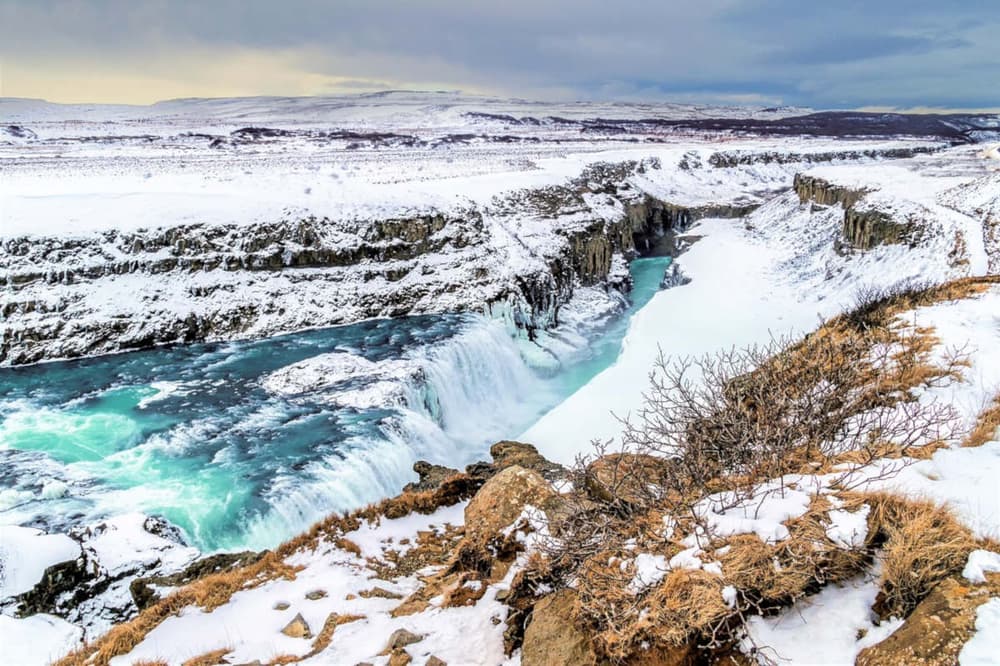
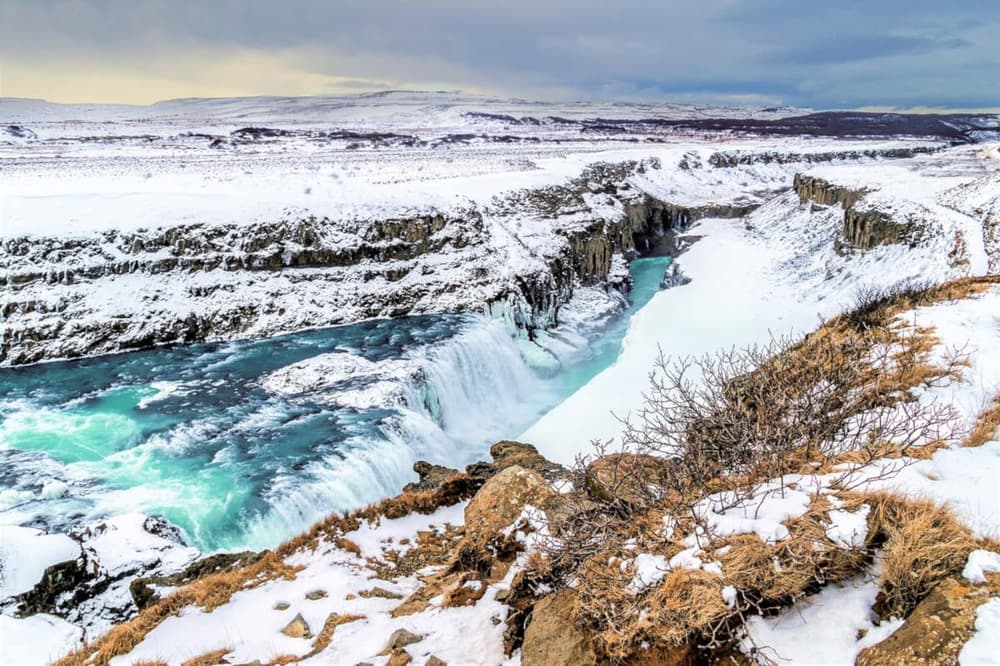
What changes more than the total hours is the quality of light. Because the sun stays low on the horizon even at midday, winter in Iceland has long stretches of soft, golden or blue-hued light rather than harsh overhead sun. Many photographers and travellers actually prefer this, it flatters the landscape at Gullfoss, along the south coast, and in the Snæfellsnes peninsula. The trade-off is that once the sun sets in mid-afternoon, it's dark for the rest of the evening, and the sun rises late enough that early starts in December feel like leaving before dawn.
Gullfoss and other sights in Iceland's winter daylight
Gullfoss is open and accessible year-round, and it's one of the most-visited waterfalls on the Golden Circle even in the depths of winter. In December and January, though, you'll likely be viewing it somewhere between late morning and mid-afternoon, since that's the entire daylight window available.
A few practical points worth building into your plan:
- Ice and spray freeze on paths and viewing platforms at Gullfoss and similar sites in winter, so footwear with grip matters more than the exact time of day you visit.
- The access road and car park can be affected by snow or ice, and conditions can change quickly, check umferdin.is and safetravel.is before heading out, rather than relying on a summer mental image of the route.
- Midday light is your best window for the Golden Circle in winter, arriving right at sunrise in November or December often means driving in darkness on unfamiliar roads for no real photographic benefit, since the light doesn't turn until well into the morning anyway.
The same logic applies to Þingvellir, Kerið, and most stops along Route 1. None of them are "closed" for winter, but your usable sightseeing window each day is genuinely limited to the daylight hours in the table above.
How to make the most of daylight hours when self-driving
The core strategy is simple: work backwards from sunset, not forwards from when you happen to wake up. Iceland's landmarks aren't lit at night, so once the sun goes down, driving becomes about getting safely to your next stop rather than sightseeing.
A few adjustments make a real difference:
- Check driving distances against daylight, not just Google Maps' estimated time. Winter road conditions, packed snow, ice, sudden gusts on open stretches like the south coast, routinely make journeys take longer than the summer estimate. Build in a buffer, especially on longer legs of the Ring Road.
- Start early if a destination is far. In December and January, that might genuinely mean setting off before or right around sunrise to reach a waterfall or glacier lagoon while there's still usable light for the return leg.
- Pick a vehicle suited to the season and route. A 4x4 isn't legally required everywhere, but it's worth honestly weighing your route and month, our guide on whether you need a 4x4 rental in Iceland walks through the real questions to ask, and 4x4 vs 2WD breaks down when a smaller car is genuinely fine.
- Read up on winter driving specifics before you land. Our winter driving guide and the car rental safety guide for first-time visitors cover things like studded tyres, wind, and black ice that matter far more in December than the exact sunset time does.
- Use dark hours productively. Reykjavík's museums, pools, restaurants and bars are all open in the evening, and darker skies mean better odds of seeing the Northern Lights if conditions align, check vedur.is for the aurora and cloud forecast.
If your arrival timing matters, for example, landing at Keflavík in the late afternoon in December and needing to be on the road before it's fully dark, completing Blue Car Rental's online check-in before you land shortens pickup at Keflavík Airport, so you spend less of what little daylight is left standing in a rental office queue.
Mistakes to avoid when planning around winter daylight
Assuming Google Maps' drive time equals your actual time. Winter conditions, snow-covered roads, reduced visibility, lower speed limits in practice, often add real time to a route that looks quick in summer.
Scheduling a full Golden Circle plus south coast day in December. With only 4–5 hours of daylight, trying to cover Gullfoss, Geysir, Kerið, and Seljalandsfoss or Skógafoss in one day is unrealistic without driving large portions in darkness. Split it over two days if you can.
Ignoring the shoulder-season sweet spot. If flexible daylight matters to your trip, September/October and March offer considerably more daylight than the December–January core, while still avoiding peak summer prices and crowds, our guide to cheaper travel seasons goes into this trade-off in more detail.
Not checking road and weather conditions the morning of departure. Road status and closures in Iceland can change overnight in winter. Always check umferdin.is (Vegagerðin/Icelandic Road Administration) and safetravel.is before setting out, regardless of what the forecast said the day before.
 RENTING A CAR IN REYKJAVÍK: A COMPLETE GUIDE FOR TRAVELERS