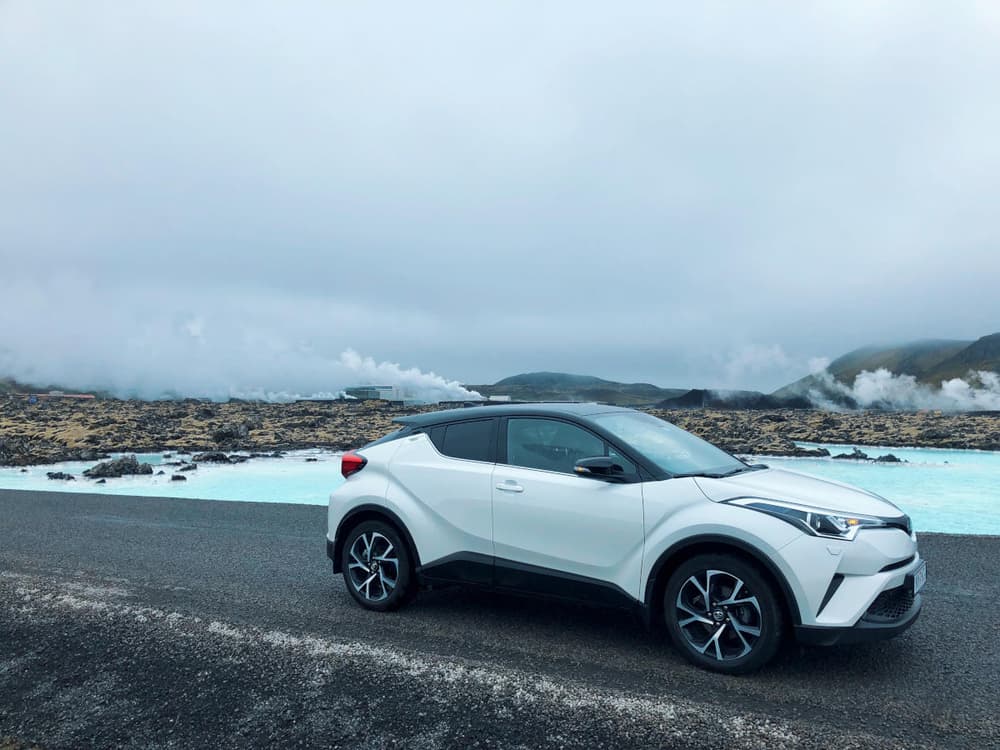

Planning a self-drive trip to Iceland almost always starts with this question, and the honest answer depends less on distance and more on how many stops you want to make along the way. This guide breaks down realistic driving times for the Ring Road (Route 1), how long to allow for each region, and how to plan a trip length that actually fits how you like to travel.
Short answer
Driving the Ring Road non-stop, with no sightseeing, takes roughly 13-15 hours of continuous driving. Nobody actually does this. For a trip that includes the waterfalls, black sand beaches, and detours Iceland is known for, plan on at least 7-10 days for the Ring Road alone, and 2-3 weeks if you want to add the Westfjords, Snæfellsnes Peninsula, or the highlands without feeling rushed. Winter travel and weather can add time to any of these estimates, so it's worth checking umferdin.is and safetravel.is before you fix a schedule.
How long does it take to drive the Ring Road non-stop?
In theory, you could drive Route 1 all the way around Iceland in about 13-15 hours if you never stopped, drove straight through the night, and had clear roads the entire way. In practice, this isn't a trip anyone should aim for, it skips every waterfall, fjord, and black sand beach that makes the drive worth doing in the first place, and it's not a realistic or safe way to drive on Icelandic roads, which include single-lane bridges, blind hills, and sections with lower speed limits than travellers expect.
The 13-15 hour figure is useful mainly as a baseline: it tells you that the loop itself isn't especially long by distance. What takes the time is everything around it, photo stops, short walks to waterfalls, fuel and food breaks, and the inevitable slowdowns from gravel sections, weather, or traffic near Reykjavík.
How many days should you allow to drive around Iceland?
Most travellers doing the full Ring Road should plan for at least 7 days, with 10-14 days giving a noticeably more comfortable pace. If you want to add the Westfjords, the highlands, or several peninsula detours, 2-3 weeks is a realistic target. There's no single correct answer, it depends on how many sights you want to fit in and how much driving fatigue you're willing to tolerate each day.
| Trip length | Typical daily driving | What you'll realistically see | Best suited for |
|---|---|---|---|
| 7 days | 3-4 hours/day | Ring Road highlights only, minimal detours | First-time visitors with limited time |
| 10 days | 2-3 hours/day | Ring Road plus a few detours (e.g. Snæfellsnes) | Balanced pace, most common trip length |
| 14 days | ~2 hours/day | Full Ring Road + Westfjords or extended stops | Recommended pace for a relaxed trip |
| 21 days | Flexible, lower daily average | Ring Road + Westfjords + highlands (summer, 4x4 required) | Travellers wanting depth over speed |
These figures are rough guidance rather than fixed rules, actual driving time varies with season, weather, and how many stops you build in. For a broader look at how routes and road types affect your plans, see our guide to driving in Iceland.
What does the drive actually look like region by region?
Breaking the Ring Road into its four rough sections helps explain where the time actually goes, since each area has a different mix of driving and stopping.
The South Coast
The stretch from Reykjavík to Jökulsárlón is the most visited part of the Ring Road, and for good reason. Along the way you'll pass Seljalandsfoss (where you can walk behind the falls) and Skógafoss, then reach Vík for Reynisfjara black sand beach and Dyrhólaey. Continuing east brings you to Skaftafell National Park and finally Jökulsárlón glacier lagoon with Diamond Beach right beside it. This section alone can easily fill 2-3 days if you stop properly rather than rushing through.
The Eastfjords
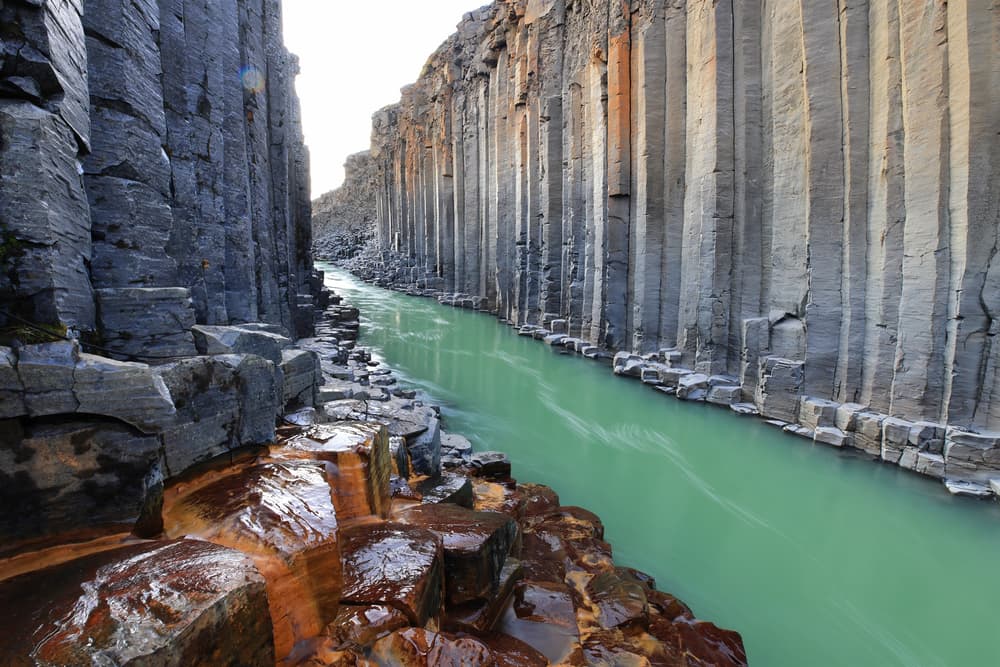
East Iceland is quieter and less crowded than the south, with the Ring Road winding through deep fjords, small fishing villages, and dramatic mountain scenery. Egilsstaðir is a natural base for side trips to Hallormsstaðarskógur, Seyðisfjörður, and Stuðlagil Canyon. The roads here have more curves and elevation changes, so allow a bit more time than the straight-line distance suggests.
North Iceland
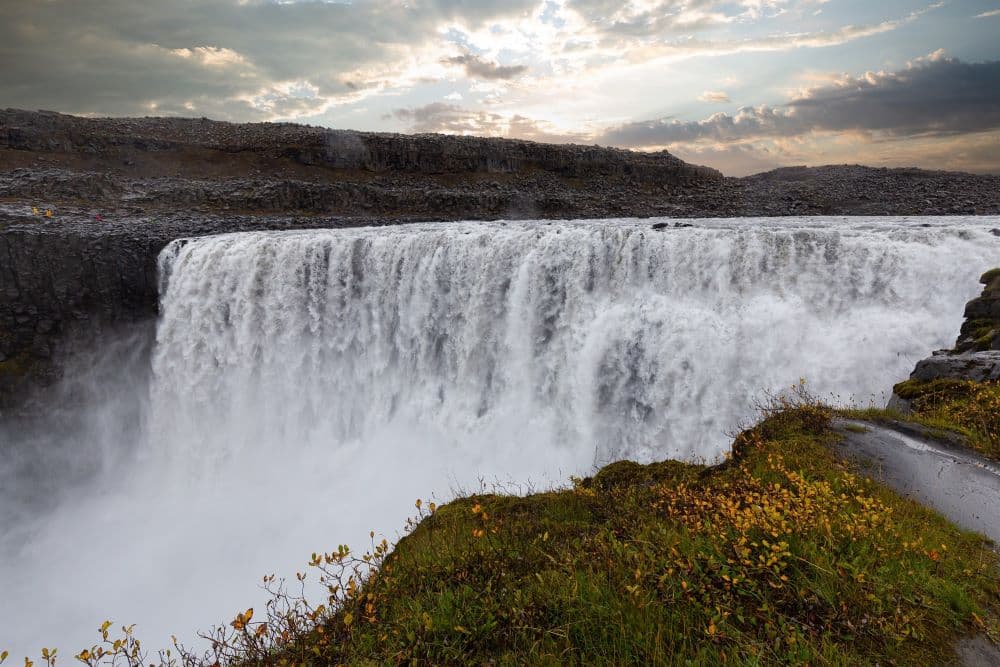
The north is home to Dettifoss, one of Europe's most powerful waterfalls, along with Húsavík and the Mývatn geothermal area. Akureyri, often called the capital of the north, is worth a stop for its town centre, shops, and restaurants, a good contrast to the more remote stretches on either side of it.
West Iceland and the return to Reykjavík
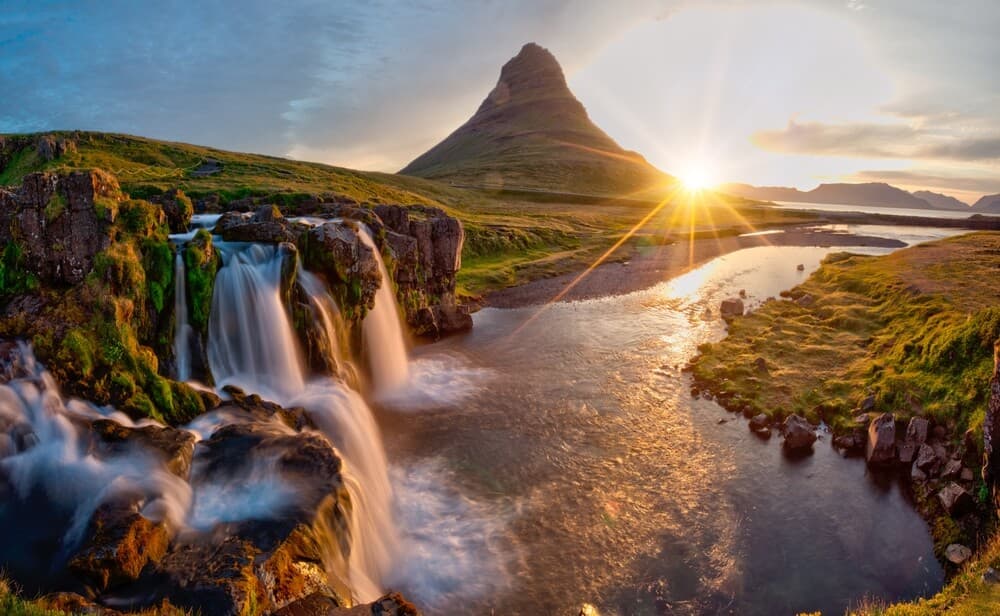
The final stretch of the loop passes through the green hills of Borgarfjörður and the town of Borgarnes before rejoining Reykjavík. This is also where many travellers detour onto the Snæfellsnes Peninsula to see Kirkjufell, one of Iceland's most photographed mountains, or visit Hraunfossar and the Víðgelmir lava cave.
Should you drive only the Ring Road, or add detours?
The Ring Road covers most of the country's famous sights, but it doesn't follow the coastline closely enough to reach everything. If you stick strictly to Route 1, you'll miss Kirkjufell on Snæfellsnes, Dynjandi waterfall in the Westfjords, the puffins of the Westman Islands, and geothermal spots like Deildartunguhver near Borgarfjörður. None of these are far off the main loop, but they do require extra driving time and, in some cases, a vehicle suited to rougher roads, worth factoring in when you're deciding whether you need a 4x4 for your route.
Does the season change how long the drive takes?
Yes. Summer daylight (up to 24 hours in June) means you can drive later and cover more ground per day, while winter's short daylight hours and possible snow, ice, or closed mountain passes mean the same distance can take noticeably longer, or require more flexibility in your schedule. Winter driving also calls for a different mindset around speed and stopping distance than summer travel does. If you're visiting between roughly November and March, it's worth reading our guide to driving in Iceland in winter before finalising your itinerary, and checking current conditions on umferdin.is rather than relying on a fixed daily plan.
Mistakes to avoid when planning your driving time
Underestimating stop time. Waterfalls, black beaches, and viewpoints all take longer than they look on a map, 15 minutes at a stop often becomes 45.
Treating the Ring Road as a race. Trying to complete the full loop in under a week usually means driving past things you came to see.
Ignoring winter daylight hours. In December, you may only have 4-5 hours of usable daylight, which changes how far you can realistically drive and sightsee in a day.
Skipping fuel planning in remote stretches. Parts of the Eastfjords and north have longer gaps between petrol stations than travellers expect.
Not matching the vehicle to the route. A small 2WD is fine for the Ring Road in summer, but detours onto F-roads legally require a 4x4, see our F-road guide to the highlands if that's part of your plan.
Which itinerary length suits your trip?
- One week: Focused Ring Road drive with the main highlights, minimal detours. Good if this is a stop within a longer Europe trip.
- 10 days: The most common choice, full Ring Road with a few well-chosen detours like Snæfellsnes.
- 2-3 weeks: Room to add the Westfjords, slow down in each region, and skip fewer of the smaller sights along the way.
- 3+ weeks or multiple trips: Suited to travellers wanting to include highland F-roads (summer only, 4x4 required) alongside the coastal route.
Whatever length you choose, picking a vehicle that matches your actual route matters more than the label on the car, our vehicle range covers everything from compact 2WDs for a straightforward Ring Road loop to 4x4s for detours off the main road. If you're arriving at Keflavík and want to get on the road quickly, online check-in lets you complete paperwork in advance rather than at the counter.

The real question isn't how fast, it's how much you want to see
There's no wrong length for a driving trip around Iceland, but there is a mismatch that trips people up: trying to fit a 3-week itinerary's worth of stops into a 5-day drive. The Ring Road's raw driving time is short; it's the country's habit of putting something worth stopping for every 20 minutes that changes the math. Build your schedule around the sights you actually want to see, allow honest time for weather and season, and check current road conditions before you lock in a daily plan.
 RENTING A CAR IN REYKJAVÍK: A COMPLETE GUIDE FOR TRAVELERS