
The Icelandic highlands are the uninhabited interior of the country, a plateau of volcanoes, glaciers, lava fields and canyons reached mostly by unpaved F-roads that are only open for a few months each summer. This guide covers the places worth building an itinerary around, what kind of vehicle and insurance you actually need, and the seasonal limits that shape any highlands trip.
Short answer: the Icelandic highlands are accessible by rental car in summer only (typically June to September, dates vary by year), and only in a 4x4, F-roads are legally closed to 2WD vehicles. Highlights worth planning around include Landmannalaugar, Þórsmörk, Askja, the Laki Craters, Sigöldugljúfur Canyon and Eldgjá. Always confirm current road status on umferdin.is and conditions on safetravel.is before you drive.
What exactly are the Icelandic highlands?
The highlands of Iceland are the elevated, largely uninhabited plateau that covers the centre of the country, no towns, no farmland, mostly black sand deserts, lava fields, glaciers and volcanic mountains. This is a different Iceland to the Ring Road: fewer services, longer distances between fuel stations, and roads that are gravel or river-crossed rather than paved.
Most travellers experience the highlands as day trips or multi-day loops from the Ring Road, using F-roads (marked with an "F" on maps, such as F208) that branch off Route 1. These roads are maintained far less than the ring road and are closed outside summer because snow, ice and glacial rivers make them impassable or dangerous the rest of the year.
Do you need a 4x4 for the highlands?
Yes. F-roads are legally restricted to four-wheel-drive vehicles, and driving them in a 2WD car is both against the rules and genuinely risky given river crossings, loose gravel and steep sections. This isn't a suggestion for comfort, it's a road classification with legal weight behind it.
If your trip is Ring Road only, a 2WD can be perfectly adequate; our 4x4 vs 2WD guide breaks down when each makes sense. But the moment an F-road is on your itinerary, you need a 4x4, and it's worth reading through our F-roads guide and the 7 questions to ask before booking a 4x4 before deciding on a vehicle class.
Driving off the marked roads, cutting across moss or sand to "save time", is illegal in Iceland regardless of vehicle, and causes damage that takes decades to recover. Our guide to off-road driving rules covers this in more detail.
When are the highlands open?
Most F-roads open sometime between early June and late June, and close again around September, but exact dates shift every year depending on snowmelt and weather. Vegagerðin (the Icelandic Road Administration) publishes live status for every F-road at umferdin.is, and this is the only reliable source, don't rely on last year's dates or a blog post's timeline.
Outside that window, the highlands are effectively off-limits to rental cars. Winter driving in Iceland is a different subject entirely, and if your trip falls outside summer, our winter driving guide is the relevant one to read instead.
The main highlands destinations
Each of these sits on or near an F-road, and each rewards a different kind of traveller, hikers, photographers, geology fans, or anyone chasing a specific waterfall.
| Destination | Region | Typical access | Known for |
|---|---|---|---|
| Landmannalaugar | Southern highlands | F208, F224 | Rhyolite mountains in pink, yellow and green; hot springs; day hikes to Bláhnjúkur and Brennisteinsalda |
| Þórsmörk | Southern highlands | F249 (river crossings) | Valley between three glaciers; birch woodland; hiking and photography |
| Askja | Northeast highlands, near Vatnajökull | F88 | Öskjuvatn crater lake; Víti explosion crater; Herðubreið mountain nearby |
| Laki Craters | South, near Kirkjubæjarklaustur | F206 | 1783 eruption site (Skaftáreldar); volcanic craters covered in moss |
| Sigöldugljúfur Canyon | Southern highlands, near Landmannalaugar | F208 area | Waterfalls dropping into a narrow black-walled river canyon |
| Eldgjá | Southern highlands | F208 | One of the world's largest volcanic canyons; the Ófærufoss waterfall |
Landmannalaugar
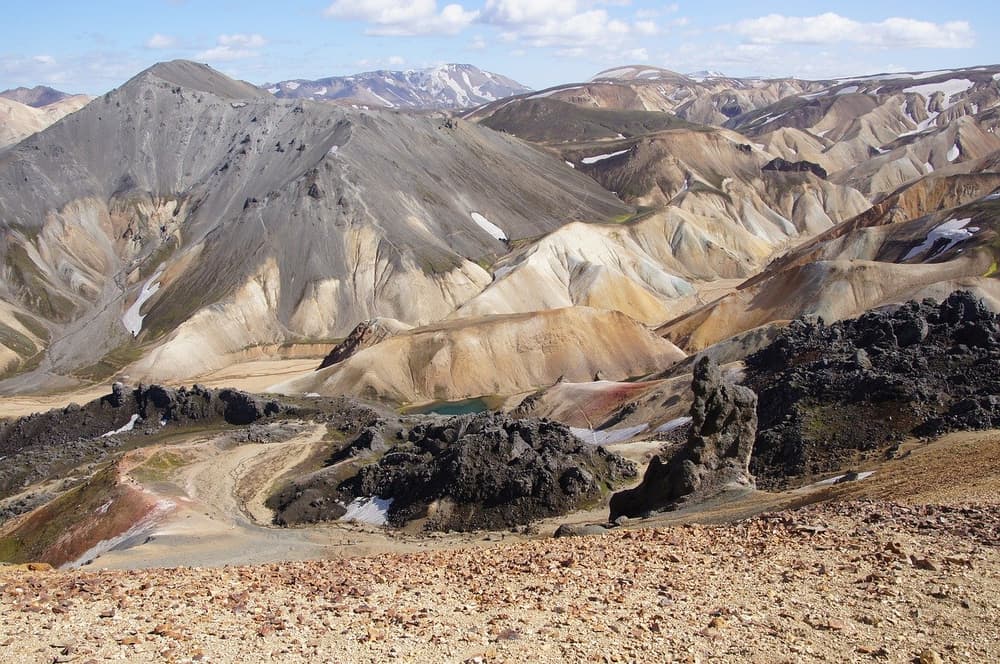
Landmannalaugar sits in the southern highlands and is one of the most visited highland areas, known for its colourful rhyolite peaks and natural hot springs. Bláhnjúkur and Brennisteinsalda are the two hiking landmarks most people head for, and the nearby lakes Frostastaðavatn and Ljótipollur are worth the detour if you have an extra hour. Most visitors treat it as a full day out, combining a short soak with a half-day hike.
Þórsmörk
Þórsmörk lies between the Eyjafjallajökull, Mýrdalsjökull and Tindfjallajökull glaciers, and the drive in involves several river crossings on F249, this is one of the harder highland approaches and not one to attempt if you're unsure of the vehicle or the water level. The valley itself is a striking contrast of black volcanic desert and green birch woodland, and it's popular with hikers and photographers for exactly that reason.
Askja
Askja is only reachable in summer, via F88, and the drive itself is a highlight, long stretches of black desert leading to a volcanic caldera. Öskjuvatn, the lake inside the caldera, and the nearby Víti crater are the main draws, and Herðubreið, nicknamed the Queen of Icelandic Mountains, rises nearby with hot springs and vegetation along its riverbanks.
Laki Craters
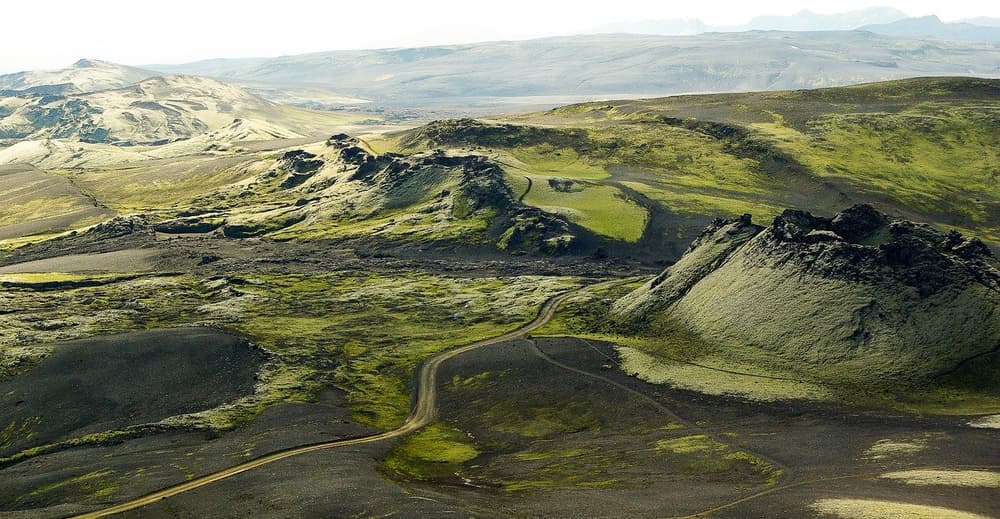
The Laki Craters formed during one of the largest eruptions in recorded history, the 1783 Skaftáreldar (Fires of the River Skaftá). The row of craters is now covered in moss, and in summer months park rangers are often on site to explain the area's history. It's reached via F206, south of the Landmannalaugar–Kirkjubæjarklaustur area.
Iceland highlands waterfalls worth planning around
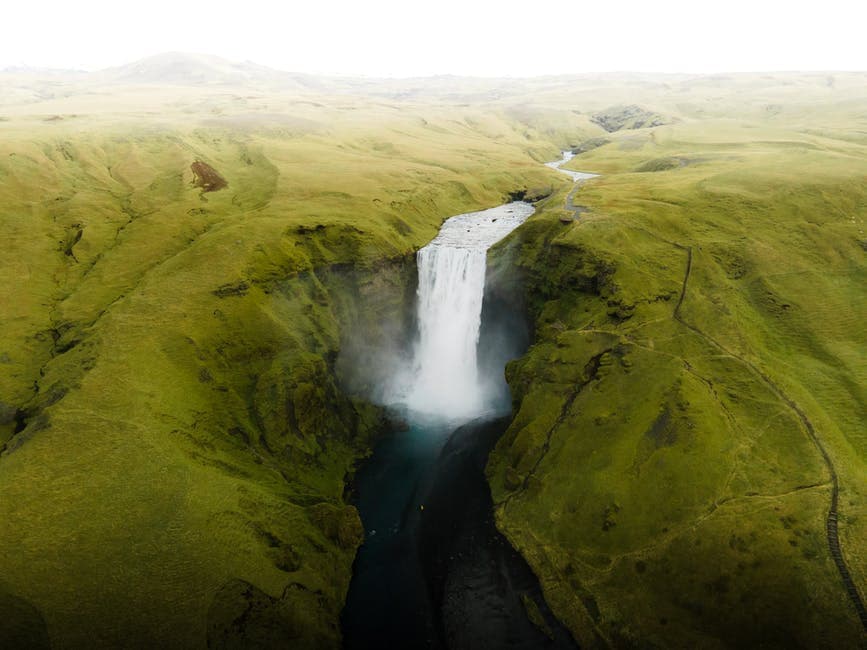
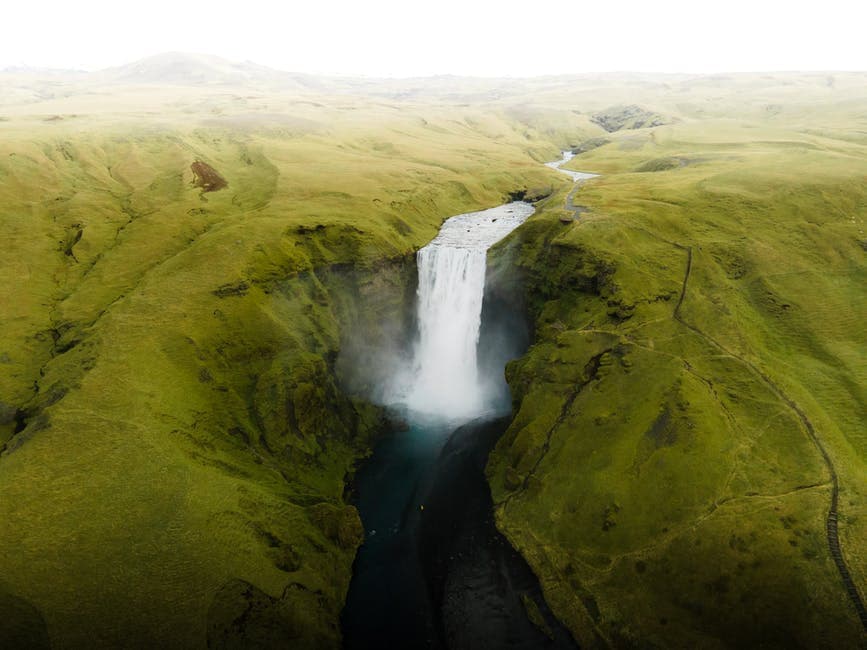
Two waterfalls stand out on the usual highland loop. Sigöldugljúfur Canyon, between Hrauneyjalón and Krókslón, has waterfalls falling from green-topped cliffs into a black-walled river gorge, and it's roughly a 45-minute drive from Landmannalaugar. Eldgjá, one of the largest volcanic canyons in the world, holds Ófærufoss inside it, a two-tiered waterfall that's become one of the more photographed highland spots, sitting between Landmannalaugar and Kirkjubæjarklaustur.
Neither location has facilities beyond basic parking, so treat them as stops on a longer highland day rather than standalone destinations.
Building an Iceland highlands itinerary
Most self-drive visitors treat the highlands as an add-on to a Ring Road trip rather than a separate holiday, and that's a sensible approach given the short season and the driving involved. A single highland detour, Landmannalaugar plus Sigöldugljúfur, for example, can be done as a long day trip from the south coast. Combining Landmannalaugar, Eldgjá and the Laki Craters realistically needs two to three days if you want time to hike rather than just drive between viewpoints. Þórsmörk and Askja are typically separate excursions again, given how far apart they sit and how much of the day the river crossings and gravel driving consume.
Build in buffer time. F-road driving is slower than paved-road driving, expect lower average speeds than on Route 1, and check umferdin.is the morning you leave, not the night before, since conditions can change.
Mistakes to avoid in the highlands
Underestimating the F-roads is the most common issue: they're steeper, rockier, and slower than they look on a map, and a 2WD simply isn't permitted or safe on them. Skipping the road status check is the second, F-roads can close for a day due to weather even mid-season, and umferdin.is reflects that in near real time. Driving through a river crossing when unsure of the depth or current is the one to be most cautious about; if you're not certain, turn around, and consider a guided superjeep tour for routes like Þórsmörk's river crossings instead of self-driving them. Finally, don't assume mobile coverage, much of the highlands has patchy or no signal, so download offline maps and let someone know your route.
Choosing the right vehicle and cover
A highlands trip means booking a genuine 4x4, not just an "AWD-badged" crossover, our range of vehicles is filtered by class so you can see which are rated for F-roads before booking. On the insurance side, it's worth knowing that Blue Car Rental's Liability Waiver covers water damage, including legal river crossings, along with underbody, tyre, wind/door and sand-and-ash damage, full details are on the insurance page. Illegal crossings or off-road driving fall outside any cover, which is another reason to stick to marked F-roads and turn back rather than push through a crossing you're unsure about.
Picking up at Keflavík is straightforward with online check-in, which is worth doing in advance if you're heading straight for the highlands and want to avoid extra time at the desk.
 CAN YOU DRINK TAP WATER IN ICELAND?