
October sits right at the edge of Iceland's driving season change: the Ring Road stays open, but the F-roads into the highlands are closing one by one, daylight is shrinking fast, and the first proper winter weather can arrive on any given week. Planning an Iceland road trip in October mostly comes down to three questions, how much daylight you'll actually have, whether you need a 4x4, and which highland routes are still reachable before they shut for the season.
Short answer: October works well for a self-drive trip on the Ring Road, South Coast, and Golden Circle, and a 2WD is usually fine for those routes early in the month. Highland roads such as the routes into Þjórsárdalur and Kjölur (road 35) close progressively through October and can be affected by snow at any point, so a 4x4 and a flexible itinerary matter more than in summer. Daylight drops from roughly 11 hours at the start of the month to around 8 hours by the end, so build in less driving per day than you would in July.
Is October a good month for a self-drive trip in Iceland?
Yes, with some planning around daylight and road closures. October is shoulder season: fewer tour buses than July or August, autumn colours still visible in the lowlands, and lower demand on accommodation and rental cars than peak summer, which is one reason it's often grouped with the low-season months.
The trade-off is that the weather turns more unpredictable as the month goes on. Early October often still feels like late summer along the south coast; late October can bring the first sustained frost, sleet, or snow at higher elevations. Travellers who want reliable highland access should lean toward the first half of the month, and everyone should check umferdin.is (Vegagerðin, the Icelandic Road Administration) and safetravel.is before setting out each day.
What daylight and weather look like in October
Daylight shortens noticeably through October, and this affects how much you can realistically drive and sightsee each day. At the start of the month you'll have roughly 11 hours of daylight; by Halloween that's down to around 8 hours. Sunset creeps earlier every day, so a route that felt relaxed in September can feel rushed by late October if you don't adjust.
Temperatures in the lowlands typically sit in the low single digits Celsius (Icelandic Met Office, last checked October 2025), with the first snow possible on higher passes and in the interior. Wind is the variable that catches most visitors off guard, gusts can pick up suddenly, especially in open stretches of the South Coast and near Vík. If you're new to these conditions, the driving in Iceland in winter guide covers wind, black ice, and low-visibility driving that can start showing up as early as October, even though the calendar still says autumn.
Do you need a 4x4 for an October road trip?
It depends on your route, not just the month. If you're sticking to the Ring Road, the Golden Circle, and paved South Coast stops, a 2WD is generally adequate in the first half of October, assuming no early snow event is forecast. If your plan includes any F-road, including popular detours to waterfalls like Háifoss, a 4x4 is required by Icelandic law on F-roads, and it becomes more important, not less, as the month progresses and gravel tracks turn wet or icy overnight.
A useful way to think about it: ask what happens if the weather turns for two days straight. If your itinerary has no flexibility to skip a highland detour, a 4x4 removes one variable. For a fuller breakdown of when a smaller car is genuinely enough, see 4x4 vs 2WD in Iceland: when a small car is enough and when it's not and the seven questions to ask yourself before booking.
Which F-roads are still open in October
Most F-roads begin closing for the season during September and October, and exact dates change every year depending on weather, there is no fixed calendar date you can rely on in advance. Some lower highland tracks, like the road up to Háifoss near Þjórsárdalur, often stay passable into October in a capable 4x4, while higher routes such as Kjölur (road 35) or F208 to Landmannalaugar close earlier and are frequently gone by the time October arrives.
Because this changes year to year, the only reliable approach is to check current status directly on umferdin.is and safetravel.is the morning you plan to drive, not the week before. If a river crossing is involved anywhere on your route, treat any uncertainty as a reason to turn around rather than attempt it, conditions on unbridged rivers change quickly and are not something to judge from the roadside. For a broader look at what F-road driving actually involves, see the rental car guide to the highlands, and note that driving off marked roads or tracks is illegal in Iceland regardless of vehicle or season, covered in more detail in is off-road driving illegal in Iceland?
A route example: Háifoss and the highland edge near Þjórsárdalur
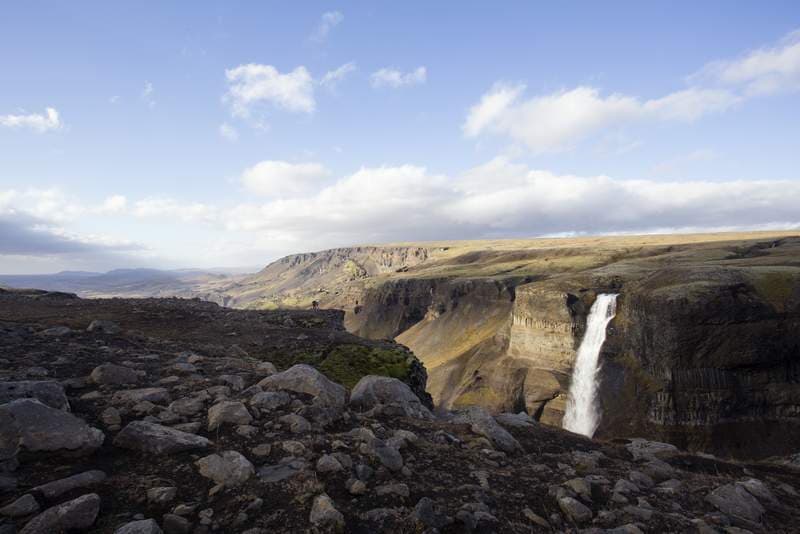
Háifoss is one of Iceland's taller waterfalls, dropping into a deep gorge with a walkable ridge along the top, a genuinely striking stop for landscape photography, especially in the shifting light typical of autumn. The access road runs over rougher gravel than the main highway network, and a 4x4 is the appropriate choice for reaching it comfortably and legally.
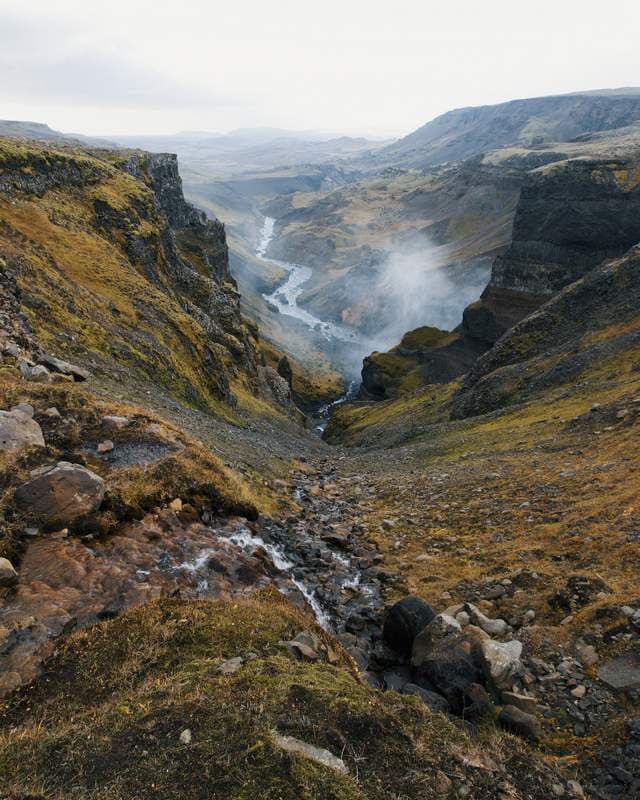
It's a good example of the kind of short highland detour that works well in early-to-mid October but shouldn't be assumed available later in the month. If Háifoss (sometimes written Haifoss) or a similar side trip is on your list, build a backup plan into your itinerary in case the access road has closed by the day you arrive.
Returning your rental car to Keflavik Airport
Plan your final driving day with a buffer, since October's shorter daylight and occasional weather delays can slow down a return trip more than a summer one would. Blue Car Rental's key-box pickup (for customers who add the Liability Waiver and complete online check-in) and online check-in are designed to make arrival smooth, and the same flexibility applies on the way back, check the Keflavik Airport location details for return procedures, and complete your online check-in in advance to save time at the counter.
Rather than a deposit that blocks funds on your card, Blue Car Rental takes a credit-card imprint as security, so nothing is held or frozen for the length of your trip. Every rental includes CDW, SCDW, Gravel Protection, Theft Protection, and Third-Party Liability as standard; the Liability Waiver additionally covers water damage, including legal river crossings, underbody, tyre, wind-door, sand, and ash damage. Illegal crossings or off-road driving are not covered by any policy, which is one more reason to treat "turn around" as the right call when a route looks uncertain. Full details are on the insurance page.
Route conditions in October: what to expect
| Route | Typical October status | Recommended vehicle |
|---|---|---|
| Ring Road (Route 1) | Open year-round, paved, occasional wind/weather closures | 2WD usually fine; check forecast |
| Golden Circle | Open year-round, paved | 2WD |
| South Coast (Vík, Jökulsárlón) | Open, exposed to wind, some gravel side roads | 2WD for main road; 4x4 for gravel detours |
| Háifoss / Þjórsárdalur access road | Often passable early-to-mid October, gravel, weather-dependent | 4x4 |
| 35 Kjölur (Kjalvegur) | Typically closes before or during October | Not an F-road, but rough highland gravel with no winter service; Blue Car Rental's rental terms allow only 4x4 or all-wheel-drive cars on it |
| F208 Landmannalaugar | Usually closed by October | 4x4 required when open |
Status changes yearly with weather, always confirm on umferdin.is and safetravel.is before departure.
Mistakes to avoid on an October road trip
The most common mistake is applying a summer daylight budget to an October itinerary, packing in the same number of stops per day when you have three fewer hours of usable light. The second is assuming an F-road that was open in September will still be open when you arrive; status can change within days. The third is skipping the 4x4 decision because "it's not winter yet", icy patches and sudden gravel-road deterioration can show up well before the calendar says winter. Choosing your vehicle for the route you're actually planning, not just the season name, avoids most of these issues; the car booking guide covering 2WD, 4x4, insurance, and pickup walks through that decision in more detail.
 CAN YOU DRINK TAP WATER IN ICELAND?