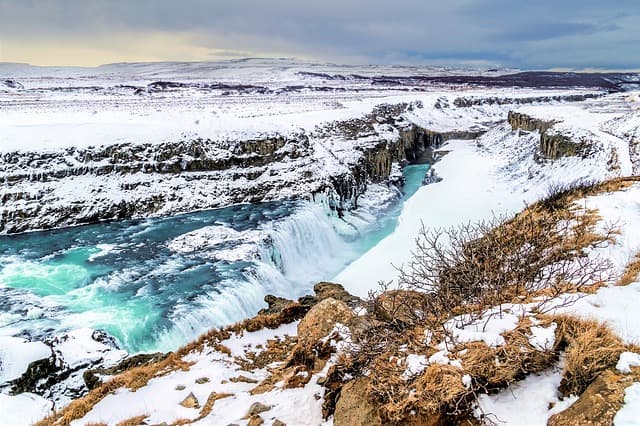

Icelandic winters run roughly from November through March, and they're defined less by extreme cold than by wind, changeable conditions, and short daylight hours. Understanding this in advance matters for anyone planning a self-drive trip, because it shapes almost every decision, from vehicle choice to route planning to what you pack.
Short answer: Icelandic winters are milder in temperature than many visitors expect, thanks to the Gulf Stream, but conditions change quickly and can include strong wind, snow, ice, and sudden shifts within the same day. Daylight is limited, especially in December and January. Self-driving is common and generally manageable with the right vehicle and a flexible itinerary, but it requires checking road and weather conditions daily rather than relying on a fixed plan.
How cold does it get in Iceland in winter?
Icelandic winter temperatures near the coast, including Reykjavík, tend to hover close to the freezing point rather than plunging deeply below it, the Gulf Stream keeps coastal areas milder than their northern latitude would suggest. Inland areas, mountain passes, and the north of the country typically run colder and see more persistent snow cover.
What catches most travellers off guard isn't the thermometer reading but the wind chill. A day that sounds mild on paper can feel far harsher once wind is factored in, and Icelandic wind can pick up quickly. For current temperature and forecast information, the Icelandic Met Office (vedur.is) is the standard reference locals check daily, and it's worth bookmarking before your trip.
How much daylight is there in an Icelandic winter?
Daylight hours shrink considerably as winter progresses, reaching their shortest around the December solstice, then lengthening again through January, February, and March. This isn't unique to Iceland, it's a function of the country's high latitude, but it does mean winter itineraries need to be planned around a much shorter driving window than a summer trip.
Practically, this means:
- Sightseeing days should be planned with the limited daylight in mind, prioritizing key stops rather than long, spread-out routes.
- Driving in darkness is normal and expected in winter, locals do it constantly, but visitors unused to Icelandic roads at night should build in extra time and caution.
- The upside is well known: longer nights are exactly what makes winter the best window for chasing the Northern Lights, conditions permitting.
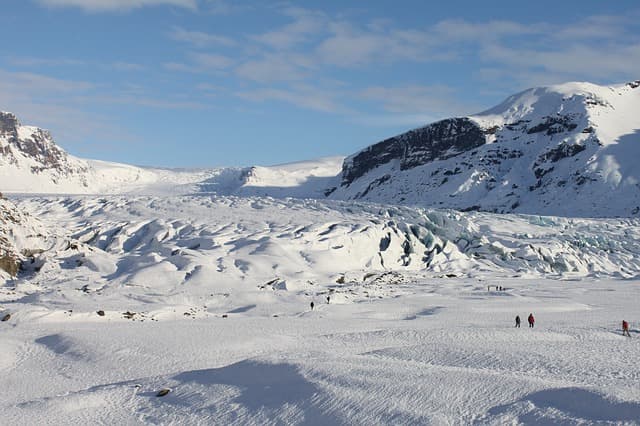
What does Icelandic winter weather actually look like month to month?
Winter isn't uniform, early winter, midwinter, and late winter each have a slightly different character, which matters when choosing when to go and what to expect on the road.
| Period | General daylight trend | Typical weather pattern | Driving considerations |
|---|---|---|---|
| Late Oct, Nov | Daylight noticeably shortening | Mix of rain, early snow, increasing wind; conditions still transitional | Roads may be clear one day, icy the next; a good time to check umferdin.is before longer drives |
| Dec, Jan | Shortest daylight of the year | Coldest, most snow-prone stretch; frequent wind events | Highland (F-road) network closed; Ring Road sections can close temporarily during storms, particularly mountain passes like Hellisheiði and Öxnadalsheiði |
| Feb, Mar | Daylight steadily lengthening | Still wintry, but with more stable stretches between systems | Snow and ice remain common; spring thaw can bring slush and reduced grip |
Conditions vary from year to year, so treat this as a general pattern rather than a guarantee for any specific date. Always check umferdin.is (Vegagerðin) and vedur.is close to your travel dates.
Is winter a good time to drive around Iceland?
Yes, for most of the Ring Road and the main tourist routes, winter self-driving is common and works well for travellers who plan around the season rather than against it. The key is matching your vehicle, route, and daily plan to conditions rather than assuming a summer-style itinerary will translate directly.
A few points worth knowing before you book:
- Iceland's F-roads (the mountain and highland routes) are closed in winter and inaccessible regardless of vehicle, so highland detours aren't part of a winter itinerary, see our F-roads guide for context on when they typically reopen.
- Many winter visitors choose a 4x4 for the added stability and ground clearance on snow and ice, though it isn't strictly required for every route or every day. Our breakdown of whether you need a 4x4 rental walks through the real decision factors.
- Studded or winter tyres are standard on winter rentals in Iceland, but tyre grip alone doesn't override closed roads or storm warnings, plans should stay flexible.
- Building slack into your schedule (an extra day, alternate routes) matters more in winter than in summer, since a single storm can affect an otherwise smooth road trip.
For a fuller walkthrough of what winter driving actually involves day to day, our winter driving guide and safety guide for first-time visitors cover route-level detail this article doesn't.
Renting itself is straightforward even with a tight winter arrival window, Blue Car Rental's key-box pickup at Keflavik Airport, available to customers who add the Liability Waiver and complete online check-in at least 24 hours before arrival, means you're not standing in a queue after a long flight, which matters more in winter when you may be picking up in darkness or ahead of an early storm window. Every rental includes CDW, SCDW, gravel protection, theft protection, and third-party liability as standard, though wind-door damage is covered separately under the Liability Waiver, not the base package, it's worth reviewing the insurance options before your trip to see that distinction along with other winter-specific scenarios like gravel damage.
What should you pack for an Icelandic winter?
Layering is the practical answer, not any single "winter coat." Icelandic weather can move from calm to windy to sleeting within a few hours, so clothing that adjusts with you works better than one heavy layer.
A workable base for a winter trip:
- A wind- and water-resistant outer shell (this matters more than pure warmth, wind is often the deciding factor in how cold a day feels)
- Insulating mid-layers, wool or fleece rather than cotton
- Waterproof, insulated footwear with good grip for icy pavements and trails
- Gloves, a hat, and a scarf or neck gaiter for wind protection
- Sunglasses, winter light and snow glare are stronger than most visitors expect
If you arrive under-prepared, outdoor gear shops are widely available in Reykjavík, so it's not a difficult gap to fix on arrival.
Mistakes to avoid when planning around Icelandic winter weather
The most common planning mistake is building a summer-density itinerary, long driving days, back-to-back stops, and applying it to winter, where shorter daylight and slower road conditions mean less ground gets covered per day. Loosen the schedule and prioritize fewer, better-chosen stops.
A second mistake is checking road and weather conditions once, at booking, and not again before departure. Icelandic winter weather changes over days, not months, so the check that matters is the one done the morning you drive, via umferdin.is and vedur.is, not the one done weeks earlier.
A third is underestimating wind specifically, treating "cold" and "windy" as interchangeable when planning clothing or driving decisions, when wind is often the more disruptive factor on Icelandic roads and coastlines.
If you're weighing winter against other seasons for cost or crowd reasons, our Iceland quieter guide, lower-cost travel season puts winter in context alongside the shoulder months.
Icelandic winters, in perspective
Icelandic winters reward preparation more than they punish spontaneity, the weather itself is rarely the problem; an unrealistic plan around it usually is. Choosing a vehicle suited to the season (browse our cars for winter-ready options), checking conditions daily, and keeping your itinerary flexible covers most of what catches visitors off guard. The Northern Lights, quiet landscapes, and snow-covered scenery that draw people to Iceland in winter are genuinely on offer, they just come with a season that asks you to move at its pace rather than yours.
 PARKING IN REYKJAVÍK: ZONES, PAYMENT, AND WHERE TO LEAVE YOUR CAR