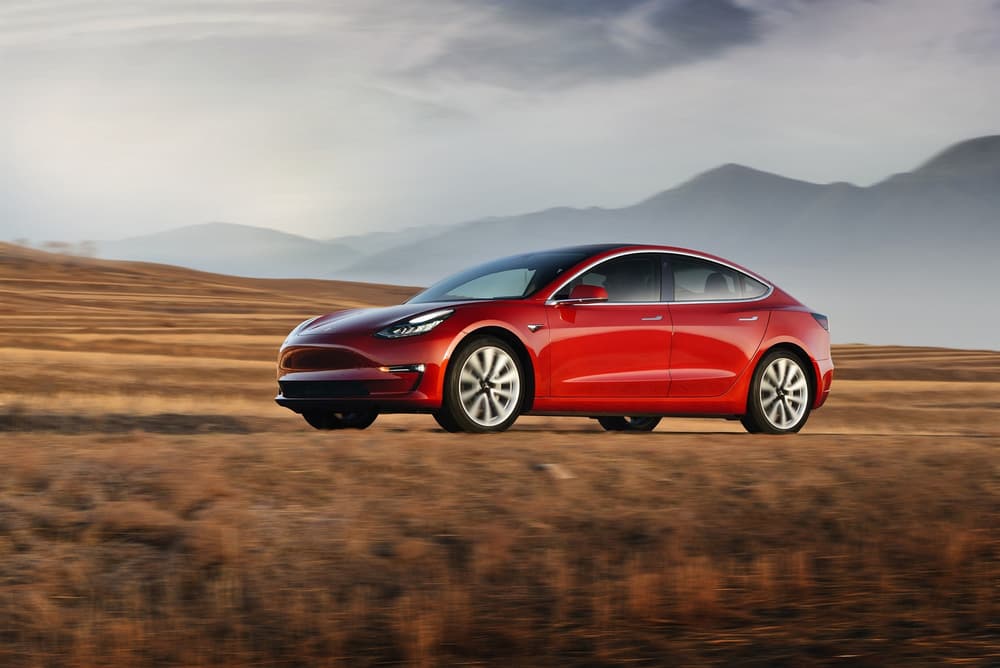

More travellers are asking whether an EV makes sense for a Ring Road trip, and the short answer is generally yes for main-road travel, with a few real limits worth knowing before you book.
Quick answer
An electric rental car works well for Iceland's paved roads, the Ring Road (Route 1), the Golden Circle, and city driving around Reykjavik, because the charging network follows the same routes most visitors already drive. It does not work on F-roads in the highlands: they legally require a 4x4, and Blue Car Rental's rental terms do not allow its electric cars on any F-road, even models with 4x4/AWD. If your trip stays on the main road network, an EV is a realistic option; if the highlands are on your list, you'll want a 4x4 for at least part of the trip.
Which electric vehicles can you rent in Iceland?
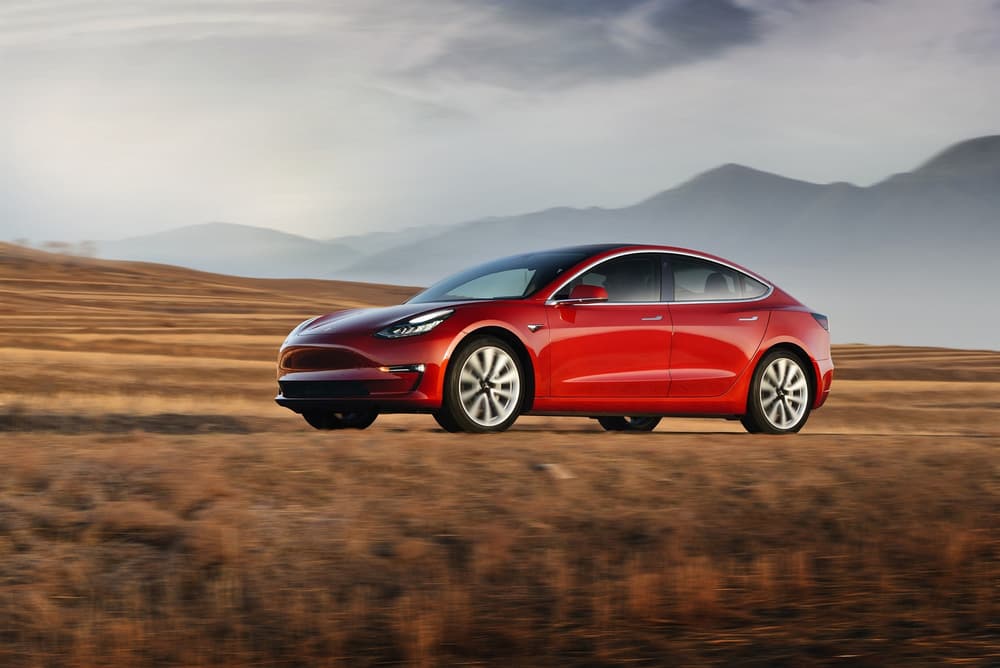
Blue Car Rental's electric cars are the Kia EV3, Kia EV6, Smart #5, Tesla Model 3 and Tesla Model Y. Availability shifts with the season, so check the our cars page before booking. Blue Car Rental's vehicle descriptions list ranges of 560 km for the Tesla Model 3, 528 km for the Kia EV6 and 455 km for the Tesla Model Y, and for the EV6 they advise planning on around 400 km.
| Model | Type | Range listed by Blue Car Rental | Notes |
|---|---|---|---|
| Kia EV3 | Compact SUV | See the car's page | Check current specifications before booking |
| Kia EV6 | Crossover | 528 km | Blue advises planning on around 400 km |
| Smart #5 | Mid-size SUV | See the car's page | Check current specifications before booking |
| Tesla Model 3 | Sedan | 560 km | Access to Tesla's own charging network in Iceland |
| Tesla Model Y | Mid-size SUV | 455 km | More cargo space than the Model 3 |
As Blue's electric cars page explains, all EVs are delivered with 70% battery charge or more and come with a fast-charging cable. Pickup and drop-off are available at both Keflavik Airport and the Reykjavik city center office. If your trip starts or ends with city driving, our Reykjavik parking guide covers the zone system.
Can you drive an EV on the Ring Road and Golden Circle?
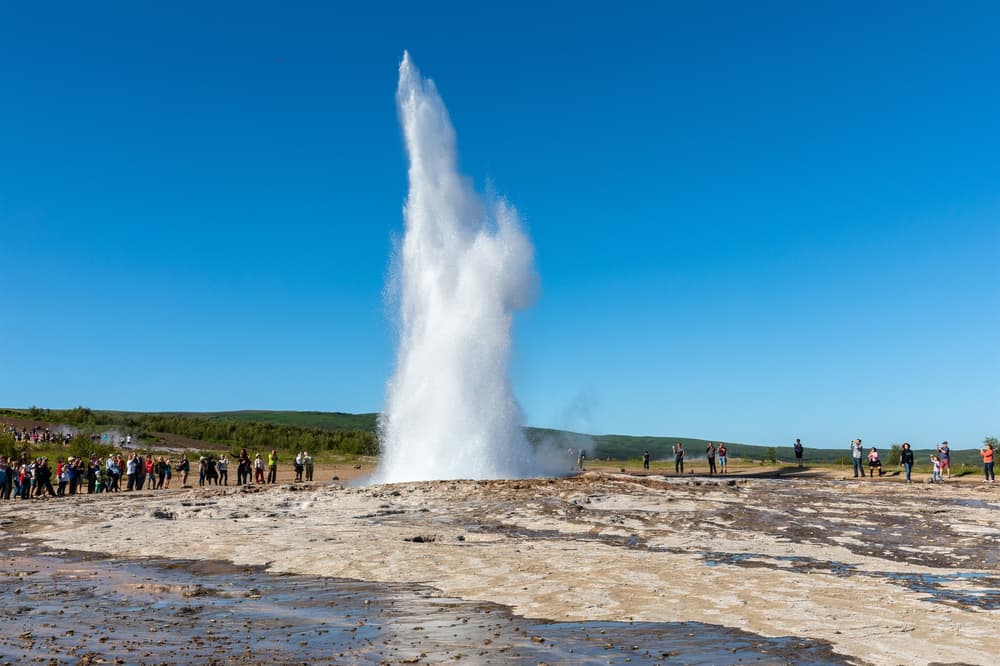
Yes. EVs are permitted on all of Iceland's main paved roads, including the full Ring Road and the Golden Circle route past Geysir, Gullfoss, and Þingvellir. These are the roads most self-drive itineraries actually use, and they're also where Iceland's charging infrastructure is concentrated, so range planning is straightforward on this network.
Treat the listed ranges as best cases: for the Kia EV6, for example, Blue Car Rental's vehicle description lists 528 km but advises planning on around 400 km. Real-world range varies with speed, wind, cold temperatures, and cabin heating use, worth building in a margin rather than planning to the last kilometre, especially in winter.
What about F-roads and the highlands?
Blue Car Rental's EVs are not permitted on F-roads under our rental terms. F-roads are gravel mountain tracks, routes like F26 Sprengisandur or F208 to Landmannalaugar, that legally require a 4x4 vehicle, and many involve unbridged river crossings that an EV simply isn't built for. This is a hard limit, not a matter of confidence or driving skill.
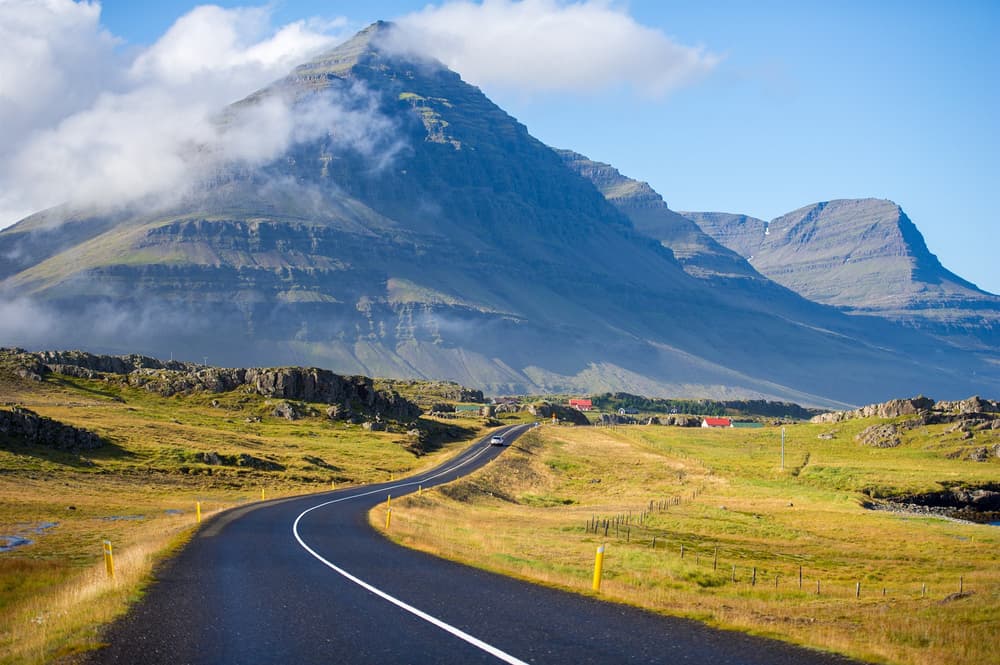
If your itinerary includes the highlands, you'll need a 4x4 for that portion of the trip. Our guides on do you need a 4x4 rental in Iceland and F-roads in Iceland cover which routes require it and when F-roads typically open for the season, always confirm current conditions with umferdin.is (Vegagerðin) and safetravel.is before heading in, since opening dates and access change year to year. Illegal off-road driving, on F-roads or otherwise, isn't covered by any insurance product, so this is worth taking seriously rather than treating as a grey area.
How easy is it to charge an EV in Iceland?
Iceland's charging network is well developed along the routes most visitors drive, with fast chargers able to take most EVs from low charge to around 80% in roughly 30 minutes (last checked August 2026). Charging points exist even in less obvious spots, there's one at the Glacier Lagoon in Vatnajökull National Park, for example, which reflects how much of the network follows the Ring Road rather than sitting only near Reykjavik.
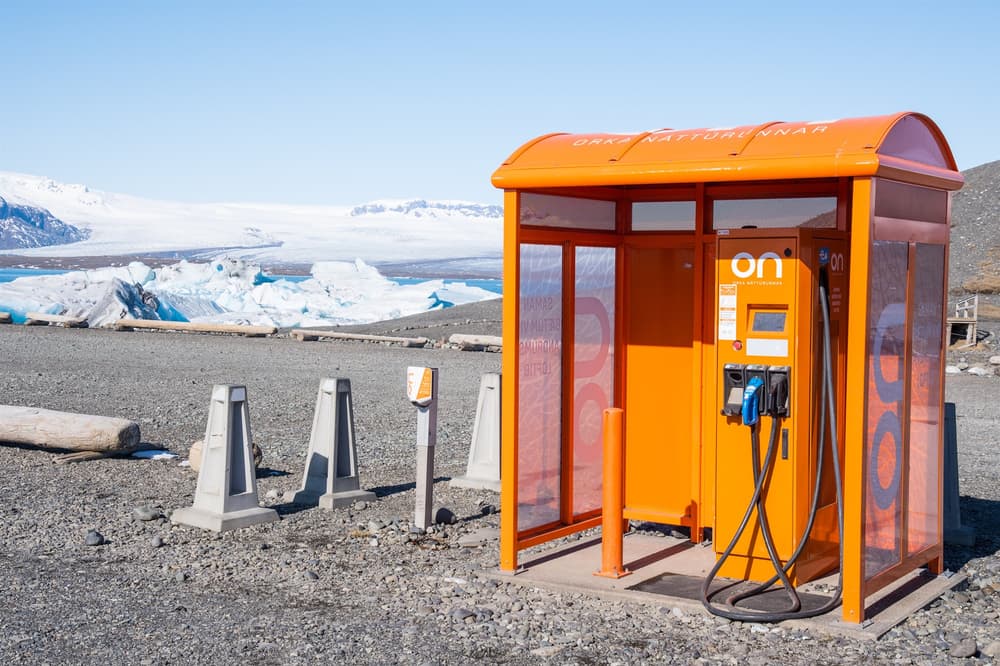
That said, charger density thins out in some stretches of the East and Northwest, so this is a trip where a bit of route planning pays off. Blue Car Rental provides a road information app with a charging station map for customers, which is worth checking each morning alongside your day's route rather than relying on memory from the night before.
Is an EV cheaper to run than a petrol or diesel rental?
Generally, yes, electricity in Iceland has typically cost less per kilometre than petrol or diesel (last checked August 2026), partly because the country's power comes largely from geothermal and hydro sources. That price gap can narrow or widen depending on current fuel and electricity prices, so treat this as a general trend rather than a fixed saving, and check current prices before your trip if fuel cost is a major factor in your budget. For a broader look at what a rental actually costs once insurance and fuel are factored in, see car hire costs and what to expect.
What to plan before renting an EV in Iceland
A little planning before you pick up the car makes the whole trip smoother, and it comes down to four things:
- How you'll use the car. A city-and-Golden-Circle trip has very different charging needs than a full Ring Road loop.
- The car's real-world range, allowing for winter cold, wind, and highway speeds rather than the maximum spec figure.
- How the car actually operates, regenerative braking, the charging port location, and how to start a charge session, all of which your rental office can walk you through at pickup.
- Where you'll charge, mapped loosely against your day's driving distance rather than left to chance.
If you're travelling in winter, it's also worth reading our winter driving guide, cold weather affects EV range more than most drivers expect, and winter road conditions are a separate consideration from the car itself.
How does booking an EV work with Blue Car Rental?
Booking an EV follows the same process as any other rental car, there's no separate procedure or extra paperwork. Online check-in lets you complete the paperwork in advance and collect your keys with minimal waiting time at Keflavik Airport, which is a genuinely useful feature if you're arriving after a long flight and want to be on the road quickly.
Every Blue Car Rental booking includes CDW, SCDW, Gravel Protection, Theft Protection, and Third-Party Liability as standard. A Liability Waiver can be added, which extends cover to water damage, including legal river crossings, underbody, tyre, wind-door, sand, and ash damage. Tyre cover specifically falls under the Liability Waiver rather than the base package, so it's worth understanding what's included before you decide whether to add it, the insurance options page breaks this down in full. Roadside assistance can also be added to any EV booking.
Security on the booking itself is handled as a credit card imprint rather than a deposit, meaning no funds are actually held or blocked on your card. Blue+ loyalty members also get a discount on bookings, 5% at Bronze level, 10% at Silver (250+ points), and 15% at Gold (400+ points), details are on the loyalty page.
Conclusion
The real question behind "should I rent an EV in Iceland" is usually "will I get stranded without charge or stuck somewhere I'm not allowed to drive." Neither is likely if your trip stays on the Ring Road and main paved network, which is where Iceland's charging infrastructure and an EV's legal access line up well. The one firm limit is the highlands, F-roads require a 4x4, and Blue's rental terms keep its electric cars off them whatever the drivetrain. Choose the vehicle that matches your actual route: an EV for a Ring Road or Golden Circle trip, a 4x4 if the highlands are on the itinerary.
Electric cars are also part of Blue's own direction: Blue Car Rental's environmental policy, first published in 2019 and last revised in April 2026, commits the company to measuring its carbon footprint, energy use, water use and waste every year, and to increasing the share of low-emission cars in its fleet.
 PARKING IN REYKJAVÍK: ZONES, PAYMENT, AND WHERE TO LEAVE YOUR CAR