
"Blue Mountain" in Iceland almost always means Bláfjöll, a ski area just outside Reykjavik, not the Blue Lagoon, and not the newer Sky Lagoon, though the names get mixed up constantly in search results and in conversation. This guide counts down five of Iceland's blue and beautiful winter sights, including Bláfjöll, the Blue Lagoon, and Sky Lagoon, sorting out which "blue" place is which, what each one is actually like in winter, and what to think about if you're planning to reach them on a self-drive trip.
Quick answer: three different "blue" places, often confused
Bláfjöll (literally "Blue Mountains") is a ski and snowboard area in the hills southeast of Reykjavik, used mostly by locals and open on a weather-dependent basis in winter. The Blue Lagoon is the famous geothermal spa on the Reykjanes peninsula, open year-round. Sky Lagoon is a separate, newer geothermal lagoon near Reykjavik that people sometimes search for as "Ski Lagoon", a phonetic mix-up rather than an actual ski facility. None of the three are the same place, and none require the same kind of trip planning.
| Place | What it actually is | Roughly where | Best time to visit | What you do there |
|---|---|---|---|---|
| Bláfjöll ("Blue Mountains") | A ski and snowboard area with cross-country trails | Hills southeast of Reykjavik | Winter, snow-dependent | Alpine skiing, snowboarding, cross-country skiing |
| Blue Lagoon | Geothermal spa in a lava field | Reykjanes peninsula, between Keflavik and Reykjavik | Year-round, including winter | Bathing in warm mineral-rich water, spa treatments, dining |
| Sky Lagoon ("Ski Lagoon") | A separate geothermal lagoon and spa | Near Reykjavik | Year-round | Bathing, sauna, cold plunge, ocean views |
| Jökulsárlón & Diamond Beach | Glacier lagoon and adjacent black-sand beach | South Iceland, off Route 1 | Best contrast in winter, accessible year-round | Watching icebergs float and wash ashore |
Top 5 blue and beautiful places to see in Iceland in winter
Here are five of Iceland's blue (and beautiful) landmarks worth knowing about before you plan a winter self-drive, including the three that share confusingly similar names.
- Bláfjöll, the "Blue Mountains" ski area, A ski and snowboard area with cross-country trails in the hills southeast of Reykjavik, open on a weather-dependent basis through winter.
- Blue Lagoon, The well-known geothermal spa on the Reykjanes peninsula, open year-round with warm mineral-rich water set against cold winter air.
- Sky Lagoon, A separate, newer geothermal lagoon near Reykjavik, sometimes searched for as "Ski Lagoon," offering bathing, sauna, and a cold plunge with ocean views.
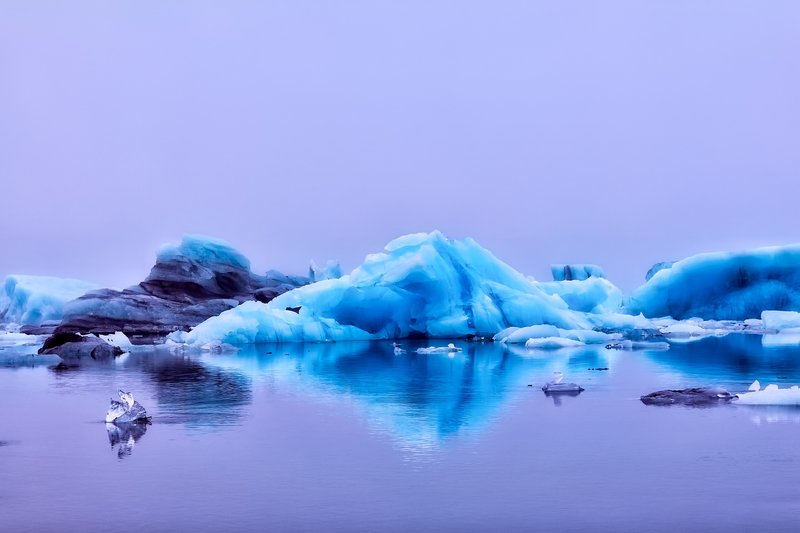
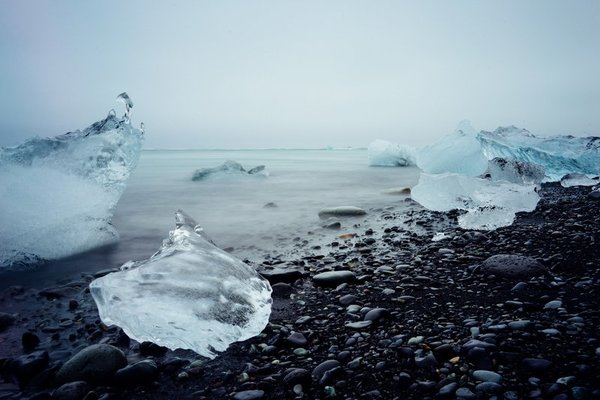
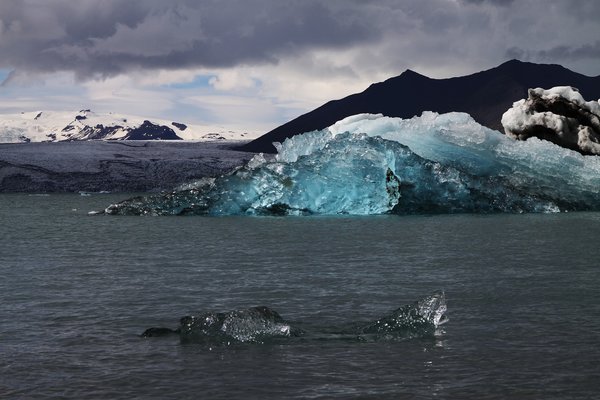
- Jökulsárlón Glacier Lagoon & Diamond Beach, Icebergs break off the Breiðamerkurjökull glacier tongue and drift across the lagoon, with some washing up on the black sand of Diamond Beach just across the road, a striking sight in winter light.
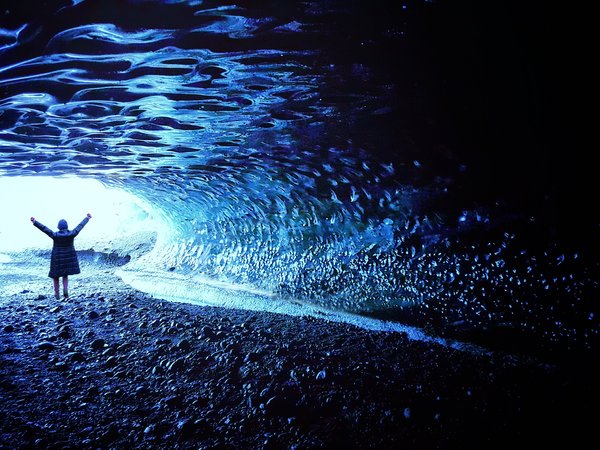
- Glacier ice caves, Guided tours into glaciers such as Vatnajökull, or the man-made cave in Langjökull, let you see blue ice up close, though cave locations shift from year to year as the ice melts and reforms. Natural ice caves are generally visited only with a certified glacier guide, roughly November to March, while the man-made Langjökull tunnel is open year-round.
These sights sit well beyond day-trip range from Reykjavik, so if you're planning to see them, our natural wonders collection and our piece on Iceland's canyons are useful for building out a longer south coast route.
What is Bláfjöll, Iceland's "Blue Mountains" ski area?
Bláfjöll is the ski area Icelanders mean when they talk about "the mountains" for a day of skiing or snowboarding without leaving the capital area. It has downhill runs, a snowboard section, and cross-country trails, and it draws Reykjavik locals on winter weekends when there's enough snow.
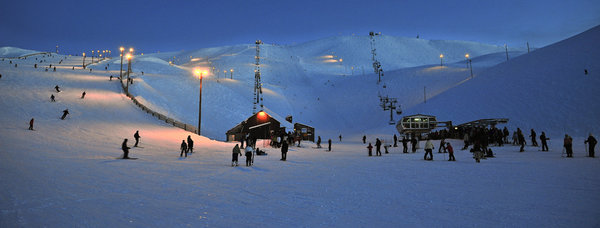
Whether it's open on any given day depends entirely on snowfall and weather, so it isn't a fixed, guaranteed attraction the way the Blue Lagoon is. If skiing at Bláfjöll is part of your Iceland plans, check current conditions before you drive out rather than assuming the lifts are running.
Is skiing at Bláfjöll suitable for visitors?
Yes, in the sense that it's a functioning ski area with runs for different skill levels, but it's set up primarily for local day-trippers rather than international ski tourism. Don't expect the infrastructure, rental fleet, or après-ski scene of an Alpine resort, expect a straightforward, low-key mountain used by Reykjavik families and students.
If you're coming from a country with established ski culture, treat Bláfjöll as a pleasant half-day add-on to a Reykjavik-based itinerary, not a dedicated ski holiday destination.
Driving to Bláfjöll in winter
The road to Bláfjöll is paved, but in winter it can be snow-covered or icy, and conditions change quickly with weather. This is exactly the kind of route where the difference between a 2WD car on winter tyres and a 4x4 becomes relevant, not because the road is technically difficult, but because grip and confidence matter once snow settles on an incline.
Our guide to choosing between 4x4 and 2WD and our broader winter driving guide both walk through how to judge this for your specific dates and route. For anything variable, road closures, snow depth, wind warnings, check umferdin.is and vedur.is before you set out, the same way you would before any Icelandic mountain drive.
Visiting the Blue Lagoon in winter
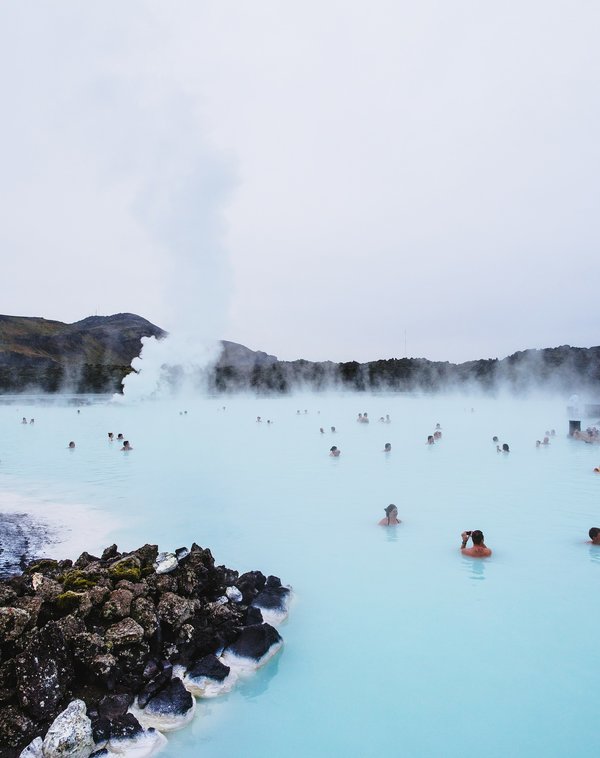
The Blue Lagoon is open year-round, and winter is when the contrast that makes it appealing is strongest: warm, mineral-rich water against cold air, sometimes with snow on the surrounding lava field. It's not a seasonal attraction that closes down, it operates through the darker months just as it does in summer, though opening hours and booking availability can vary by season and should be checked directly with the Blue Lagoon before you go.
What changes about the Blue Lagoon in winter?
The water temperature stays geothermally warm regardless of the season, but the air is cold, daylight hours are short, and the drive there can involve winter road conditions on the Reykjanes peninsula. Pack a warm layer for the walk between changing rooms and water, and allow extra time for driving if there's been recent snow.
On clear, dark nights, some visitors also hope to combine a lagoon visit with a chance of the northern lights, though this depends entirely on solar activity and cloud cover and is never guaranteed on any given evening.
Do you need to book in advance?
Reservation requirements and time-slot systems for the Blue Lagoon can change, so it's worth checking directly on the official Blue Lagoon site close to your travel dates rather than assuming walk-in access. The same caution applies to any add-ons like spa treatments or the on-site restaurant.
Is "Ski Lagoon" actually the Sky Lagoon?
Most likely, yes. "Ski Lagoon" is a common mishearing or misspelling of Sky Lagoon, a separate geothermal lagoon and spa near Reykjavik that opened after the Blue Lagoon and has become popular in its own right. It has nothing to do with skiing, the name confusion comes purely from how the words sound alike.
If your plan was to combine skiing with a lagoon soak in one trip, that's genuinely possible in Iceland, but it means treating Bláfjöll and either lagoon as two separate stops on your itinerary rather than one activity.
Choosing a rental car for winter visits to these sites
Whether you're heading to Bláfjöll for a few runs, the Blue Lagoon for an afternoon, or further along the south coast to Jökulsárlón, the vehicle you choose should match the route and season rather than the other way around. A 2WD car can be perfectly adequate for a Reykjavik-to-Blue Lagoon trip on clear roads, while a 4x4 gives more margin on snowy or icy stretches like the road up to Bláfjöll. Our guide to whether you need a 4x4 walks through the questions worth asking yourself before booking.
Practical pickup details matter too, especially if you're landing at Keflavik and heading straight to the Blue Lagoon on the way into Reykjavik. Blue Car Rental's online check-in lets you complete paperwork ahead of arrival and collect your car via key-box (for customers who add the Liability Waiver and complete online check-in) at the airport, which cuts down on time spent at a counter when you'd rather be on the road. It's worth browsing our cars with your specific route and season in mind rather than picking on price alone.
Insurance is another area where it pays to understand what's included before you drive off. Every Blue Car Rental booking comes with CDW, SCDW, gravel protection, theft protection, and third-party liability as standard, and tyre cover falls under the optional Liability Waiver. Full details are on our insurance page. Returning customers can also look at Blue+ loyalty discounts, which scale from 5% at Bronze up to 15% at Gold tier.
Mistakes to avoid when planning around Iceland's blue landmarks
A few avoidable mix-ups come up often enough to flag directly:
- Assuming "Blue Mountain" refers to a single famous peak, in Iceland it almost always means the Bláfjöll ski area near Reykjavik.
- Booking a Blue Lagoon slot in winter without checking current opening hours and reservation requirements beforehand.
- Confusing Sky Lagoon with the Blue Lagoon when booking, they're separate venues with separate reservations.
- Driving to Bláfjöll on winter tyres suited to city streets but not checking road conditions first; conditions on the approach road can change within hours.
- Treating a skiing-plus-lagoon day as one single stop when it's really two separate destinations requiring their own drive time.
 CAN YOU DRINK TAP WATER IN ICELAND?