
Iceland works as a honeymoon destination almost any month, but the right season depends on what kind of trip you want: long golden evenings and easy driving, or dark skies with a chance of the Northern Lights. This guide breaks down the real trade-offs by season so you can pick dates that match the experience you're after, then build your self-drive itinerary around them.
Short answer: For most couples, late May to early September offers the easiest driving, longest daylight, and access to the full Ring Road and highland F-roads, making it the most reliable window for a honeymoon that combines road-tripping with waterfalls, glaciers and hot springs. If seeing the Northern Lights is the priority, aim for late September to mid-March, when nights are dark enough for aurora viewing, though this comes with shorter days and more variable road and weather conditions.
When is the best time to visit Iceland overall?
There isn't a single "best" month, it depends on whether you're prioritising daylight and easy road access or dark skies and winter scenery. Summer (June–August) gives you the longest days and the most accessible roads, including highland F-roads. Winter (November–February) gives you dark nights, ice caves, and a shot at the aurora, but shorter daylight and more demanding driving conditions.
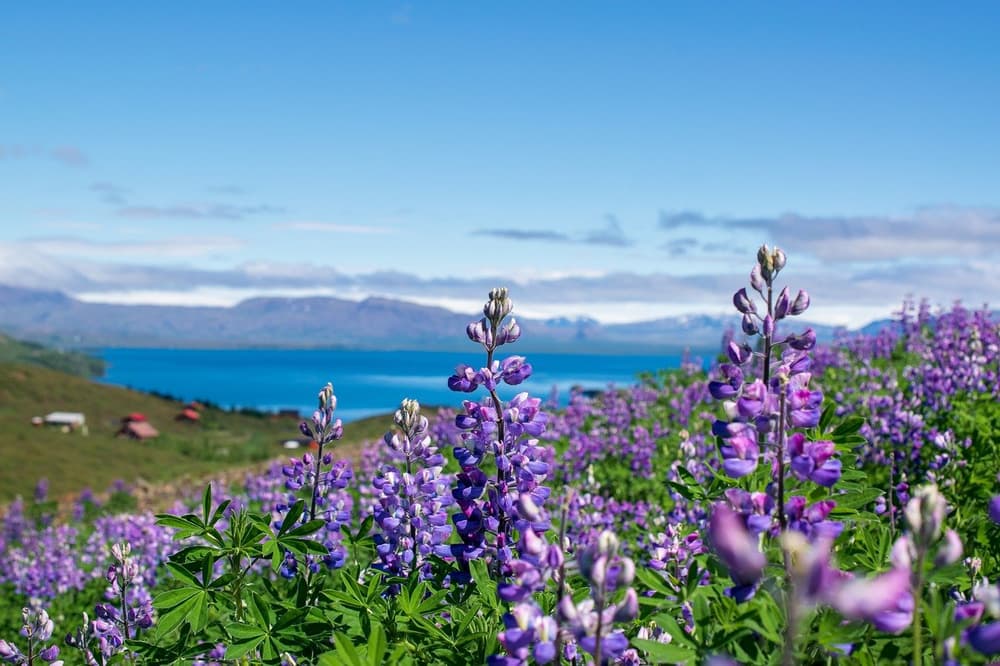
June is the peak of the Icelandic summer and the month of the midnight sun, useful if you want to pack extra sightseeing into each day, since it barely gets dark. May and September sit either side of peak summer: both offer noticeably fewer crowds than July and August, and September in particular is a favourite for honeymooners who want warm hot springs, colourful landscapes, and quieter roads without full winter conditions yet.
If you're weighing cost alongside timing, our guide to the low-season months breaks down how shoulder-season travel (May, September, early October) tends to combine lower prices with still-good road access.
Best time to visit Iceland for a honeymoon, month by month
Honeymooners generally fall into two camps: those chasing bright, easy summer days for road-tripping and photos, and those chasing dark winter skies for the aurora and a quieter, moodier landscape. The table below summarises what each part of the year realistically offers.
| Period | Daylight | Road & driving conditions | Northern Lights chance | Honeymoon appeal |
|---|---|---|---|---|
| June (midnight sun) | Near 24 hours | Full Ring Road and most F-roads typically open | None (too bright) | Long days for sightseeing, hiking, waterfalls |
| July–August | ~18–20 hours | All main roads open; busiest tourist season | None (too bright) | Most crowded; best for whale/puffin watching |
| September | ~11–14 hours, shortening | Good; F-roads may start closing later in the month | Improving from late September | Popular for honeymoons, quieter, warm hot springs, first auroras possible |
| October | ~8–11 hours | Some F-roads closed; winter tyres advisable later in month | Good, dark evenings return | Autumn colours, fewer tourists, aurora chances rising |
| November–February | ~5–8 hours | Winter driving conditions; snow and ice common | Best window overall | Ice caves, snowy landscapes, strongest aurora odds |
| March | ~10–12 hours, lengthening | Still winter conditions, improving | Good until mid-month | Last good aurora window, longer days returning |
| April–May | ~13–17 hours | Improving; some highland roads still closed | Fading (too bright by late May) | Waterfalls at full flow, greening landscapes, fewer crowds than summer |
Conditions above are general patterns and vary year to year, always check umferdin.is for current road status and vedur.is for weather before travelling, especially outside the summer months.
When is the best time to see the Northern Lights in Iceland?
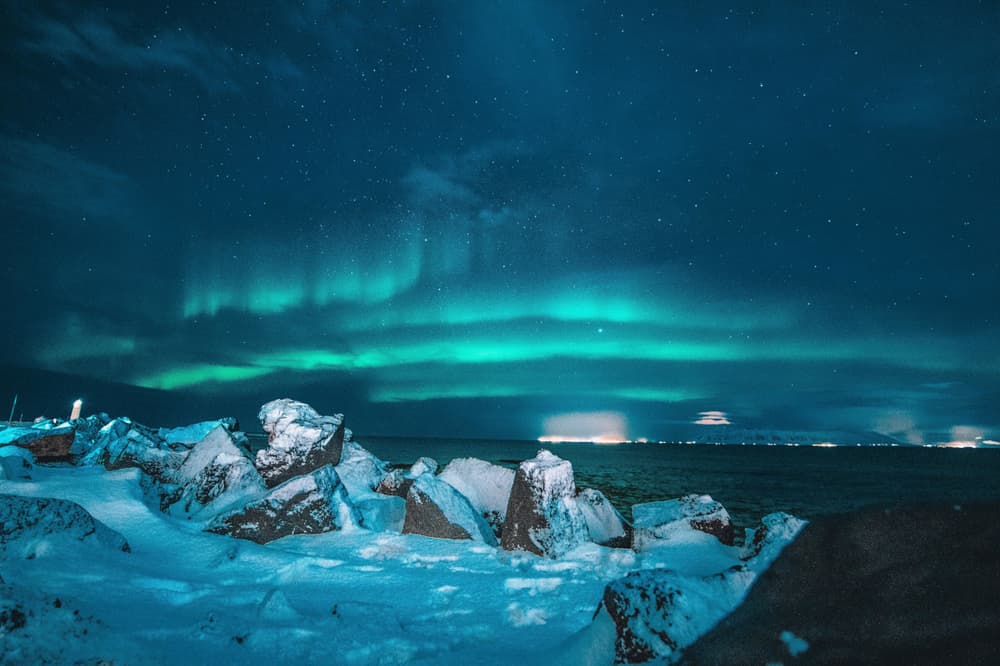
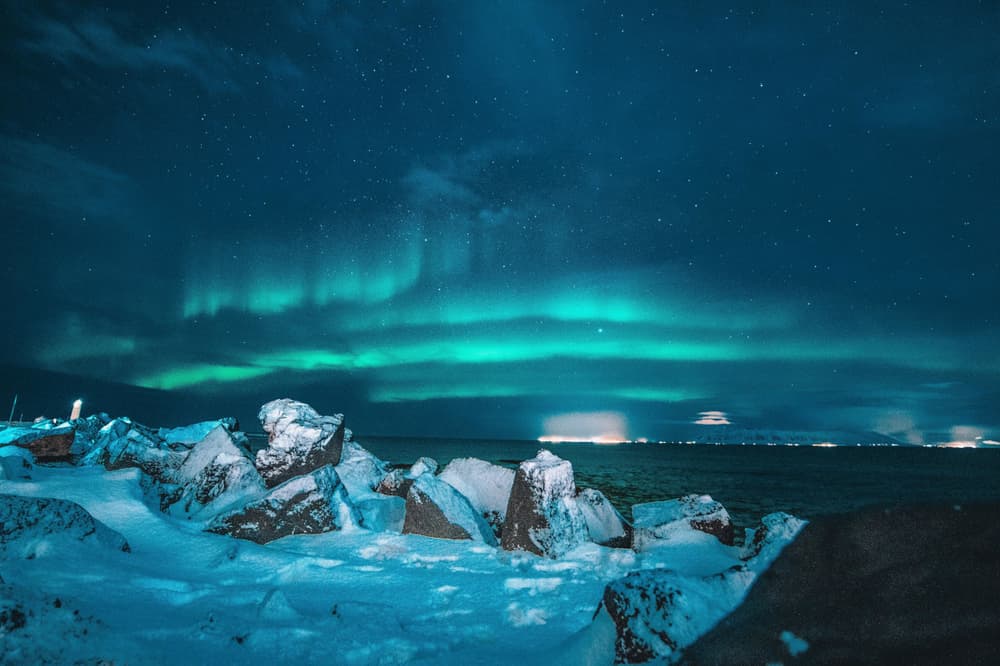
For Northern Lights viewing, the reliable window is late August/September through to mid-March, when nights are dark enough for the aurora to be visible. Iceland's summer months (May–early August) have too much daylight, or none at all in the case of the midnight sun, so the lights simply can't be seen regardless of solar activity.
Within that dark-sky window, November through February tends to offer the longest stretches of darkness each night, which improves your odds statistically, but visibility still depends on clear skies and aurora activity on the night itself, neither of which can be guaranteed on a fixed travel date. Many couples build in two or three nights away from Reykjavik's light pollution, since rural areas along the south coast or in the countryside generally offer darker skies. The Icelandic Met Office (vedur.is) publishes an aurora forecast alongside its cloud-cover map, which is worth checking each evening of your trip rather than relying on a single forecast made weeks in advance.
If a honeymoon built around the aurora is the goal, pairing it with winter driving means preparing properly for the season, our driving in Iceland in winter guide covers what changes on the roads once snow and ice set in.
Whale watching, puffins and Arctic sea tours
Boat-based experiences are a popular add-on for honeymooners, and timing matters here too. Whale watching around Iceland's coast, including from Reykjavik and Húsavík, is strongest in summer (roughly June–August), when minke whales, dolphins and humpbacks are most commonly sighted, alongside puffin colonies on cliffs and islands that are mostly present between May and August before the birds head back out to sea.
Some operators also run longer Arctic sea tours and multi-day cruises that trace Iceland's coastline or continue on toward Greenland, giving couples a different perspective on the fjords and glaciers than a land-based itinerary allows. These itineraries, schedules and routes vary by operator and season, so it's worth checking current departures directly with the tour company rather than assuming year-round availability, winter sea conditions in particular can affect scheduling.
Choosing a rental car for your honeymoon season
The right vehicle for your honeymoon depends heavily on when you're travelling and how much of the country you plan to cover. A compact 2WD car is often enough for a summer Ring Road loop sticking to paved routes, while a 4x4 becomes the more sensible, and in some cases legally required, choice for winter driving, gravel roads, or any detour onto an F-road in the highlands.
If your dates fall in the shoulder or winter season, it's worth reading through do you need a 4x4 rental in Iceland before booking, since road conditions, not personal preference alone, often decide the answer. Blue Car Rental's full vehicle line-up spans 2WD, 4x4, and premium options, so couples can match the car to the route rather than the season dictating a compromise. For arrival logistics, online check-in lets you complete paperwork ahead of time and collect your car via key-box pickup (for customers who add the Liability Waiver and complete online check-in) at Keflavik Airport, which is a small but welcome convenience after a long-haul honeymoon flight.
How many days do you need in Iceland for a honeymoon?
Most couples find 7 to 10 days enough to comfortably drive a meaningful loop of the Ring Road, with time for detours to places like the Golden Circle, Jökulsárlón glacier lagoon, and the south coast waterfalls near Vík, without feeling rushed. Shorter trips of 4–5 days work well if you're focusing on the southwest, Reykjavik, the Golden Circle, and the Blue Lagoon area, rather than a full circuit of the island.
Winter honeymoons with Northern Lights as a priority can work well even at 5–6 days, since aurora viewing doesn't require covering long distances, a few nights based in one or two locations away from city lights is often more productive than a rushed circuit.
Mistakes to avoid when planning honeymoon timing
A few timing mistakes come up repeatedly with honeymoon planning. Booking peak July or August dates and expecting a quiet, romantic pace is one, this is Iceland's busiest season, with popular stops like the Golden Circle and Jökulsárlón seeing the most visitors and parking pressure. Assuming Northern Lights are visible any time of year is another; without dark, clear nights, they simply won't appear, regardless of how the trip is marketed.
On the road side, underestimating winter conditions is a common issue for couples who book a compact car for a December or January trip without checking whether a 4x4 suits their planned route better. It's also worth avoiding the assumption that all roads stay open year-round, highland F-roads typically close by autumn and reopen only once conditions allow the following summer, a detail covered in our F-roads and highland driving guide.
The bottom line
There's no wrong time to honeymoon in Iceland, but there is a mismatch to avoid: choosing summer dates and hoping for the Northern Lights, or booking winter dates without preparing for shorter days and tougher driving. Once you know which experience matters more, long bright days for road-tripping, or dark skies for the aurora, the right season, route, and vehicle tend to fall into place naturally.
 PARKING IN REYKJAVÍK: ZONES, PAYMENT, AND WHERE TO LEAVE YOUR CAR