
There is no single correct month to visit Iceland, the "best" time depends on whether you're prioritising good driving conditions, lower prices, long daylight, or a chance at the northern lights. This guide breaks down what each season actually offers on the road and around the country, so you can match your trip dates to what you actually want to see and do.
Short answer
Most self-drive travellers get the easiest conditions in June to August (long daylight, open roads, mild weather) but pay the most and share the road with the most traffic. April–May and September–October offer a good middle ground: fewer crowds, often lower prices, and a real chance at the northern lights in autumn. November to March brings the highest chance of aurora and dramatic winter scenery, but also short daylight, changeable weather, and roads that require more caution and, in many cases, a 4x4. There is genuinely no wrong season, only a season that fits your priorities.
Summer (June to August): the easiest driving season
June through August is the most straightforward time to drive around Iceland, with nearly 24-hour daylight in June and mild temperatures by Icelandic standards. This is also when the Ring Road (Route 1) and most mountain passes are reliably clear, and when Iceland's F-roads into the Highlands typically open, though exact opening dates vary each year and should be checked on umferdin.is before you plan a route.
The trade-off is that summer is high season. Expect more traffic on popular stretches like the Golden Circle and the South Coast, fuller car parks at well-known waterfalls, and higher prices for flights, accommodation, and car hire. If you want to combine a Ring Road trip with a Highland detour on routes like F208 Landmannalaugar or the Kjölur highland road (road 35), summer is realistically the only season this is possible, since these roads require a 4x4 and are closed the rest of the year. Our guide to F-roads and the Highlands covers what's involved in more detail.
Shoulder seasons (April–May and September–October): the balanced choice
The shoulder months give you a workable balance between weather, cost, and crowd levels, without the deep winter driving conditions. Daylight is still generous, several hours more than midwinter, and you avoid the peak-season squeeze on roads and accommodation.
Weather during these months is genuinely variable: you might get a run of calm, clear days, or a spell of wind and sleet, sometimes within the same week. September and October also bring the first realistic chance of seeing the northern lights, since nights start getting dark enough, while the roads are usually still in good shape. April and May sit at the tail end of winter, so some Highland F-roads may still be closed and mountain passes can occasionally see late-season snow, again, worth checking on umferdin.is or safetravel.is close to your travel dates.
If keeping costs down matters more than guaranteed sunshine, the shoulder seasons are usually the sweet spot, our breakdown of the low-season months goes into this in more depth.
Winter (November to March): the most dramatic, most demanding season
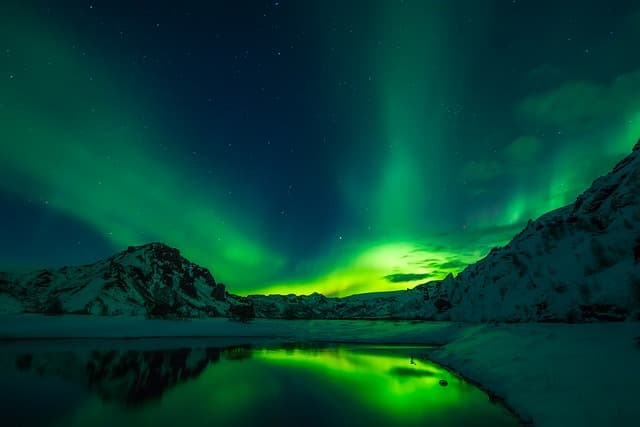
Winter is when Iceland looks most like the postcards, snow-covered lava fields, ice caves, steam rising off hot pools, and the best odds of seeing the northern lights on a clear, dark night. It's also the season that asks the most of you as a driver.
Daylight is short (as little as four to five hours around the winter solstice), weather can change quickly, and road conditions vary from clear tarmac to snow, ice, or temporary closures depending on the storm system passing through. This isn't a reason to avoid winter, many visitors have a completely calm and enjoyable trip, but it does mean building flexibility into your itinerary, checking umferdin.is and vedur.is each morning, and choosing a vehicle suited to the conditions. Our winter driving guide and the more detailed safety guide for first-time winter drivers both walk through what to expect on Icelandic roads at this time of year.
Comparing the seasons at a glance
| Season | Months | Daylight | Typical weather | Crowds & pricing | Road & driving notes |
|---|---|---|---|---|---|
| Summer | June–August | Up to 24 hrs (midnight sun) | Mild, most stable of the year | Highest, peak season pricing | Ring Road and most F-roads typically open; easiest driving conditions |
| Shoulder | April–May, Sept–Oct | Several hours more than winter | Variable, sun, rain, or sleet possible | Lower than summer, often better value | Mostly clear roads; some F-roads closed early/late season; first aurora chances in autumn |
| Winter | November–March | As little as 4–5 hours | Changeable, clear spells and storms | Lower demand outside holidays | Snow/ice possible; some road closures; 4x4 often recommended |
Road access and weather patterns shift year to year, so treat this table as a general seasonal pattern rather than a guarantee, always confirm current conditions before setting out on any specific route. Pricing and demand patterns above were last checked in August 2026 and can shift from year to year.
When is the best time to fly to Iceland?
For flight availability and fewer schedule disruptions, June through August is the most predictable window, since this is peak season for airlines flying into Keflavik. If you're flexible and want a chance at lower fares, the shoulder months and off-peak winter weeks (outside Christmas and New Year) tend to see less demand. Winter storms can occasionally affect flight schedules, so if you're travelling November–March, it's worth keeping some buffer time around your arrival and departure dates rather than booking a tight connection.
Matching the season to what you actually want
Chasing the northern lights, you need dark skies, which effectively rules out May through July. Late September through March gives you the real window, with autumn offering a decent compromise between darkness and manageable driving conditions.
Hiking and camping, summer is the practical choice, since most trails, campsites, and Highland routes are only accessible from roughly June to early September, weather depending.
Keeping costs down, the shoulder seasons and off-peak winter weeks generally cost less across flights, accommodation, and car hire than the summer peak. Our article on keeping your Iceland car rental costs down has more on timing rental bookings specifically.
Comfortable, low-stress driving, summer wins here by a clear margin, with long daylight and the most predictable roads.
Choosing a vehicle to match your season
Whatever time of year you travel, the vehicle you book should match the roads and season, not just the itinerary. A 2WD car is generally sufficient for the Ring Road and paved routes in summer, but winter conditions or a Highland detour usually call for a 4x4, our guide on whether you need a 4x4 rental walks through the questions worth asking before you book. Blue Car Rental offers a range of vehicles from 2WD to 4x4, family, and premium options, viewable on the our cars page, alongside full-cover insurance options and roadside assistance that are worth reviewing regardless of season. To make pickup at Keflavik Airport simpler, especially if you're arriving on a winter evening flight, online check-in lets you complete paperwork in advance and collect your keys with less time standing around the terminal.
Mistakes to avoid when timing your trip
Don't assume summer weather will be warm in the way it might be at home, even July can bring cool, windy days, so pack layers regardless of season. Don't book a Highland route (F208 or similar) outside the summer opening window without checking umferdin.is first, since these roads are legally closed to all vehicles, including 4x4s, until conditions allow. And in winter, avoid building a tight, fully fixed itinerary, leave slack in your schedule so a delayed road opening or a change in weather doesn't derail the whole trip.
The real question isn't "when" but "what for"
If you've been searching for the single best time to visit Iceland, the honest answer is that the question itself needs one more step: best time for what. Long daylight and easy driving point to summer. Value and a first shot at the northern lights point to the shoulder months. Snow, aurora, and a quieter Iceland point to winter, provided you're comfortable adjusting plans around the weather. None of these are wrong choices; they're just different trips.
 PARKING IN REYKJAVÍK: ZONES, PAYMENT, AND WHERE TO LEAVE YOUR CAR