
East Iceland is the quietest of the country's main driving regions, and that's the point. Fewer tour buses, greener valleys, and a string of fjord villages that most Ring Road visitors drive past without stopping. This guide covers where to go, what a self-drive route through the East Fjords actually looks like, and when you'd want a 4x4 versus a standard car.
Short answer: East Iceland (the East Fjords and the area around Egilsstaðir) is worth a stop of at least 1-2 nights on a Ring Road trip. The main draws are the fishing villages of Seyðisfjörður and Stöðvarfjörður, the hiking area of Stórurð near Borgarfjörður Eystri, and, for those with a 4x4, a handful of highland detours further north. A standard car covers the paved coastal route comfortably; a 4x4 is only needed if you plan to leave Route 1 for gravel highland roads.
Where exactly is East Iceland?
East Iceland refers to the region stretching from the East Fjords (Austfirðir) on the coast inland to Egilsstaðir and the edge of the northeastern highlands. It sits roughly between Höfn in the southeast and the Möðrudalur area to the north, making it the eastern third of the Ring Road (Route 1) loop.
Most visitors reach it either driving clockwise from the south coast (via Höfn) or counter-clockwise from Mývatn in the north. Either way, it's usually a full day of driving from Reykjavík, so most itineraries treat it as an overnight stop rather than a day trip.
Is Egilsstaðir a city?
No, Egilsstaðir functions as the region's hub but is a small town, not a city in the way Reykjavík or Akureyri are. It's often called the "capital of the East" because it has the region's main services: fuel, supermarkets, a hospital, and the airport with domestic flights.
If you're researching cities in Iceland, it's worth knowing that outside Reykjavík, almost every settlement, including Egilsstaðir, Akureyri, and the East Fjord villages, is a town by international standards. Egilsstaðir also has Iceland's largest planted forest, Hallormsstaðaskógur, and sits beside Lagarfljót, a long lake with its own local legend of a lake monster. If you're camping, Atlavík is one of the go-to sites nearby.
What is there to do in the East Fjords?
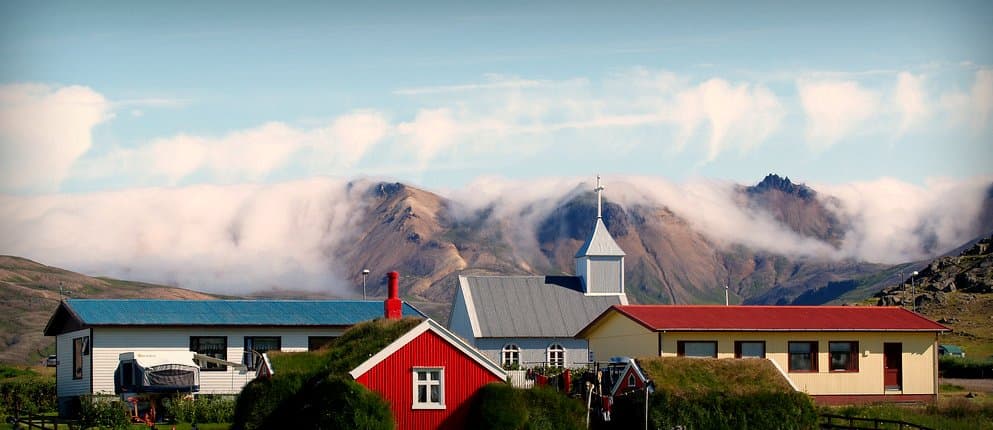
The East Fjords (Austfirðir) are a string of narrow, mountain-walled inlets along the coast southeast of Egilsstaðir, each with its own small fishing village. They're best explored slowly, since the road winds along the coastline rather than cutting straight across.
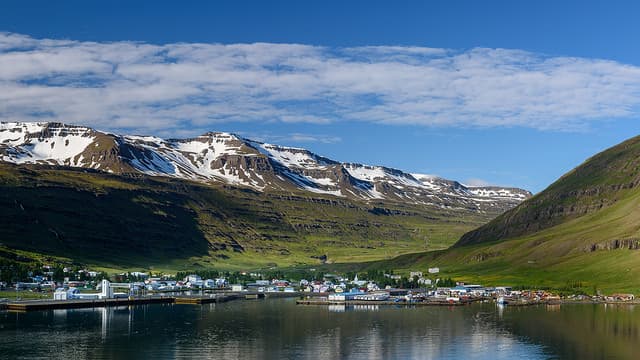
Seyðisfjörður is the best known of them, reached by a mountain pass that drops steeply into a fjord so enclosed you barely see the horizon once you're in town. Seyðisfjörður things to do include:
- Walking the town's short waterfall trails and the famous rainbow-painted street leading to the blue church
- Visiting the East's centre for visual arts and catching whatever exhibition, concert, or art festival is on
- Taking a kayak tour out on the fjord, a good way to actually see the sky again after the drive in
- Wandering the harbour, since Seyðisfjörður remains a working ferry port with a distinct, slightly artsy character compared to other Icelandic villages
Stöðvarfjörður, further south, is smaller and quieter. Its main attraction is Petra's Stone Collection, a private home turned museum showcasing decades of one woman's mineral and rock collecting, a low-key but genuinely interesting stop for anyone curious about Iceland's geology. Nearby, the Fish Factory (Fabrikkan) is a former fish processing building now used as a creative space with artists in residence and occasional workshops or concerts.
Other East Fjord villages, Djúpavogur, Fáskrúðsfjörður, Reyðarfjörður, each have their own harbour, café, or short walk worth a stop if you have time, but Seyðisfjörður and Stöðvarfjörður are the two most travellers prioritise.
Is the Stórurð hike near Borgarfjörður Eystri worth the detour?
Yes, if you have a full day to spare. Stórurð ("Big Boulders") is a boulder-strewn highland basin near Borgarfjörður Eystri, in the northeast of the East Fjords region, not to be confused with the town of Borgarfjörður in West Iceland. The hike combines mountains, meadows, small turquoise ponds, and huge glacial boulders in one relatively compact area, which is why it's often described as an all-in-one landscape.
Plan for the better part of a day. The trailhead is reached via a gravel road, and the hike itself involves uneven, rocky terrain, so sturdy footwear matters more than distance here. Check conditions before you go, since this is a highland-adjacent area where weather can turn quickly outside summer.
Do you need a 4x4 for East Iceland?
Not for the main coastal route. The Ring Road and the roads into Seyðisfjörður, Stöðvarfjörður, and Borgarfjörður Eystri are paved or well-maintained, and a standard 2WD car handles them fine outside winter conditions. A 4x4 becomes necessary only if you're heading into the highlands, for example toward the geothermal hot pool and hot river area in the northeastern central highlands, or continuing on to Dettifoss via unpaved routes.
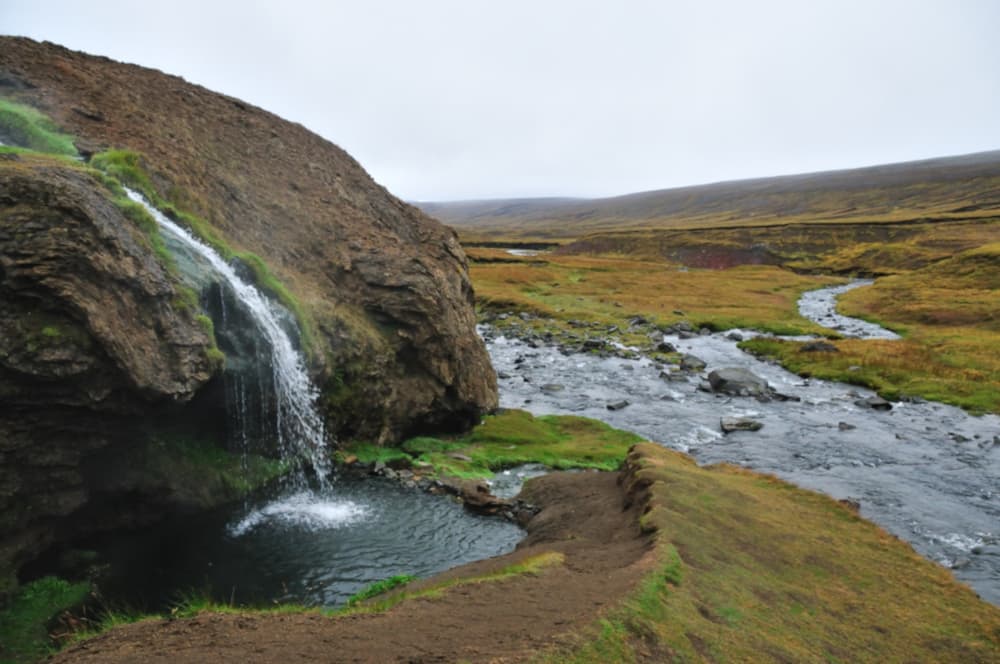
Those highland roads are classified as F-roads in places, and driving them legally requires a 4x4, it's not a suggestion, it's a rule that also affects your insurance cover. If you're weighing this up for your trip, the 4x4 vs 2WD comparison and F-roads guide to the highlands walk through which routes need which vehicle. Driving off the marked road or track anywhere in Iceland, including in the highlands, is illegal regardless of vehicle, see the guide on off-road driving rules if you're unsure what counts.
If your East Iceland plans stay on the coast and Route 1, a 2WD is a reasonable choice. If you're adding a highland detour toward Dettifoss or the hot river area, book a 4x4 for that leg of the trip, you can browse options in our car fleet.
East Iceland at a glance
| Stop | Type | Best for | Vehicle needed |
|---|---|---|---|
| Egilsstaðir | Town / regional hub | Fuel, supplies, Hallormsstaðaskógur forest, Lagarfljót lake | 2WD |
| Seyðisfjörður | Fishing village | Art scene, waterfalls, kayak tours, harbour walks | 2WD |
| Stöðvarfjörður | Fishing village | Petra's Stone Collection, Fish Factory creative space | 2WD |
| Borgarfjörður Eystri / Stórurð | Hiking area | Full-day hike through boulders, meadows and ponds | 2WD to trailhead, sturdy boots for the hike |
| Northeastern highlands (hot river, Dettifoss approach) | Highland / F-road area | Geothermal pool, Dettifoss waterfall | 4x4 required |
Planning your route and stay
East Iceland works best as a slow overnight stop rather than a rushed pass-through. Because the road hugs each fjord rather than cutting across, distances that look short on a map often take longer to drive than expected, build that into your schedule rather than the direct-line estimate.
If you're arriving from Keflavík at the start of your trip and East Iceland is a later stop on a full Ring Road loop, picking up your car with online check-in can save time on day one, leaving more room in the itinerary for the East Fjords later on. And since this region gets fewer visitors than the South Coast or Golden Circle, it's also a good place to slow down and let the trip breathe, something covered in more general terms in the summer road trip guide.
Midges can be a minor nuisance around Lagarfljót and other still-water areas near Egilsstaðir in summer; the guide to biting midges in Iceland has practical tips if that's a concern. And if you're travelling in winter, note that mountain passes like the one into Seyðisfjörður can close or require extra caution, the winter driving guide is worth reading before that leg of the trip.
 CAN YOU DRINK TAP WATER IN ICELAND?