The F-Roads
of Iceland
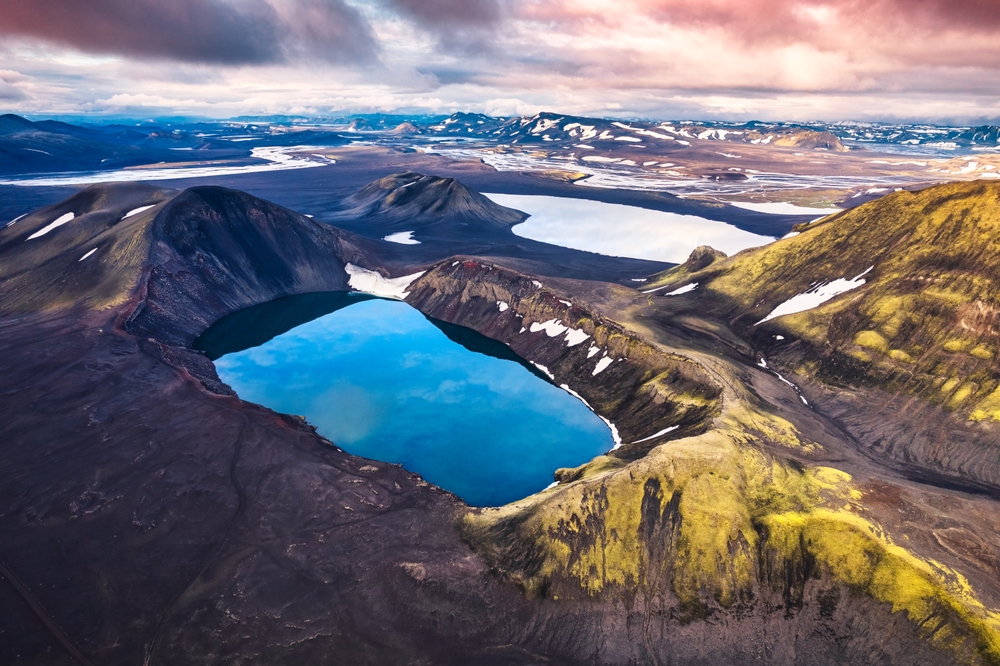
The Icelandic Highlands represent one of the most remote and striking regions of the country. Vast black sand deserts, geothermal valleys with rising steam, and colorful mountains extend across the landscape in dramatic contrast. Access to these areas, however, is only possible via the designated F-roads.
For visitors planning a journey with a rental car in Iceland, this guide provides a comprehensive overview of the F-road system, offering essential information on safe driving practices and what travelers can expect when exploring the Highlands.
What are F-roads in Iceland?
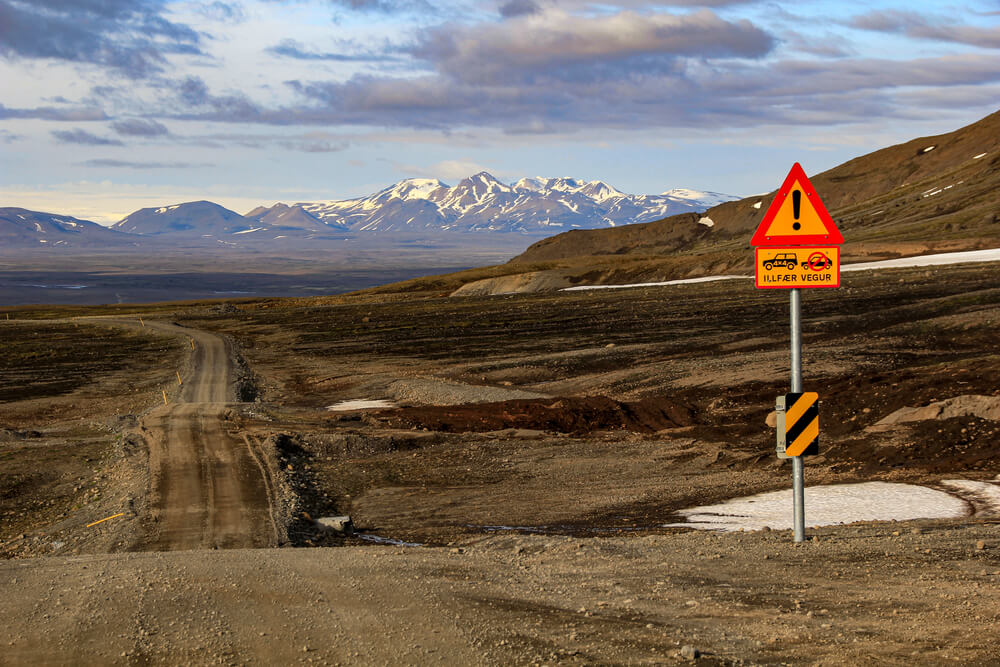
F-roads are mountain roads in Iceland, marked with an “F” before the route number (for example F35 or F208). They are gravel tracks that cut through the remote Highlands.
Unlike regular roads, F-roads are:
- Unpaved and rough – with gravel, loose rocks, and steep hills.
- Seasonal – usually open only from mid-June until late September.
- Challenging – many include unbridged river crossings.
- Restricted – only 4x4 vehicles are allowed by law.
Driving F-roads is not about getting from A to B quickly. They are slow, bumpy, and demanding. But they also lead to some of the most breathtaking landscapes in Iceland.
F-roads rules and regulations
Driving in Iceland’s Highlands comes with strict rules:
- 4x4 vehicles only – mandatory on all F-roads.
- Off-road driving is illegal – it damages fragile nature and results in heavy fines.
- Speed limits – 80 km/h on gravel, but you’ll often need to drive much slower.
- Respect closures – if the road is closed, it is unsafe and illegal to enter.
Check conditions daily – road.is provides updates, and SafeTravel shares safety alerts.
Preparing for a Highland Road Trip
Because the Highlands are remote, you need to prepare differently than for normal road trips.
Before entering the Highlands, make sure to:
- Fill your fuel tank – no gas stations once inside.
- Bring food and water – carry enough for a full day or more.
- Pack warm clothing – weather can turn quickly.
- Download offline maps or GPS – mobile coverage is unreliable.
- Share your travel plan – register on SafeTravel.is.
- Travel with others if possible – two cars are safer than one.
When traveling in the highland you are entering the wilderness where self-sufficiency is important.
F-road driving with a rental car
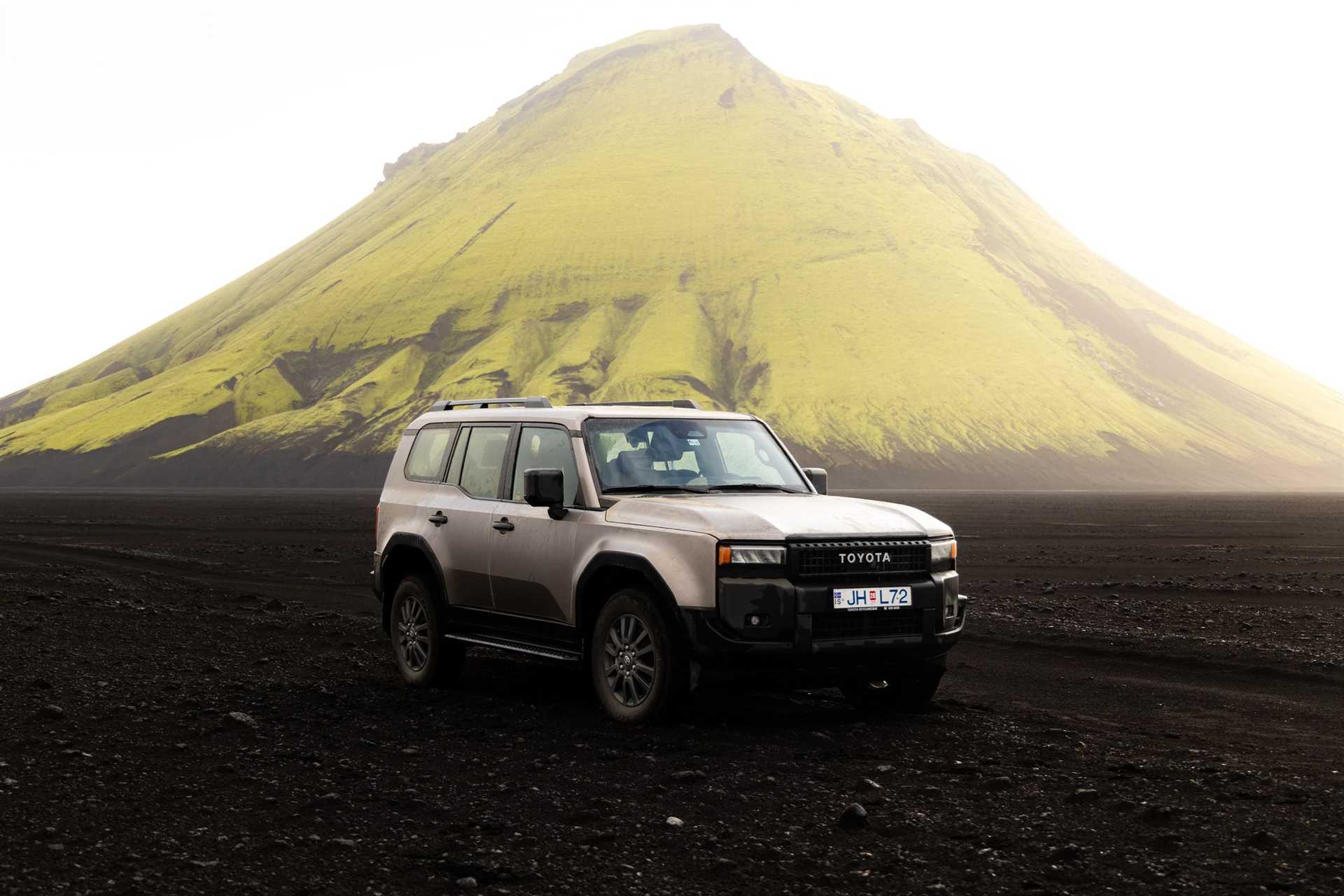
By law, only 4x4 vehicles are allowed on F-roads. Attempting to drive a normal car is illegal and will void your insurance. The terrain demands vehicles with strong suspension, higher ground clearance, and four-wheel drive.
Here’s a simple overview of what car types can (and cannot) be used:
| Car Type | Suitable for F-Roads? | Why / Why Not |
|---|---|---|
| Small Cars (2WD) | ❌ No | Not allowed. Too low clearance, no 4x4 system. Insurance invalid if used on F-roads. |
| Medium SUV (4x4) | ✅ Yes, on easier routes | Allowed, but not recommened for most routes. |
| Large SUV (4x4) | ✅ Best choice | Strong road ability, high clearance, better handling in rivers and rough terrain. |
| Vans / Minibuses | ❌ No | Too heavy and low for rough terrain. Not designed for gravel or rivers. Not permitted on F-roads. |
| EVs (Electric Cars) | ❌ No | Most EVs are 2WD. No charging stations in the Highlands. Range limits make them impractical. |
It is important to understand that not all 4x4 vehicles are the same. There is a difference between a standard 4x4 and a mountain vehicle.