
Fuel is one of the few costs on an Iceland road trip that's entirely in your hands, and it's also one of the easiest things to get wrong if nobody explains the local system to you. This guide covers how fuel policies work across Icelandic rental companies, which fuel type your car actually needs, and how to fill up without confusion at the pump.
Short answer: Most car rental companies in Iceland, including Blue Car Rental, use a full-to-full fuel policy, you collect the car with a full tank and return it full. A smaller number offer prepaid or full-to-empty options, which usually cost more overall since you rarely use every last drop. Your fuel type (petrol, diesel, or electric) is always specified on the fuel cap, the key tag, and your rental agreement, so the real risk isn't picking the wrong policy, it's putting the wrong fuel in the tank.
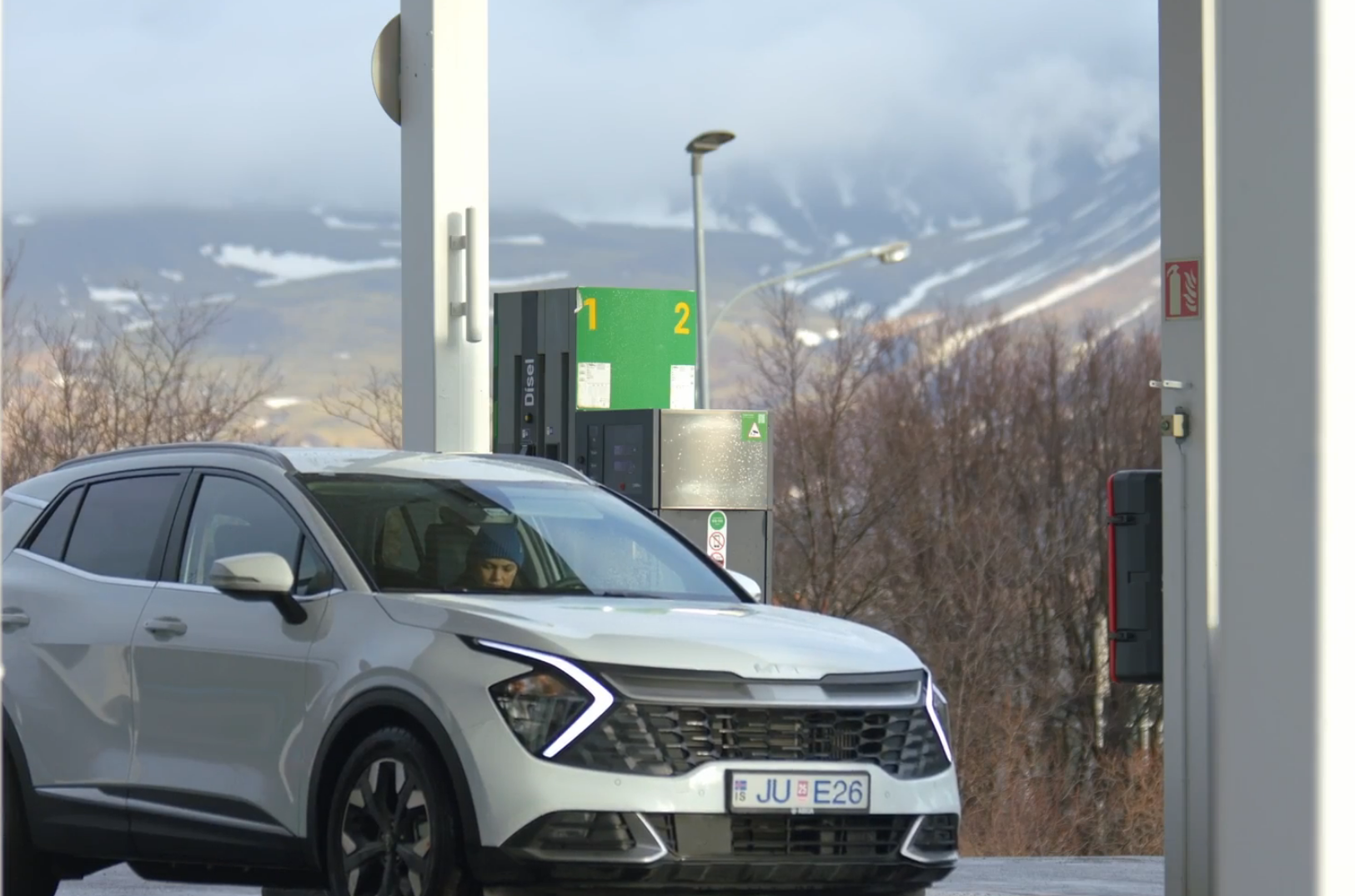
What fuel policies do Icelandic rental companies use?
Fuel policies in Iceland generally fall into three types, and the difference between them can meaningfully affect what you pay for fuel over the course of a trip. The most common by far is full-to-full, but it's worth knowing the alternatives so you recognize what you're agreeing to when you sign a rental contract.
| Policy type | How it works | What to watch for |
|---|---|---|
| Full-to-full | Car is collected full and must be returned full | Fill up shortly before drop-off and keep the receipt in case of a dispute |
| Full-to-empty (prepaid) | You pay upfront for a full tank and return the car empty | You're paying for fuel you likely won't use, since returning on empty is impractical |
| Same-to-same | Return the car with the same fuel level as pickup | Requires you to note the exact gauge reading at pickup |
Full-to-full tends to cost less overall for most travellers because you only pay for the fuel you actually burn, at regular station prices rather than a bundled rate. The exact policy attached to your booking is set out in your rental agreement, so it's worth checking this before you drive off, particularly if you're comparing quotes from different companies. If you want a wider look at where costs can creep in beyond fuel, see how to keep your Iceland car rental costs down and the hidden costs of renting a car in Iceland.
What fuel type should I use in a rental car in Iceland?
Iceland uses two liquid fuel types for cars, petrol (gasoline) and diesel, plus a growing number of fully electric vehicles that don't need fuel at all. Your rental car will only take one of these, and it's clearly indicated on the vehicle and in your paperwork, so there's no need to guess.
At the pump, green nozzles are for petrol and black nozzles are for diesel, the diesel nozzle also has a metal cover labelled "Diesel" so it's hard to mistake for petrol even in a hurry. Above the pumps you'll typically see signage marked "95 okt" for petrol (95 octane is the standard grade sold in Iceland) and "Diesel" for the black pump. Before you leave the rental lot, confirm your fuel type in three places:
- The sticker or label on the fuel cap itself
- The tag attached to your key
- The vehicle details on your rental agreement
If you've used online check-in and picked up your car from a key box (for customers who add the Liability Waiver and complete online check-in), take a moment to check the key tag and fuel cap before your first fill-up, since there's no staff member handing the car over in person to remind you verbally.
How to fill up gas in Iceland
Filling up in Iceland is mostly self-service, and many stations, especially outside Reykjavik, are fully unmanned, meaning there's no attendant or kiosk to pay at in person. You pay directly at the pump using a credit or debit card, and some pumps will ask for a PIN code, so it's worth knowing your card's PIN before you set off rather than discovering the requirement at an empty rural station.
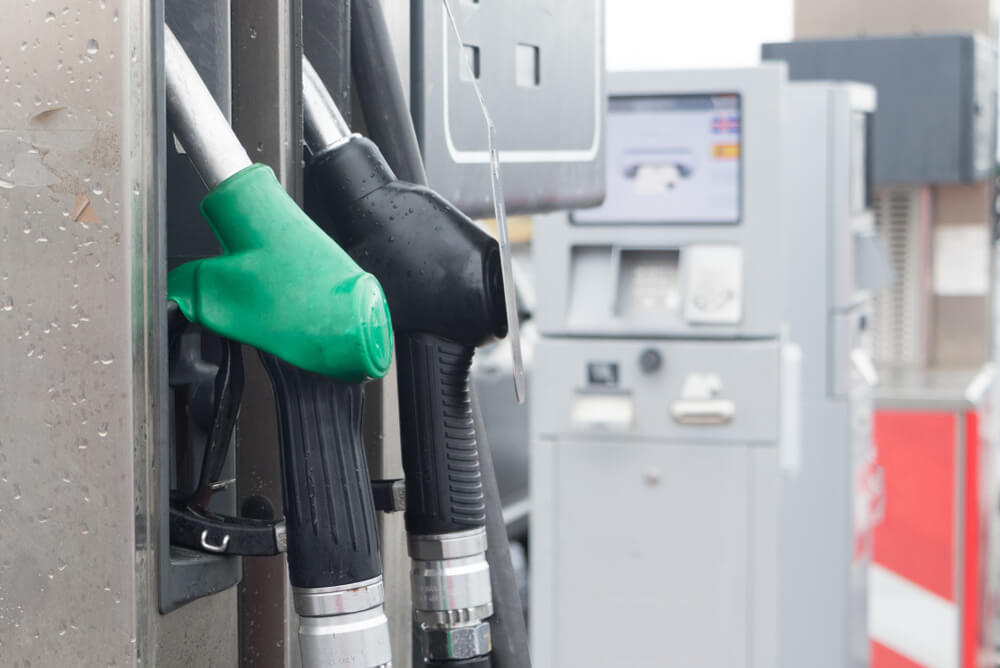
The process at most pumps is straightforward:
- Select the correct pump colour (green for petrol, black for diesel)
- Insert your card and follow the on-screen prompts
- Enter your PIN if requested, or select a preset amount before fuelling
- Lift the nozzle, select the fuel grade if prompted, and fill the tank
Because many rural stations are unmanned around the clock, it's worth fuelling up before you head into remote stretches of the Ring Road or into the highlands, rather than assuming a station will be staffed or even open. Locations and opening patterns can vary by region and season.
What happens if you put the wrong fuel in a rental car
Putting the wrong fuel in a rental car will cause the engine to stop running, usually within a short distance, and it will not restart. How far you get before it dies depends on how much of the correct fuel was already in the tank, but the outcome is the same, a car that needs to be drained, and possibly repaired, before it can be driven again.
This is treated as driver negligence rather than an accident, and it isn't something any of our coverage options extend to. Every Blue Car Rental booking includes CDW, SCDW, Gravel Protection, Theft Protection and Third-Party Liability as standard, and on top of that, the optional Liability Waiver extends cover to things like legal river crossings, underbody damage, tyres, wind and door damage, sand and ash, but none of these extend to misfuelling, because it's an avoidable mistake rather than an unpredictable event. You can read the full breakdown of what's included on the insurance and coverage page.
Being stranded with a dead engine is also more than an inconvenience in Iceland, on quieter rural roads, especially with limited daylight or poor weather, it can leave you waiting a while for recovery. If you're planning a winter trip, it's worth pairing careful fuelling habits with a general read of the winter driving guide, since breakdowns of any kind carry more weight when conditions are cold and services are stretched thin.
Petrol vs diesel rental cars in Iceland, which should you choose?
Both petrol and diesel rental cars are widely available in Iceland, and neither is inherently the "right" choice, it depends on your route and how much driving you're doing. Diesel engines are often slightly more fuel-efficient over long distances, which can matter if you're planning a full Ring Road circuit, while petrol cars are generally the norm for smaller 2WD city runabouts and are just as easy to refuel since petrol stations are more numerous.
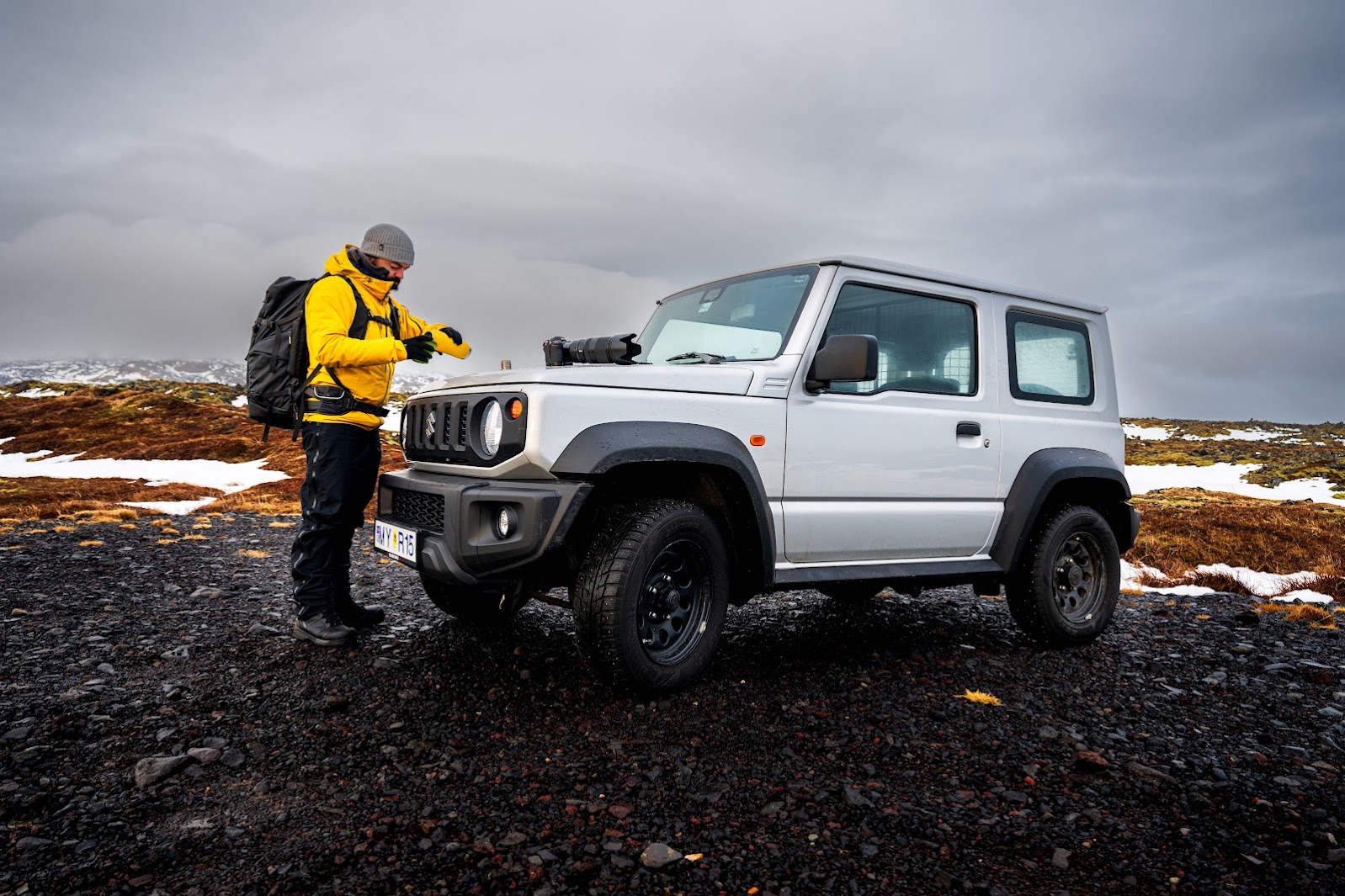
If you're deciding between a petrol, diesel, or electric vehicle for your trip, the more useful question is usually about drivetrain and size rather than fuel type, for example, whether you need a 4x4 versus a 2WD car for your planned route. You can browse the full range of petrol, diesel, and electric options, along with 4x4 and family vehicles, on the vehicle fleet page.
Mistakes to avoid with rental car fuel in Iceland
A handful of avoidable habits cause most fuel-related problems for visitors, and none of them require any special local knowledge to sidestep:
- Assuming pump colours match your home country. Pump colour conventions vary by country, so don't assume they match home, in Iceland, green is always petrol and black is always diesel.
- Confusing "petrol" and "diesel" terminology. Travellers from continental Europe sometimes use "gas oil" for diesel, which can cause hesitation at the pump, the fuel cap label settles it either way.
- Not checking the fuel cap or key tag before driving off, especially after an unattended key-box pickup (for customers who add the Liability Waiver and complete online check-in).
- Leaving fuelling until the tank is critically low on rural stretches where the next station may be some distance away.
- Guessing instead of asking. If anything is unclear, contact your rental company before you fill up rather than after.
Does the fuel policy affect your total rental cost?
Yes, the fuel policy you're on can change your overall spend more than the pump price itself does. A full-to-full policy generally keeps costs closest to what you'd pay filling up any car, since you're only buying the fuel you use. Prepaid full-to-empty options can look convenient but often mean paying for a full tank you don't fully burn through, especially on shorter trips.
Beyond fuel, your total cost is also shaped by things like insurance level, season, and any loyalty discounts you're eligible for, Blue+ members, for instance, can access tiered discounts (Bronze, Silver, and Gold) on eligible bookings depending on points accrued, which is worth checking via the loyalty programme page if you rent regularly. For a fuller picture of where your money goes on a typical rental, see car hire prices in Iceland and what to expect.
The bottom line
Fuel policies themselves aren't where most travellers run into trouble in Iceland, full-to-full is the standard, straightforward, and generally the most cost-predictable option, and it's what to expect from most rental companies including Blue Car Rental. The real risk is misfuelling, and that's fully preventable: check the fuel cap, the key tag, and your rental agreement before your first fill-up, and ask your rental company directly if anything doesn't line up. Get that one habit right, and fuel becomes one of the simplest parts of driving in Iceland rather than a source of worry.
 PARKING IN REYKJAVÍK: ZONES, PAYMENT, AND WHERE TO LEAVE YOUR CAR