
Yes — off-road driving is illegal in Iceland unless you are driving on a marked road or marked track where vehicle traffic is permitted. A rental car gives you the freedom to explore Iceland at your own pace, but that freedom ends at the edge of the road.
Here is what counts as off-road driving, why the rule exists, what can happen if you break it, and how to reach Iceland’s wildest places the legal way.
Quick answer
- Off-road driving is illegal across Iceland under the Nature Conservation Act. This includes driving on moss, lava fields, riverbeds, black-sand beaches, highland vegetation, or the verge beside the road.
- F-roads are not off-road. They are marked highland roads that are legal to drive, but only in a suitable 4x4 and generally only during the summer season.
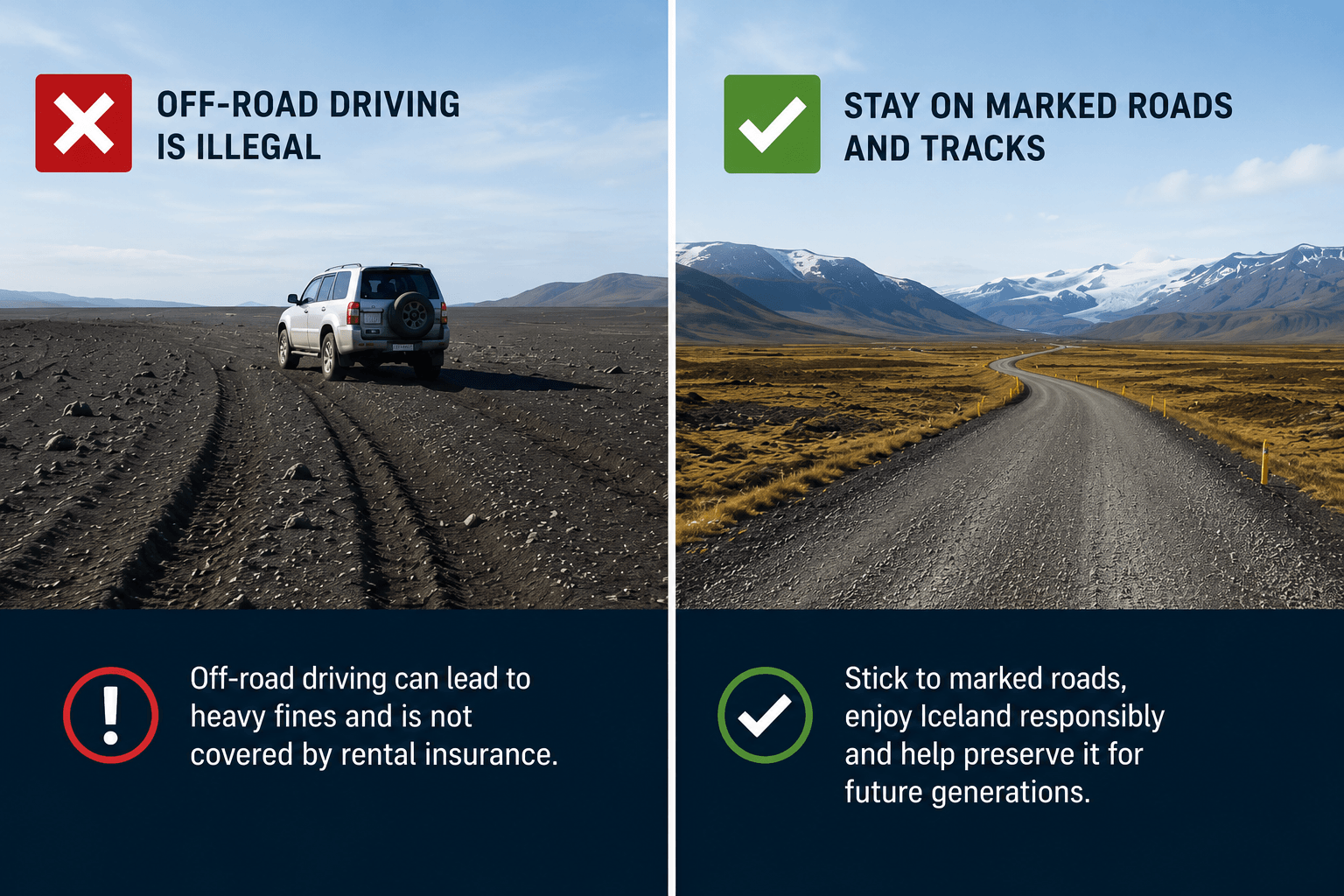
- Penalties are serious. Drivers can face substantial fines, and any vehicle damage, recovery cost or related expense caused by illegal off-road driving is not covered by rental insurance.
- The legal way to reach roadless areas is on foot. Park safely where driving is allowed, then hike from there.
What counts as off-road driving?
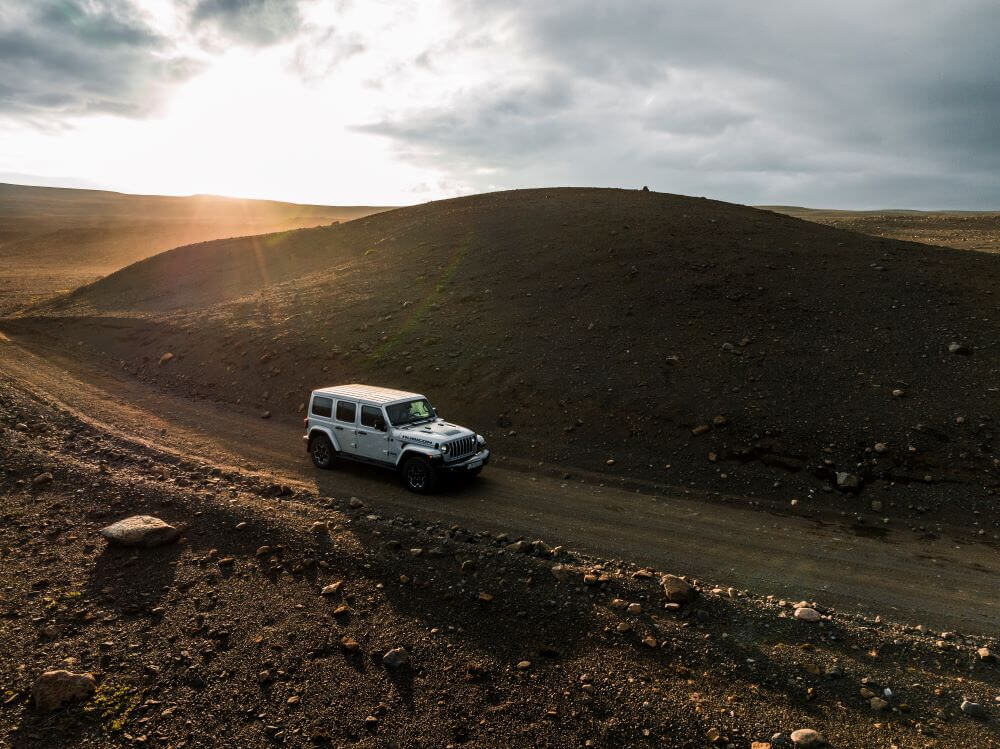
Off-road driving means taking a vehicle anywhere that is not a marked road or marked track where driving is allowed. In Iceland, that includes driving across moss, lava fields, sand, riverbeds, beaches, vegetation or open ground.
It also includes something many visitors do not think about: pulling off the road surface to park on the landscape for a photo. If there is no marked road, parking area or permitted track under your wheels, you may be driving off-road.
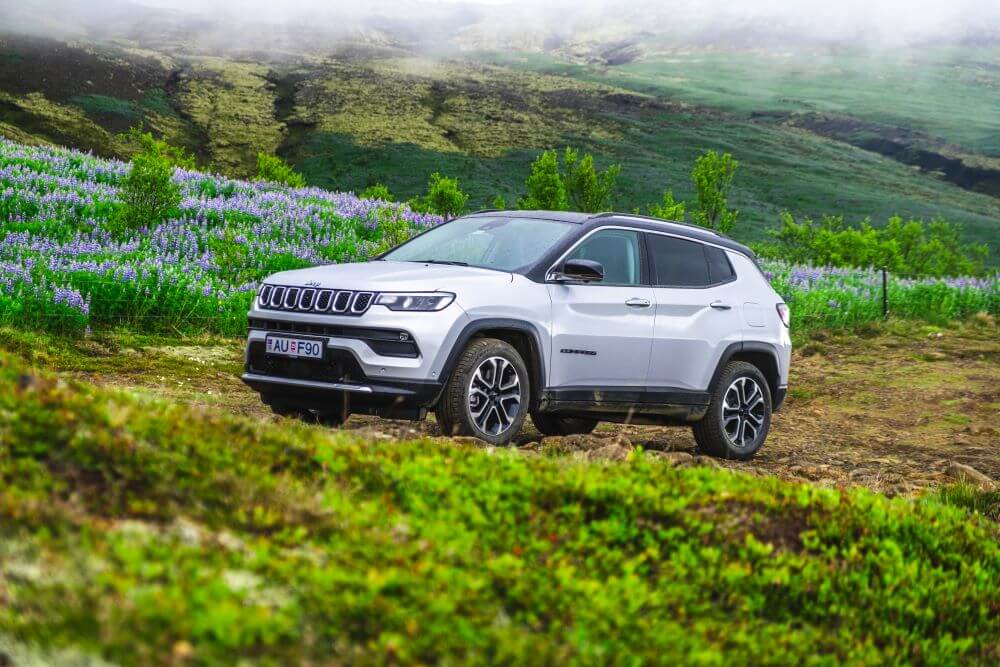
A rugged-looking 4x4 does not change the rule. In Iceland, a 4x4 is for rough legal roads, gravel routes and marked highland roads — not for leaving the road.
Off-road vs F-roads — know the difference
Most confusion comes from the word “off-road.” Many travellers see Iceland’s rough highland roads and assume they are off-road routes. They are not.
F-roads are official marked roads in the Icelandic highlands. They can be rough, remote and challenging, but they are still roads. Driving an F-road legally is very different from leaving a marked route and driving across untouched nature.
| Where you drive | Legal? | Vehicle | Notes |
|---|---|---|---|
| Paved main roads, including the Ring Road | ✅ Legal | Any rental car | Open most of the year, depending on weather and conditions |
| Marked gravel roads | ✅ Legal | Usually any rental car | Drive slowly and watch for loose gravel |
| F-roads, marked highland routes | ✅ Legal | 4x4 required | Usually open in summer only; some routes include river crossings |
| Anywhere off a marked road or permitted track | ❌ Illegal | None | Includes moss, beaches, lava fields, riverbeds, verges and open land |
Want a quick visual guide to how Iceland’s F-roads work? Watch our short video below before planning a highland route. It explains what makes F-roads different from off-road driving and why the right 4x4 matters.
For more detail, read our guide to F-roads in Iceland and our overview of Iceland’s roads.
Why off-road driving is illegal in Iceland
The rule exists because Icelandic nature is extremely fragile. Moss, lichen and highland vegetation grow slowly in a harsh climate and thin volcanic soil. One set of tyre tracks can scar the ground for decades, and the damage can spread as wind, rain and melting snow turn a small rut into erosion.
Off-road driving can also disturb wildlife, damage nesting areas and leave visible marks in places that are meant to remain wild.
This is not just a recommendation. Iceland’s Nature Conservation Act protects the landscape, and off-road driving is treated seriously by the Icelandic authorities. The Environment Agency of Iceland also warns against off-road driving, known in Icelandic as utanvegaakstur, because of the long-lasting damage it causes.
In short: if you are not on a marked road, marked track or permitted parking area, do not drive there.
What happens if you drive off-road?
Driving off-road in Iceland can have expensive and serious consequences.
1. You may receive a substantial fine
Police and authorities can issue fines for illegal off-road driving. The amount can vary depending on the case, the damage caused and the circumstances, but travellers should not treat this as a minor traffic mistake.
Off-road driving is one of the most serious things you can do behind the wheel in Iceland because it damages protected nature.
2. Your rental insurance will not cover it
This is the part that often surprises visitors. Rental insurance does not cover damage, recovery costs or related expenses caused by illegal off-road driving.
If a car gets stuck in sand, mud, snow, a riverbed or soft ground after leaving a marked road, the cost of recovery and repair can become your responsibility.
3. You may get stranded
Off-road ground is unpredictable. What looks solid from the driver’s seat may be soft sand, wet moss, loose volcanic gravel or hidden rocks. Vehicles get stuck every year, especially in remote areas where help can be far away.
To avoid common mistakes, read our guide on what not to do when driving in Iceland.
Recent cases show why Iceland takes off-road driving seriously
Off-road driving in Iceland is not just illegal. It is also deeply damaging to the environment and strongly disliked by the public in Iceland.
Recent Icelandic news coverage has highlighted how serious the issue is. In one case reported by Iceland Monitor, visible tyre tracks across untouched Icelandic nature led to a strong public reaction, with the article titled: “This is the worst thing I’ve ever seen”. The reaction says a lot about how people in Iceland view off-road driving. It is not seen as a harmless mistake, but as damage to a fragile landscape that may take years or even decades to recover.
That is because Icelandic nature is unusually vulnerable. Moss, lava fields, black sand, wetlands and highland vegetation are not built for vehicle traffic. A few minutes of careless driving can leave scars that remain visible long after the driver has left the country.
For locals, this is also about respect. Iceland’s landscapes are part of everyday life, national identity and the travel experience people come here to enjoy. When someone drives off marked roads, it damages the environment, creates anger in the local community and gives visitors a bad reputation.
The message is simple: stay on marked roads and tracks. It protects Icelandic nature, keeps your rental insurance valid, helps you avoid heavy fines and shows respect for the people who live here.
How to explore Iceland’s wild areas legally
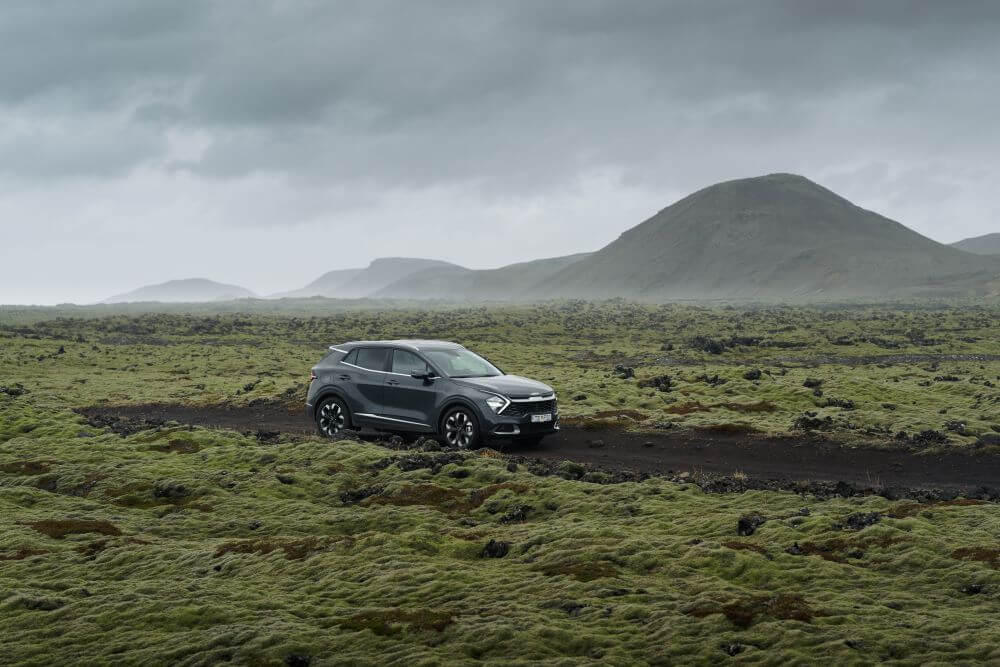
You do not have to miss Iceland’s remote landscapes. You just need to reach them the right way.
Drive the F-roads in a suitable 4x4
During the summer, marked F-roads open access to parts of the highlands, including areas near Landmannalaugar, Kjölur and other remote routes. These roads are legal to drive when open, but you need a 4x4 rental that is approved for F-road driving.
Before you go, always confirm that your rental car is allowed on F-roads. Smaller cars are not permitted, and they are not insured for highland routes.
Park legally, then hike
Some of Iceland’s most beautiful places cannot be reached by car, and that is part of what makes them special. Park in a marked or permitted area, then continue on foot.
Hiking is often the best way to experience hot springs, canyons, glaciers, lava fields and remote highland scenery without damaging the landscape. Places such as Landmannalaugar and Hveravellir are great examples of areas where driving and hiking work together.
For inspiration, see our guide to amazing canyon hikes in Iceland.
Check road and safety conditions before you go
Icelandic road conditions can change quickly, especially in the highlands. Before driving long distances or entering the highlands, check current road conditions on umferdin.is and safety updates on safetravel.is.
If a road is closed, do not enter it. A closed road is not a challenge — it is a safety warning.
Renting a car in Iceland responsibly
A rental car is one of the best ways to experience Iceland, but responsible driving matters. Staying on marked roads protects the country’s fragile nature, keeps your insurance valid and helps you avoid fines or recovery costs.
If you are planning to visit the highlands, choose a 4x4 that is suitable for F-roads and keep to marked routes. That gives you the freedom to explore Iceland’s wilder side legally and safely.
The bottom line
Off-road driving is illegal in Iceland unless you are on a marked road or permitted track. It damages fragile nature, can lead to substantial fines, voids your rental insurance and can leave you stranded in remote areas.
The rule is simple: keep your wheels on marked roads and your feet free to explore beyond them. That way, you can enjoy Iceland’s wild landscapes without harming the places you came to see. wild. penalties and safety risks.
 4X4 RENTAL IN ICELAND: ROUTE AND SEASON REQUIREMENTS