
Iceland shows up again and again on international rankings of the world's most beautiful countries, sometimes in a top 15, sometimes in a broader top 50 roundup. This guide explains what actually earns Iceland that reputation and how to see those landscapes on a self-drive trip, with practical notes on where to eat along the way. It's written for travellers from the US, UK, Europe, Canada and Australia planning their own Iceland itinerary rather than for readers comparing abstract lists.
Short answer: Iceland regularly places in the upper half of "most beautiful country" rankings published by travel media, largely because of its glaciers, volcanic terrain, waterfalls, black sand beaches and geothermal areas, all visible from a fairly compact road network. Exact positions vary between publishers and change year to year, so treat any specific number as a rough indicator, not a fixed fact. What matters more for trip planning is understanding which landscapes drive that reputation and how to reach them safely by car.
What actually earns Iceland a spot on these rankings
Iceland's reputation comes from a small number of landscape features packed into a country roughly the size of Portugal or the US state of Kentucky. Glacial ice, active volcanic zones, and the North Atlantic coastline sit within a few hours' drive of each other, which is unusual and makes the country easy to photograph well.
The features that come up most often in these rankings include:
- Glaciers and ice caps, such as Vatnajökull in the southeast, Europe's largest ice cap by volume
- Waterfalls, including Seljalandsfoss and Skógafoss along the South Coast
- Black sand beaches, most famously Reynisfjara near Vík
- Geothermal areas, from the Golden Circle's Geysir to the highland hot springs
- The Northern Lights, visible on clear nights roughly from late August to April, weather and solar activity permitting
Lists titled "top 15 most beautiful countries in the world" or "top 50 most beautiful countries in the world", in English or in Spanish, where you'll sometimes see them as "los países más bonitos del mundo" or shortlists of "15 países", tend to weigh these same criteria: landscape diversity, natural drama, and how photogenic a country is. Iceland scores well on all three, which is why it appears consistently rather than on just one or two lists.
Seeing it for yourself: why a self-drive trip is the practical way in
Most of what makes these rankings is spread along Iceland's road network rather than concentrated in one city, so a rental car is the most practical way to see it firsthand. Reykjavik itself is compact and walkable, but the landscapes that earn Iceland its reputation, the South Coast waterfalls, the Snæfellsnes peninsula, the Westfjords, the highland interior, sit anywhere from one to several hours outside the capital.
The Ring Road (Route 1) loops the entire island and connects most of the well-known sights without requiring a 4x4. Side trips off the Ring Road, particularly into the Highlands on F-roads, are a different matter and legally require a 4x4 vehicle, along with careful attention to seasonal access. Our guides on F-roads and highland access and whether you actually need a 4x4 go into this in more detail.
| Region | Signature scenery | Typical season | Usual vehicle need |
|---|---|---|---|
| South Coast (Route 1) | Waterfalls, black sand beaches, glacier lagoons | Year-round | 2WD often sufficient; 4x4 preferred in winter |
| Golden Circle | Geysers, hot springs, Þingvellir rift valley | Year-round | 2WD |
| Snæfellsnes Peninsula | Coastal cliffs, Snæfellsjökull glacier | Year-round | 2WD, 4x4 in winter conditions |
| Westfjords | Fjords, remote coastline, birdlife | Late spring–early autumn | 4x4 recommended |
| Highlands (F-roads) | Volcanic interior, hot springs, river crossings | Roughly June–September, dates vary by year | 4x4 legally required |
Road access, especially into the Highlands, is set and updated by Vegagerðin (the Icelandic Road Administration) and should be checked at umferdin.is before you drive, alongside weather forecasts at vedur.is and safety notices at safetravel.is. Conditions can change quickly outside the summer months, and this is doubly true in the Highlands.
Matching the vehicle to the route
The vehicle you book should follow your itinerary, not the other way around. A South Coast and Golden Circle loop in summer is manageable in a 2WD car; the same route in December, or any route that touches the Highlands, calls for a 4x4. Our comparison of 4x4 versus 2WD and the winter driving guide walk through this decision in more depth.
Blue Car Rental offers a range from compact 2WD cars through 4x4 SUVs, electric vehicles, and family and premium models, which is worth browsing on the vehicle fleet page once your route is roughly set. If you're curious whether an EV suits a Ring Road trip specifically, our electric car rental guide covers charging stations and range considerations. Every rental includes CDW, SCDW, Gravel Protection, Theft Protection and Third-Party Liability as standard, with details on additional cover such as the Liability Waiver available on the insurance page. Pickup at Keflavik Airport is handled through online check-in and key-box collection (for customers who add the Liability Waiver and complete online check-in), which helps if your flight lands late or early.
Food stops during your self-drive trip
Icelandic food developed under real geographic constraints, an isolated island with limited arable land, historically reliant on sheep, fish and dairy rather than imported staples. That isolation shows up directly in the national dishes, and it's part of the same story that produces the country's dramatic landscapes: a small population working with what the land and sea actually offered.
| Dish | What it is | Where you'll typically find it |
|---|---|---|
| Skyr | A thick, cultured dairy product, similar to a cross between yogurt and cottage cheese | Supermarkets and cafés nationwide |
| Plokkfiskur | A mashed fish and potato stew, often with béchamel sauce | Traditional restaurants, especially in Reykjavik |
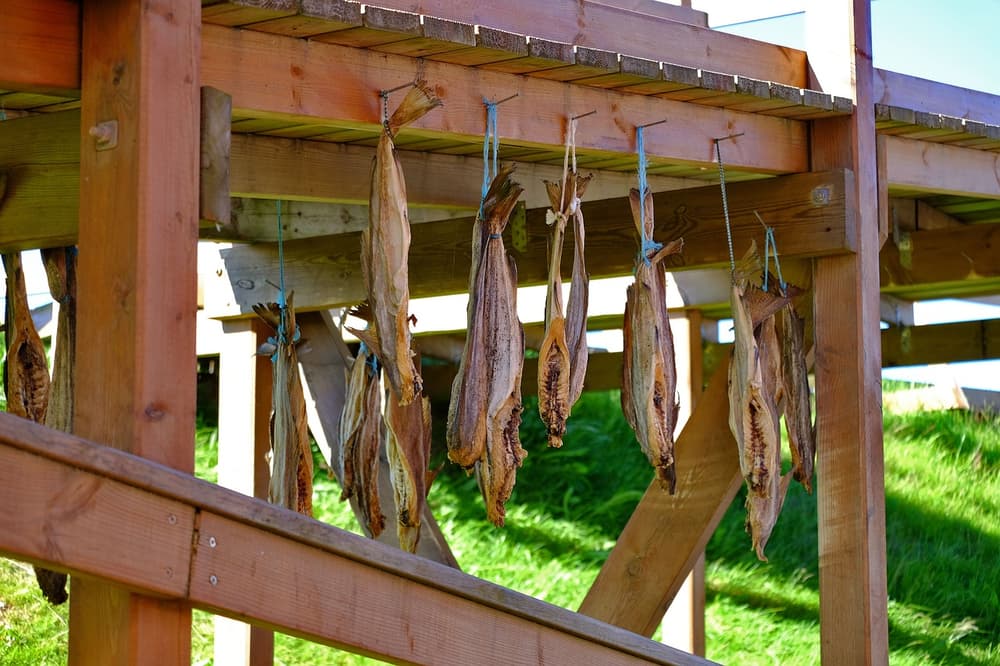
| Harðfiskur | Wind-dried fish, eaten as a snack, often with butter | Petrol stations, supermarkets, fish markets |
| Rúgbrauð | A dense, slightly sweet rye bread, historically steam-baked in geothermal ground | Bakeries and traditional restaurants |
| Lamb dishes | Roasted or slow-cooked lamb, a staple protein across Icelandic cuisine | Restaurants island-wide |
On the road, food options cluster around petrol stations and small towns rather than dedicated restaurant districts. N1 and Orkan stations are the most reliable stops between sights, most sell pylsur (Icelandic hot dogs), coffee, and pre-packaged harðfiskur, which is worth trying straight from the shelf rather than seeking out a specialist shop. Expect to pay roughly 800–1,200 ISK for a hot dog and coffee combo, and around 1,500–2,000 ISK for a pack of harðfiskur (as of August 2026).
For a sit-down meal on the South Coast, Ströndin Bistro in Vík and Systrakaffi in Kirkjubæjarklaustur are common stops for plokkfiskur or fish soup, typically 2,800–4,200 ISK a plate (as of August 2026). In Reykjavik, Bæjarins Beztu is the best-known pylsur stand if you want to try the same snack before setting off. Bakeries such as Björnsbakarí, with locations in Reykjavik and along the South Coast, are a reliable source of rúgbrauð and pastries for a quick breakfast before an early start.
Lamb and fish carry most Icelandic menus, but vegan and vegetarian options have become common in Reykjavik and larger towns in recent years. If you want to dig further into how geography shaped the country's culture and cooking, our Icelandic culture guide covers this alongside other traditions worth knowing before you travel.
Planning notes for a landscape-focused trip
A trip built around Iceland's scenery works best when timed to season and budgeted with some flexibility. Summer (June–August) gives the longest daylight and the widest road access, including most F-roads, but also the highest visitor numbers and rental demand. Shoulder seasons and winter bring lower costs in general and a chance at the Northern Lights, at the cost of shorter days and more variable driving conditions, our the low-season months and car hire cost guide go into the trade-offs.
Parking in Reykjavik follows a zoned system that's straightforward once you understand it, covered in our Reykjavik parking guide. And if you're wary of surprise fees on a rental, our piece on hidden costs and how to avoid them explains what's typically included and what to check before you sign.
The bottom line
Whether Iceland ranks 8th, 12th or somewhere else on a given "most beautiful countries" list matters less than the fact that its landscapes are genuinely varied and accessible by road within a compact area. A self-drive trip, matched to the right vehicle and season, is the most direct way to see why the country keeps earning that reputation, and a plate of skyr or plokkfiskur along the way is a fitting way to understand the place that produced it.
 HOW BLUE CAR RENTAL SUPPORTS LOCAL COMMUNITIES IN ICELAND