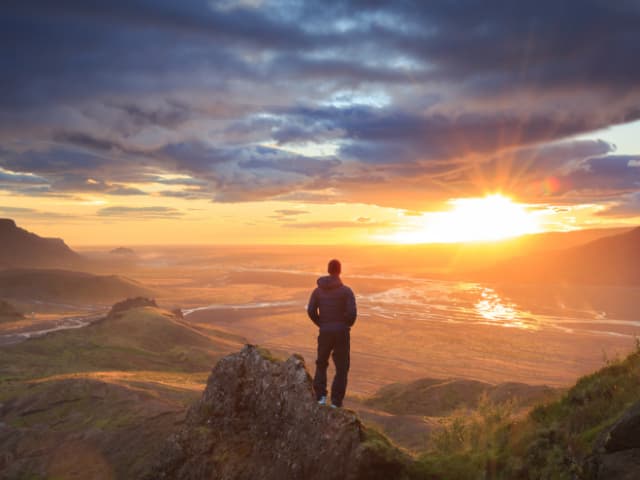

Iceland has hiking trails for almost every fitness level and every part of the country, from short valley walks near Reykjavik to multi-day treks through the interior. This guide covers the routes travellers ask about most often, what each one actually involves, and how to reach the trailheads with a rental car.
Which hiking trails should you actually plan around?
For most self-drive visitors, the shortlist looks like this: Reykjadalur geothermal valley for an easy half-day walk near the capital, the Laugavegur trail for Iceland's most famous multi-day hike, Fimmvörðuháls for a demanding one-day trek between two glaciers, Glanni waterfall and Paradísarlaut in West Iceland for an easy, low-commitment walk, and the trails around Skaftafell in Vatnajökull National Park for glacier and canyon views. Trail access, difficulty and the vehicle you need vary a lot between these, so it's worth matching the hike to your route, your fitness level and the season you're travelling in.
Reykjadalur geothermal valley, the easiest popular hike
Reykjadalur, near the town of Hveragerði about 45 km from Reykjavik, is a geothermal valley walk suitable for almost any fitness level. The trail climbs gently through steaming ground and past a geothermal river, and most visitors finish the round trip in 3 to 4 hours depending on pace.
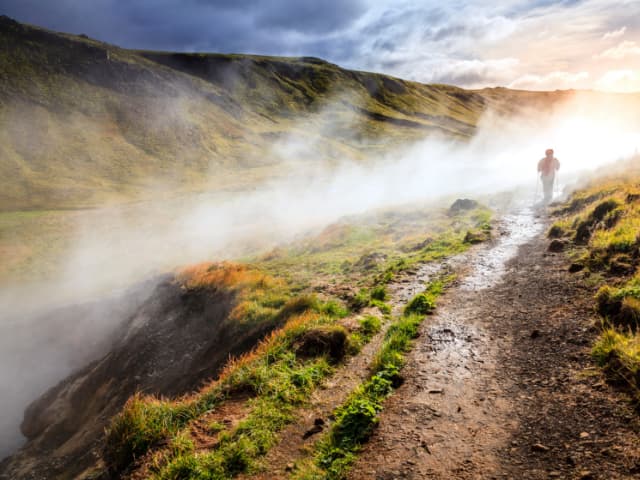
The reward at the top is a stretch of the river warm enough to bathe in, bring a swimsuit and a towel. It's one of the most visited trails in the country, so expect company on the path, especially in summer, but the valley is wide enough that it rarely feels crowded once you're in it. The trailhead has a car park, and the drive there is a straightforward paved-road trip from Reykjavik, no 4x4 required.
The Laugavegur trail, Iceland's most famous hiking route
The Laugavegur trail, running roughly 55 km from Landmannalaugar to Þórsmörk, is generally considered Iceland's most famous hiking route. It's typically walked over 2 to 4 days, with mountain huts and campsites spaced along the way, and it crosses highland terrain that shifts from geothermal fields and rhyolite mountains to black sand and glacier views.
This is a highland trek, not a casual day out. The trail is normally open only in summer (typically July through mid-September, though this varies year to year), and reaching the Landmannalaugar trailhead requires driving F-roads that are legally restricted to 4x4 vehicles. Some approach routes involve river crossings. If you're unsure about a crossing or road conditions on the day, the right call is to turn around rather than push on, check current conditions on umferdin.is and safetravel.is before you set out, and consider booking with an experienced highland operator if you'd rather not drive the F-roads yourself. Our guide to F-roads in Iceland covers what to expect from these routes in more detail, and do you need a 4x4 in Iceland walks through how to decide.
Fimmvörðuháls, a demanding trek between two glaciers
Fimmvörðuháls is a moderately difficult, one-day trek that runs between the Eyjafjallajökull and Mýrdalsjökull glaciers, often used as an extension onto the Laugavegur trail toward Þórsmörk. The full crossing typically takes up to 9 hours and is only recommended for fit, experienced hikers with proper navigation equipment, map, compass or GPS, and enough water and layers for changeable mountain weather.
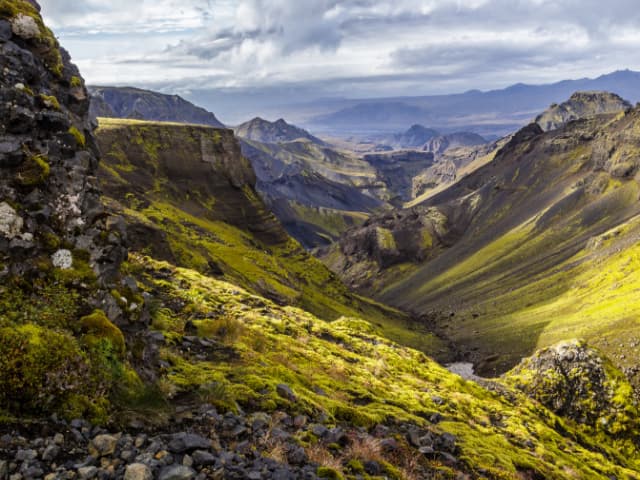
Parts of the route are exposed and conditions can change quickly, even in summer. This isn't a trail to attempt in poor visibility or without checking the forecast at vedur.is first. It's well marked and well regarded for good reason, but it rewards preparation rather than spontaneity.
Glanni waterfall and Paradísarlaut, an easy walk in West Iceland
In Borgarfjörður, a short and easy trail leads to Glanni waterfall on the Norðurá river and on to Paradísarlaut (Paradise Hollow), a sheltered hollow surrounded by birch trees. Norðurá is well known locally for salmon fishing, and the walk itself is flat and clearly marked, making it a good option if you want scenery without a big time commitment.
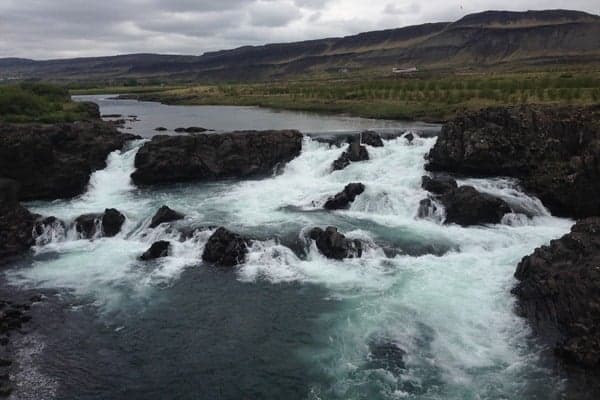
There's a car park at the trailhead with a small shop nearby, and the drive from Reykjavik is entirely on paved roads, a comfortable stop if you're heading north on Route 1 or exploring West Iceland for the day.
Skaftafell and the Vatnajökull National Park trails
Skaftafell, part of Vatnajökull National Park in South Iceland, offers a network of trails ranging from a short walk to Svartifoss waterfall to longer routes with views over glacier tongues and outwash plains. Distances and difficulty vary widely by trail, so it's worth checking the park's trail map at the visitor centre before setting off, especially if you're combining a hike with a longer driving day along the south coast.
Comparing the main trails
| Trail | Region | Typical duration | Difficulty | Season | Vehicle needed |
|---|---|---|---|---|---|
| Reykjadalur | South, near Hveragerði | 3–4 hours round trip | Easy | Year-round (weather dependent) | 2WD |
| Laugavegur | Highlands, Landmannalaugar–Þórsmörk | 2–4 days | Moderate to demanding | Summer only, typically Jul–mid Sep | 4x4 (F-roads) |
| Fimmvörðuháls | South Highlands | Up to 9 hours | Demanding | Summer, weather dependent | 4x4 for trailhead access |
| Glanni & Paradísarlaut | West, Borgarfjörður | 1–2 hours | Easy | Year-round | 2WD |
| Skaftafell trails | South, Vatnajökull NP | 1 hour to full day, varies by trail | Easy to moderate | Year-round (some trails weather dependent) | 2WD |
Durations, opening windows and road access can all shift with weather and season, so treat this table as a starting point and confirm current conditions before you drive.
Do you need a 4x4 for hiking trails in Iceland?
It depends entirely on the trailhead. Reykjadalur, Glanni, Paradísarlaut and most of Skaftafell's trails are reached on paved roads, so a 2WD car is fine. Landmannalaugar and other highland trailheads sit on F-roads, which are legally restricted to 4x4 vehicles and are usually only open in summer.
If your trip includes both easy lowland walks and a highland trek like Laugavegur, it often makes sense to plan the vehicle around the highland leg rather than the easy one. Our guide on 4x4 vs 2WD in Iceland breaks this down by route, and Blue Car Rental's car fleet includes 4x4 options alongside standard 2WD vehicles, so you can match the car to the terrain rather than over- or under-preparing.
When to hike in Iceland
Summer (June through August) is the most reliable season for hiking, when daylight is long and highland routes like Laugavegur and Fimmvörðuháls are typically open. Lowland trails such as Reykjadalur, Glanni and most of Skaftafell's shorter walks can be done outside summer too, though shorter days, ice on paths and changeable weather mean more planning in autumn, winter and spring.
If you're travelling outside the summer months, our winter driving guide covers what changes on the roads, which is worth reading alongside any hiking plans since getting to a trailhead safely is part of the hike.
Mistakes to avoid when planning a hiking trip
Underestimating driving time is the most common one, many trailheads are an hour or more from the nearest town, and gravel or F-road sections take longer than paved driving. Skipping a weather and road check before a highland hike is another: conditions at safetravel.is and umferdin.is can change a plan from straightforward to inadvisable within a day. And renting a 2WD car for a trip that includes Landmannalaugar or similar F-road trailheads is a mistake that shows up only once you're at the barrier, check your route against your vehicle before you book.
Getting to the trailheads
None of these trails are reachable by public transport in a way that fits a flexible hiking schedule, so a rental car is the practical way to string several trailheads together on one trip. Picking up at Keflavik Airport with online check-in and key-box collection (for customers who add the Liability Waiver and complete online check-in) means you can head straight for Reykjadalur or the south coast without losing your first day to paperwork, and if you're basing yourself in Reykjavik between hikes, our parking guide covers the city's zone system.
For more trail ideas beyond this list, our roundup of Iceland's canyons and the wider natural wonders section cover routes not included here.
 CAN YOU DRINK TAP WATER IN ICELAND?