
Iceland rewards travellers who plan around a short list of unmissable places rather than trying to see everything. This guide covers five experiences that consistently top self-drive itineraries, where they are, how much driving time to budget, and the best season for each, plus where to find genuine relaxation along the way.
The short answer
For a first self-drive trip, most travellers build their route around these five: the Blue Lagoon (or another geothermal spa), the Snaefellsnes Peninsula, the South Coast's black sand beaches, a drive through the Eastfjords, and a chance to see the Northern Lights between September and April. Together they cover Iceland's geothermal, coastal, volcanic and highland-fringe landscapes without requiring F-road driving or a rigid schedule.
1. Relax at a geothermal spa (Blue Lagoon and beyond)
The Blue Lagoon, near Keflavik, is Iceland's best-known geothermal spa and a natural first or last stop for a self-drive trip, since it sits close to the airport. Its milky-blue water is warmed geothermally and rich in silica and minerals, and pre-booking a time slot is standard practice given how popular it is.
If the Blue Lagoon's crowds aren't for you, Iceland also has dozens of smaller geothermal pools and public swimming pools scattered around the Ring Road, many locals prefer these for a quieter soak. Sky Lagoon near Reykjavik, the Secret Lagoon in Fludir, and Myvatn Nature Baths in the north are common alternatives. Since most of these sit just off Route 1 or a short detour away, they work well as a stop on your driving day rather than a dedicated excursion.
Because a spa visit typically bookends a longer road trip, it's worth having your rental car sorted before you factor in pickup logistics. If you're landing at Keflavik and heading straight to the Blue Lagoon, online check-in can shorten the time between touchdown and getting on the road.
2. Spend a day (or three) on the Snaefellsnes Peninsula
Snaefellsnes, in West Iceland, is often called "Iceland in miniature" because it packs a glacier, volcano, waterfalls, lava fields, sea cliffs, fishing villages and black-sand coves into one compact peninsula roughly 90 minutes to two hours from Reykjavik. It's a realistic day trip, but travellers with more time often stretch it to two or three days to properly cover the loop road around it.
Highlights include Snaefellsjokull National Park at the peninsula's tip, the village of Stykkisholmur with its harbour views, and Kirkjufell mountain, recognisable from film and television and one of the most photographed peaks in the country. The peninsula is accessible year-round on paved roads, though winter driving calls for extra caution on exposed coastal stretches; see our winter driving guide before a cold-season visit.
3. See the South Coast's black sand beaches
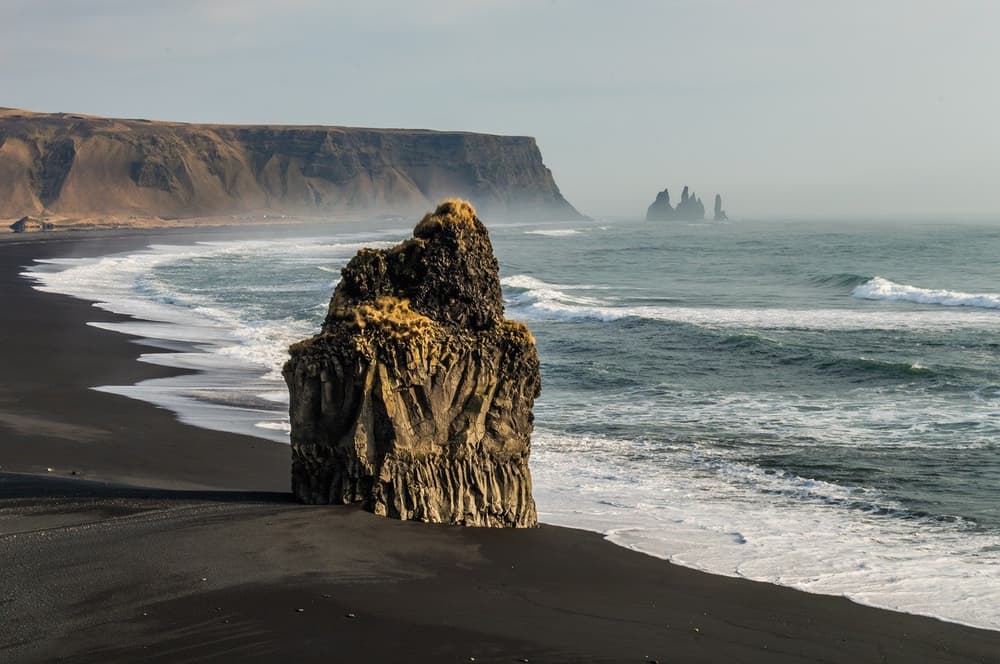
Reynisfjara and the surrounding black sand beaches on Iceland's South Coast are dramatic year-round, with basalt sea stacks rising out of the surf and, in summer, the sea arch at Dyrholaey visible nearby. Swimming is not possible here, the currents and sneaker waves are genuinely dangerous, and visitors are advised to stay well back from the water's edge regardless of season.
The South Coast is one of the most accessible parts of Iceland for a rental car, running along Route 1 with paved surface the whole way, which makes it a natural add-on to a Ring Road itinerary or a standalone weekend trip from Reykjavik. Parking areas at Reynisfjara and nearby Skogafoss and Seljalandsfoss waterfalls are well marked, though they fill up in high season.
4. Drive out to the Eastfjords
The Eastfjords reward travellers willing to go further off the well-worn South Coast and Golden Circle route. This remote stretch of coastline in East Iceland sees noticeably fewer visitors than the south or the Reykjanes area, and the drive itself, climbing over high mountain passes with views toward Vatnajokull National Park and Iceland's largest glacier, is part of the appeal.
Because distances between towns are longer here and roads climb through mountain passes, it's worth checking current conditions at umferdin.is before setting out, particularly outside summer. A 4x4 isn't strictly required for the paved sections, but if your route includes gravel side roads or you're travelling in shoulder season, it's worth reading through 4x4 vs 2WD in Iceland to match the vehicle to your plans.
5. Chase the Northern Lights
The Northern Lights are visible in Iceland roughly from September to April, when nights are dark enough for the aurora to show against the sky. Sightings depend on solar activity, cloud cover and light pollution, so there's no guaranteed night or location, clear, dark skies away from town lighting give you the best odds.
Many self-drive travellers combine aurora-watching with an evening drive a short distance outside Reykjavik or whichever town they're based in, since even a modest reduction in ambient light improves visibility. Checking the Icelandic Met Office's aurora forecast at vedur.is before heading out is the most reliable way to judge your chances on a given night.
How the five compare
| Experience | Region | Typical time needed | Best season | Rental car considerations |
|---|---|---|---|---|
| Blue Lagoon / geothermal spas | Reykjanes, Reykjavik, Ring Road towns | 2–4 hours | Year-round | Close to Keflavik; easy first/last stop |
| Snaefellsnes Peninsula | West Iceland | 1 day, or 2–3 for the full loop | Year-round (winter needs caution) | Paved roads; 2WD generally fine |
| South Coast black sand beaches | South Iceland | Half day to 1 day | Year-round | Fully paved on Route 1 |
| Eastfjords | East Iceland | 1–2 days | Summer for easiest driving | Mountain passes; check umferdin.is |
| Northern Lights | Anywhere with dark skies | 1 evening (flexible) | September–April | No special vehicle needed |
Mistakes to avoid when planning around these five
Trying to do all five in under a week is the most common overreach, the Eastfjords alone are a long drive from Reykjavik, and rushing coastal or mountain roads in poor weather is not worth the time saved. It's also easy to underestimate how much a Blue Lagoon or spa visit anchors your schedule around a fixed time slot, so build driving time around it rather than the other way round.
Another frequent mistake is assuming a small car will comfortably handle every gravel detour off these main routes. Most of the five highlights above sit on paved roads, but if your itinerary stretches toward the Highlands or F-roads, that's a different vehicle question, covered in our guide to F-roads in Iceland and whether you need a 4x4.
Choosing a car for this kind of trip
None of the five destinations above legally require a 4x4, Snaefellsnes, the South Coast and the Eastfjords' main road are all paved. A standard 2WD is generally sufficient for a summer trip covering these highlights, while winter travel benefits from a 4x4 given ice and wind exposure on open stretches. Every Blue Car Rental vehicle includes CDW, SCDW, gravel protection, theft protection and third-party liability as standard, and completing online check-in before you land shortens pickup at Keflavik, which is useful if your flight lands late or your Blue Lagoon slot is early. You can browse the full lineup, from 2WD to 4x4 and EV options, on the our cars page.
Answering the worry behind this question
Travellers searching for a "top five" list are usually worried about wasting limited time in Iceland on the wrong places. The reassurance is that these five, a spa, Snaefellsnes, the South Coast, the Eastfjords and the Northern Lights, cover distinct landscapes and don't overlap, so picking three or four of them (rather than forcing all five into a short trip) still gives a well-rounded first visit. Matching your route to the season and choosing a vehicle that fits it, rather than overpacking the itinerary, matters more than ticking every box.
 CAN YOU DRINK TAP WATER IN ICELAND?