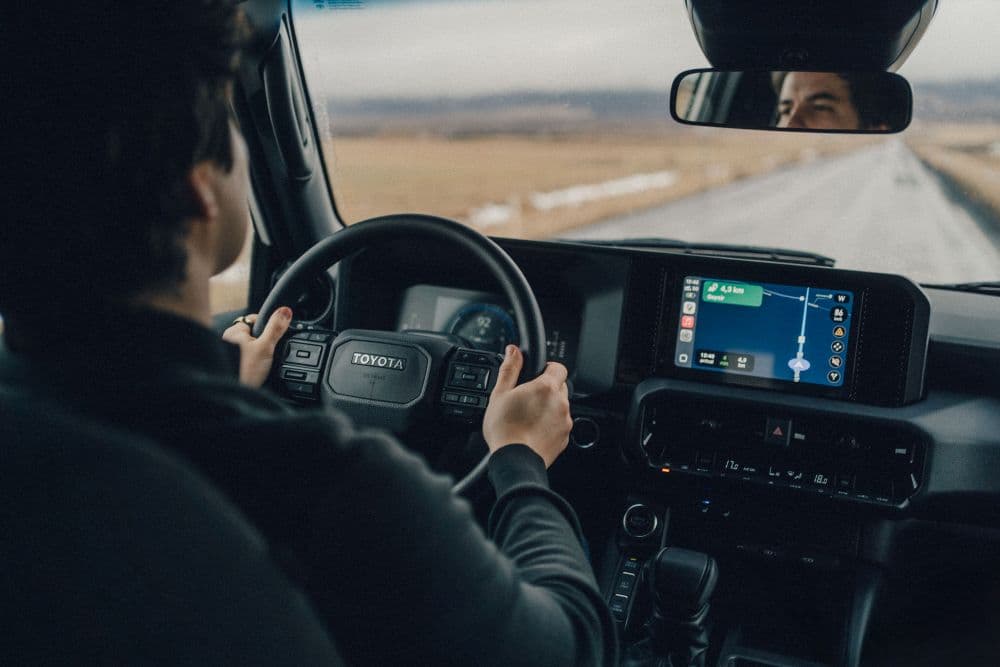

Iceland's roads stretch through long, open landscapes, and services can be spread further apart than many self-drive travellers expect.
Short answer: Public toilets are available at fuel stations (N1, Olís, Orkan), most cafés and restaurants, museums, visitor centres, and at major attractions like Þingvellir, Geysir and Gullfoss. In towns and at busy sites you'll sometimes pay a small fee, often 100–300 ISK (last checked August 2026), while fuel station toilets are usually free if you're a customer. In the Highlands and along quieter stretches of the Ring Road, facilities thin out considerably, so it's worth planning stops around fuel and food breaks rather than assuming something will turn up.
Where can you actually find a toilet while driving in Iceland?
The most dependable option on any Icelandic road trip is a fuel station. N1, Olís and Orkan operate stations along the Ring Road (Route 1) and most secondary routes, and nearly all of them have public restrooms, whether or not you're filling up the tank.
Beyond fuel stations, a few other spots reliably have toilets:
- Cafés and restaurants, usable if you're a customer; it's good etiquette to buy something small if you're not eating a full meal.
- Museums and visitor centres, found at national parks, geothermal areas, and larger attractions.
- Public restrooms in towns, Reykjavík, Akureyri, Selfoss and other larger towns have standalone public facilities, often near main parking areas.
- Popular natural attractions, Þingvellir, Geysir and Gullfoss all have visitor facilities, though these can be seasonal or fee-based.
- Campsites, mostly a summer resource, but useful to know if you're staying overnight along the route.
The gaps appear once you leave the Ring Road for quieter routes, the Westfjords, or F-roads into the Highlands. Distances between services on those roads can be considerably longer, so it's worth topping up on fuel and using the toilet at the same stop rather than pushing on and hoping for the next one.
What does it cost to use a public toilet in Iceland?
Most fuel station toilets are free, particularly if you're buying fuel, coffee, or a snack while you're there. Some public toilets in high-traffic tourist areas charge a small fee, typically in the range of 100–300 ISK (last checked August 2026, based on typical fee signage at sites like Þingvellir and Geysir), and payment methods vary, some machines take coins only, others accept cards or contactless payment.
It's worth carrying some small change for this reason, since not every rural facility will have a working card reader. Prices and payment setups can change from one site to the next, so treat this as a general expectation rather than a fixed rule.
Comparing toilet options along an Iceland road trip
Prices below last checked August 2026 and may vary by site.
| Location type | Typical availability | Typical cost | Notes |
|---|---|---|---|
| N1 / Olís / Orkan fuel stations | Widespread on Ring Road and main routes | Usually free for customers | Most reliable option outside towns |
| Cafés and restaurants | Towns and villages | Free with purchase | Polite to buy something if not dining |
| Museums and visitor centres | Major attractions, national parks | Free or small fee | Often the cleanest, most modern facilities |
| Public toilets in towns | Reykjavík, Akureyri, Selfoss, etc. | Sometimes 100–300 ISK | Coins or card, depending on the machine |
| Highlands / F-road areas | Sparse, seasonal | Varies | Plan around fuel stops; some sites unstaffed outside summer |
| Campsites | Seasonal, mainly summer | Usually included with pitch fee | Not a year-round option |
Are toilets in Iceland clean and well maintained?
Yes, in general. Toilets at fuel stations, cafés, and visitor centres are typically clean and modern, especially along the main tourist routes. In more remote or rural spots, facilities can be more basic, sometimes a single stall or a portable unit, but they're still functional.
For anywhere off the beaten path, it's sensible to carry your own hand sanitiser and a small pack of tissues, since rural facilities don't always restock as regularly as those in towns.
What changes in winter or on F-roads?
Facilities become less predictable outside the summer season and away from the Ring Road. Some visitor centres and seasonal toilets close or reduce their hours over winter, and F-roads into the Highlands are closed to all traffic for much of the year regardless of vehicle type, see our F-roads guide to the highlands for how opening dates work and why they vary each season.
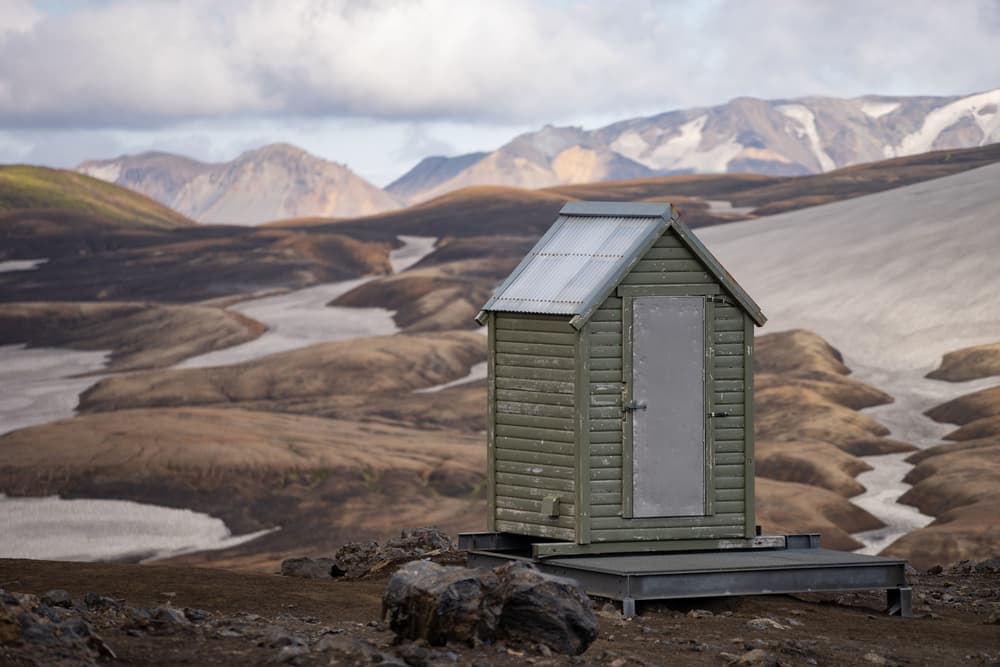
If you're driving in winter, shorter daylight hours and changeable weather make it worth planning fuel and toilet stops earlier rather than later, our winter driving guide covers the wider planning side of cold-season trips, including why buffer time matters on quieter roads.
What should you do if there's no toilet in sight?
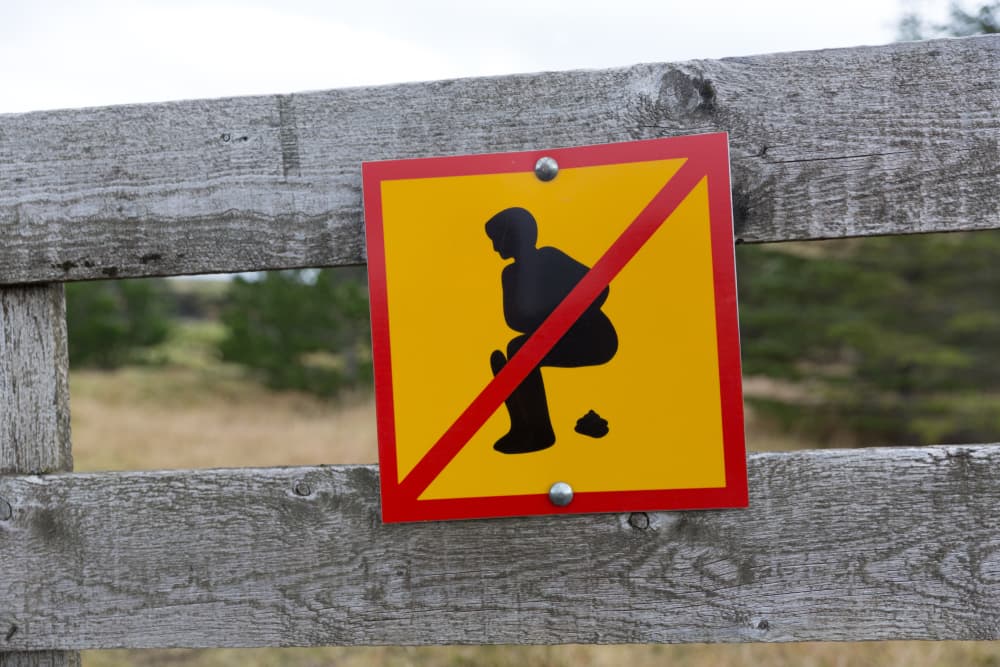
Plan ahead rather than relying on finding a spot in the moment, that's the most reliable fix. If you do find yourself genuinely stuck between services, a few points matter:
- Don't stop on the road or shoulder. Pulling over on a blind bend or narrow verge is a safety hazard for you and other drivers.
- Don't drive off the marked road to find privacy. Driving onto moss, gravel margins, or open ground off the designated road counts as off-road driving, which is illegal in Iceland and damages fragile terrain that can take decades to recover, see our explainer on why off-road driving is illegal in Iceland for what counts as off-road under Icelandic law.
- Choose a legal pull-off, a proper layby or parking area, and walk well away from the road, trails, and any water source.
- Leave nothing behind. Pack out any tissue or waste; national parks and protected areas are strict about this.
None of this is a substitute for planning. Iceland's fuel stations are spaced closely enough on the Ring Road that a bit of route awareness usually avoids the situation entirely.
Toilet stops in Reykjavík and other towns
Reykjavík has public restrooms near main parking areas, shopping streets, and most cafés will let paying customers use their facilities. If you're picking up or dropping off a car in the city, or parking downtown for a few hours, our Reykjavík parking guide covers where the main parking zones are, which is also useful for locating nearby public facilities since most staffed parking areas sit close to shops or cafés.
Tips for families and long driving days
A few habits make toilet stops easier on longer legs of a road trip:
- Use every stop, even if no one "needs to go." On long stretches like the south coast or the Westfjords, the next reliable option might be 40–60 minutes away.
- Pack tissues, hand sanitiser and wipes in the car door pocket, not buried in a suitcase.
- Combine stops with sightseeing or fuel. Many N1 and Olís stations have an attached café or small shop, so a toilet break doubles as a food stop, a good moment to try an Icelandic hot dog (pylsa), sold at nearly every service station.
- Check your route the night before if you're heading into a quieter area, so you know roughly where the next station sits.
How a rental car gives you more control over stops
One advantage of self-driving over a scheduled coach tour is that you decide when and where to stop. With a rental car from Blue Car Rental, you're not tied to someone else's itinerary, if the group needs a break at a random farm shop or a viewpoint with a toilet, you simply pull in.
Picking up the car smoothly also helps you start the trip without unnecessary delays: online check-in lets you complete paperwork in advance, and customers who add the Liability Waiver and complete online check-in can collect the car from the key box at Keflavík Airport instead of queuing at a counter, so you're on the road, and near your first proper toilet stop, sooner.
What to remember before you head out
Public toilets in Iceland are generally easy to find along the Ring Road and in towns, thanks to a dense network of N1, Olís and Orkan fuel stations, plus cafés, museums, and attraction visitor centres. Fees are occasional rather than universal, usually small, and mostly appear at popular tourist sites. The real planning matters on quieter routes, in the Highlands, and in winter, when facilities are sparser and some seasonal sites close. Carry a bit of change, keep tissues and sanitiser in the car, and treat toilet stops as part of your route planning rather than an afterthought, the flexibility of a self-drive trip means you can almost always work one in before it becomes urgent.
 PARKING IN REYKJAVÍK: ZONES, PAYMENT, AND WHERE TO LEAVE YOUR CAR