You arrive in Iceland, fresh-faced and full of wonder. You get your rental car, because how else are you going to travel in Iceland? And then you think to yourself: wait, which side of the road do I drive on in Iceland?
You lament the fact you did not check this out before you began your travels, but no matter, this is why we are here: to answer these questions for you! And while we’re at it, we’ll cover the practical “what now?” details that actually matter once you’re behind the wheel—roundabouts, one-lane bridges, sheep, sudden weather changes, and the kind of common-sense choices that keep your trip smooth (and your photos taken from safe pull-offs, not the shoulder of the Ring Road).
The answer is simple: You drive on the right side. We do not merely mean that you have to drive on the correct side of the road – which you do, but literally the right side, like the majority of the world. If your brain is still adjusting after a flight, just remember this: your driver sits on the left side of the car, and oncoming traffic will be on your left as well.
If you are from one of the countries where cars drive on the left side of the road, do not worry; the rules are pretty much the same, just mirrored. The trick is not the driving itself—it’s building a few quick habits so you don’t default to “home mode” at the worst moment (like pulling out of a parking lot or entering a roundabout).
Use your common sense when driving!
There are a few things you need to have in mind when driving in Iceland. Road markings might not be of the same standard as you are used to. It is generally frowned upon, for example, to stop at the side of the Ring Road.
In many places of the world, roads have an unbroken line painted on the side to show where people are not allowed to stop. Icelanders do not generally do this as it is just common sense for us not to stop the car on the side of the Ring Road. If you want a photo, a snack, or a “wow, look at that waterfall” moment, wait for a marked lay-by, a parking area, or a safe pull-off that’s clearly intended for stopping. Not only is it safer, it also keeps traffic flowing—especially in summer when the Ring Road can be busy.
Your first 10 minutes behind the wheel
Before you even leave the lot, set yourself up for an easy start. Adjust your mirrors, pair your phone (hands-free), and get your navigation ready so you’re not fiddling with settings on the move. If Keflavík Airport is your starting point, it helps to skim a simple step-by-step overview of the route and the road feel before you merge onto the main highway—this guide on driving from Keflavík Airport to Reykjavík is perfect for that “okay, what should I expect?” moment.
If you normally drive on the left, say your new mantra out loud when you pull away: “Keep right.” Do it again when you leave a parking area, when you approach a junction, and when you exit a roundabout. Those are the three places where muscle memory loves to surprise you.
The Iceland driving basics that catch visitors out
Driving on the right is the easy part. The real “Iceland difference” is how quickly conditions can change, and how rural roads behave once you leave towns. If you want a solid checklist before your trip (licenses, confidence tips, how to plan your daily drive time), it’s worth reading how to prepare for an Iceland driving trip—it’s the kind of practical guide you’ll be glad you saw before day one.
1) Roundabouts: In Reykjavík and other towns you’ll see plenty of them. Stay calm, signal clearly, and keep an eye on pedestrians and cyclists. If you’re from a left-driving country, roundabouts can feel “backwards” for a day or two—but once you’ve done a couple, it clicks.
2) One-lane bridges and narrow sections: You’ll meet these often on the Ring Road and in the countryside. The rule of thumb is simple: slow down early, look ahead, and yield if the other vehicle is clearly closer to the bridge. Don’t rush—this is Iceland, not a racetrack.
3) Gravel roads: Even when a route is “easy,” you may encounter gravel stretches. Reduce speed, increase following distance (flying stones are real), and avoid sudden steering or harsh braking. If you’re not sure how confident you’ll feel in different conditions, this article on whether it’s easy to drive in Iceland offers a realistic view of what drivers experience across seasons.
4) Headlights and visibility: Iceland’s light can be bright, then suddenly flat and hazy, especially with rain, mist, or low sun. Make visibility a priority. If in doubt, slow down and give yourself more room.
Why you shouldn’t stop “just for a second”
It’s tempting: you spot a waterfall, a mountain, or a moody patch of light, and your photographer brain says “pull over now.” But on fast rural roads, stopping on the shoulder is risky for you and for everyone behind you. Cars approach quickly, visibility may be limited, and the shoulder can be uneven. Instead, plan your stops like a local would: use marked viewpoints, official parking areas at attractions, and designated pull-offs. You’ll get better photos, and you’ll keep Iceland’s roads safer for everyone—especially during busy travel months.
Watch for sheep (yes, really)
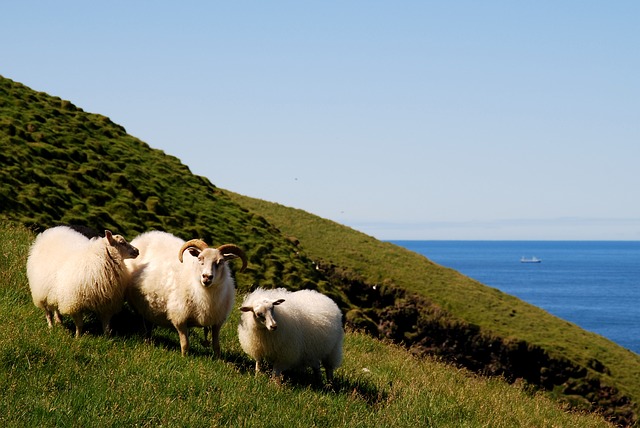
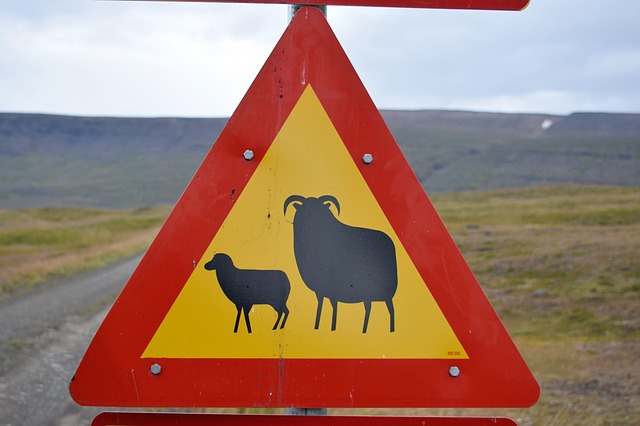
That photo above isn’t just cute—it’s accurate. In rural Iceland, animals can and do wander onto the road. Sheep are especially famous for appearing in the exact place you least expect. Slow down in farming areas, scan the roadside, and be prepared for sudden movement. If you see one sheep, assume there are more. And if you need to stop, do it in a safe place—animals on the road can distract other drivers, and you don’t want to add a parked car into the mix.
Winter driving: the same rules, higher stakes
In winter, you still drive on the right—no surprises there. What changes is traction, visibility, and how fast conditions shift. Wind can be the headline act, and a clear morning can turn into a whiteout vibe quicker than you’d like. If your trip is between late autumn and early spring, spend a few minutes with this winter months driving guide so you know what “normal” winter road behavior looks like in Iceland—and what choices make it easier (like slowing down early, keeping extra distance, and being flexible with your plan).
One of the best “Goldmine-standard” travel tips we can give is this: build buffer time into your day. Iceland is not a country where you want a schedule so tight that a weather delay ruins your whole itinerary. Give yourself space to slow down, stop safely, and arrive relaxed.
If something goes wrong: know your next step
Most trips are uneventful (in the best way). Still, it’s smart to know what you’ll do if you get a flat tire, a warning light, or a minor bump. Save yourself stress by reading this quick guide on what to do in case of emergency while driving in Iceland. Even if you never need it, having the mental plan is calming—especially if you’re traveling far from Reykjavík.
A quick mindset shift for left-side drivers
If you’re used to driving on the left, here’s the biggest secret: you don’t need to “relearn driving,” you just need to stay deliberate when you start moving. Parking lots, petrol stations, and quiet rural pull-outs are where mistakes happen, because you’re not surrounded by traffic cues. Take two seconds before you pull out, check which lane you’re joining, and commit to the right side. After a day, it becomes second nature.
Another thing, many roads in Iceland are elevated, sometimes almost two metres up from the ground but do not let that scare you. The shoulders are often quite wide on either side, but the roads are elevated, so snow does not blow onto the road. On windy days, that elevation can also make gusts feel stronger—so keep both hands on the wheel and slow down if the car feels light.
And now you know! Icelanders drive on the right side of the road; road markings are not always up to code and roads are often elevated for your safety. Now, get going—but drive like you’re here to enjoy the journey. Be patient, stop only in safe places, keep your eyes open for animals, and give yourself the gift of extra time.
If you want to keep learning (and feel even more confident each day you drive), start with these practical reads: a simple overview of the Keflavík to Reykjavík drive, a pre-trip checklist on preparing for Iceland’s roads, a realistic guide on what driving here feels like, a seasonal deep dive into winter driving, and—just in case—what to do if an emergency happens on the road.
 DRIVING IN WINTER: ICELAND’S CAR RENTAL SAFETY GUIDE FOR FIRST-TIME VISITORS