If your rental car has a flat tyre, won't start, or gets stuck on a gravel shoulder, this article explains exactly who to call, what Blue Car Rental's roadside assistance covers, and when you need Iceland's emergency number instead. It also covers what determines whether help is free or comes with a cost, and how to reduce that risk before you set off.
Short answer: For anything involving injury, danger, or a serious accident, call 112, Iceland's single emergency number for police, fire, and ambulance. For a breakdown, flat tyre, or any issue with the rental vehicle itself where nobody is in danger, call Blue Car Rental's 24/7 support line on +354 773 7070, also printed on your booking confirmation, rental agreement, and the online check-in page. Roadside assistance is available around the clock across Iceland, though response times and costs vary with how remote your location is and which coverage you've chosen.
What to do first if something goes wrong
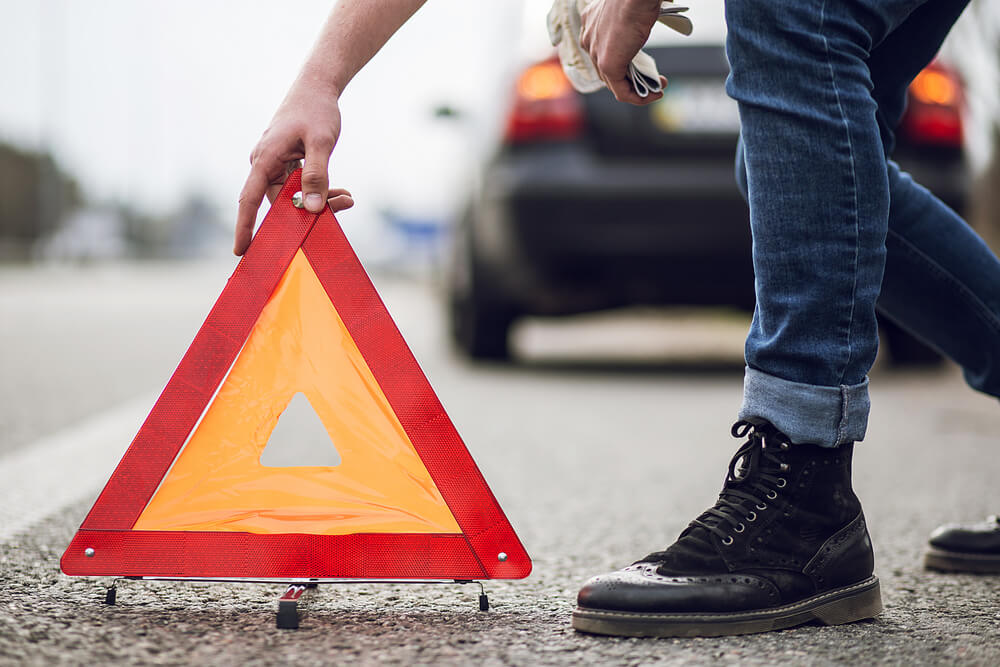
Pull over somewhere safe before doing anything else. Get the car off the traffic lane if possible, turn on your hazard lights, and if you have a reflective warning triangle, place it behind the vehicle, this matters on Route 1 (the Ring Road) and other roads where visibility can drop quickly in rain, fog, or wind.
Once you and your passengers are safe, take a moment to work out what kind of problem you're dealing with. A flat tyre is a very different situation from an accident or someone feeling unwell, and the next step depends on which one it is.
Which number to call: 112 or Blue Car Rental
This is the single most useful thing to know before you drive in Iceland. The two numbers serve different purposes, and mixing them up wastes time in a genuine emergency.
112 is Iceland's emergency number, equivalent to 911 in the US or 999 in the UK. It connects you to police, fire, and medical services, and operators speak English. Call 112 for accidents involving injury, fire, medical emergencies, or any situation where someone's safety is at immediate risk. There's also a 112 Iceland app that can share your GPS location automatically, which is useful in areas with limited address information, such as the highlands or the Westfjords.
Blue Car Rental's 24/7 support line is for issues with the vehicle itself, flat tyres, a car that won't start, warning lights, or getting stuck, where nobody is in danger. This number is listed on your rental agreement, booking confirmation, and the online check-in page, so it's worth saving it to your phone before you leave the pickup location.
| Situation | Who to call | What typically happens |
|---|---|---|
| Accident with injury or danger | 112 | Police, fire, or ambulance dispatched; notify Blue Car Rental afterwards |
| Flat tyre, dashboard warning light, car won't start | Blue Car Rental support line | Guidance by phone, or roadside assistance/towing arranged |
| Stuck in sand, snow, or mud | Blue Car Rental support line | Traction advice or towing arranged, depending on location |
| Medical issue, not life-threatening | Local clinic or 112 if unsure | Directed to nearest health centre |
| Uncertain river crossing on an F-road | Turn around; check road.is / safetravel.is | No crossing advice given by phone, turn around if unsure; check road.is and safetravel.is |
If you're ever unsure whether a situation counts as an emergency, calling 112 to check is the safer choice than deciding not to.
What's included in every Blue Car Rental booking
Every Blue Car Rental rental includes Collision Damage Waiver (CDW), Super Collision Damage Waiver (SCDW), Gravel Protection, Theft Protection, and Third-Party Liability as standard. These reduce your exposure to a range of common issues, gravel chips to the windscreen or bodywork, theft, and liability toward other parties, without needing to add anything extra.
Tyre damage sits under the Liability Waiver (LW), not the standard package. The LW also covers water damage, including legal river crossings, underbody damage, wind damage to doors, and sand or ash damage. It's a meaningful upgrade if your route includes gravel roads, highland tracks, or river fords, since tyres and underbody are the parts most exposed on those surfaces. You can compare what each level of cover includes on the insurance overview page or in this breakdown of pricing, deposits, and insurance.
Illegal river crossings or driving off marked roads fall outside every waiver, nothing covers damage from that, which is also why off-road driving is illegal in Iceland regardless of insurance.
One point worth remembering: Blue Car Rental takes a credit card imprint as security when you pick up the car, not a deposit, no funds are actually held or blocked on your card. You can read more about how this works in the car rental deposit guide.
Flat tyre: what to do and what's covered
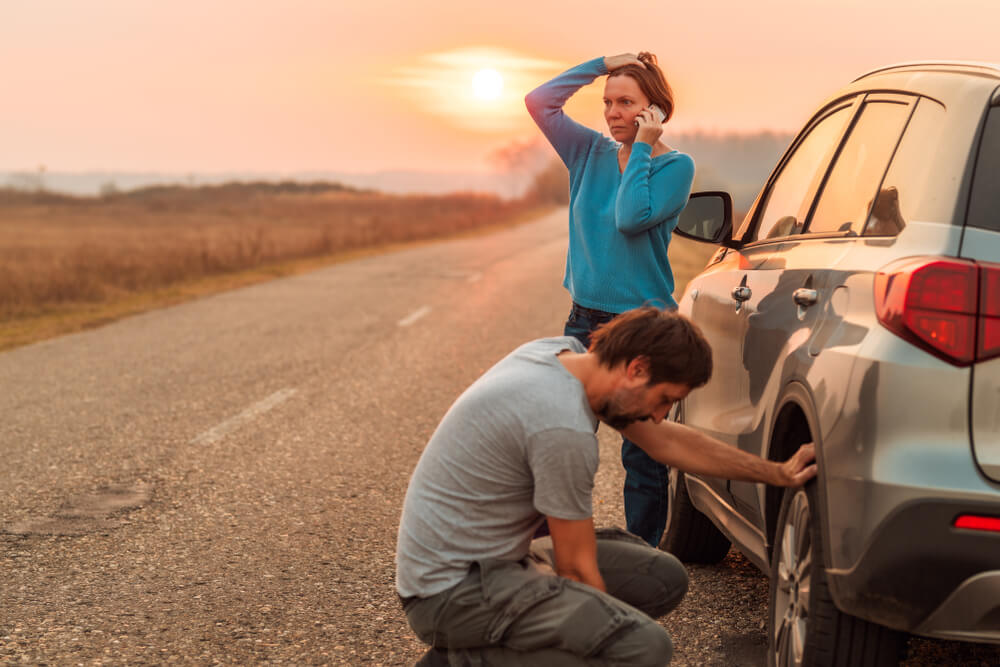
If you get a flat tyre, pull over to a safe, flat spot and turn on your hazard lights. If you're comfortable changing it yourself and the car carries a spare and the right tools, you can do so, otherwise, call Blue Car Rental's support line rather than attempting a roadside fix on a busy or narrow road.
Because tyre cover sits under the Liability Waiver, whether the replacement or repair is covered, and at what cost, depends on whether LW was added to your rental. Without it, tyre damage is generally the renter's responsibility. This is one of the more common questions travellers have after picking up a car, and it's worth clarifying with the rental desk at pickup if you're unsure which cover you've chosen, rather than finding out on a gravel road in the Highlands.
Engine trouble, getting stuck, and other common scenarios
Unusual noises, overheating, or a dashboard warning light mean you should stop driving as soon as it's safe to do so, rather than continuing and risking further damage. Call the support line and describe what you're seeing, this helps them assess whether it's something you can continue with cautiously or something that needs a technician or tow.
If you get stuck in sand, snow, or soft ground, avoid spinning the wheels repeatedly, as this usually digs the car in further rather than freeing it. Traction aids or a shovel can help in mild cases; otherwise, call for assistance and describe your surroundings as precisely as you can.
River crossings on F-roads such as F35 Kjölur or routes into Landmannalaugar (F208) are a separate category of risk. If you're not certain a crossing is safe, the right move is to turn around rather than attempt it, this isn't something to judge by eye or by watching another vehicle go first. Check current conditions on road.is / umferdin.is and safetravel.is before you commit to any F-road, and consider that some highland routes are better suited to an experienced local operator than a self-drive rental. For more on which vehicle class suits which route, see this guide to F-roads in Iceland and when a 2WD is enough versus when you need a 4x4.
What Blue Car Rental needs from you when you call
Having a few details ready speeds things up considerably when you call for roadside assistance:
- Your exact location, sharing GPS coordinates or a pin from your phone's maps app is more useful than a road name alone, especially outside towns
- A short description of what's wrong (flat tyre, won't start, stuck, warning light, etc.)
- Your rental agreement or booking reference
The team will talk you through next steps, which might be phone guidance, a technician being sent out, or towing, depending on what's wrong and where you are.
Costs of roadside assistance and how coverage affects them
Roadside assistance callouts for issues that aren't covered by your waiver level are typically charged based on distance, as outlined in your rental agreement, confirm current terms with the support line, since technicians and tow trucks in Iceland often have to travel considerable distances to reach remote roads. Because many of Iceland's most scenic routes, highland tracks, parts of the Westfjords, the interior near Kjölur, are exactly where this distance is greatest, an uncovered callout in a remote area can end up costing more than one closer to Reykjavik or Keflavik.
This is the practical reason to review your coverage before setting out, particularly if your itinerary includes gravel roads, highland routes, or winter driving. Adding the Liability Waiver reduces exposure to tyre, underbody, water, and wind-door damage; combined with the standard-included CDW, SCDW, Gravel Protection, Theft Protection, and Third-Party Liability, this covers most of what can realistically go wrong with the vehicle itself. For a broader look at where unexpected charges tend to come from, see hidden costs of renting a car in Iceland.
| Coverage level | What's included | Best suited to |
|---|---|---|
| Standard (included in every rental) | CDW, SCDW, Gravel Protection, Theft Protection, Third-Party Liability | Ring Road / paved road itineraries |
| Standard + Liability Waiver (LW) | All of the above, plus tyre, water damage (incl. legal river crossings), underbody, wind-door, sand & ash | Gravel roads, F-roads, winter driving, remote routes |
Preparing for remote roads and Icelandic conditions
Keep a few essentials in the car regardless of season: warm clothing and a blanket, some food and water, and a charged phone with a power bank. Cell coverage is generally reliable along Route 1 but can drop out in valleys, tunnels, or deep in the highlands.
Before heading out each day, check road conditions at road.is/umferdin.is and the weather forecast at the Icelandic Met Office (vedur.is), and consider installing the SafeTravel app, which lets you register your travel plan so authorities know roughly where to look if something goes wrong. This matters more in winter, see this guide to driving in Iceland in winter for how conditions differ from summer, and on any route that takes you away from the main ring road.
Mistakes to avoid
A few recurring issues account for most avoidable roadside calls:
- Continuing to drive after a warning light appears, which can turn a minor issue into an expensive one
- Attempting a river crossing without checking current conditions first, rather than turning around when unsure
- Driving off marked roads or tracks, this is illegal in Iceland and isn't covered by any waiver
- Not knowing which coverage level you booked, then being surprised by a bill after a callout
- Skipping the weather and road checks before a highland or winter drive
The bottom line
Getting a flat tyre or a warning light in Iceland isn't unusual, and it doesn't need to derail a trip. Knowing the difference between 112 and your rental company's support line, understanding what your coverage actually includes, and keeping a few basics in the car covers most situations. If you're still deciding how much coverage to add before you travel, the FAQ page and insurance overview are good places to check the specifics for your booking.
 4X4 RENTAL IN ICELAND: ROUTE AND SEASON REQUIREMENTS