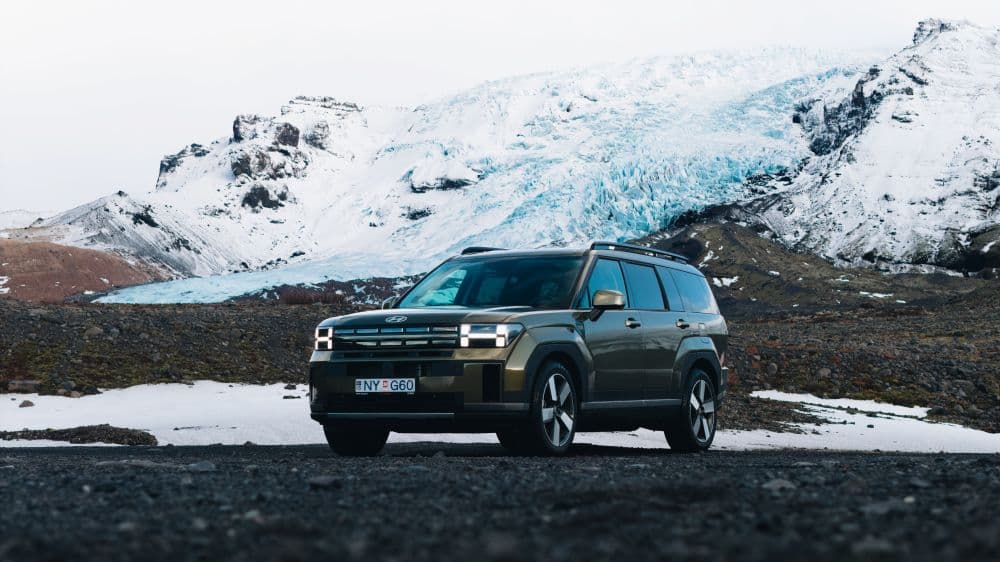

Picking the right vehicle for an Iceland self-drive trip is one of the most genuinely consequential decisions you will make before you arrive. A 4x4 rental in Iceland is legally required for F-roads and the Highlands, strongly advisable in winter, and often unnecessary for a summer Ring Road trip. Get it right and you move freely across the country. Get it wrong and you may find yourself turning back at a river crossing or paying for capability you never needed.
This guide works through the full decision: when a 4x4 rental in Iceland is legally required, when it is just strongly advisable, when a 2WD is perfectly adequate, and how campervans fit into the picture. It also covers specific vehicle options for different budgets and trip types, so you can match your choice to your actual itinerary.
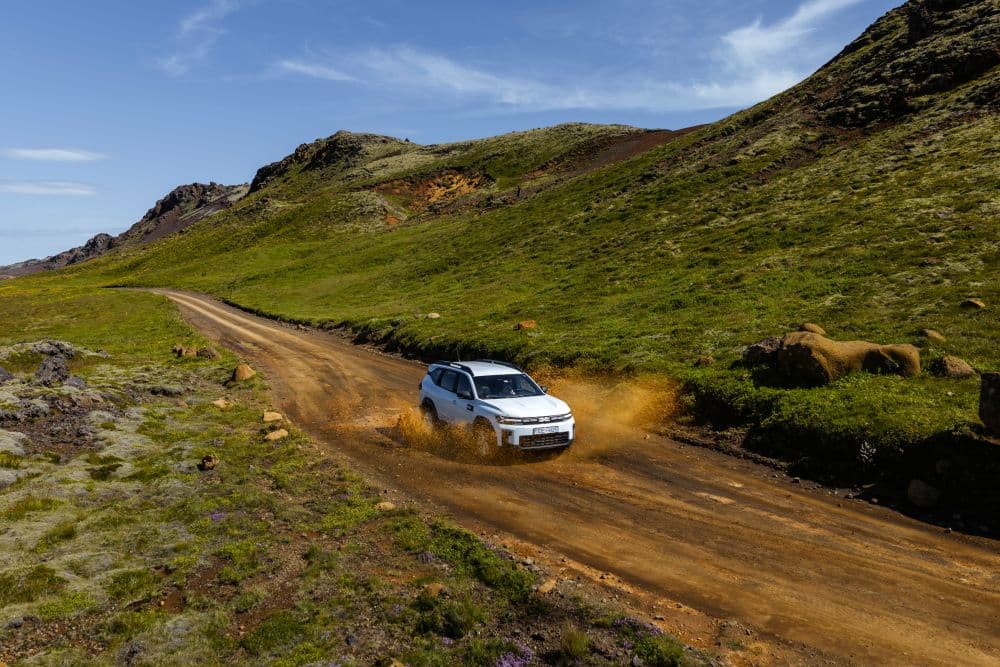
Do you actually need a 4x4 in Iceland?
The short answer: it depends almost entirely on where you plan to drive and when.
For the Ring Road (Route 1) in summer, a standard 2WD with decent ground clearance will get you around the entire country without issue. For the Highlands and F-roads, a 4x4 with genuine off-road clearance is not optional, it is a legal requirement. In winter, a 4x4 is strongly advisable even on paved roads, and for some mountain routes it becomes essential regardless of season.
If you are unsure which side of that line your itinerary falls on, the detailed breakdown at Do I need a 4x4 rental in Iceland? walks through seven specific questions to ask yourself before booking.
When a 4x4 is legally required: F-roads and the Highlands
F-roads legally require a 4x4 in Iceland. They are unpaved, often include unbridged river crossings, and are only accessible during summer (typically late June through September, though dates vary year to year based on snowmelt and weather). Driving on them in a 2WD is prohibited by Icelandic law, and any damage to your rental vehicle on an F-road while driving an ineligible vehicle will void your insurance cover entirely.
The most commonly driven F-roads include:
- F35 Kjölur route: the most accessible Highland crossing, running between the north and south of Iceland between Gullfoss and Blönduós. No river crossings, but rough gravel and Highland conditions throughout.
- F208 to Landmannalaugar: a popular route into the Highlands with multiple river fords. Water depth varies with rainfall and snowmelt, making it one of the more unpredictable F-roads.
- F26 Sprengisandur: a remote north-south crossing across the interior desert. Rarely driven solo and genuinely demanding.
- F88 to Askja: the approach to the Askja caldera in the northeast Highlands. River crossings are standard here, and a high-clearance 4x4 is non-negotiable.
For anyone heading into the Highlands, read the full practical breakdown at F-roads in Iceland: a rental car guide to the Highlands before you go.
Always check current road conditions and access status before driving any F-road. The Icelandic Road and Coastal Administration posts live updates at umferdin.is. Roads can be officially open but still genuinely hazardous after heavy rain.
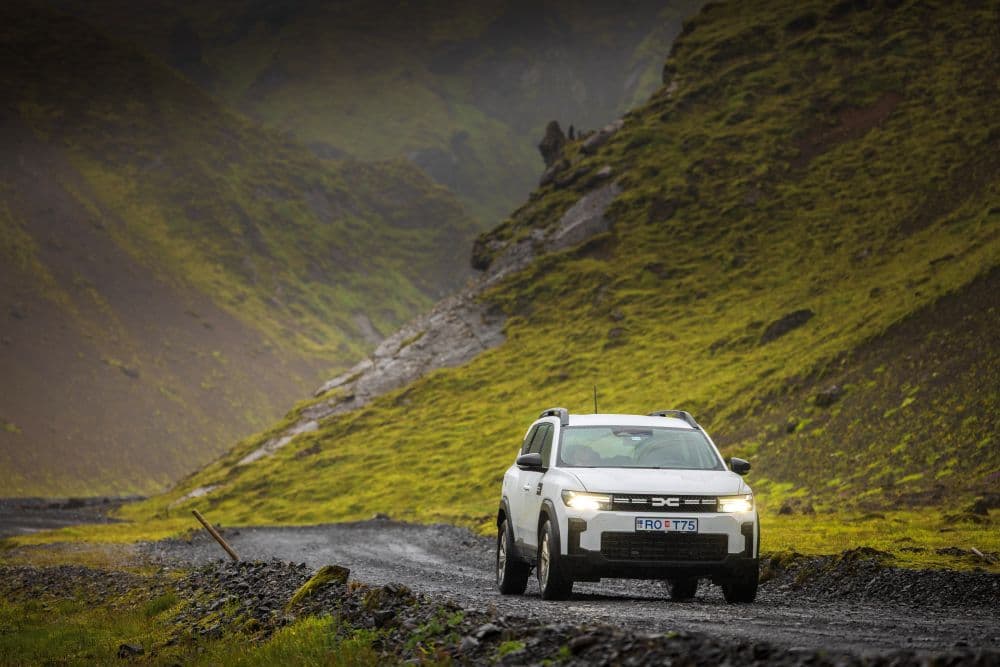
The Ring Road in summer: does a 4x4 add value?
For most of Route 1 in summer conditions, a 4x4 is not necessary. The road is paved, well-maintained, and navigated by ordinary passenger cars throughout the season. A compact 2WD from a reputable rental company with summer tyres will complete the Ring Road without drama.
Where the calculation changes is on the side roads. Many of the short detours off the Ring Road, to waterfalls, viewpoints, beach parking areas, and remote guesthouses, are on unpaved gravel tracks. Some are fine for any car. Others develop ruts and soft shoulders after rain, and an SUV with more clearance will handle them with less stress.
If your itinerary is primarily Ring Road with occasional paved detours, a well-specified 2WD or crossover is a reasonable choice. If you want the flexibility to follow a gravel track wherever it leads without checking the surface first, a mid-sized 4x4 is worth the step up.
The full side-by-side breakdown is covered in 4x4 vs 2WD in Iceland: when a small car is enough and when it's not.
Winter driving and why 4x4s matter more in cold months
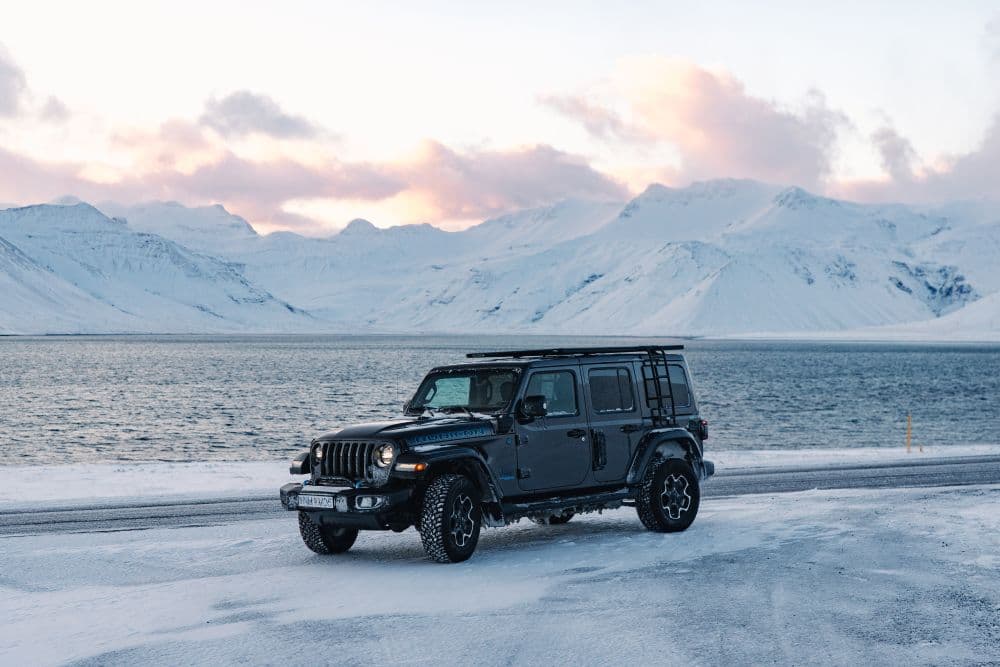
In winter, a 4x4 is the practical choice for almost any route outside Reykjavik. Iceland's road conditions can change within hours: a paved highway that is clear at 9am can be icy, snow-compacted, or drifted by afternoon. The Ring Road itself can be temporarily closed during severe storms.
All rental vehicles in Iceland are fitted with winter tyres during the winter season, which provides meaningful grip on icy roads. But winter tyres alone do not give you the traction of a 4x4 drivetrain on a steep, snow-covered incline, or the confidence of higher ground clearance when roads have not been ploughed since the previous storm.
For winter travel to the south coast (Vík, Skaftafell, Jökulsárlón), the north (Mývatn, Akureyri), or the Snæfellsnes Peninsula, a 4x4 is the sensible choice. For a short Reykjavik city stay with only day trips on main roads, you can manage with a 2WD, but the margin for disruption is narrower.
Always check road conditions at umferdin.is and weather forecasts at vedur.is before setting out in winter.
Which 4x4 for which trip: a practical guide by route type
Vehicle type matters as much as the 4x4 label itself. There is a significant difference between a compact SUV suited for gravel roads and a full-size Land Cruiser built for unbridged river crossings.
| Route type | Recommended vehicle tier | Example models |
|---|---|---|
| Ring Road in summer | 2WD crossover or mid-sized SUV | Kia XCeed, Suzuki Vitara, Hyundai Tucson |
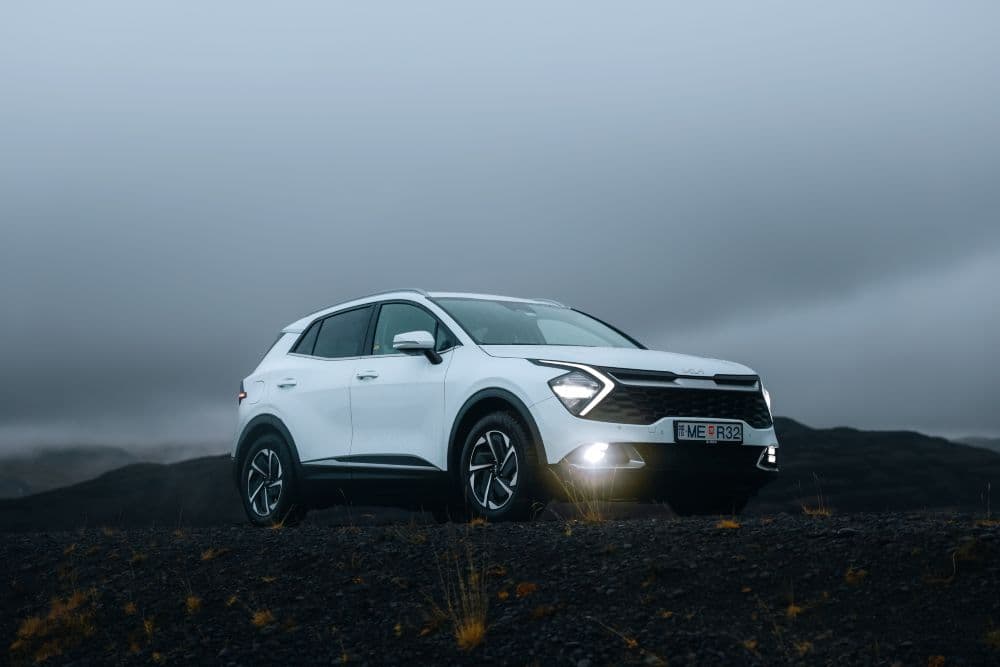
| Ring Road in winter | Mid-sized 4x4 SUV | Toyota RAV4, Nissan X-Trail, Kia Sportage |
| F35 Kjölur (easier F-road) | Mid-to-large 4x4 | Dacia Duster, Dacia Bigster, Hyundai Santa Fe |
| F208, F88, river crossings | High-clearance 4x4 | Toyota Land Cruiser, Land Rover Discovery 5, Super Jeep |
| Family of 5-7, Ring Road | Large 4x4 SUV | Kia Sorento 7-seat, Toyota Highlander, Land Rover Discovery 5 |
| Remote Highlands, solo or pair | Full expedition 4x4 | Toyota Land Cruiser 250, Land Rover Defender, Jeep Wrangler Rubicon |
A few vehicles worth singling out:
Dacia Bigster: a newer addition to Iceland's rental market and a genuinely useful option for travellers who want proper 4x4 capability on a moderate budget. It handles easier F-roads confidently and offers more ground clearance than a standard crossover. Details at Dacia Bigster.
Suzuki Jimny: small, light, and mechanically capable. A good pick for solo travellers or couples tackling the Highlands. Its compact footprint works in its favour on tight tracks, though luggage space is limited. See Suzuki Jimny.
Toyota Land Cruiser (250 or series): if your itinerary includes serious river crossings or deep Highland tracks, this is the level of vehicle you want. The Toyota Land Cruiser 250 and Toyota Land Cruiser 5-seat are built for it.
Land Rover Defender: a practical and capable choice for travellers who want expedition-level clearance without going into super jeep territory. The Land Rover Defender handles the Highlands well.
Super Jeeps: modified high-clearance vehicles used for the most demanding tracks and conditions. If your route includes F-roads that experienced drivers approach cautiously, a Super Jeep may be the appropriate choice. These are also used for guided tours, so they are well proven in Iceland's terrain.
For a full view of what is available, the Blue Car Rental fleet page lists all current vehicle options across 2WD, 4x4, EV, and camper categories.
Camper van vs car rental: which suits an Iceland trip better?
A camper gives you flexibility on accommodation: you can stop when you find a good spot (at designated campsites), avoid the stress of booking guesthouses months in advance, and experience the country at a slower pace. That flexibility comes with trade-offs.
A standard rental car with hotel or guesthouse accommodation is generally more comfortable in winter, faster to manoeuvre, and easier to park. Campervans also have weight and clearance limitations that restrict which F-roads they can access, even if they are built on a 4x4 base.
The full comparison, including cost, logistics, and comfort considerations, is at Camper van vs car rental in Iceland: what's the best choice?.
AWD vs 4WD: does the distinction matter in Iceland?
In practical terms for most Iceland travellers, yes, particularly for F-road access.
AWD (all-wheel drive) systems distribute power to all four wheels automatically and continuously. They are excellent on slippery roads and gravel surfaces, and most modern mid-sized SUVs use this system. They are not designed for extreme off-road use.
4WD (four-wheel drive) systems, often with a dedicated low-range gear, provide more torque control in demanding terrain: steep inclines, loose rock, and river crossings. Vehicles like the Land Rover Defender, Jeep Wrangler Rubicon, and Toyota Land Cruiser use this system.
For the Ring Road and easy gravel tracks, AWD is sufficient. For serious F-roads with river crossings, you want a proper 4WD with high ground clearance and, ideally, experience driving in those conditions.
Insurance considerations for 4x4 rentals
A 4x4 rental in Iceland is typically more expensive than a 2WD, and the appropriate insurance cover follows a similar pattern. Iceland's driving environment is genuinely demanding: sand, volcanic grit, river spray, and loose gravel all pose risks that do not apply elsewhere.
Blue Car Rental's standard rental includes third-party liability, though coverage levels vary by booking and package tier. Check the specific package for full details at the insurance page. Beyond the baseline, you can add gravel protection (for damage from loose stones), sand and ash protection (relevant for volcanic areas), and full cover options that bring your excess down to zero. For F-roads, reviewing your cover level carefully before departure is worth the time.
If you want to understand what each waiver actually covers, the liability waiver explanation is a useful read before booking.
Mistakes to avoid when choosing a 4x4 rental in Iceland
Assuming any SUV qualifies for F-roads. The vehicle must have genuine 4x4 drive and adequate clearance. Your rental agreement and the Icelandic road regulations specify which vehicles are approved for F-road access. Check before driving, not after.
Underestimating luggage space. Compact 4x4s like the Jimny and some Dacia models have limited boot space. If you are travelling with large cases, camping equipment, or a family, factor this in when choosing your vehicle tier.
Booking a 4x4 and then using it to ford rivers without local knowledge. River crossings in Iceland are one of the most common causes of serious vehicle damage and, occasionally, accidents. Water level varies with rainfall and snowmelt. If you are not confident in reading river conditions, stay on the bank and wait for another vehicle to cross first, or choose a route without crossings.
Ignoring winter conditions on a summer vehicle booking. If you are travelling in shoulder months (April, May, October, November), conditions can be wintry at elevation even if the lowlands look fine. A 4x4 adds margin.
Not checking F-road status before heading into the Highlands. F-roads are officially opened and closed each season. This is managed by the Icelandic Road and Coastal Administration, and status is posted at umferdin.is. Driving a closed F-road is illegal and voids your insurance.
Practical pickup and logistics at Keflavik Airport
Most travellers collecting a 4x4 rental in Iceland will arrive at Keflavik Airport. Blue Car Rental offers online check-in and key-box pickup at the airport, which means you can collect your vehicle outside of counter hours without waiting in queues. Details on how that process works are at the Keflavik Airport pickup page.
If you are adding extras like child seats, a GPS unit, or roadside assistance, those can be arranged in advance rather than at the counter. Roadside assistance in particular is worth considering for any trip into the Highlands or during winter, where a breakdown on a remote track is a genuinely different situation from breaking down near a town.
Summary: matching vehicle to route
A 4x4 rental in Iceland is not universally necessary, but for a meaningful share of traveller itineraries, particularly those involving the Highlands, winter travel, or significant gravel road driving, it is the sensible and sometimes legally required choice.
Ring Road in summer? A 2WD or AWD crossover serves most travellers well, with a mid-sized 4x4 adding useful flexibility.
F-roads and Highlands? A 4x4 with genuine off-road capability is required. Match the vehicle tier to the difficulty of your specific route.
Winter anywhere outside Reykjavik? A 4x4 is strongly advisable. Winter tyres help, but drivetrain and clearance matter when conditions deteriorate quickly.
Take the time to map your actual itinerary against the vehicle categories, check road status before you depart each day, and choose cover that reflects where you are actually going. That combination gets you around Iceland with confidence.
 RENTING A CAR IN REYKJAVÍK: A COMPLETE GUIDE FOR TRAVELERS