Gravel protection is one of those add-ons that appears at checkout and leaves many travellers unsure whether it is genuinely useful or just an upsell. In Iceland, gravel protection deserves more thought than in most countries, because road conditions here are genuinely different. This guide explains what gravel protection covers, how it fits alongside CDW and other insurance options, and how to decide what level of cover actually makes sense for your trip.
What gravel protection actually covers
Gravel protection, sometimes listed as GP or stone chip cover, protects the underside and windscreen of the rental car against damage caused by loose gravel and stones thrown up from the road surface. In Iceland, that damage category is relevant on a daily basis, not just on remote tracks.
Standard CDW (Collision Damage Waiver) typically covers collision and rollover damage to the body of the car but usually excludes the underside, tyres, wheels, and windscreen, though exact exclusions vary by policy. Gravel protection fills part of that gap, specifically for stone-chip and gravel impact damage to the exterior paintwork, glass, and underbody.
Without it, a chipped windscreen or scratched underbody can generate a claim that falls outside what your CDW covers, and the excess or repair cost falls to you.

Why gravel damage is a real concern in Iceland
Iceland's road network includes a high proportion of unsealed surfaces, narrow passes, and sections of Route 1 (the Ring Road) that are still unpaved or regularly affected by road-surface repair work. Loose gravel is common on:
- Rural sections of the Ring Road in the East and North
- Any road leading to a popular attraction off the main highway
- F-roads in the interior highlands (where 4x4 is legally required regardless)
- Secondary coastal and mountain roads across the Westfjords and Snæfellsnes peninsula
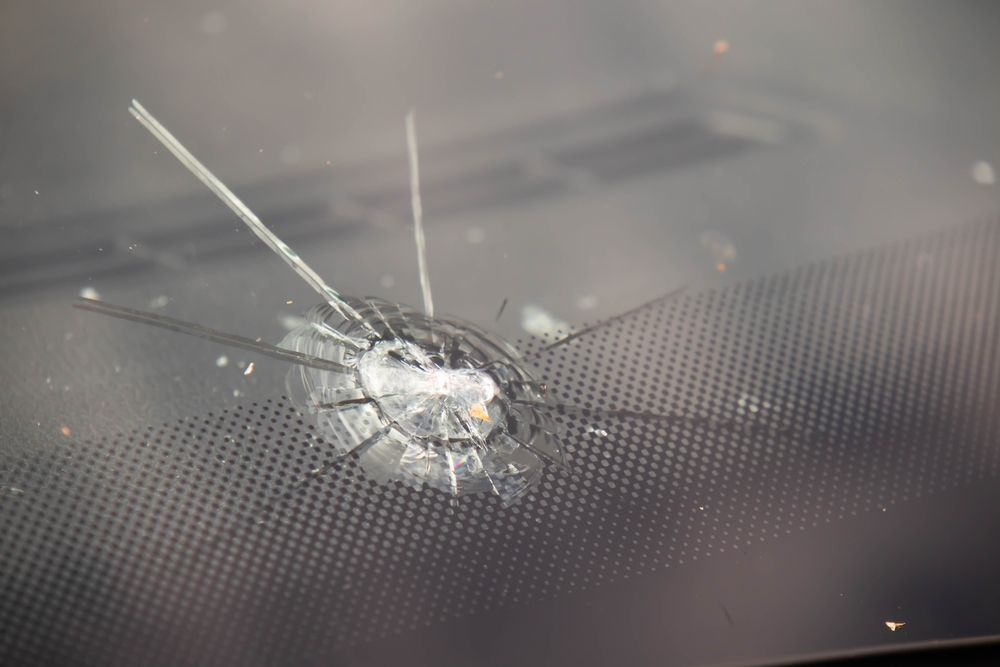
When another vehicle passes in the opposite direction, stones get thrown at speed. Even at legal speeds on a sealed road, windscreen chips happen. On gravel roads, underbody scraping from road debris is a routine risk.
This is not a theoretical concern inflated to sell cover. Chipped windscreens are one of the most common damage incidents reported on Icelandic rental cars, across all vehicle categories and seasons.
How gravel protection fits into the broader insurance picture
Understanding gravel protection means understanding where it sits relative to the other coverage layers available. Here is how the main options typically stack up:
| Coverage type | What it covers | What it typically excludes |
|---|---|---|
| CDW (Collision Damage Waiver) | Collision and rollover body damage | Underside, glass, tyres, wheels, negligence |
| Gravel Protection (GP) | Stone chips, windscreen cracks, underbody gravel damage | Driver negligence, F-road damage where prohibited |
| SAAP (Sand and Ash Protection) | Wind-driven sand and volcanic ash damage to paintwork | Negligence, F-road damage |
| Liability Waiver | Reduces your liability on CDW excess | Varies by policy terms |
| Zero Excess / Full Cover Bundle | Eliminates excess across covered categories | Still excludes negligence and prohibited roads |
CDW alone leaves meaningful gaps. Gravel protection closes one of the most Iceland-specific of those gaps. Sand and ash protection (SAAP) closes another, particularly relevant if your route includes the south coast, Mývatn, or any area near active volcanic zones.
If you're new to how Icelandic rental insurance is structured, the guide to CDW Iceland covers the foundations in detail. For a fuller picture of how all these layers interact, the car rental insurance page at Blue Car Rental walks through each option and what it means in practice.
Do you need gravel protection even on the Ring Road?
Yes, gravel protection is worth considering even if you plan to stay on the Ring Road and never venture onto an F-road. Here is why.
The Ring Road is sealed for most of its length, but "sealed" in Iceland does not always mean "smooth tarmac with zero loose stones." Roadworks are frequent, gravel sections appear without much warning, and trucks and 4x4s kicking up stones are a constant reality in summer and autumn.
If your route stays entirely on sealed roads in and around Reykjavik and the Golden Circle, the risk is lower but still present. A single windscreen chip on a rental car, depending on its size and location in your field of view, can result in a full screen replacement claim.
If your route extends to the East Fjords, the Westfjords, the north coast, or any highland-adjacent area, gravel protection moves from optional to genuinely recommended.
Gravel protection and F-roads: an important distinction
F-roads require a 4x4 vehicle and present a different risk profile entirely. Gravel protection does not change the rules around F-road access, and it will not cover damage that results from driving a vehicle on roads for which it is not rated or permitted.
If you plan to drive into the highlands on routes such as F35 (Kjölur) or F208 (to Landmannalaugar), you need an appropriate vehicle first. Read through the F-road driving guide before booking, and make sure your insurance stack is confirmed for that vehicle category and route type.
Gravel protection on an F-road-rated vehicle still provides value on the approach roads and unpaved sections, but it is not a substitute for using the right vehicle.
Sand and ash protection: the other cover Iceland travellers overlook
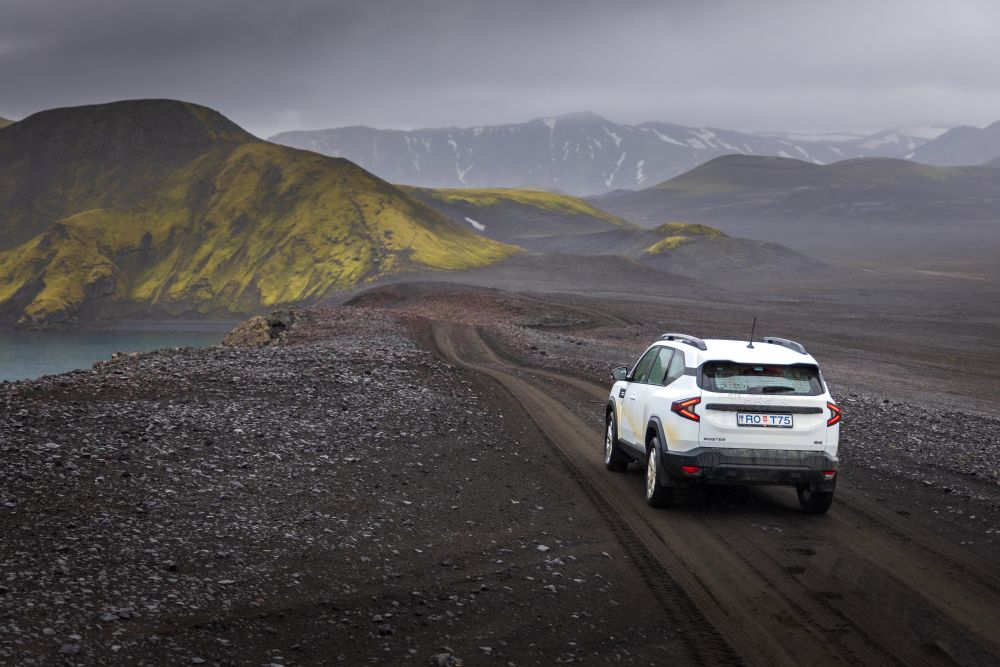
If gravel protection is new territory for you, sand and ash protection (SAAP) may be even less familiar. Iceland's volcanic geology means fine black sand and ash are present across large parts of the south coast and interior, and wind-driven particles cause a distinctive type of paintwork abrasion that standard CDW does not cover.
The south coast around Reynisfjara, the roads approaching Jökulsárlón, and the area around Mývatn are particularly exposed. In storm conditions, visible damage to an unprotected vehicle can accumulate in hours.
SAAP is sold as a separate add-on to gravel protection, and the two are worth considering together if your route crosses the south coast. You can read more about sand and ash protection and what it specifically covers.
How the liability waiver fits in
The CDW excess is the amount you remain liable for even when CDW applies, typically a fixed sum held as a deposit on your card. On higher-category vehicles, this can be substantial. The exact excess amount varies by vehicle category, so check your quote or the booking summary for the figure that applies to your rental before you confirm.
The liability waiver reduces or eliminates that excess, meaning that if a covered claim arises, you are not out of pocket for the deposit amount.
Gravel protection reduces the chance of a claim in the first place. The liability waiver limits what you pay if a claim does go through CDW. The two serve different functions and can be used together.
It is also worth understanding why insurance matters when renting a car in Iceland before deciding which layers to add. For detail on how the waiver works and what it applies to, the liability waiver page has the specifics.

Zero excess bundles: when does full cover make sense?
Some travellers prefer to consolidate everything into a single zero excess package rather than add individual layers at checkout. A zero excess or full cover bundle typically combines multiple protections into one cost, removing the deposit hold and eliminating the excess across covered damage categories.
Blue Car Rental's Zero Worries package is designed along these lines, and may include CDW, gravel protection, SAAP, and the liability waiver, though you should check the Zero Worries product page directly for the definitive list of inclusions, as the bundle composition can vary. Whether it works out cheaper than buying layers individually depends on which add-ons you would otherwise select and the length of your rental. For those who want the reassurance of zero excess car rental in Iceland, a bundle approach is usually the most straightforward way to achieve it.
This approach suits travellers who:
- Find it hard to track which damage type falls under which add-on
- Are doing a long trip across varied terrain and want simplicity
- Prefer a single predictable cost over multiple line items
- Are uncomfortable with a large deposit hold on their card
For context on how rental costs and insurance options fit together more broadly, this article on hidden costs of renting a car in Iceland is worth reading before you book.
Mistakes to avoid when choosing gravel protection
Assuming your travel insurance or credit card covers it. Many travel insurance policies exclude windscreen and underbody claims on rental vehicles. Some credit card rental policies require you to pay the full rental on that card to activate cover, but terms vary widely. Confirm the conditions directly with your card issuer before relying on it, and check specifically whether glass and gravel damage are included or excluded, they frequently are not.
Adding gravel protection but skipping SAAP on a south coast route. The two cover different damage mechanisms. On the south coast, sand and ash damage is often the greater risk.
Skipping all cover because you are only driving for a few days. A windscreen chip can happen on day one. The risk does not scale proportionally with trip length.
Not checking what the CDW excess actually is. The deposit hold is the sum you are liable for under CDW before it applies. As noted above, the exact figure varies by vehicle category, so confirm it from your quote or booking details before you drive. Knowing the number helps you decide whether the liability waiver makes financial sense.
A practical decision guide by route type
| Route type | Gravel protection | SAAP | Notes |
|---|---|---|---|
| Reykjavik city only | Low priority | Low priority | Mostly sealed roads, minimal gravel risk |
| Golden Circle day trip | Recommended | Optional | Some gravel sections near popular stops |
| Ring Road full circuit | Recommended | Recommended (south leg) | Varied surfaces; south coast adds ash risk |
| Westfjords or north coast | Strongly recommended | Optional | High proportion of unsealed roads |
| Highland F-roads | Strongly recommended | Recommended | Requires 4x4; confirm cover applies |
| South coast to Jökulsárlón | Recommended | Strongly recommended | Volcanic sand exposure is significant |
Is gravel protection worth it?
For most self-drive trips in Iceland, yes. The road conditions here are different from what most travellers encounter at home, and chipped windscreens and underbody damage are not rare edge cases. Adding gravel protection is a relatively low-cost way to remove a category of damage that standard CDW will not handle.
Whether you add it individually or through a bundle with zero excess depends on your route, vehicle, and how you prefer to manage risk. The key is to make the decision consciously, with a clear picture of what each layer covers and what it does not.
 RENTING A CAR IN REYKJAVÍK: A COMPLETE GUIDE FOR TRAVELERS