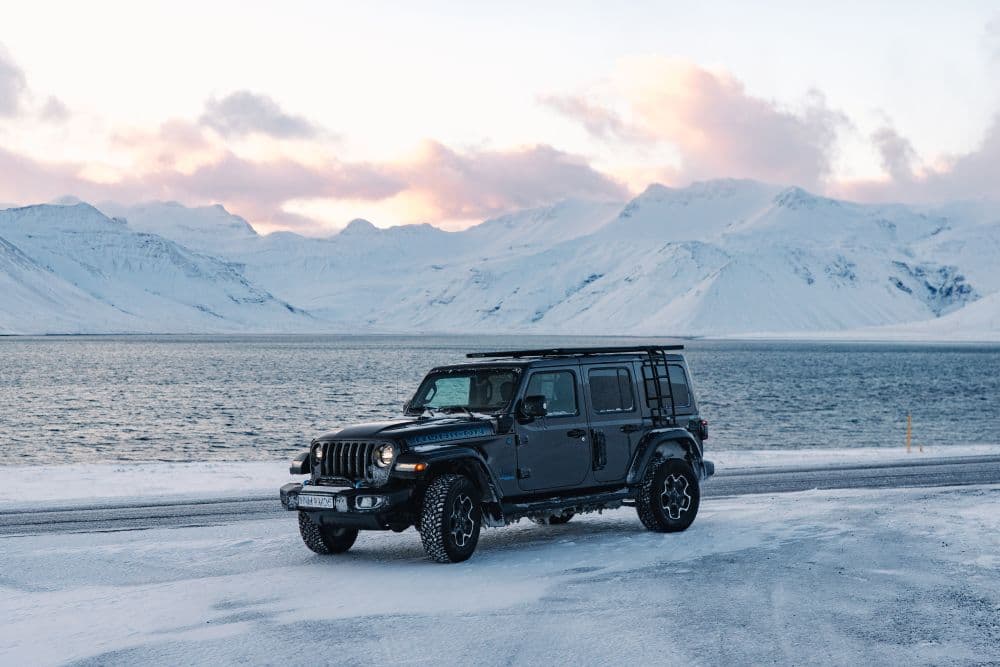

Iceland's Ring Road in winter is not the same road you drive in July. Snow, ice, wind, and limited daylight change everything on Route 1, and preparation, vehicle choice, and a flexible schedule are what separate a rewarding trip from a stressful one. The short answer: yes, you can drive the Ring Road in winter, but it takes the right vehicle, a realistic daily plan, and a willingness to stop when conditions say so.
What the Ring Road actually looks like in winter
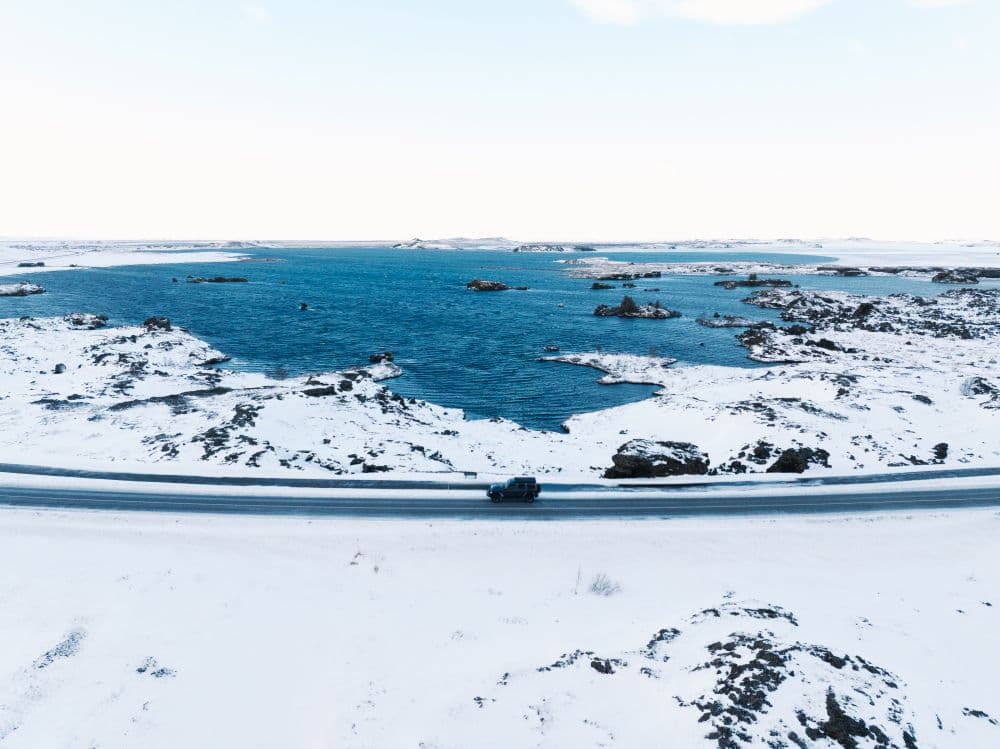
Route 1 is Iceland's main highway, a roughly 1,332 km loop around the entire island. In summer it is straightforward driving. In winter, stretches of it, particularly in the East Fjords, the north around Mývatn and Akureyri, and across the highland passes of the south, can be covered in compacted snow, black ice, or drifted shut for hours at a time.
The road itself stays open year-round as a priority, but "open" in Iceland means passable, not necessarily easy. Road conditions can shift from clear tarmac to ice within a few kilometres, especially after a night of frost or a fresh storm.
What actually shapes your experience:
- Snow and ice: Common from November through March, occasional in October and April. Even when the road is cleared, overnight refreeze is routine.
- Wind: Iceland's south and west coasts can see gusts strong enough to push a car sideways. High-sided vehicles such as campervans are more exposed.
- Reduced daylight: In December, Reykjavik gets around four hours of usable daylight. In the north and east, that window is shorter. Plan your daily distances accordingly, because driving in Iceland's winter darkness on unfamiliar roads adds real fatigue.
- Closures: Short closures for clearing or storm conditions happen. Longer closures are rare on Route 1 itself but do occur on mountain sections.
Check umferdin.is (the Icelandic Road and Coastal Administration) before and during every driving day. The Met Office at vedur.is gives wind speed forecasts by location. Both are essential tools, not optional ones.
Do you need a 4x4 for the Ring Road in winter?
Not every kilometre of Route 1 demands four-wheel drive, but for a full winter Ring Road trip the honest answer is yes, a capable 4x4 makes a significant difference. The sections most likely to cause problems for a two-wheel-drive car are the mountain passes and any stretch that receives heavy snowfall before it is ploughed.
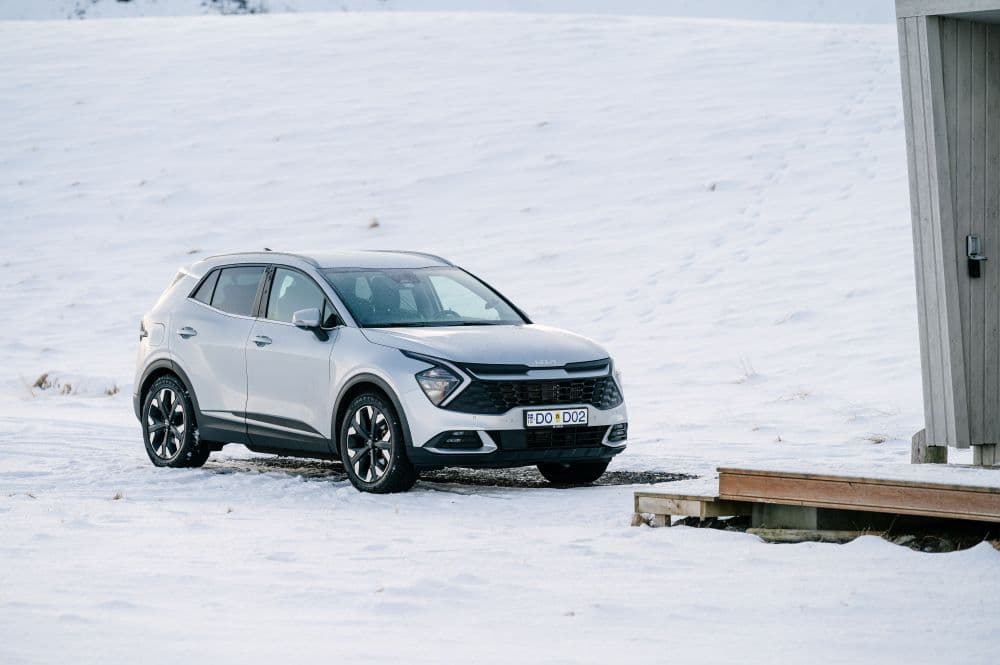
A mid-size AWD SUV such as a Toyota RAV4 or Kia Sportage handles most winter Ring Road conditions well when fitted with winter tyres, which Icelandic rentals must provide from 1 November by law. For more demanding conditions or for travellers who want greater clearance and confidence on icy gradients, a larger 4x4 such as the Land Rover Defender is worth considering.
All-wheel drive improves traction but does not shorten stopping distances on ice. That distinction matters on downhill sections, and confident driving on winter tyres still requires care and adjusted speed. For further information feel free to read our guide on choosing a 4x4 rental in Iceland.
Choosing the right vehicle for the Ring Road in winter
For most travellers doing the full Ring Road between November and March, the right vehicle is a capable AWD or 4x4 SUV with winter tyres already fitted. Icelandic law requires winter tyres on rental cars from 1 November; confirm the current end date with Samgöngustofa (the Icelandic Transport Authority) or your rental company when you book, as the requirement can be updated from year to year.
A smaller 4x4 like the Dacia Duster handles budget-conscious trips on the main road but offers less reassurance on icy gradients. A larger vehicle like the Land Rover Defender gives more clearance and capability but is overkill for travellers who will stay on Route 1 and skip the highland tracks. Note that highland F-roads are closed in winter regardless of what you drive; details on F-roads.
Two things to confirm when booking:
- The car has appropriate winter snow tyres for your travel dates
- You understand what your insurance covers if something does go wrong
Iceland's rental insurance landscape is worth understanding in advance. The insurance and waiver options page explains what is included in a standard rental and what additional cover is available.
For a broader look at matching the right car to the right route and season, the article on choosing the right car for your Iceland road trip is a practical starting point.
Planning your route and daily distances in winter
The Ring Road is roughly 1,332 km. In summer, many drivers cover it in seven to eight days at a relaxed pace. In winter, the same route sensibly takes nine to twelve days, sometimes longer if conditions delay you.
Why the difference?
- Daylight limits useful driving hours to as few as four to six in December and January.
- Icy conditions reduce safe cruising speed.
- Winter detours (some secondary roads and all F-roads are closed) make some side trips impossible.
- Breaks for weather, closures, or simply waiting out a storm are part of the rhythm.
A practical approach is to keep daily distances under 200 km in poor conditions and to build at least two flexible days into the itinerary. Rigid schedules that rely on making up time are a recurring source of trouble on winter road trips in Iceland. Book refundable accommodation where possible so that a storm-day stop does not lock you in. And treat any red-coded road warning on umferdin.is as a hard stop rather than a suggestion: those colour ratings exist for good reason.
The sections that need the most attention
The East Fjords (Austurland): The road winds along narrow fjord edges with steep drops. Snow and ice collect on the shaded sections. This stretch rewards patience more than speed.
Route 1 north of Mývatn toward Akureyri: Exposed plateau driving with crosswinds and drifting. Often cold, often clear, occasionally shut.
The south coast between Vík and Kirkjubæjarklaustur: Deceptively flat but exposed to Atlantic storms. Snow can arrive fast, and the distances between fuel and services are longer than they look on a map.
Hvalfjörður and the Hringvegur around the Snæfellsnes junction: Less dramatic terrain but the area around Borgarnes can ice heavily in frost. The new road tunnel under Hvalfjörður (a toll route) bypasses the fjord road, which can be more exposed in winter; details on Iceland's road tolls.

What to pack and prepare for a winter Ring Road trip
The car matters, but what you carry matters too.
In the car:
- Ice scraper and de-icer spray (rental cars usually have a scraper; check before you leave)
- Warm layers and waterproofs accessible from the back seat, not buried in the boot
- A charged power bank and a downloaded offline map as backup
- Snacks and water for at least half a day, in case you stop unexpectedly
- A fully charged phone with safetravel.is bookmarked
Before you drive each day:
- Check umferdin.is for road status (green, yellow, orange, red or closed)
- Check vedur.is for wind warnings at your planned locations
- Tell someone your route and expected arrival, or register it at safetravel.is
For advice on what to do if something goes wrong on the road, the breakdown and emergency guide is worth reading before you travel. Blue Car Rental offers a Roadside Assistance Waiver as an optional add-on; check the current options on the Roadside Assistance page when booking.
The Ring Road in winter versus summer
| Factor | Summer (June–August) | Winter (November–March) |
|---|---|---|
| Daylight | 20+ hours | 4–6 hours |
| Road conditions | Generally clear and dry | Ice, snow, wind common |
| F-roads and side routes | Mostly open | Closed |
| Crowds | High season, popular stops busy | Quieter, some businesses closed |
| Northern lights | Not visible | Frequent (weather permitting) |
| Driving difficulty | Low to moderate | Moderate to high |
What makes winter worthwhile anyway
None of this is meant to discourage the trip. A winter Ring Road journey has a character that summer simply cannot offer: the silence of a snow-covered lava field at noon, the northern lights arcing over Jökulsárlón, the warmth of a geothermal pool after a cold drive. Fewer people, longer evenings at guesthouses, and landscapes that look nothing like the Instagram version. The trade-off is real effort and real flexibility.
For a deeper look at all the specifics of cold-weather driving in Iceland, the winter travelling guide covers road conditions, vehicle requirements, and what Icelandic winter driving law actually requires.
 RENTING A CAR IN REYKJAVÍK: A COMPLETE GUIDE FOR TRAVELERS