
Winter driving in Iceland calls for more preparation than most travellers expect. Snow tires are required by Icelandic law from November through April, roads ice over quickly, and weather shifts without warning. This guide covers what snow tires are legally required, what additional equipment matters, how to choose the right vehicle for winter conditions, and what to check before you drive.
The short answer
All rental cars in Iceland are fitted with winter tires during the winter season, typically from November through April. You do not need to request them separately or pay extra for them. What matters is choosing the right vehicle for your specific route, understanding what the tires can and cannot do on Iceland's roads, and knowing when conditions make driving inadvisable regardless of your equipment.
What Icelandic law says about winter tires
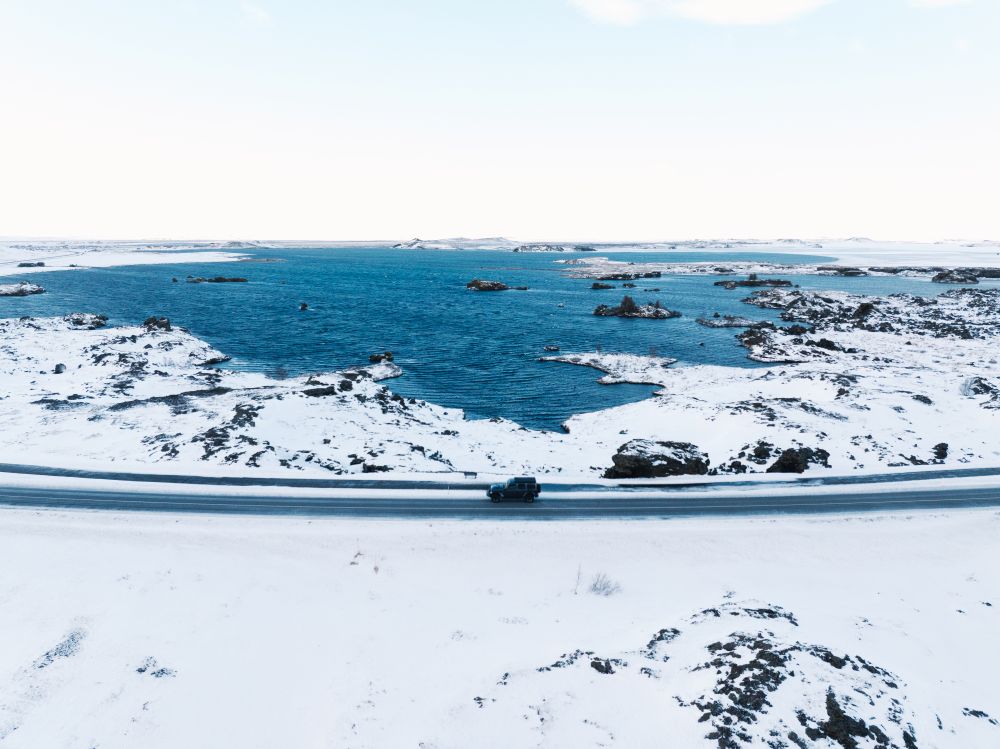
Icelandic regulations require winter tires on all vehicles from 1 November through 15 April. Outside that window, the road administration (Vegagerðin) can mandate winter tires at any time if conditions require it. The legal minimum tread depth for winter tires is 3 mm.
In practice, reputable rental companies have winter tires fitted well before the legal deadline and remove them after it. When you pick up a vehicle in winter, the tires are already compliant. The question is not whether you have snow tires, but whether those tires, combined with your vehicle, match the roads you plan to drive.
Studded versus non-studded tires: what's actually on your rental car
Iceland uses both studded and non-studded (friction) winter tires. Each has different strengths.
| Tire type | Best conditions | Limitations |
|---|---|---|
| Studded winter tires | Hard ice, packed snow, black ice | Noisier on dry roads, less comfortable on tarmac |
| Non-studded (friction) tires | Wet snow, slushy roads, milder conditions | Less grip on hard glare ice |
Most rental fleets use studded tires for the core winter months because Iceland's winter roads frequently include glare ice, especially in the north, east, and highland access roads. If you are unsure what is fitted to your vehicle, ask at pickup or check with your rental provider.
What else counts as winter equipment
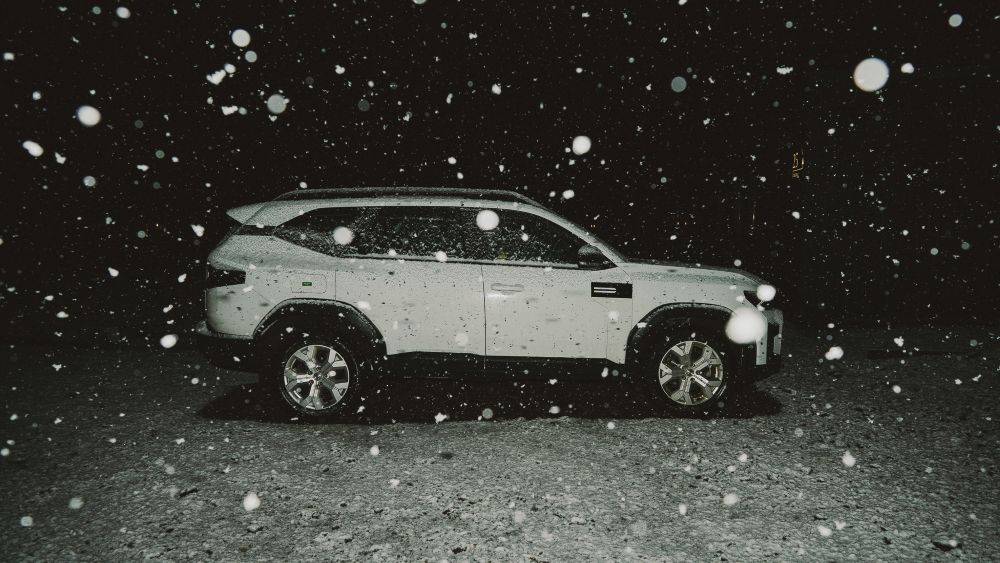
Snow tires are one part of the picture. The following items are either legally required, practically essential, or both for winter driving in Iceland.
Scrapers and de-icer: Required by law to keep your windscreen clear before driving. Most rental cars include a scraper. Check yours is in the car before you leave the lot.
Snow chains: Snow chains are not normally used on standard rental cars in Iceland. In winter, rental vehicles are equipped with appropriate winter tires, often studded, which are the normal solution for driving on snowy or icy roads. Icelandic regulations allow chains when conditions require additional traction, but they must not be used where they could damage the road surface.
Shovel: Useful if you get stuck in drifted snow on a rural road, particularly in the Westfjords, east Iceland, or near highland approaches.
Traction mats or boards: Helpful for self-recovery on soft or icy ground. More relevant for highland-adjacent routes than for the Ring Road itself.
Warning triangle and reflective vest: Icelandic regulations require a warning triangle to be carried in the vehicle. A reflective vest is also sensible safety equipment, particularly if you need to leave the car on a dark or exposed road.
Fully charged phone and offline maps: Not a legal requirement, but essential. Mobile coverage drops significantly in rural areas. Download offline maps before you leave Reykjavik. If you are traveling with a rental car, connectivity tips for Iceland are worth reviewing before your trip.
Do you need a 4x4 in winter?
For the Ring Road in good winter conditions, a 2WD with winter tires is often adequate. For anything beyond the Ring Road, including the Snæfellsnes Peninsula, the Westfjords, remote coastal roads, or highland approaches, a 4x4 gives you meaningfully better control on inclines, loose snow, and unpredictable surfaces.
The practical breakdown looks like this:
| Route / area | Minimum recommendation | Notes |
|---|---|---|
| Ring Road (November–April) | 2WD with winter tires | Adequate in normal conditions; check road status daily |
| Reykjavik and South Coast | 2WD with winter tires | Manageable if roads are clear |
| Snæfellsnes Peninsula | 4x4 recommended | Mountain roads can be icy and steep |
| Westfjords | 4x4 strongly recommended | Remote, hilly, and less frequently gritted |
| North Iceland (Akureyri area) | 4x4 recommended | Reliable snowfall from November |
| Highland F-roads | Closed in winter | Do not attempt regardless of vehicle |
F-roads are closed from roughly October to June, sometimes later. They are not passable in winter, and driving them outside the open season is illegal and genuinely dangerous. For more on which roads are accessible and when, read the guide to F-roads and Iceland's highlands.
For broader guidance on winter travelling in Iceland, including road conditions, daylight hours, and regional route planning, that pillar page covers the full picture.
Choosing the right vehicle for your winter route
Vehicle choice in winter should be driven by your itinerary, group size, and comfort with challenging roads, not by the assumption that bigger is always safer.
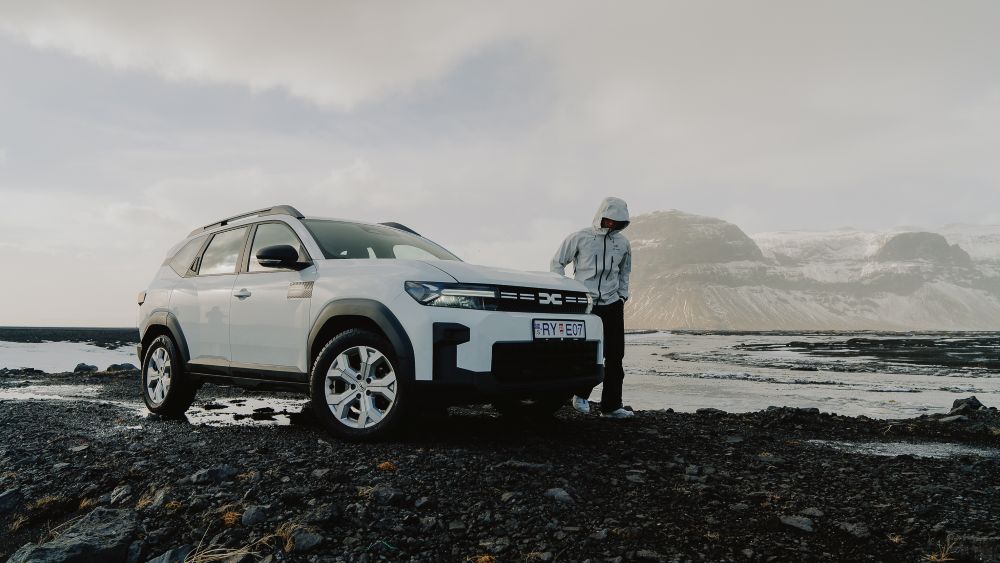
Small 4x4 or crossover (e.g. Dacia Duster, Hyundai Tucson, Kia Sportage, Toyota RAV4): Good for couples or small groups doing the Ring Road with regional detours. Comfortable, fuel-efficient relative to larger SUVs, and capable in typical winter conditions.
Mid-size to large 4x4 (e.g. Kia Sorento, Land Rover Defender, Jeep Wrangler Rubicon): Better for families, groups with luggage, or itineraries taking in more challenging winter terrain. Higher ground clearance is an advantage in heavy snowfall.
Super jeep (e.g. Toyota Land Cruiser with large tires): Reserved for genuine off-road conditions. Not necessary for standard winter routes. Worth considering for tours that take you near highland terrain during shoulder season.
2WD (compact or standard): Suitable for Reykjavik-based exploration and day trips on well-maintained roads. Not advisable as your only vehicle if your itinerary includes northern or eastern Iceland in deep winter.
You can review the full range of available vehicles, including winter-capable 4x4s and SUVs, at the Blue Car Rental fleet page.
For more detailed thinking on matching vehicle category to winter route, the article on choosing the best car rental for a winter road trip in Iceland goes into useful specifics.
How to check road conditions before you drive
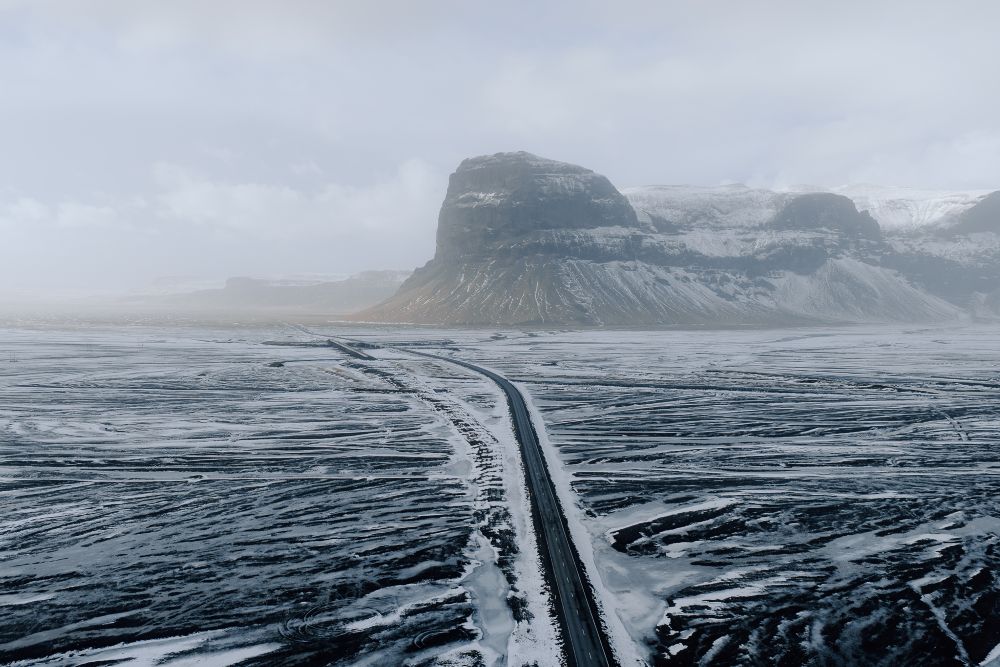
This is non-negotiable in winter. Iceland's road conditions can shift from clear to impassable in a matter of hours during a storm.
Vegagerðin (umferdin.is): The official Icelandic Road and Coastal Administration website shows live road conditions, closures, and hazard warnings across every road in Iceland. Check it every morning before you drive and again at lunchtime if the weather is moving.
Icelandic Met Office (vedur.is): Weather forecasts, wind warnings, and storm alerts. In winter, wind warnings are as important as snow warnings because high crosswinds make driving dangerous on exposed sections of the Ring Road, particularly in the south and east.
Safe Travel Iceland (safetravel.is): Aimed specifically at travellers, this site aggregates safety alerts and has a travel plan registration tool.
No insurance policy, no vehicle, and no set of snow tires changes the fact that driving in storm conditions in Iceland is genuinely dangerous. When official sources recommend against travel, take that seriously.
Insurance and winter driving: what to check
Standard rental insurance covers many scenarios, but not all. In Iceland, gravel protection (SAAP or similar) matters year-round because road surfaces throw debris. In winter, flooding and sandstorm coverage is less relevant, but wind damage and single-vehicle incidents on icy roads are realistic risks.
Review what is and is not covered before you drive. Blue Car Rental offers several insurance tiers, including full-cover options that reduce or eliminate the excess. Understanding your coverage before you encounter a problem is simpler than working it out afterward. The insurance options overview explains what each level includes.
For a full breakdown of winter-specific insurance considerations alongside safety tips, the guide on car rental insurance bundles and winter safety is worth reading before you book.
Picking up your car at Keflavik in winter: practical notes
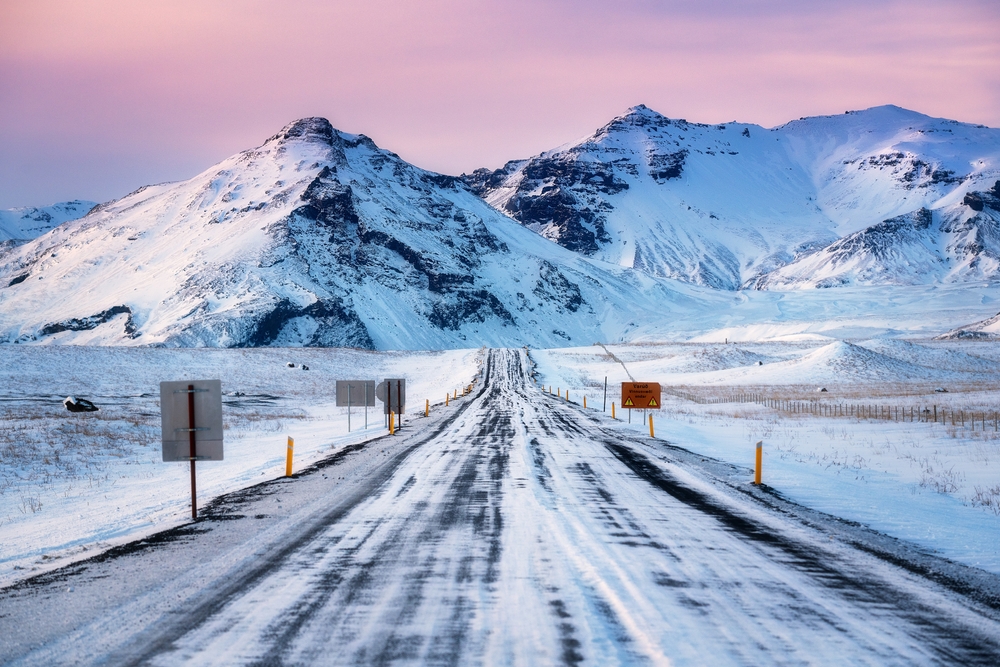
Most travellers land at Keflavik International Airport late in the evening or early in the morning. In winter, the drive from Keflavik to Reykjavik (around 50 km on the Reykjanesbraut) can be icy, windy, and dark.
Blue Car Rental uses a key-box system at Keflavik Airport, which means you can complete check-in online before you arrive and collect your keys without waiting for a desk to open. The Keflavik Airport pickup location and key-box details explain exactly how the process works. This is particularly useful if you land outside standard business hours, which is common on transatlantic flights.
When you pick up the car, take a few minutes to locate the scraper, check the wiper fluid is full, and familiarise yourself with the controls before leaving the lot. Doing that in a lit car park is considerably easier than doing it on the roadside in the dark.
Practical winter driving habits that matter
Winter tires and a capable vehicle put you in a reasonable position. The following habits determine whether you use that position well.
Drive to the conditions, not the speed limit. Legal limits in Iceland are 90 km/h on rural paved roads and 80 km/h on gravel. On icy roads, safe speeds are often well below those figures.
Brake early and gently. Threshold braking on ice frequently leads to skidding. Even with ABS, give yourself far more stopping distance than you would in summer.
Watch for black ice. Bridges and sheltered road sections freeze before open road. Black ice is invisible. Suspect it whenever temperatures are near or below zero.
Never drive into closed roads. Road barriers are there for reasons that are not always immediately visible. Drifted snow, flood water, and avalanche risk are all possibilities.
Keep fuel above half a tank. Service stations in rural Iceland are spread out, and some close early. Running low on a winter night in a remote area is avoidable with simple planning.
Tell someone your plan. If you are driving remote routes, register your travel plan with Safe Travel Iceland. It costs nothing and gives search-and-rescue teams a starting point if something goes wrong.
A note on Iceland winter itinerary planning
A winter itinerary in Iceland needs to build in flexibility. Budget extra days, especially around changeable weather windows. The most experienced winter travellers in Iceland are often the ones who spend an unplanned afternoon in a guesthouse rather than push through a storm warning. For better understanding I recommend our blog about the weather in Iceland and how to prepare for it on a self-drive trip.
If you are planning a winter road trip itinerary, factor in that daylight hours are short (4–5 hours in December), road closures can add hours to any journey, and popular attractions near the South Coast see heavy visitor traffic even in midwinter. Building in rest days and alternative plans is not pessimism, it is practical travel.
 CAMPING IN ICELAND WITH A RENTAL CAR: A PRACTICAL ROAD TRIP GUIDE