
Driving a rental car in Iceland in winter for the first time is very doable, and most of what first-time visitors worry about comes down to a handful of habits rather than special skills. This guide is about you and the car: what to know before you go, how to choose between 2WD and 4x4, the hazards that actually cause incidents, what to do if you get stuck, and what your rental already covers. For the conditions themselves, daylight hours by month, road closures and why the F-roads are shut, see our companion page on driving in Iceland in winter: road conditions, closures and daylight.
Quick answer: Self-driving in Iceland in winter (roughly November through March) is manageable for confident drivers who slow down, check umferdin.is and vedur.is before setting out, use a vehicle fitted with proper winter tires, and stay flexible about their route. It is not the same as driving in summer, and it is not the right trip for everyone, but with the right vehicle and mindset, it works well for most visitors.
Is a self-drive winter trip realistic for first-time visitors?
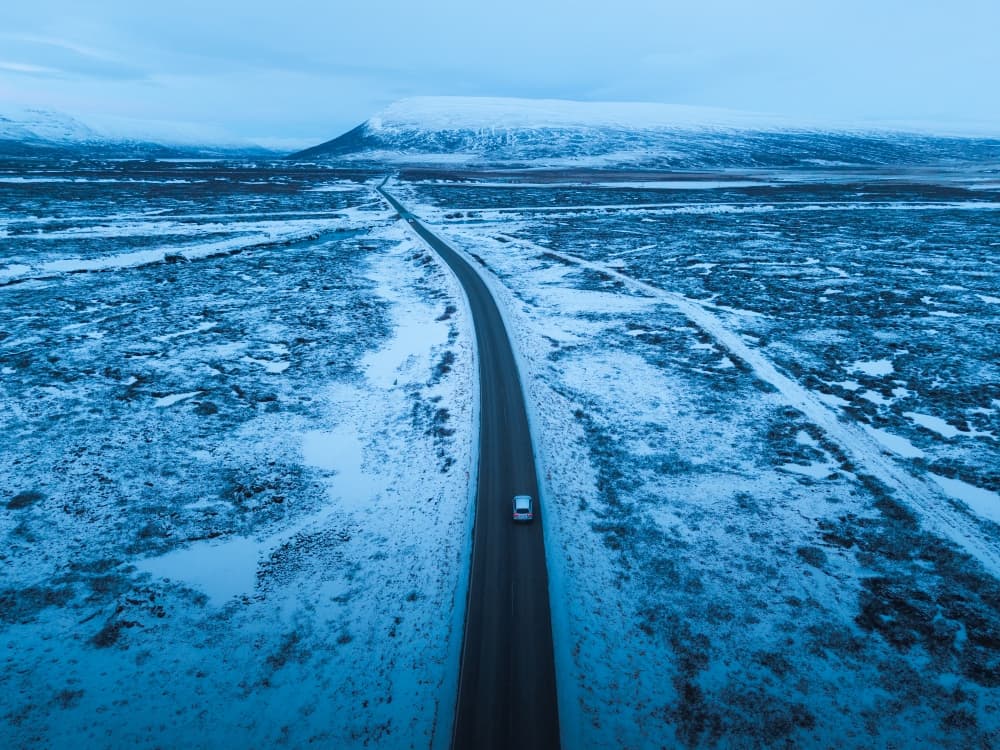
Yes, for most travellers it is, as long as expectations match reality. Iceland's main roads, including Route 1 (the Ring Road), are ploughed and salted through winter, and locals drive them daily. What changes is your margin for error: shorter daylight, colder surfaces, and wind that can genuinely push a car sideways on open stretches.
First-time visitors who do well in winter tend to share a few habits: they build extra time into each day's drive, they check conditions before leaving the hotel rather than after, and they treat a closed road or a delayed plan as a normal part of the trip rather than a failure. Travellers who struggle are usually the ones trying to keep a tight, summer-style itinerary in December's short days.
Winter tires in Iceland: what the law actually requires
Icelandic law doesn't name winter tires as compulsory, but it makes every driver responsible for tires that suit the conditions, and from November 1 to April 14 tires must have at least 3 mm of tread. Studded tires are allowed only in that window and are never required (sources: FÍB and the City of Reykjavík, last checked September 2026). In practice, summer tires aren't fit for Icelandic winter roads, and Blue fits winter tires as standard for the season, so this isn't an add-on you request.
There's a difference between winter tires and studded tires, and between winter tires and snow chains (which are rarely used or needed on Icelandic tarmac). If you're renting from a company operating in Iceland, the fleet is prepared for the season, but it's still worth confirming your vehicle has the correct tires fitted before you drive off, especially if you're picking up outside normal hours.
One thing worth understanding before you sign anything: every Blue rental already includes CDW, SCDW, Gravel Protection, Theft Protection, and Third-Party Liability as standard, but tyre damage on Icelandic rentals is typically covered only under the optional Liability Waiver (LW), not under that standard collision cover. It's a detail easy to overlook when comparing quotes, and worth checking on the insurance options page before you travel.
2WD or 4x4 for winter driving in Iceland?
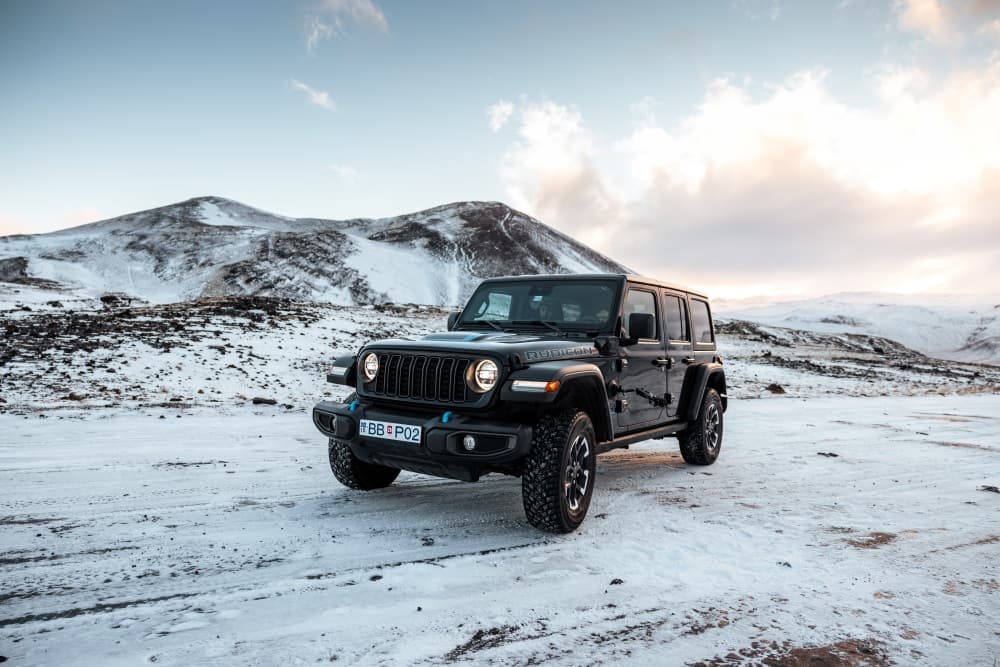
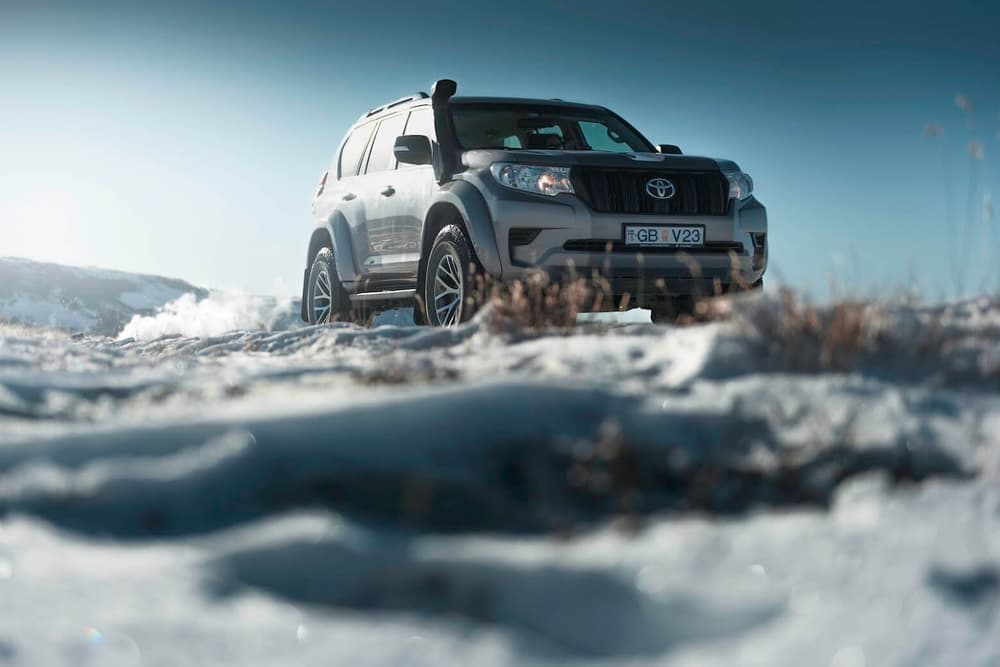
A 4x4 isn't legally required to drive Iceland's main roads in winter, but it's the more practical choice for most winter itineraries, especially outside the Reykjavík area. A 2WD car can be fine for short, city-based trips on well-cleared roads; a 4x4 gives you meaningfully better traction and stability once you're on rural roads, mountain passes, or anywhere wind and drifting snow are a factor.
| Consideration | 2WD rental | 4x4 rental |
|---|---|---|
| Traction on snow/ice | Limited | Noticeably better |
| Ground clearance | Standard | Higher, copes better with snow buildup |
| Best suited to | Reykjavík, Golden Circle, short trips | Ring Road, rural routes, longer winter trips |
| Handling in crosswind | More affected | More stable |
| Access if weather shifts plans | More restricted | More flexible |
If you're still weighing this up for your specific route, this breakdown of when a 2WD is enough and when it isn't and these questions to ask yourself before booking a 4x4 go through it route by route. Browsing the available vehicle categories before you book also helps, winter demand for 4x4s runs high, and options thin out closer to travel dates.
What driving in December specifically looks like
December is the shortest-daylight month of the Icelandic winter, and it changes how a self-drive itinerary should be planned more than any other single factor. In December and January, daylight in Iceland typically runs to only around 4–5 hours, concentrated in the middle of the day.
Practically, that means:
- Long driving days that felt easy in July can eat your entire window of daylight in December.
- Plan to be off unfamiliar rural roads before dark whenever possible.
- Christmas and New Year period road trips are popular, but towns and fuel stations may keep reduced hours, check ahead rather than assuming.
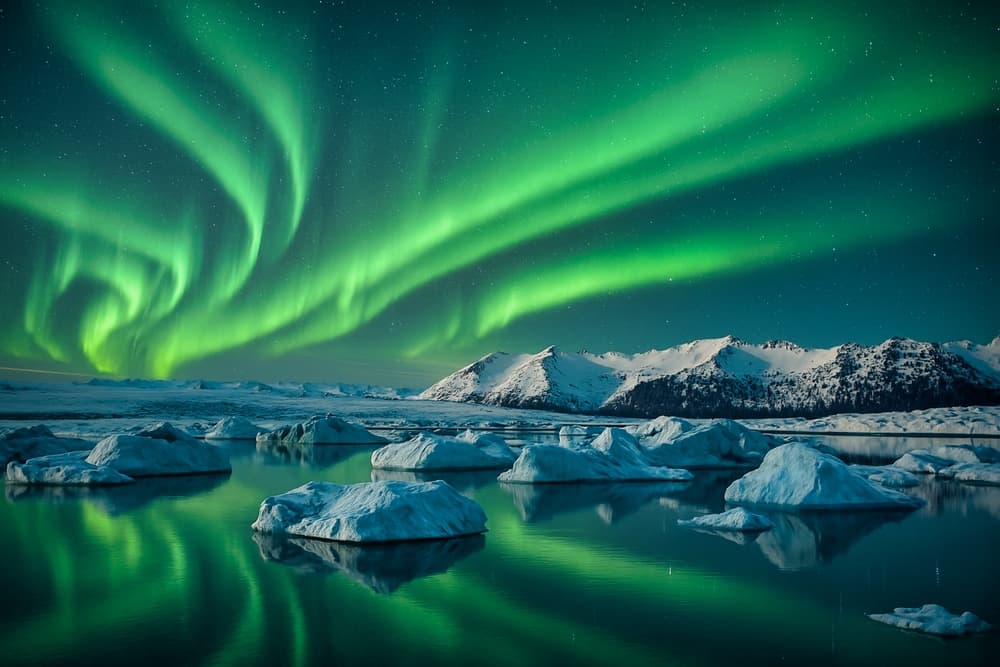
- The upside: fewer daylight hours also mean more hours of darkness for aurora viewing, which is part of why many travellers choose December despite the driving trade-offs.
Hazards to know before you drive
The main winter driving hazards in Iceland are wind, black ice, and sudden shifts in visibility, not deep snow, which is what most first-time visitors expect to worry about. Understanding which one you're actually dealing with changes how you should react.
- Wind: Gusts over 100 km/h are possible in open landscapes and around headlands, and can affect car doors and steering, especially in a taller vehicle. Reykjanes and the south coast are known for this.
- Black ice: A thin, often invisible ice layer, most common on bridges, in shaded valleys, and after a thaw-refreeze cycle. Slow down before you can see it, not after.
- Whiteouts and drifting snow: Conditions can shift from clear to near-zero visibility within minutes on open plains and mountain passes.
- Short daylight: Not a hazard in itself, but a multiplier, it compresses your safety margin for everything above.
None of these are reasons to avoid driving in winter, but they are reasons to check conditions before you leave rather than relying on how the weather looks out the window at 8am.
Popular winter routes and what to expect
The Ring Road (Route 1) stays open year-round and is maintained by Vegagerðin (the Icelandic Road Administration), but sections in the southeast and east are exposed to strong wind and can see temporary closures during storms.
The Golden Circle is well maintained and one of the more forgiving winter day trips from Reykjavík, though parking areas at Geysir and Gullfoss can turn icy underfoot after snowfall.
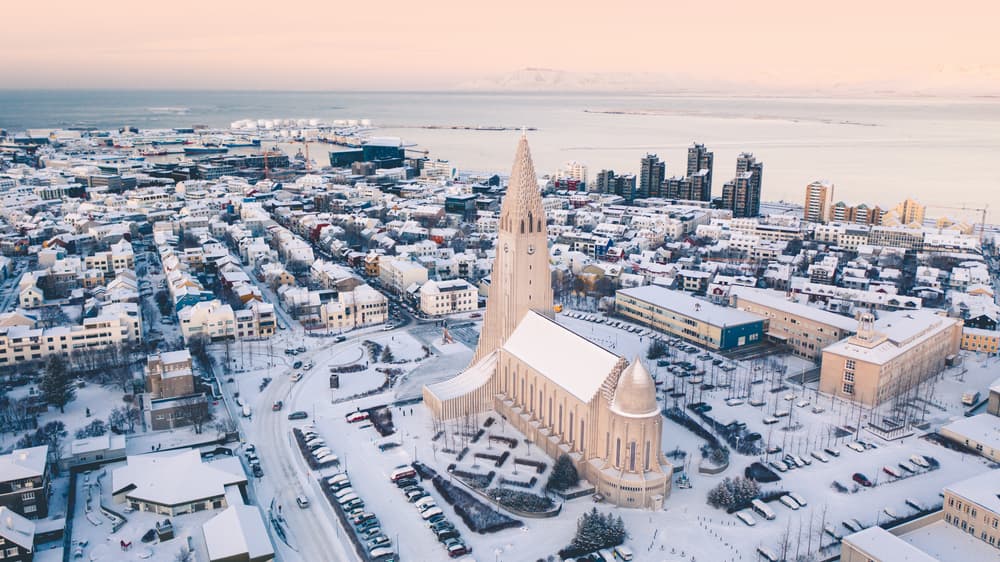
Reykjanes Peninsula, close to Keflavík Airport, is flat and exposed, winds here can be stronger than the forecast for Reykjavík suggests.
Highland F-roads, including F35 Kjölur and F208 towards Landmannalaugar, are closed for winter and typically don't reopen until late spring or early summer, with exact dates set each year by Vegagerðin. If you're planning a highland leg of your trip, that belongs in a summer itinerary, see this F-roads guide for how access actually works.
For all of the above, umferdin.is (umferðin.is) gives real-time closures and conditions, vedur.is gives the weather forecast, and safetravel.is lets you register your travel plan so authorities know your route if something goes wrong.
What insurance and cover actually matter in winter
Winter driving raises the odds of the kind of incidents insurance is designed for, a gravel chip from a snowplough, a tyre cut on an icy edge, a gust that catches a door. Every Blue Car Rental booking already includes CDW, SCDW, Gravel Protection, Theft Protection, and Third-Party Liability as standard, and the Liability Waiver (LW) extends cover to water damage, including legal river crossings, as well as underbody, tyre, wind-door, sand, and ash damage. Tyre cover specifically sits under the LW rather than the base package, which is worth knowing before winter driving on gritted or icy roads.
Damage from illegal river crossings or genuine off-road driving is covered by nothing, a rule that matters more in summer highland driving than in winter, when most F-roads are closed anyway.
Rather than a deposit, Blue takes a credit-card imprint as security, no funds are actually held or blocked on your card. If you want the full picture on how cover levels and pricing interact, this breakdown of pricing, deposits, and insurance and the gravel protection explainer cover it in more detail than fits here.
What to do if your rental car gets stuck in snow
If your car gets stuck in snow in Iceland, stay calm, stay with the vehicle, and call for help rather than trying to push through it. Blue Car Rental offers 24/7 roadside and breakdown assistance for exactly this situation, and the optional Roadside Assistance Waiver (1,300 ISK per day, last checked September 2026) reduces the call-out charges. Check your rental agreement for the number before you need it.
Practical steps:
- Don't spin the wheels, it usually digs you in deeper.
- Try gently rocking forward and back in low gear if the car has 4x4 engaged.
- If that doesn't work, call your rental company's roadside assistance line, or 112 if you're in genuine difficulty (exposed location, worsening weather, no signal reassurance).
- Keep the engine running periodically for heat, but check the exhaust isn't blocked by snow.
- Use hazard lights and stay visible if you're near a road.
This is also why keeping a half-full tank, warm clothing, and a charged phone in the car matters more in winter than any other season.
Mistakes to avoid when self-driving in Iceland in winter
- Booking a tight, multi-stop summer-style itinerary. December daylight and weather don't support back-to-back long drives.
- Skipping the morning conditions check. Five minutes on umferdin.is and vedur.is before leaving the hotel is the single most useful habit.
- Assuming a 2WD is fine for the whole trip because it was fine in Reykjavík. Conditions change fast once you leave the capital area.
- Ignoring wind warnings because the road looks clear. Wind, not snow, causes most winter driving incidents.
- Not registering your route on safetravel.is for longer or more remote day trips.
Should you book a winter self-drive trip to Iceland?
If you're comfortable adjusting plans around weather, comfortable driving cautiously on unfamiliar roads, and willing to check conditions daily rather than assume, a winter self-drive trip in Iceland is a genuinely good option, not a compromise version of the summer trip. Choose a vehicle that fits your actual route (a 4x4 for anything beyond Reykjavík and the Golden Circle), confirm your winter tires and cover before you drive off, and build slack into your daily plan for shorter daylight and the occasional closed road. Online check-in before you land can also save time at Keflavík when you'd rather be on the road while there's still light left.
 RENTING A CAR IN REYKJAVÍK: A COMPLETE GUIDE FOR TRAVELERS