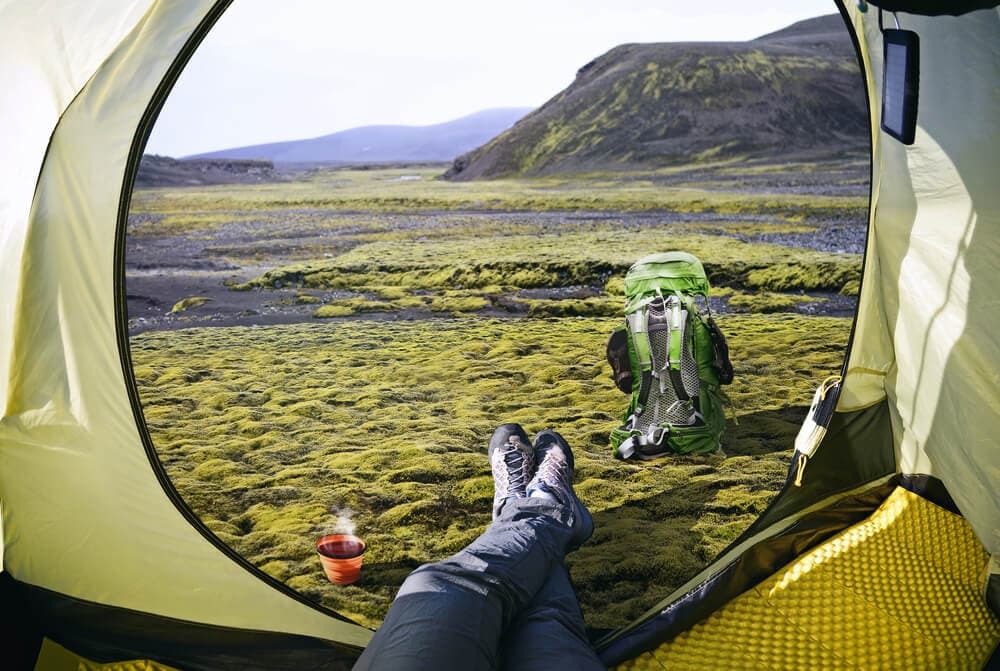

Camping in Iceland with a rental car gives you the freedom to travel at your own pace while keeping accommodation costs under control. You can drive between waterfalls, hiking trails and small towns during the day, then stay at an organised campsite at night. But a good camping road trip still needs planning. You need the right rental car, suitable equipment and a clear understanding of where camping is allowed.
This guide explains how to plan a camping trip in Iceland, choose a car for your route, find places to stay and prepare for Icelandic weather.
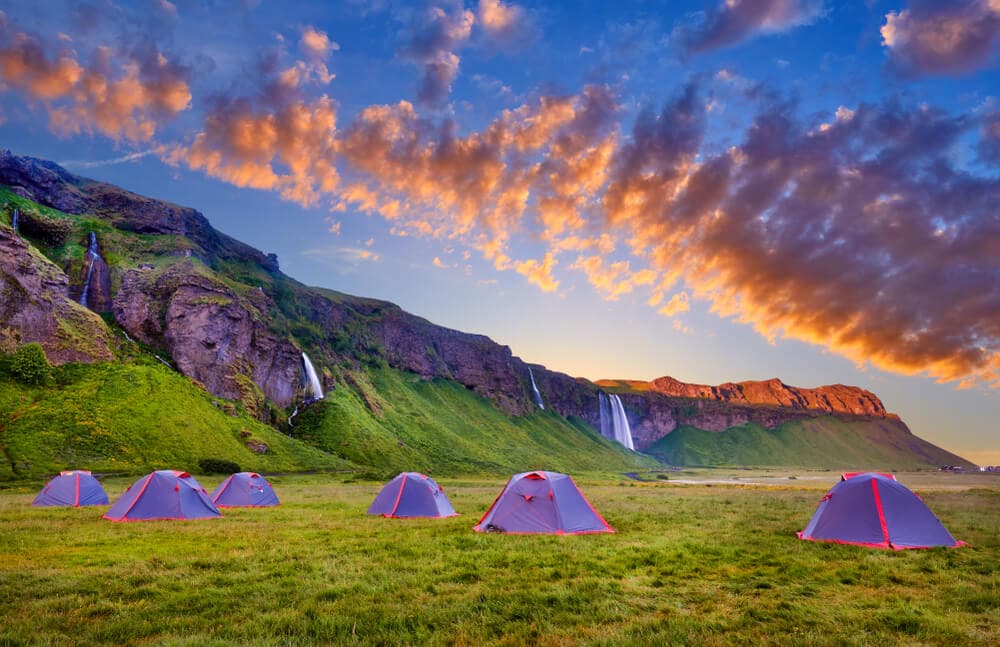
Is camping in Iceland with a rental car a good idea?
Yes, particularly from late spring to early autumn.
A rental car lets you carry a tent, sleeping bags, food and outdoor clothing without moving everything by bus. It also makes remote campsites and early-morning hiking starts much easier to manage.
Camping can work well for:
- Travellers who want a flexible summer road trip
- Couples or friends sharing equipment and costs
- Hikers who want to stay near trailheads
- Visitors driving the Ring Road
- People who want to reduce accommodation and restaurant spending
But camping does not remove the need for a daily plan. Campsites can close outside the main season, strong winds can make tent camping difficult and long driving days can become tiring.
If you are deciding between a tent-and-car trip and a vehicle with sleeping facilities, compare the practical differences in our guide to camper vans vs car rental in Iceland.
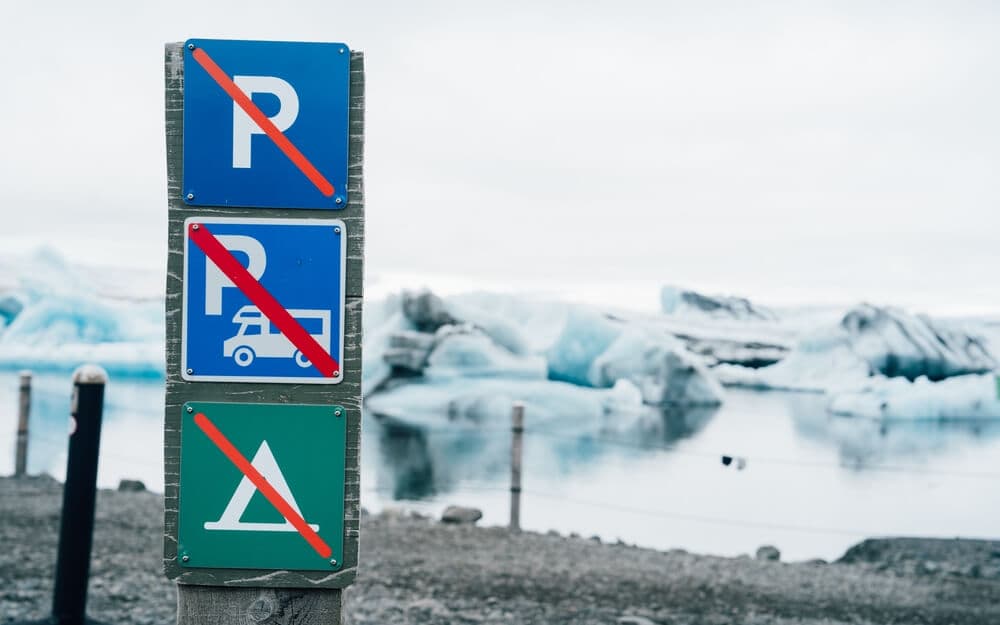
Can you camp anywhere in Iceland?
No. The safest and simplest approach is to use an organised campsite.
Icelandic rules make an important distinction between a traditional tent and a camper van, caravan or similar vehicle. A traditional tent may be used for one night on some uncultivated land, subject to local restrictions and several conditions. You may need the landowner’s permission, and protected areas often have their own rules.
Camper vans, caravans, tent trailers and similar vehicles cannot be used overnight outside organised campsites or urban areas unless the landowner or rightsholder has given permission.
For a road trip, organised campsites are the practical choice. They reduce uncertainty and often provide:
- Toilets
- Running water
- Showers
- Cooking or washing-up areas
- Waste and recycling facilities
- Charging points
- Local weather and road information
Facilities vary. Some campsites are simple fields with basic services, while others have indoor common areas, laundry facilities and electric hookups. Check what is available before you arrive by using tjalda.is or similar camping websites in Iceland.
Camping rules can also be stricter in national parks and protected areas. Do not assume that an open space beside a road is a legal place to camp. And never drive off-road to reach a camping spot. Off-road driving damages fragile ground and is illegal in Iceland. Our guide explains why off-road driving is illegal in Iceland.
Planning note: Rules and local restrictions can change. Check the campsite or protected-area website before your trip and follow signs when you arrive.
What is the best time for camping in Iceland?
Summer is the main camping season in Iceland. June, July and August usually offer the broadest choice of open campsites and the most daylight.
| Travel period | Camping conditions | What to expect |
|---|---|---|
| May | Cool and changeable | Some campsites remain closed; check each stop |
| June | Long days and more open sites | Good for road trips, but nights can still be cold |
| July | Main camping season | Best availability, with more visitors at popular sites |
| August | Good access early in the month | Nights grow darker and temperatures can fall |
| September | Quieter but less predictable | Fewer open campsites and colder, wetter nights |
| Winter | Difficult for tent camping | Severe weather, limited campsites and short daylight |
Long summer days make travelling in Iceland easier, but they can also encourage people to drive too far. Set a realistic stopping time and keep enough energy to pitch the tent safely.
Read our Iceland summer road trip guide for more on routes, daylight and seasonal driving.
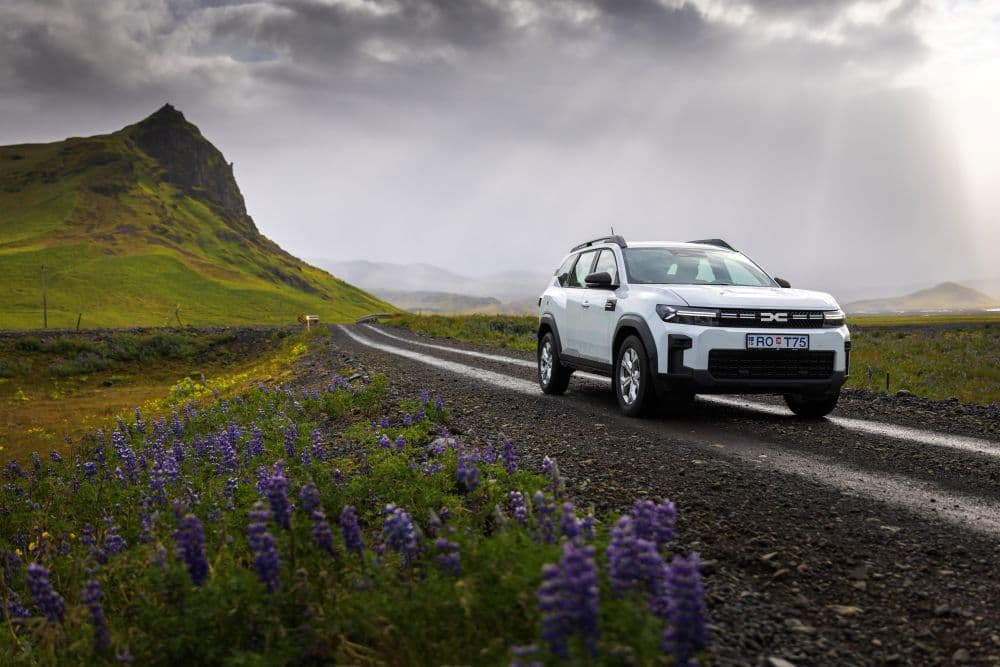
Choosing a rental car for a camping trip
The right car depends on your route, group size and equipment. A tent, sleeping bags, mats, cooking gear and food take more space than many travellers expect.
A 2WD for paved summer routes
A small or medium 2WD can be suitable if you are:
- Travelling in summer
- Staying on paved roads
- Following the Ring Road, Golden Circle or South Coast
- Carrying equipment for one or two people
A smaller car will generally use less fuel. But do not choose by price alone. Check the luggage space and make sure nothing blocks the driver’s view.
A 4x4 for Highlands and F-roads
You need an approved 4x4 if your route includes F-roads. These mountain roads are seasonal and can be rough, with loose surfaces, potholes and river crossings.
Not every 4x4 is suitable for every F-road. A compact SUV may be approved for easier routes, while roads with deeper rivers or rough ground can require a larger vehicle with greater clearance. Always check the road requirements and rental agreement.
Our F-roads rental car guide explains vehicle rules, seasonal access and highland driving in more detail.
Allow room for wet equipment
Camping gear does not always return to the car clean and dry. Keep wet tents, muddy boots and cooking equipment away from seats and electrical controls. Waterproof boxes or strong bags help protect both your equipment and the rental car.
Do not use a standard rental car as sleeping accommodation unless the rental terms clearly allow it. A regular car is designed for transport, not overnight living, cooking or ventilation.
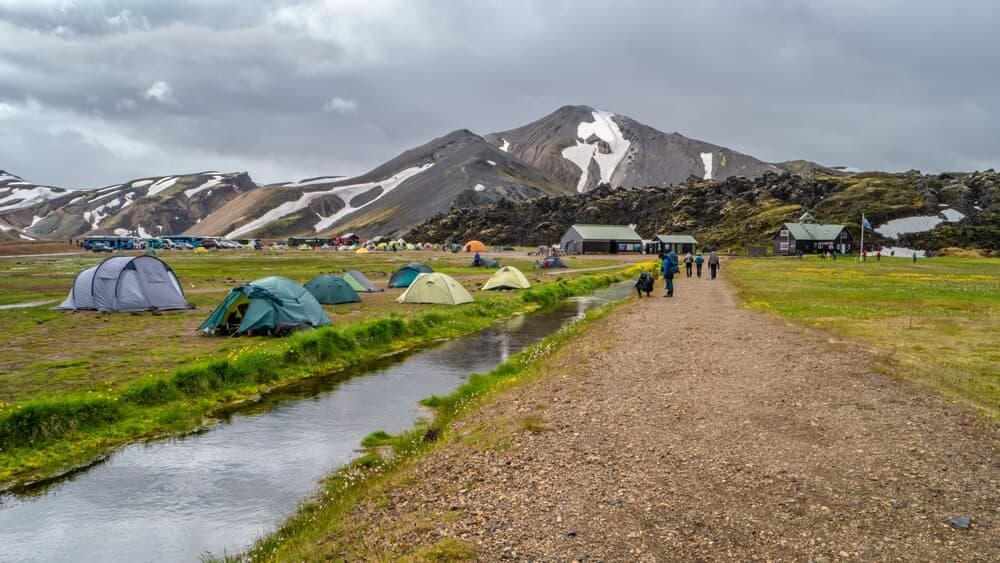
Where to stay when camping around Iceland
Organised campsites are found in many towns and popular travel areas. This makes it possible to build a camping route around the Ring Road, South Coast, Snæfellsnes, North Iceland and parts of the Westfjords.
Before leaving each morning, choose:
- Your preferred campsite
- A backup campsite nearby
- The latest sensible arrival time
- A non-camping option if the weather becomes unsafe
Do not rely only on old blog posts or saved map pins. Check current opening dates and facilities directly with the campsite. In quieter months, call or message ahead.
For a typical Ring Road trip, seven days is possible but fast. Eight to ten days gives you more time for hiking, weather delays and shorter drives. Our 7-day Ring Road itinerary is a useful starting point, but add time if camping is a major part of the trip.
What to pack for camping in Iceland
Icelandic summer weather can change quickly. Sun, rain and strong wind can all arrive on the same day. Your camping setup should be suitable for wet and windy conditions, not only the expected temperature.
Pack:
- A sturdy waterproof tent with a full rainfly
- Strong pegs suitable for firm or rocky ground
- A warm sleeping bag with an appropriate temperature rating
- An insulated sleeping mat
- Waterproof jacket and trousers
- Warm base and mid-layers
- Hat and gloves
- Spare dry socks
- Waterproof boots or shoes
- Headlamp, especially later in summer
- Power bank and charging cables
- Reusable water bottles
- Quick-drying towel
- First-aid kit
- Bags or boxes for wet equipment
- Sleep mask for bright summer nights
Avoid open flames in or near a tent. Use cooking equipment only where it is permitted and where the surface and conditions are safe. Strong wind can make even a small stove hazardous.
In some areas, biting midges in Iceland can be a nuisance in summer, so pack insect repellent and a head net
For a broader clothing and equipment list, see what to pack for Iceland in summer.
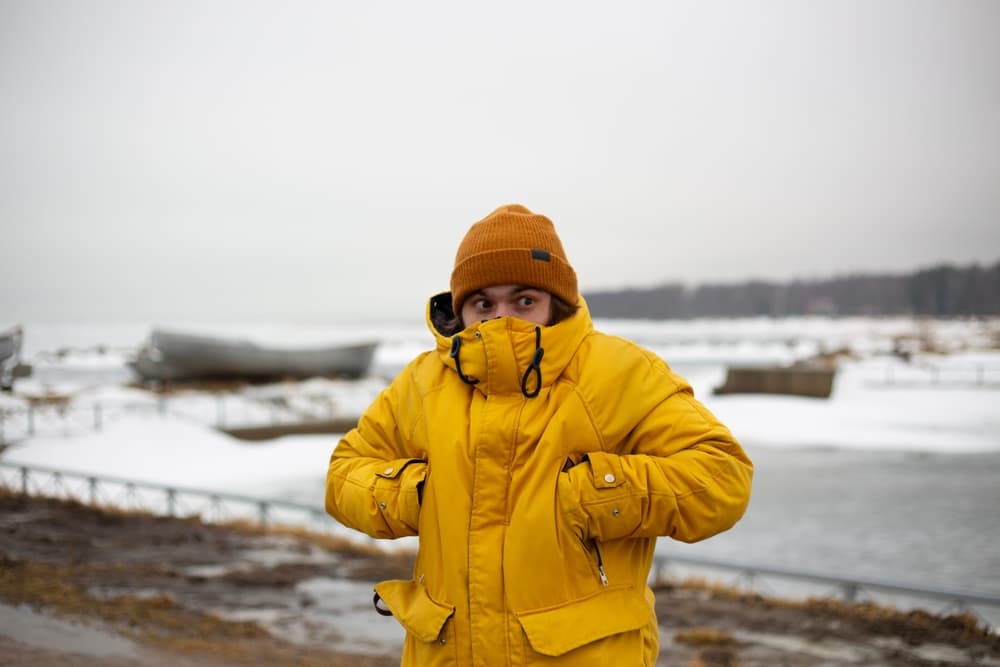
How to camp safely in Icelandic weather
Wind is often the main challenge. A calm afternoon can become a difficult night if the tent is exposed.
When you arrive:
- Ask campsite staff where tents are normally placed.
- Use natural shelter where permitted, without damaging vegetation.
- Face the lower or stronger end of the tent toward the wind.
- Use every suitable guy line.
- Secure loose items before going to sleep.
- Keep dry clothing and essential electronics in waterproof bags.
Check the official weather forecast and road conditions every day. If a weather warning is issued, change the plan. A hostel, guesthouse or cabin is a sensible backup, not a failed camping trip.
Weather can also affect driving in Iceland. Slow down in rain, gravel and strong side winds. Never stop in the road to take photos or check the tent on the roof or in the luggage area. Use a marked parking space.
Review the main road rules in Iceland before setting off.
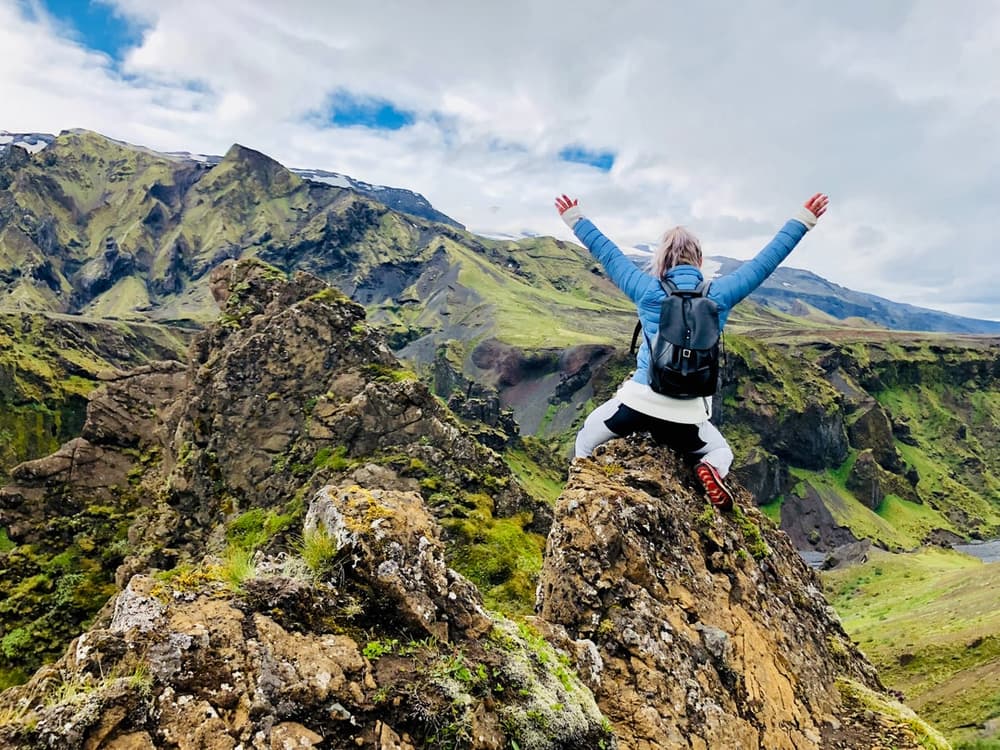
Camping and hiking in Iceland
Camping and hiking fit naturally together. A campsite near a trail can help you start early, avoid unnecessary backtracking and keep your route flexible.
But keep the driving time realistic. A long hike followed by several hours behind the wheel is a poor combination. If the walk takes most of the day, choose a campsite close to the trail and stay there that night.
Before a hike:
- Check the forecast and trail conditions
- Tell someone where you are going
- Take water, food and extra clothing
- Stay on marked paths
- Turn back if the weather changes
- Leave enough time to return before you are tired or cold
For route ideas, see our guide to hiking in Iceland’s canyons.
Camping in the Icelandic Highlands
The Highlands offer remote landscapes, hiking routes and simple campsites. They also require more preparation than a standard Ring Road trip.
Highland roads normally open only in summer, and opening dates vary each year. You need a suitable 4x4 for F-roads. Fuel stations, shops and phone coverage can be far apart.
Before travelling into the Highlands:
- Confirm that the road is open
- Check that your rental car is approved for the route
- Ask whether river crossings are involved
- Fill the fuel tank
- Carry food, water and warm clothing
- Download maps for offline use
- Check campsite opening and payment arrangements
- Leave the route if the weather worsens
Do not cross a river unless you have the right vehicle, current information and the experience to do it safely. Rental protection generally does not cover water damage caused by river crossings.
See our Iceland Highlands travel guide before adding highland camping to your itinerary.
How to save money on an Iceland camping trip
Camping may reduce accommodation costs, but fuel, food, campsite fees and equipment still add up.
Shop in supermarkets
Buy breakfast, lunch ingredients and simple evening meals in larger towns. Rural shops can have shorter opening hours and a smaller selection.
Good road-trip foods include:
- Oats and cereal
- Bread or flatbread
- Cheese and sandwich fillings
- Skyr
- Fruit
- Pasta and simple sauces
- Soup
- Nuts and snack bars
Plan meals that use the same ingredients more than once. This reduces cost and food waste. Keep chilled food at a safe temperature and use campsite kitchens when available. Here's how you can save money at supermarkets in Iceland.
Drive a realistic route
Adding long detours increases fuel costs and leaves less time at each stop. Choose one region or build a steady Ring Road plan instead of trying to see every part of Iceland in one trip.
Bring suitable gear
Cheap or unsuitable equipment can become expensive if it fails in bad weather. If you already own proper camping gear, bringing it may cost less than replacing items in Iceland. Check airline baggage rules before deciding.
For more ways to manage the budget, read our guide to travelling Iceland on a budget.
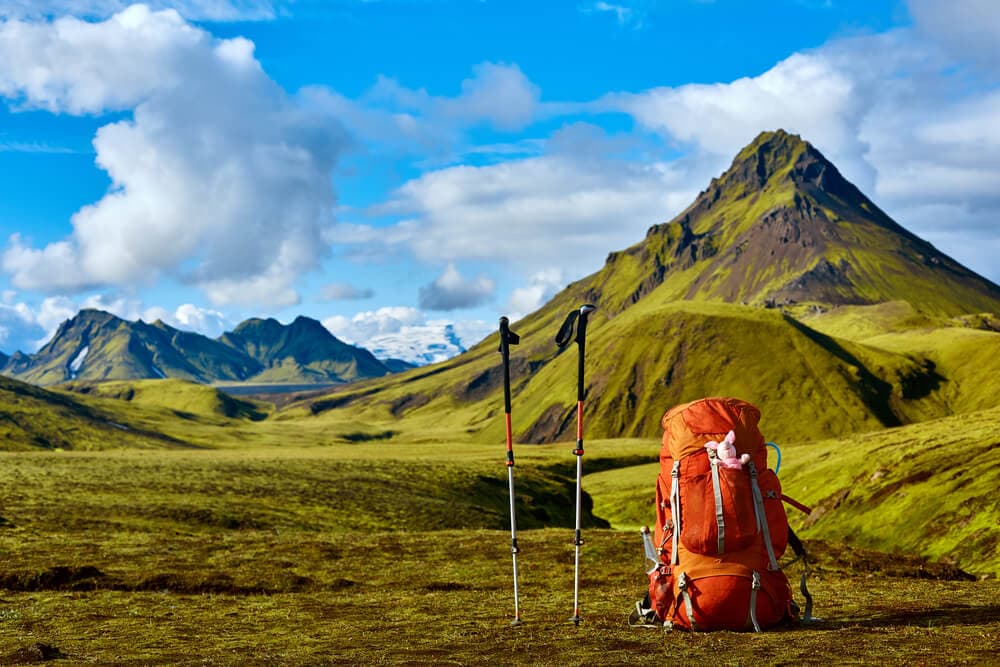
A simple camping road trip checklist
Before booking:
- Choose the route and travel dates
- Check seasonal campsite availability
- Select a rental car with enough luggage space
- Confirm whether any F-roads are included
- Review the rental terms and insurance options
Before each driving day:
- Check the weather
- Check road conditions
- Confirm the night’s campsite
- Choose a backup place to stay
- Fill up before remote sections
- Secure all equipment in the car
- Keep food, water and warm clothing accessible
- It also helps to plan your bathroom breaks while driving in Iceland, especially on longer routes with fewer services.
Camping in Iceland with Blue Car Rental
Camping in Iceland with a rental car can be one of the most flexible ways to explore the country. The key is to keep it simple: use organised campsites, choose a vehicle that suits the route and prepare for changing weather.
Blue Car Rental offers vehicles for paved summer road trips, Ring Road travel and approved highland routes. Choose based on passengers, luggage and planned roads, rather than size alone. If you are unsure which category fits your camping trip, contact the team with your route before booking.
 PARKING IN REYKJAVÍK: ZONES, PAYMENT, AND WHERE TO LEAVE YOUR CAR