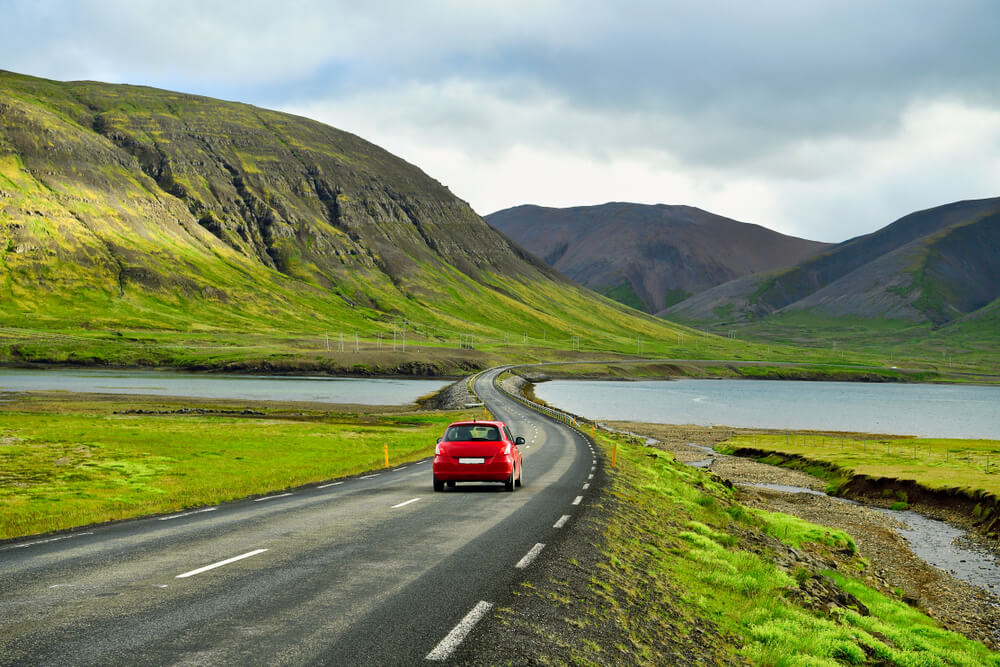
Most of what makes Iceland worth visiting, waterfalls, black sand beaches, geothermal valleys, fjords, sits well outside Reykjavik, and public transport does not reach most of it. A rental car is how the vast majority of independent travellers see the country, and getting the basics right (which vehicle, where to pick it up, what's covered) makes the difference between a relaxed trip and a stressful one.
Short answer: yes, renting a car is the practical way to explore Iceland beyond the capital, and for most itineraries, the Ring Road, the Golden Circle, the South Coast, a 2WD car is enough in summer, while winter travel or any route touching the Highlands calls for a 4x4. Pickup is straightforward at Keflavik Airport, and every rental in Iceland includes a baseline of legally required insurance, though coverage levels vary by company and package.
Do you actually need a car in Iceland?
If your plans go beyond Reykjavik's city centre, yes. Iceland has no rail network, intercity buses run limited and seasonal schedules, and many of the country's best-known sights, Kirkjufell, Jökulsárlón, Dettifoss, the Westfjords, sit far from any bus stop.
A car also removes the biggest constraint of tour-based travel: timing. You decide when to stop at a waterfall, wait out a rain shower, or linger at a black sand beach instead of moving on with a group. For a first Iceland trip built around the Ring Road (Route 1) or the South Coast, a self-drive itinerary is usually the more efficient option once you account for tour prices and fixed schedules.
If your entire trip stays inside Reykjavik, museums, restaurants, a day tour or two, you can manage without a car and add day tours for excursions like the Golden Circle or Blue Lagoon. But once you're combining several regions or travelling at your own pace, a rental car in Iceland becomes the more practical choice.
Where do you pick up a car, airport or Reykjavik city?
Most travellers collect their car at Keflavik Airport (KEF), which is the country's main international gateway and roughly a 45-minute drive from Reykjavik. Picking up at the airport avoids arranging separate transport into the city just to then rent a car there.
In-town pickup in Reykjavik can also suit travellers spending a few nights in the capital before starting a road trip, though Blue Car Rental's own pickup is based at Keflavik Airport, covered in detail below. Either way, check how the specific pickup process works before you land, some rentals require a shuttle to an off-site lot, which adds time after a long flight.
Blue Car Rental offers online check-in ahead of arrival and key-box pickup (for customers who add the Liability Waiver and complete online check-in) at Keflavik, so you can head straight to your car rather than queue at a counter. Details on the pickup location and process are on the Keflavik Airport car rental pickup page.
Which car should you rent: 2WD or 4x4?
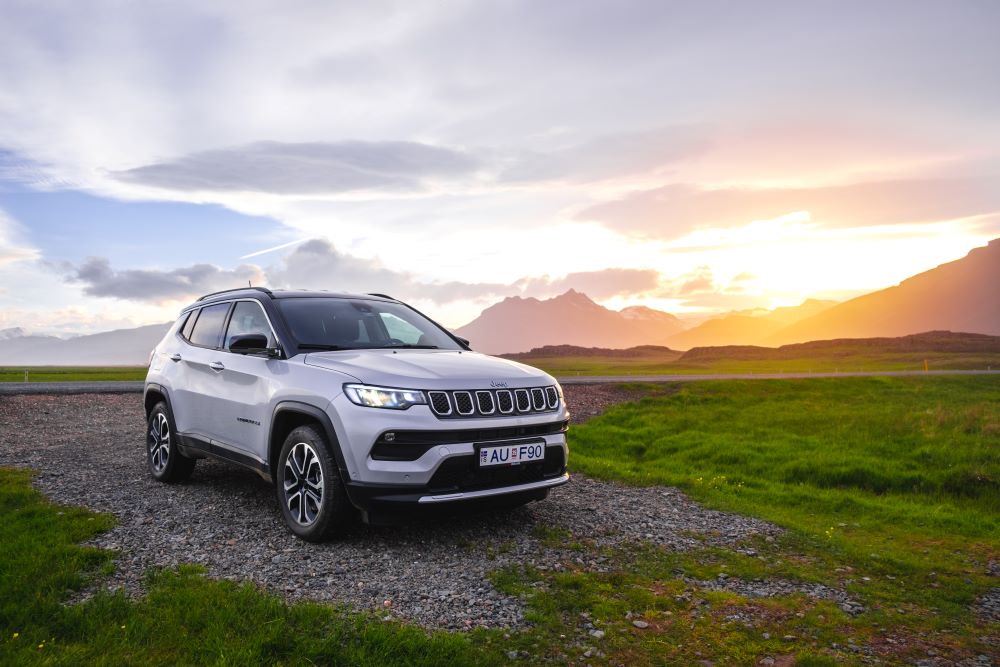
It depends on your route and the season, not on preference alone. A small or mid-size 2WD car is sufficient for the Ring Road, the Golden Circle, and the South Coast in summer, when roads are dry and clear. A 4x4 becomes necessary, legally, not just practically, for Iceland's F-roads in the Highlands, and is strongly advisable for winter driving anywhere outside the capital area, where snow, ice, and wind are common.
| Vehicle type | Typical use | Season fit | Notes |
|---|---|---|---|
| Small 2WD (e.g. hatchback/compact sedan) | Ring Road, Golden Circle, South Coast, city driving | Best in summer (Jun–Sep) | Not permitted on F-roads |
| Mid-size 4x4 / compact SUV | Ring Road plus gravel side roads, shoulder-season travel | Spring, autumn, and winter | More stable in wind and on gravel; still check specific F-road requirements |
| Large 4x4 (e.g. SUV built for rough terrain) | Highland F-roads, river-crossing-capable routes | Summer only, once F-roads open | Required by law on marked F-roads |
| Electric vehicle | Ring Road and paved routes with charging access | Year-round, route-dependent | Plan charging stops; range drops in cold weather |
For a closer look at the decision, see 4x4 vs 2WD in Iceland and the seven questions to ask yourself about needing a 4x4. Blue Car Rental's full lineup, 2WD, 4x4, EV, family and premium options, is listed on the our cars page, so you can match the vehicle to the actual route rather than defaulting to the biggest available option.
Do the Highlands and F-roads need special planning?
Yes. Iceland's F-roads, mountain routes leading into the interior Highlands, such as those toward Landmannalaugar or Kjölur, are open only in summer, typically from around late June through August or September, and only to 4x4 vehicles by law. Dates vary each year with snowmelt and conditions.
These roads can include river crossings, and this is an area to treat conservatively rather than confidently: if you're unsure about a crossing, the right decision is to turn around, not attempt it. Always check current conditions with the Icelandic Road Administration (umferdin.is and safetravel.is before heading into the Highlands, and consider an experienced local operator for the more demanding routes. The F-roads guide to the Highlands covers what to expect in more detail, and is off-road driving illegal in Iceland explains why driving off marked roads and tracks, even briefly, is against the law and not covered by any insurance.
How does driving in Iceland change with the season?
Summer (roughly June–September) offers the calmest, most accessible driving conditions of the year, with long daylight and F-roads open. Winter (roughly November–March) brings snow, ice, wind, and much shorter daylight hours, and driving outside Reykjavik requires more caution and often a 4x4.
Even in summer, Icelandic weather shifts quickly, sudden wind or rain is normal, not a sign something has gone wrong with your plans. Check the forecast at vedur.is daily during a road trip. In winter, road closures and studded-tyre requirements are common; the driving in Iceland in winter guide and the winter safety guide for first-time visitors go through what to expect, from single-lane bridges to free-roaming sheep on rural roads year-round.
What's actually included in an Iceland car rental?
Every rental in Iceland is legally required to carry a baseline of insurance, but what's bundled beyond that varies by company. With Blue Car Rental, every rental includes CDW (Collision Damage Waiver), SCDW (Super CDW), Gravel Protection, Theft Protection, and Third-Party Liability. Tyre damage is covered specifically under the Liability Waiver (LW), which also covers water damage, including legal river crossings, underbody, wind-door, sand and ash damage. None of this extends to illegal crossings or off-road driving, which remain uninsured under any policy.
Rather than a card deposit that blocks funds, Blue Car Rental takes a credit-card imprint as security, no money is actually held or blocked on your card. Normal wear-and-tear cleaning is included in the rental; only excessive interior dirt is charged separately. Full details are on the insurance page and in car rental pricing, deposits, and insurance.
What does a car rental in Iceland typically cost?
Prices vary by season, vehicle class, rental length, and how far ahead you book, prices last checked August 2026 show rates noticeably higher in July and August than in the shoulder seasons or winter, and higher for 4x4/SUV classes than for small 2WD cars. Always check the current rate for your dates via the prices page rather than relying on a fixed figure, since rental pricing shifts throughout the year.
A few cost factors worth planning around:
- Season: summer (peak) costs more than winter or shoulder months.
- Vehicle class: small 2WD cars are generally the most economical; large 4x4s and EVs cost more.
- Add-ons: extra insurance tiers, additional drivers, and equipment like child seats affect the total.
- Loyalty discounts: Blue Car Rental's Blue+ programme offers tiered savings, Bronze at 5% instant, Silver (250+ points) at 10%, and Gold (400+ points) at 15%, detailed on the loyalty page.
For a fuller cost breakdown, see prices in Iceland: car hire costs and what to expect and hidden costs of renting a car in Iceland.
Where do you park in Reykjavik?
Reykjavik uses a zoned paid parking system in the city centre, generally enforced during daytime hours on weekdays and Saturdays, with free parking in most residential areas outside the numbered zones. Pay-and-display machines and parking apps are the usual way to pay.
Once you understand the zone colours and hours, parking in central Reykjavik is manageable rather than complicated, it's mostly about not forgetting to pay once you're parked. The parking in Iceland guide walks through the zones and rates in more detail.
Mistakes to avoid when renting a car in Iceland
A few recurring issues catch first-time self-drivers more than anything else:
- Booking a small 2WD car for a winter or highland trip. Check your route and season before choosing the lowest-priced available class, a car that's fine on the Ring Road in July may not be adequate in a February storm or on an F-road in August.
- Skipping the current road and weather check. Conditions in Iceland change quickly; umferdin.is and vedur.is take a minute to check and can save a wasted or dangerous drive.
- Assuming off-road driving is a shortcut for a photo. It's illegal everywhere in Iceland, damages fragile terrain, and isn't covered by any insurance.
- Not reading what insurance actually covers. Confirm what's included as standard versus what needs adding, especially for gravel roads and river crossings, before you're standing at the pickup counter.
- Underestimating driving distances. Iceland looks compact on a map, but distances between stops on the Ring Road are often 100+ km with few services in between, build in more time than you'd expect.

 RENTING A CAR IN REYKJAVÍK: A COMPLETE GUIDE FOR TRAVELERS