
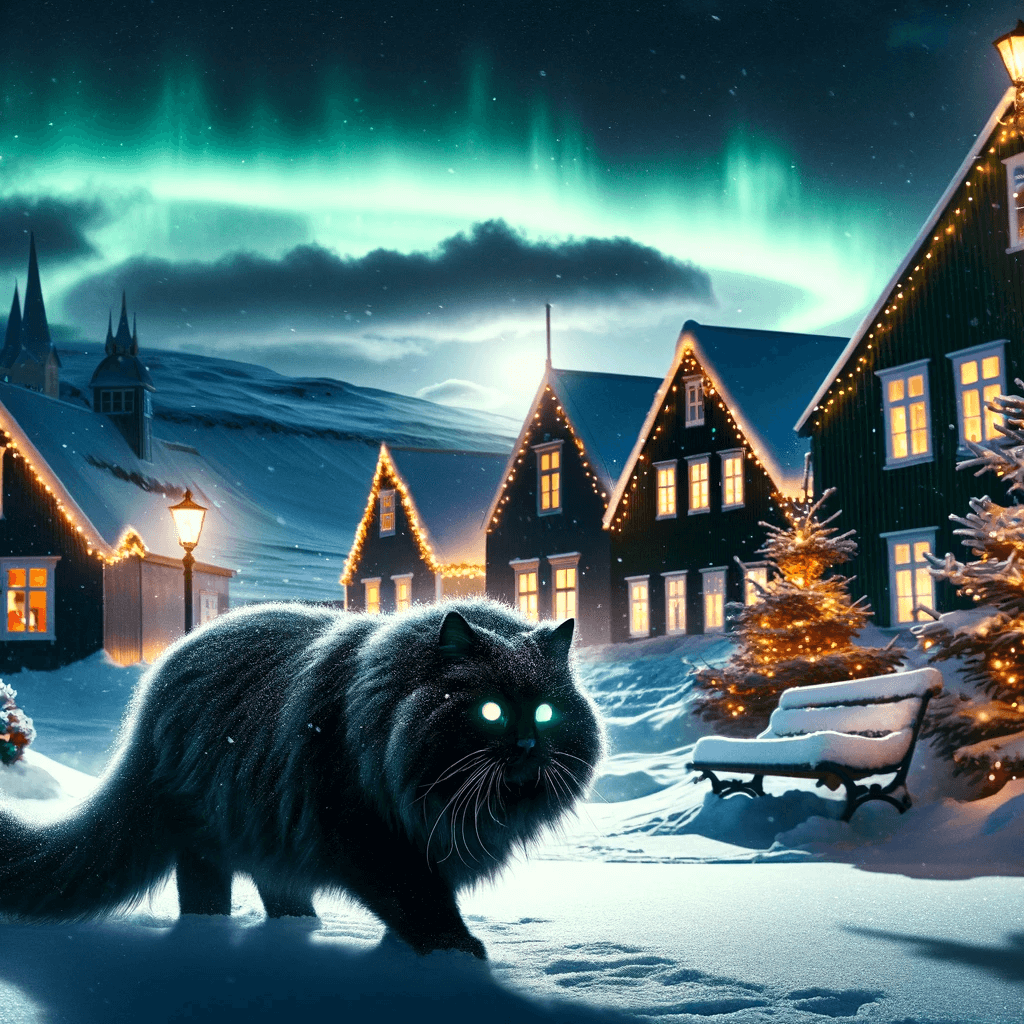
The Yule Cat, or Jólakötturinn, is one of the most fascinating and eerie figures in Icelandic folklore. Unlike the friendly image of Christmas animals found elsewhere, the Yule Cat in Iceland is a massive and mysterious creature said to roam the countryside during the Christmas season, watching closely for those who have not received new clothes.
This chilling legend is deeply rooted in Icelandic Christmas traditions, blending storytelling, cultural values, and a touch of fear to encourage generosity during the darkest time of year.
What Is the Yule Cat?
The Yule Cat is a giant mythical creature that appears in Icelandic folklore during the Christmas season. Stories of the Yule Cat date back centuries and are closely connected to rural life in Iceland, where hard work and preparation before winter were essential.
According to tradition, anyone who did not receive new clothing before Christmas Eve risked being eaten by the Yule Cat. While this may sound extreme, the story had a practical purpose: it encouraged people to complete their work, particularly wool processing, before winter fully set in.
The Origins of the Yule Cat Legend
The legend of the Yule Cat is tied to Iceland’s agricultural past. Farmers would reward hardworking workers with new clothing at the end of the harvest season. Those who worked diligently received warm garments, while those who did not were said to fall victim to the Yule Cat.
This connection between effort and reward became an important part of Icelandic folklore, reinforcing values of responsibility and community contribution.
The Yule Cat is also closely linked to Grýla, the Icelandic ogress, and her mischievous sons, the Yule Lads, who play a major role in Icelandic Christmas traditions.
Why Does the Yule Cat Exist?
At its core, the story of the Yule Cat serves as a cultural lesson. Rather than being purely frightening, the tale was designed to promote generosity and ensure that everyone received something new to wear during the Christmas season.
This tradition is still reflected in modern Iceland, where giving clothing as gifts remains common. The phrase “to avoid the Yule Cat” is still understood as a reminder of this long-standing custom.
The Yule Cat and Icelandic Christmas Traditions
The Yule Cat is just one part of a wider set of Icelandic Christmas traditions. Alongside the Yule Lads and Grýla, the Yule Cat forms a unique trio of folklore figures that define the holiday season in Iceland.
While the Yule Lads leave gifts for well-behaved children, the Yule Cat represents the consequences of not taking part in seasonal traditions. Together, these stories create a rich narrative that blends fun, fear, and moral lessons.
You can learn more about these traditions in our guide to the Yule Lads in Iceland.
Is the Yule Cat Still Relevant Today?
Today, the Yule Cat remains an important cultural symbol in Iceland. While few people truly fear the creature, its story continues to be shared during the Christmas season, especially with children.
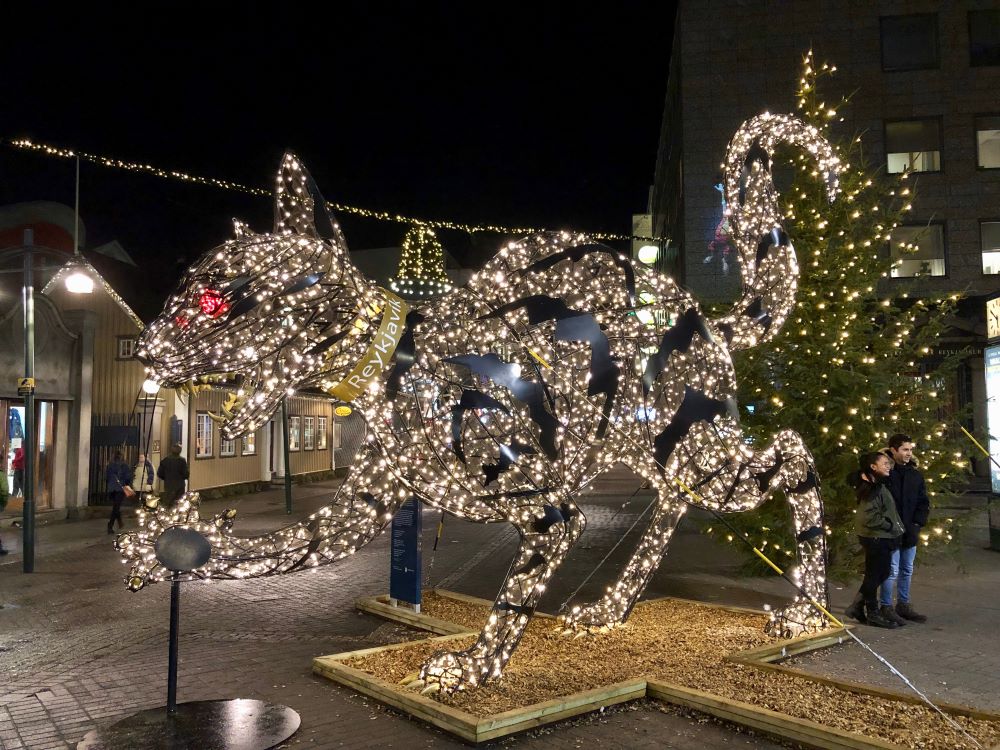
In Reykjavík, visitors can even spot a large statue of the Yule Cat during the holidays, making it a popular attraction for those exploring Icelandic culture.
Experiencing the Yule Cat in Iceland
If you are visiting Iceland during the Christmas season, the story of the Yule Cat adds an extra layer of magic to your trip. From festive decorations in Reykjavík to cultural storytelling, the legend is very much alive.
Exploring Iceland in winter with a car rental in Iceland allows you to experience these traditions at your own pace, whether in the capital or in smaller towns where folklore still plays a strong role in daily life.
Before you travel, make sure you are prepared for winter conditions and pack appropriately. And just to be safe—bring something new to wear, because you never know when the Yule Cat might be watching.
For more insights into Icelandic traditions and travel tips, explore our guides to Icelandic culture and practical travel information.
 HOW BLUE CAR RENTAL SUPPORTS LOCAL COMMUNITIES IN ICELAND