
Spring in Iceland runs from March through May, and it's a genuinely good time for a self-drive trip: daylight lengthens fast, the winter crowds thin out, and the island slowly opens back up after months of dark and ice. The trade-off is that conditions are transitional, March can still feel like winter, while May starts to feel like early summer. This guide covers what actually changes month by month, when puffins really arrive, and what it means for the car you choose.
Short answer: Yes, spring is a solid time to visit Iceland, especially April and May, when daylight is long and most roads are back to normal. March is colder and icier, with a real chance of snow, and puffins haven't returned yet, they typically arrive in early April, not March. Whale watching, on the other hand, runs year-round from several ports, so a February or March sighting is entirely possible.
What changes month by month in spring
Each spring month in Iceland has a distinct character, and the differences matter more than "spring" as a single season suggests. March still behaves like winter in terms of road conditions and daylight, while May is close to the long-daylight rhythm of summer.
| Month | Daylight & light | Roads & weather | Puffins | Northern Lights | Crowds |
|---|---|---|---|---|---|
| March | Still short, but lengthening quickly | Snow and ice still common on the Ring Road; winter driving conditions likely | Not yet arrived | Good chance, especially away from town lights | Quieter, off-peak |
| April | Long and lengthening fast | Snow melting at lower elevations; conditions improving but variable | Begin arriving in early April | Possible in the first half; harder to see from mid-April as nights get bright | Shoulder season, moderate |
| May | Near-continuous light by late May | Most lowland roads clear; highland F-roads still closed | Established on breeding cliffs | Effectively over, too much daylight | Picking up toward summer levels |
Road and weather conditions vary from year to year, so it's worth checking umferdin.is (Vegagerðin) and vedur.is (the Icelandic Met Office) before and during your trip rather than relying on general seasonal patterns alone.
Are there puffins in Iceland in March?
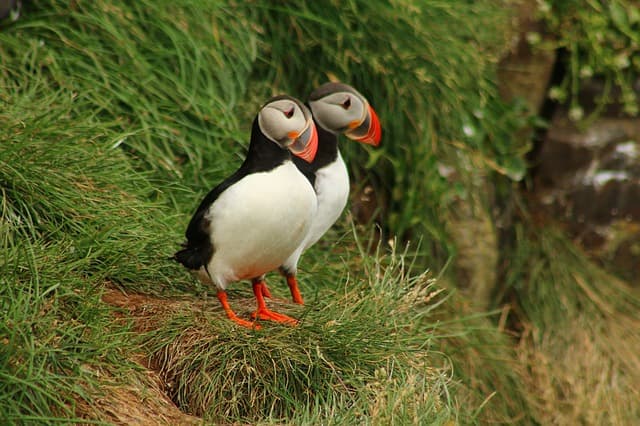
No, generally not. Atlantic puffins spend winter out at sea and come back to their Icelandic breeding cliffs starting in early April, so a March visit is usually too early to see them. If puffins are the reason for your trip, aim for April onward rather than March.
Once they do arrive, puffins can be found on the south coast, the west coast, and in the Westman Islands (Vestmannaeyjar), which hold one of the largest colonies in the country. Cliffside spots like Dyrhólaey on the south coast are also well known puffin sites once the birds are back. By May, colonies are well established and puffin-watching tours and coastal walks become a realistic part of a spring itinerary, just not in March.
Whale watching in spring, and does it work in February too?
Whale watching in Iceland runs throughout the year, not just in summer, and spring is a good season for it. Sightings are common thanks to the dozen-plus whale species found in Icelandic waters, and tours operate from ports around the country, including Reykjavík, Húsavík, and Akureyri.
If you're comparing a February trip to a spring one: winter and early-spring whale watching does happen and can be rewarding, but sea conditions and tour schedules vary more in the colder months, so it's worth checking with individual tour operators for current departures rather than assuming a fixed schedule. By March and April, sea conditions tend to be calmer, and tours run more predictably as the season progresses toward summer.
Can you still see the Northern Lights in spring?
Yes, but only early in the season. March is one of the better months to catch the Aurora Borealis before the season effectively ends around mid-April. Once you get past mid-April, the nights get bright too early and too often for the lights to be visible, even during periods of strong aurora activity.
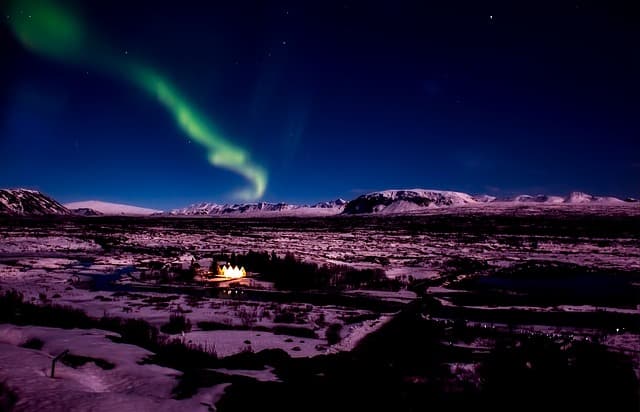
For the best chance in March, get away from Reykjavík's light pollution and head into the countryside on a clear, dark night, the same conditions that make roads icier are often the ones that produce the clearest skies.
Glaciers and ice in spring
Yes, spring is a good time for glacier tours, with Sólheimajökull walks and Langjökull's ice tunnel tours running as normal, while Jökulsárlón's ice caves are nearing the end of their season. Spring is one of the better times to combine glacier activity with everyday road access, since the deep-winter conditions are easing but the ice itself hasn't melted away yet.
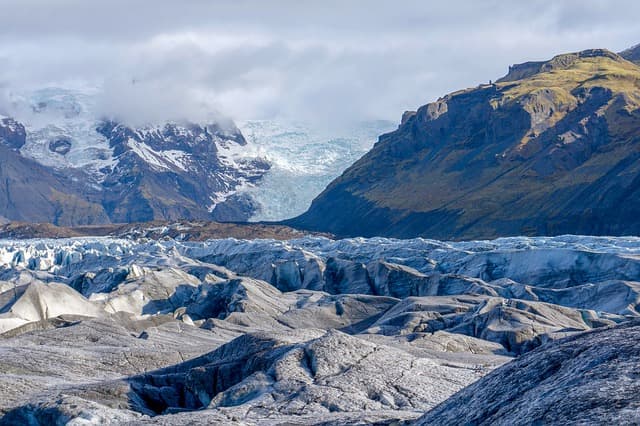
- Jökulsárlón (Glacier Lagoon) on the south coast, near Vatnajökull, Europe's largest glacier, is a highlight of any Ring Road trip. Ice cave tours here typically run from November to March, so early spring is close to the tail end of that season.
- Sólheimajökull, also on the south coast, is an easily reached glacier for guided walks and is a common day trip from Reykjavík.
- Langjökull, Iceland's second-largest glacier on the west coast, offers man-made ice tunnel tours (with operators such as Into the Glacier) that run independently of surface snow conditions.
Water culture: waterfalls, hot springs, and pools
Yes, spring is a great season for Iceland's waterfalls, natural hot springs, and public pools, all fully open and running as usual. As you drive the Ring Road, you'll pass a steady run of waterfalls, natural hot springs, and public swimming pools, and stopping at as many as you can is very much in the spirit of the trip. Sitting in a hot tub in the rain, snow, or sudden spring sunshine is about as Icelandic an experience as there is, see our guide to Iceland's natural wonders for more on where to find them.
What spring means for your rental car
Because spring conditions swing from winter-like to summer-like within a few weeks, the vehicle decision matters more than in a settled season like July.
In March, and often into April, you should plan as if you're driving in winter: snow, ice, and sudden weather changes are still realistic, particularly outside the southwest. Our guide to driving in Iceland in winter covers the habits worth carrying into early spring, reduced speeds, watching for black ice, and building in extra time between stops.
A few practical points for spring self-drive trips:
- F-roads stay closed. Iceland's highland F-roads, including routes like F208 to Landmannalaugar, and the Kjölur highland road (road 35) typically don't open until early summer, and opening dates vary by year and snowmelt. Check umferdin.is before planning any highland detour, and see our F-roads guide for what's involved once they do open.
- 4x4 vs. 2WD is still a real question in March and April, less so by late May. Our breakdown of when a 2WD is enough and when it isn't walks through this by route and season.
- Shoulder-season pricing tends to sit between winter and peak summer; our guide to the low-season months explains how demand shifts through the year.
- Airport pickup timing matters more when flights land late or early with unpredictable spring weather, online check-in lets you complete paperwork in advance so you're not doing it at the counter after a delayed flight.
Mistakes to avoid when planning a spring trip
A few assumptions catch visitors out most often. Expecting puffins in March is the most common one, they simply aren't back yet. Assuming the highlands are open once the lowlands look green is another; F-roads follow snowmelt at altitude, not the calendar. And treating March like a summer month for driving purposes, skipping winter tyres' worth of caution, or underestimating how fast weather can turn, is worth avoiding even if the forecast looks mild that morning.
Spring in Iceland, in short
If you're weighing a spring trip against summer or winter, the honest answer is that spring gives you a bit of both: shorter queues and lower rates than July, combined with steadily improving weather and daylight compared to December or January. The trade-off is timing precision, puffins mean April or later, Northern Lights mean March or earlier, and F-roads mean waiting until early summer regardless of month. Plan around the specific thing you want to see, choose a vehicle suited to the month you're actually travelling in, and check road and weather conditions close to your trip rather than relying on general seasonal averages.
 CAN YOU DRINK TAP WATER IN ICELAND?