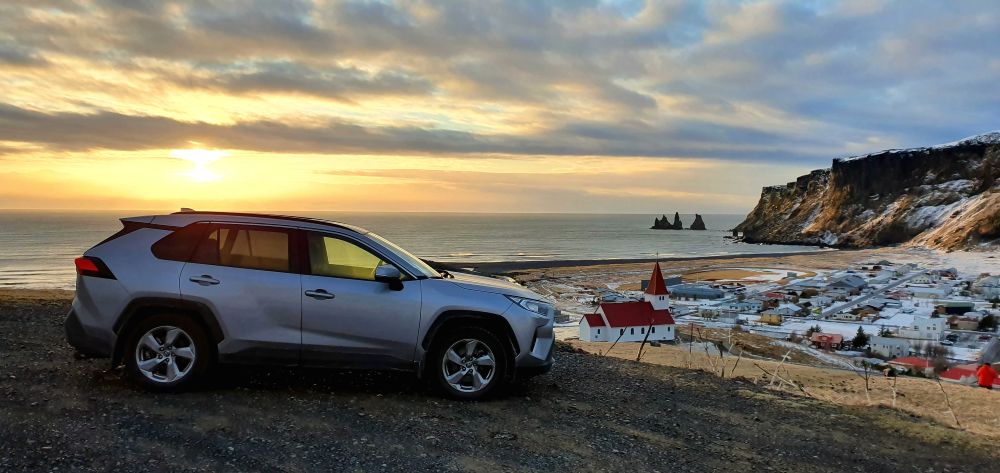

Winter in Iceland is beautiful. It’s also unpredictable. You can get clear roads in the morning, then snow, wind, and ice by lunch.
So the “best” winter rental isn’t one perfect car. It’s the right car for where you’ll drive, how far you’ll go, and how comfortable you want to be when conditions change.
Below are Blue Car Rental’s local, practical recommendations for winter driving, plus key safety, studded tire, and insurance advice that matters a lot more in winter than in summer.
What winter driving in Iceland is really like
A few things shape our recommendations every winter:
- Wind is a bigger problem than snow on many days (especially on open stretches like the South Coast).
- Ice patches show up fast, even when roads look “fine.”
- Roads can switch between wet → slush → hard-pack snow → ice in one drive.
- Even in Reykjavík, you can get heavy snow and slick streets.
That’s why we usually steer winter travelers toward a 4x4 and a bit more ground clearance, even if you’re not planning anything extreme.
Recommended winter rental cars (Blue Car Rental picks)
|
Trip type / use case |
Recommended car (model) |
Transmission |
Why it’s recommended in winter |
|
Best all-around winter rental |
Manual |
Solid traction + clearance, easy to handle, good value for winter conditions |
|
|
Best all-around winter rental |
Automatic |
Comfortable and stable for mixed winter roads, good for KEF + day trips |
|
|
Best all-around winter rental |
Automatic |
Reliable winter-ready SUV feel, smooth for longer drives and changing conditions |
|
|
Long drives + remote areas |
Automatic |
More clearance and stability for exposed roads, rougher surfaces, longer distances |
|
|
Long drives + remote areas |
Automatic |
Same “big 4x4” confidence with modern comfort—great for winter road trips |
|
|
Mostly Reykjavík + airport drive |
Automatic |
Compact and easy in the city, but still practical when Reykjavík gets snowy |
1) The best “all-around” winter rental: a medium 4x4 SUV
If you want one safe choice for winter, this is it: a medium-size 4x4 SUV.
Why locals recommend this category
- Better traction than a 2WD car when roads get icy or slushy.
- More ground clearance for fresh snow, ruts, and plowed piles.
- More stability in wind than a tiny compact car.
- Comfortable for the KEF airport winter drive and day trips outside Reykjavík.
Our picks (Blue Car Rental recommendations)
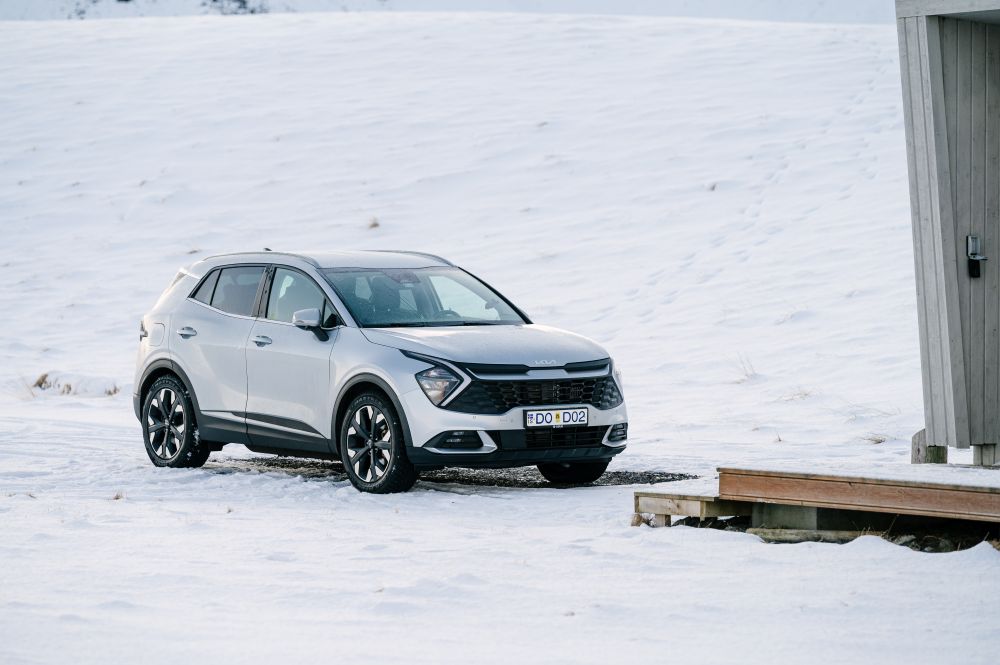
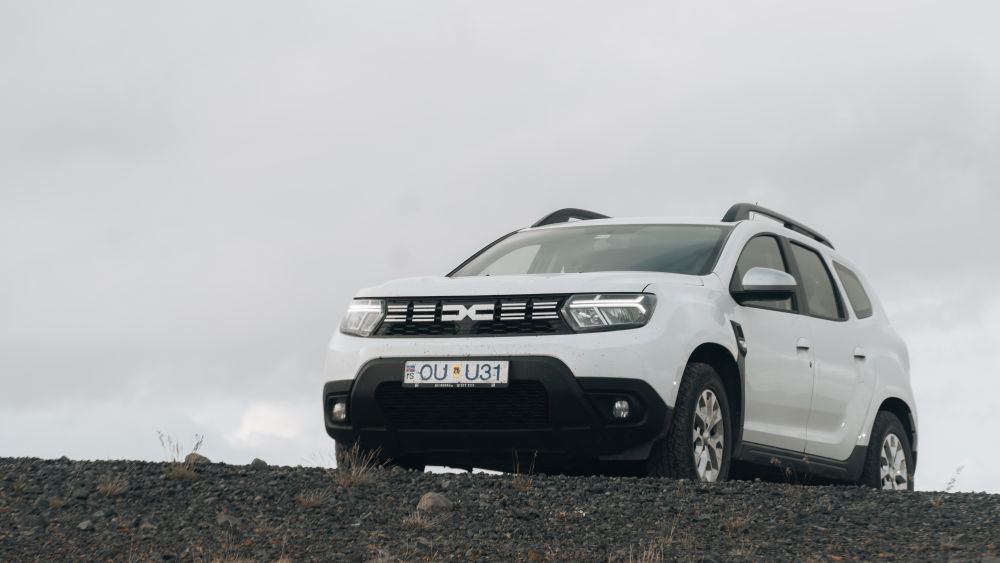
- Manual: Dacia Duster 4x4
- Automatic: Kia Sportage 4x4 or Toyota RAV4 4x4
Why these models work well in winter:
- They hit the sweet spot: capable, not oversized, and easier to drive than a huge 4x4 if you’re not used to winter roads.
- They handle the most common winter situations well: slush, light snow cover, icy stretches, strong gusts, and changing road surfaces.
- They’re practical for luggage and winter gear (coats, boots, day bags), without feeling bulky in town.
2) Best for long winter drives and remote regions: a large 4x4
If you’re planning longer winter drives—especially routes where conditions can be tougher—we recommend moving up to a larger 4x4.
Trips where we recommend a large 4x4
- South Coast all the way to Jökulsárlón
- Snæfellsnes in winter
- Akureyri / North Iceland in winter
- More remote plans like the Westfjords, East Iceland, or the North East
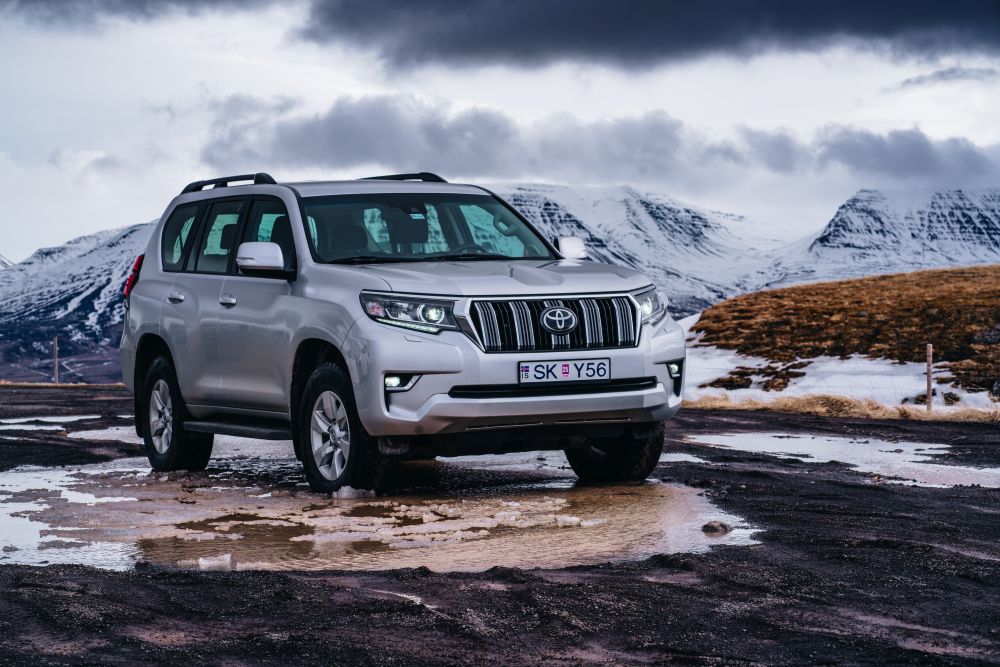
Our pick
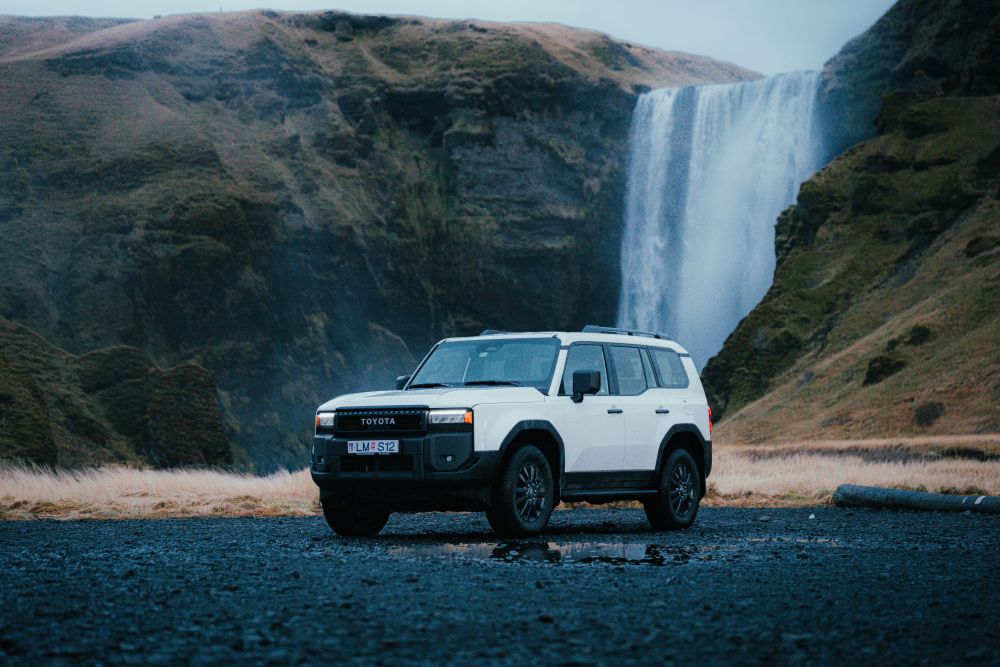
- Toyota Land Cruiser 150 or Toyota Land Cruiser 250
Why a Land Cruiser makes sense in winter
- A true large 4x4 gives you more clearance, a heavier, steadier feel in wind, and a more confident ride when roads are rougher.
- It’s also a better match for travelers doing longer stretches in winter, where you want extra margin for changing conditions.
- More space helps when you’re carrying winter luggage, camera gear, or traveling as a group.
This isn’t about “off-roading.” (Off-road driving is illegal in Iceland.) It’s about having the right tool for winter highways, mountain passes, and exposed coastal roads.
3) “Mostly Reykjavík” winter rental: small car that still feels safe
If your plan is mainly Reykjavík, a small car can be fine.
But here’s the catch: winter can be very snowy even in Reykjavík, and you still need to drive from Keflavík Airport to Reykjavík (about 30–45 minutes depending on conditions and traffic).
Our small-car winter pick
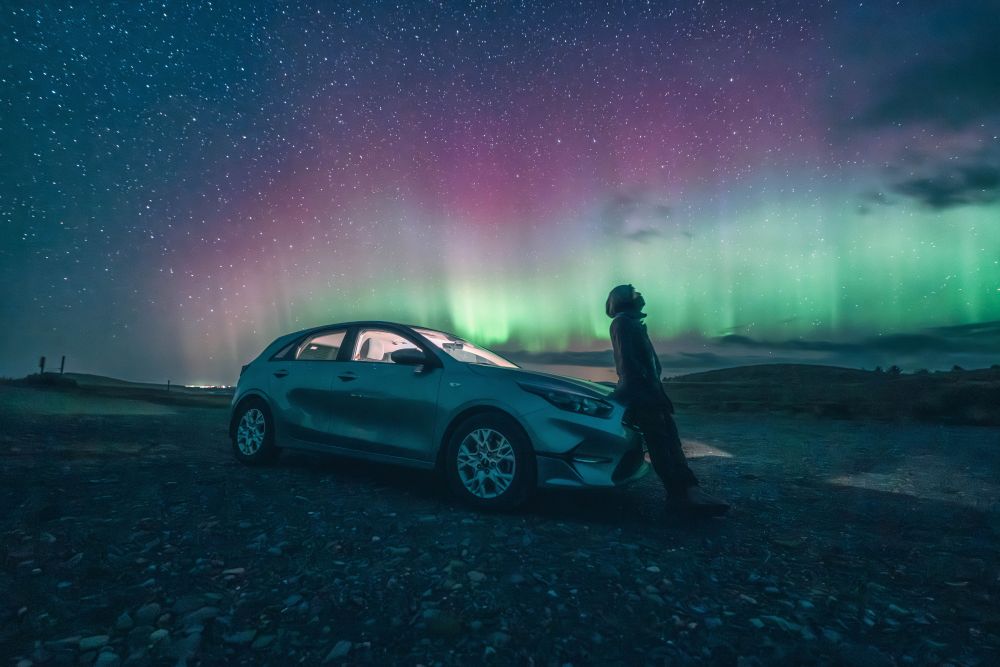
- Kia Stonic
Why this is a smart “small car” choice for winter
- It’s compact and easy to park in the city.
- It sits a bit higher than many tiny hatchbacks, which helps when streets are snowy or slushy.
- It’s a comfortable, simple option for airport pickup and city driving.
If you’re truly staying only in the capital area, this is often the most sensible budget-friendly choice.
Studded winter tires in Iceland (and why they matter)
Tires matter more than anything else in winter. More than horsepower. More than “4x4.”
Blue Car Rental equips all rental cars with studded winter tires from November 1 to April 15.
Studded tires help most on:
- Black ice
- Hard-packed snow
- Slick conditions on shaded roads and bridges
And yes—winter tires are a big deal in Iceland. Official travel guidance and road-condition services emphasize checking conditions frequently, especially in winter.
Winter road safety basics (what we tell friends and family)
1) Check road conditions before you drive
Use official sources:
- Icelandic Road and Coastal Administration info and updates
- Traffic and road conditions on Umferðin
- SafeTravel alerts and advice when driving
If the forecast looks bad, don’t “hope it’s fine.” Adjust the plan.
2) Slow down earlier than you think you need to
On ice, braking distances jump fast. Drive like you’ll need to stop on a slippery surface at any moment.
3) Respect wind (especially when opening doors)
Wind gusts are real. Hold the door tight when getting in and out. If it’s howling, park so the wind hits the front of the car, not the side.
4) Don’t force remote routes in bad weather
In winter, some of the most memorable trips come from a simple decision: turn around early and do something closer instead.
5) Know the emergency number
In an emergency, call 112.
Insurance in winter: it’s not optional in practice
Winter conditions increase the odds of:
- Sliding incidents at low speed
- Gravel spray and windshield chips
- Storm-related surprises (wind, blowing sand/ash in certain areas)
Blue Car Rental breaks down coverage types like CDW, SCDW, GP, TP, and more on their insurance information pages.
What we recommend in winter
- Don’t treat insurance like a “maybe.”
- Match your coverage to your route:
- Mostly Reykjavík: you still want solid protection (winter streets + airport drive).
- South Coast / long distances: stronger coverage is worth it because conditions can change quickly.
- Remote regions: your risk exposure is higher simply because help is farther away and roads are more exposed.
If you’re unsure, pick the option that reduces your financial risk the most. Winter is not the season to gamble.
Why a local car rental company can be a better winter choice than global brands
Global brands can be fine. But Iceland winter travel has its own rules.
Local operators are built around:
- The reality that winter tires (and often studs) are non-negotiable and inseparable part of winter driving in Iceland.
- Fast-changing weather and frequent road-condition checks
- Advice that fits Iceland roads (not generic winter driving tips)
The goal is simple: you get a car and support that’s prepared for Iceland, not just “winter somewhere.”
If you want, I can also turn this into a tighter “comparison” section (pros/cons table by car type) and add a short section for which car fits each classic winter itinerary (Golden Circle, South Coast, Snæfellsnes, North Iceland).
Fun things to do in Iceland in winter (great with a rental car)
Winter isn’t only about “getting from A to B.” It’s also when Iceland has a few experiences you can’t really get in summer.
1) Ice cave exploration (go with a certified guide)
Ice caves are one of the most winter-only activities in Iceland. The big point here is safety: natural ice caves change fast, so you should only visit with certified glacier guides who choose the safest cave for the day and cancel if conditions aren’t right.
Why it’s worth doing in winter
- The ice is more stable than in warmer months (and caves are often safer/accessible then).
- You get that deep blue ice and frozen textures that winter is known for.
How a rental car helps
- Many popular ice cave tours meet on the South Coast (often as a day trip or overnight route), so having your own car makes timing easier—especially if the weather shifts.
2) Northern Lights self-drive “hunt” (your own mini tour)
A self-drive Northern light tour is simple: you use your car to escape city lights and follow clearer skies. Northern lights season in Iceland is generally late Aug/Sept to mid-April, when nights are dark enough.
How to plan it
- Check the official aurora + cloud cover forecast before you go. The Icelandic Met Office has an aurora forecast map that’s built around cloud cover and auroral activity.
- Drive 30–60 minutes from Reykjavík (often enough to find darker skies).
- If it’s cloudy where you are, try another direction. Sometimes it’s clear just a short drive away.
Quick safety rules for aurora driving
- Don’t stop on the roadside if it’s not safe. Use pull-offs and parking areas.
- Keep your tank topped up and bring warm layers. Waiting outside gets cold fast.
- If roads are icy or windy, keep it close to town and don’t force it.
(This is also where that winter car choice matters: a medium 4x4 SUV makes these evenings more relaxed if roads are snowy or slick.)
3) A few more winter-friendly ideas (easy to add to your route)
- Geothermal pools and hot springs (perfect after a cold day outside)
- Winter waterfalls (short walks, big payoff—just watch for ice on paths)
- The Golden Circle in winter (classic sights, usually manageable as a day trip if conditions are good)
If you want, I can add a short “best winter itinerary pairings” section right after this (example: Duster/Sportage/RAV4 + South Coast + ice cave day, or Stonic + Reykjavík + easy aurora hunt).
Quick recap: what should you rent for winter in Iceland?
- Best all-around winter choice: medium 4x4 SUV
- Manual: Dacia Duster
- Automatic: Kia Sportage or Toyota RAV4
- Best for long drives / remote regions: Toyota Land Cruiser 150 or 250
- Best small car for mostly Reykjavík: Kia Stonic
- Non-negotiables: studded winter tires (Nov 1–Apr 15 at Blue), road checks, and strong insurance
Final conclusion
Winter driving in Iceland is all about choosing a car that gives you a bit of extra margin when conditions change. For most travelers, a medium 4x4 SUV is the best all-around option because it balances traction, comfort, and ease of driving. If you’re planning long routes or remote regions, step up to a large 4x4 for more clearance and stability. And if you’ll mostly stay in Reykjavík, a smaller car can work—just pick one that still feels confident in snow and on the KEF airport drive.
Whatever you choose, winter is when the basics matter most: drive to conditions, rely on studded winter tires (Nov–Apr), and take insurance seriously. And using a local company helps, because the setup and advice are built for Iceland—not a generic winter somewhere else.
 DRIVING IN WINTER: ICELAND’S CAR RENTAL SAFETY GUIDE FOR FIRST-TIME VISITORS