
Iceland's population is small compared to its landmass, and that gap between empty landscape and inhabited towns shapes almost everything about planning a self-drive trip, from where you'll find fuel and food to how far you might be from help if something goes wrong on the road. This guide answers how many people actually live in Iceland, where they live, and what that means for travellers driving the Ring Road or heading into the highlands.
Short answer: According to Statistics Iceland (last checked August 2026), Iceland has a population of roughly 400,000 people. About 82% are Icelandic citizens, and the country has one of the lowest population densities in Europe. Around 63% of residents live in the capital area of Reykjavik, and more than 80% live within about an hour's drive of it. Outside that radius, Iceland is largely open coastline, farmland, and uninhabited highland.
How many people live in Iceland?
Iceland's population sits at approximately 400,000 people, a figure that has grown steadily since the mid-20th century as the country urbanised and, more recently, as foreign residents settled in growing numbers. It's a population roughly the size of a mid-sized European city, spread across an island of about 103,000 km².
Around 82% of residents are Icelandic citizens. The rest, about 71,000 people in mid-2026, are foreign citizens, many working in tourism, fishing, and construction, who have added a genuinely multicultural layer to what was historically a fairly homogenous Nordic society. There are also around 52,000 Icelandic citizens living abroad, mainly in Denmark, Norway, Sweden, and the US, which puts the total number of Icelandic citizens worldwide at roughly 375,000.
So yes, people do live in Iceland, and have done for over a thousand years, with their own language, sagas, and social structures that predate most of the countries their visitors come from.
Where do most people live in Iceland?
Most people in Iceland live in and around Reykjavik. The capital area holds roughly 63% of the national population, and if you extend the radius to about one hour's drive, that figure climbs past 80%. This concentration is the single most important fact for understanding Icelandic geography as a driver.
Beyond the capital region, population is scattered in a handful of coastal towns connected by Route 1, the Ring Road:
| Area | Approximate share of population | Notes for drivers |
|---|---|---|
| Reykjavik capital area | ~63% | Largest services, fuel, hospitals, shopping |
| Within 1 hour of Reykjavik | ~80%+ (cumulative) | Includes Akranes, Selfoss, Reykjanesbær |
| Reykjanesbær | Regional town | Home to Keflavik Airport |
| Akureyri | Regional town, North Iceland | Largest town outside the capital area |
| Ísafjörður | Regional town, Westfjords | Main hub for the remote west |
| Rest of the country | Remaining share | Small towns, farms, and uninhabited highland |
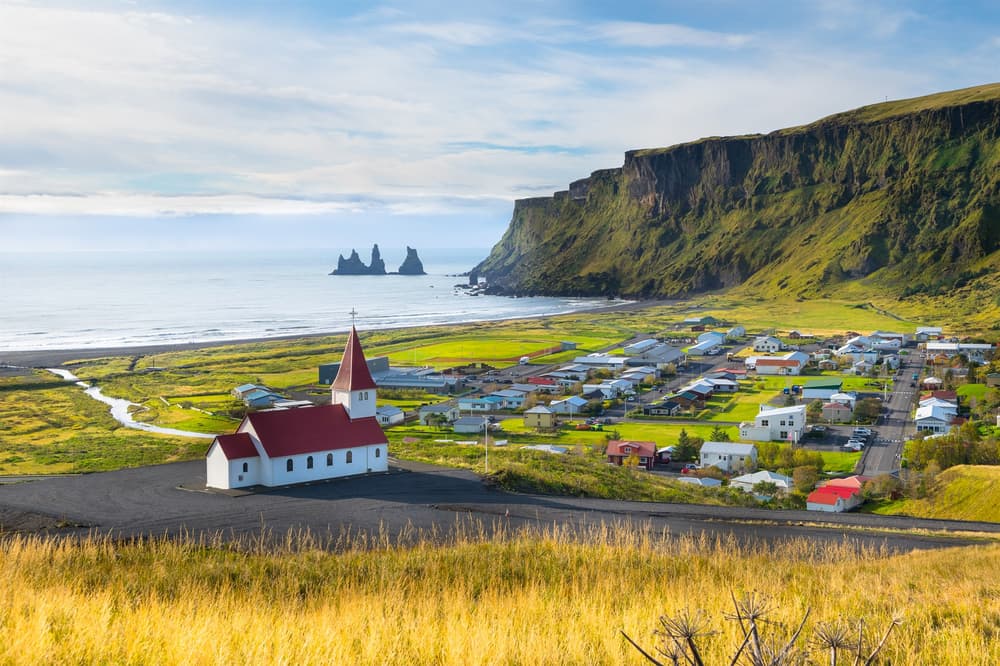
Driving the Ring Road, you'll pass through these towns and dozens of smaller villages, but between them the landscape is often empty for long stretches, lava fields, farmland, or highland edges with no settlements at all. This is normal in Iceland, not a sign you've taken a wrong turn.
Who lives in Iceland?
The majority of Iceland's population is ethnically Icelandic, descended largely from Norse and Celtic settlers who arrived over a thousand years ago, with a distinct language (Icelandic) still spoken and taught in schools much as it was centuries ago. Alongside this, foreign nationals now make up a meaningful share of residents, particularly in and around Reykjavik and in fishing and tourism towns along the coast.
This mix means that as a visitor, you'll hear Icelandic, English, Polish, and other languages depending on where you are, English is spoken widely and reliably across the tourism industry, including at car rental desks, hotels, and petrol stations.
Does anyone live outside the towns?
Yes, but sparsely. Farms are scattered along the coastal ring, particularly in the south and around fjords in the north and east, and rural populations rely on Route 1 and secondary roads for access to schools, hospitals, and shops. Once you move away from the coastal ring into the interior highlands, however, there are effectively no permanent residents at all.
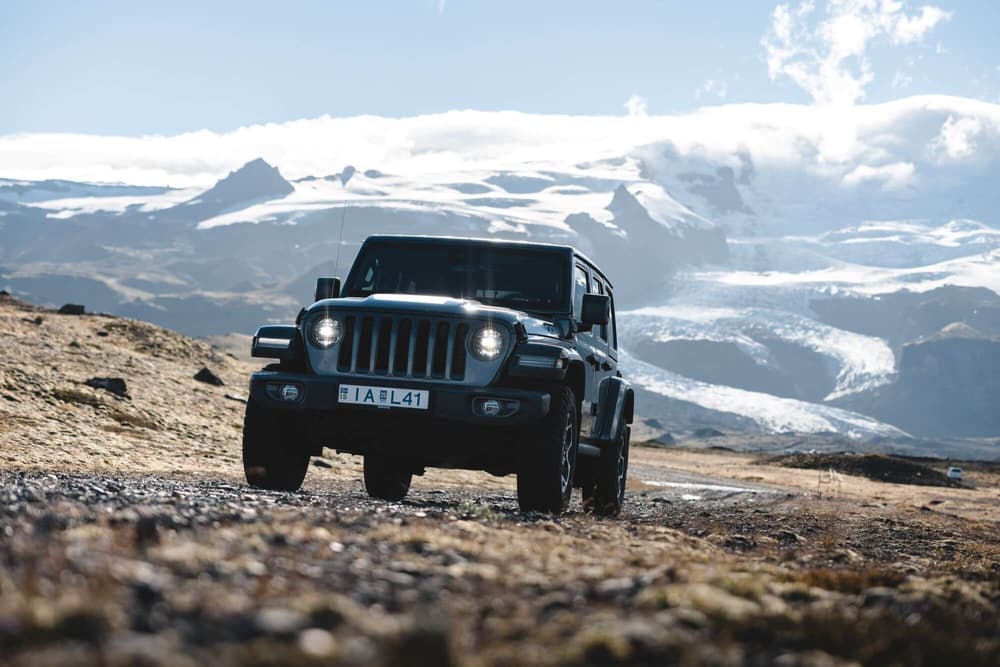
The Highlands, home to landscapes like Landmannalaugar and Hveravellir, are largely uninhabited wilderness, accessible only via F-roads that are open seasonally and legally require a 4x4 vehicle. If you're planning to explore that part of the country, it's worth reading about which 4x4 you actually need for Iceland's F-roads before you commit to a route, since conditions and opening dates vary from year to year and should always be checked with umferdin.is and safetravel.is before setting out.
How does the population compare to the number of visitors?
According to the Icelandic Tourist Board (last checked August 2026), Iceland receives around 2 million visitors a year, a figure that dwarfs its resident population of roughly 400,000. For a country this size, that's an unusually high visitor-to-resident ratio, and it explains why certain sites, Geysir, Gullfoss, and Reynisfjara among them, can feel busy during peak summer months even though the country as a whole is sparsely populated.
Interestingly, Icelanders themselves aren't heavy users of their own wilderness; many prefer travelling abroad on holiday rather than hiking their own highlands. That leaves much of the more remote landscape quiet outside of the main tourist routes, even in high season.
Why population density matters for a self-drive trip
Because so much of Iceland is unpopulated, distances between services can be longer than visitors expect, and this should shape how you plan fuel stops, accommodation, and route timing. Outside the Reykjavik area and larger towns like Akureyri or Selfoss, fuel stations and shops can be spaced well apart, particularly in the Westfjords or along stretches of the south and east coast, for example, between Vík and Höfn, fuel stops can be over 100km apart, and stretches of the Westfjords can see similar gaps between services.
This is also why vehicle choice matters more in Iceland than in densely populated countries. A 2WD versus 4x4 decision depends heavily on season and route, a small car may suit a summer Ring Road loop, while winter conditions or highland routes call for something with more capability. If you're unsure which fits your itinerary, our guide on asking yourself the right questions before booking a 4x4 walks through the main considerations, and the winter driving guide covers what changes once daylight and road conditions shift in the colder months.
Once you're in Reykjavik itself, where most of the population and most rental pickups begin, parking works on a zone system that's manageable once you understand it; our Reykjavik parking guide breaks it down.
Picking up a car near where people actually live
Because the overwhelming majority of residents, and nearly all arriving travellers, are concentrated around the Reykjavik capital area and Keflavik Airport, this is also where car rental logistics are most straightforward. Blue Car Rental offers online check-in and key-box pickup for customers who add the Liability Waiver and complete online check-in (24/7 at Keflavik Airport, 06:00-21:00 at the Reykjavik City Office), which is useful precisely because most visitors land, collect a car, and head out from this densely served corner of an otherwise sparsely populated country. From there, the choice of vehicle, 2WD, 4x4, EV, or something larger for a family, depends on how far off the populated coastal ring your route will take you; the full range is listed on our fleet page.
The bottom line
Iceland's small population, around 400,000 people, concentrated overwhelmingly around Reykjavik, is exactly why the country feels so open once you leave the capital area. Understanding this distribution helps you plan realistic driving days, choose a vehicle suited to your route and season, and know what to expect between fuel stops on the Ring Road or a highland detour.
 HOW BLUE CAR RENTAL SUPPORTS LOCAL COMMUNITIES IN ICELAND