Iceland. Greenland. Similar names. Close neighbors. Both known for dramatic landscapes, glaciers, and Arctic vibes.You’d be surprised how often people mix them up.
But once you look past the names, they’re very different places, especially when it comes to travel.
If you’re planning a trip and wondering which one makes more sense, here’s a clear, practical breakdown of the real differences between Iceland and Greenland.
Same Neighborhood, Very Different Islands
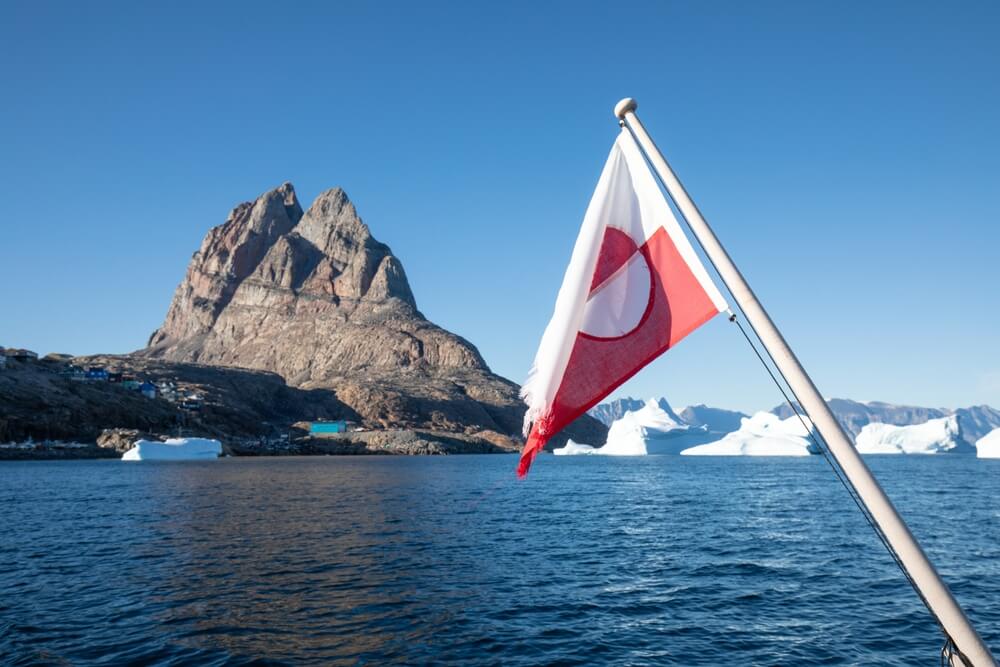
Greenland is Iceland’s closest neighbor, but it’s on a completely different scale.
Iceland is a large island. Greenland is massive. In fact, Greenland is the largest island in the world. It’s so big that it stretches farther north, south, east, and west than Iceland.
Despite the size, Greenland feels far more remote. Most of the island is covered by a huge ice sheet, with glaciers spilling down toward the coast. Iceland also has famous glaciers like Vatnajökull and Snæfellsjökul, but they’re much smaller and far easier to reach.
This is why In Iceland, glaciers are part of everyday travel. While in Greenland, they dominate the landscape.
“Iceland Is Green, Greenland Is Ice”
You’ve probably heard the saying:
“Iceland is green, Greenland is ice.”
It’s not completely accurate, but it’s not wrong either.
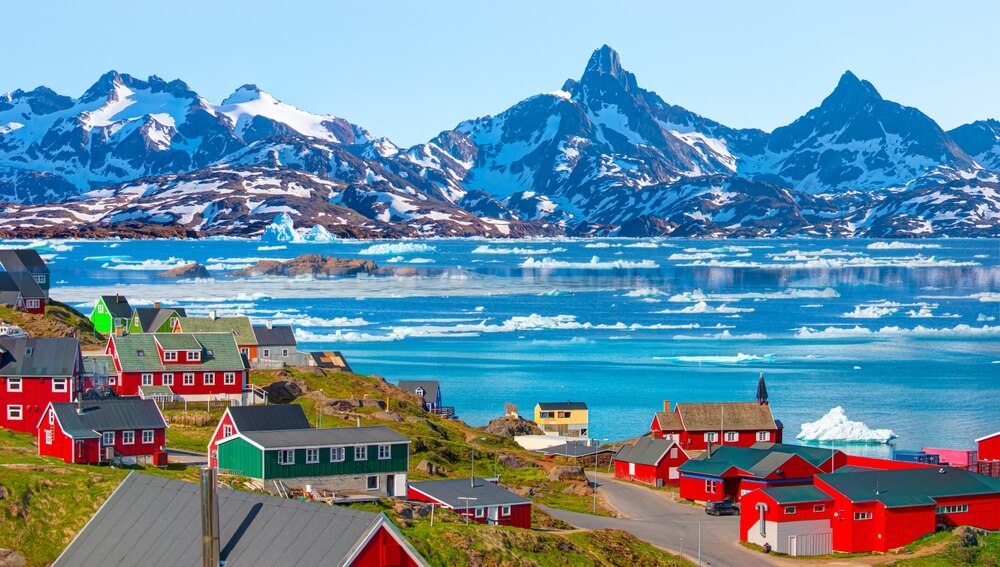
Greenland is largely covered by ice year-round. The interior is almost entirely inaccessible, and even along the coast, ice plays a big role in daily life.
Iceland, on the other hand, has a mix of lava fields, moss, waterfalls, black sand beaches, volcanoes, hot springs, and glaciers, often all within the same day’s drive. The landscapes change constantly, and most of them are reachable by road.
That difference alone shapes how people travel in each country.
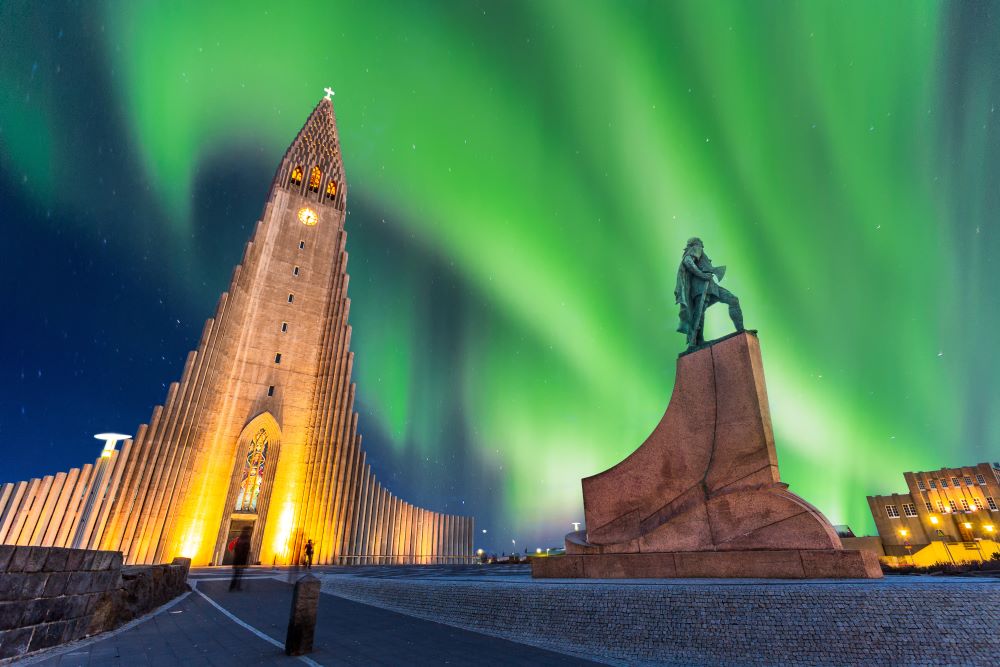
A Shared Viking History
The two countries are closely connected historically.
Greenland was first settled by Vikings, led by Erik the Red, who sailed there from Iceland after being exiled. He named the island “Greenland” to attract settlers, one of the boldest marketing moves of the Middle Ages.
His son, Leif Erikson, later sailed west from Greenland and reached mainland North America, in what is now Canada, centuries before Columbus.
So while Greenland and Iceland developed very differently, their roots are deeply linked. Seeking more historical facts? Check out the history of Iceland in a timeline.
Population: Busy vs. Barely Inhabited
Iceland has a population of nearly 400,000 people. Greenland has around 55,000.
That difference matters when you’re traveling.
In Iceland, towns and services are spread all around the island. You’ll find gas stations, supermarkets, cafés, hotels, and emergency services even in fairly remote areas.
In Greenland, settlements are small and scattered, mostly along the south and west coast. Huge areas of the country are completely uninhabited and unreachable without special transport.
Transportation: This Is Where Things Really Change
This is the biggest practical difference for travelers.
Traveling in Greenland
Greenland has almost no road network between towns and villages. You can’t rent a car and drive across the country, it’s simply not possible.
Travel between places usually happens by:
- Boat
- Small aircraft
- Helicopter (sometimes the only option)
That makes travel expensive, weather-dependent, and limited. A short distance on the map can take hours or days to reach.
Traveling in Iceland
Iceland is the complete opposite.
The country has a modern and well-maintained road system. You can drive the full Ring Road around the island, reach waterfalls, volcanoes, glaciers, black sand beaches, and hot springs. All on your own schedule.
In summer, you can even drive Iceland’s highland F-roads with a 4x4 and access some of the most remote places in the country.
This freedom is one of the biggest reasons travelers choose Iceland.
Airports and Accessibility
Greenland recently opened its first international airport in Nuuk, but access is still limited, especially in winter.
Most international arrivals come via:
- Small planes from Iceland
- A limited number of flights from Denmark
Weather delays are common, and options are few.
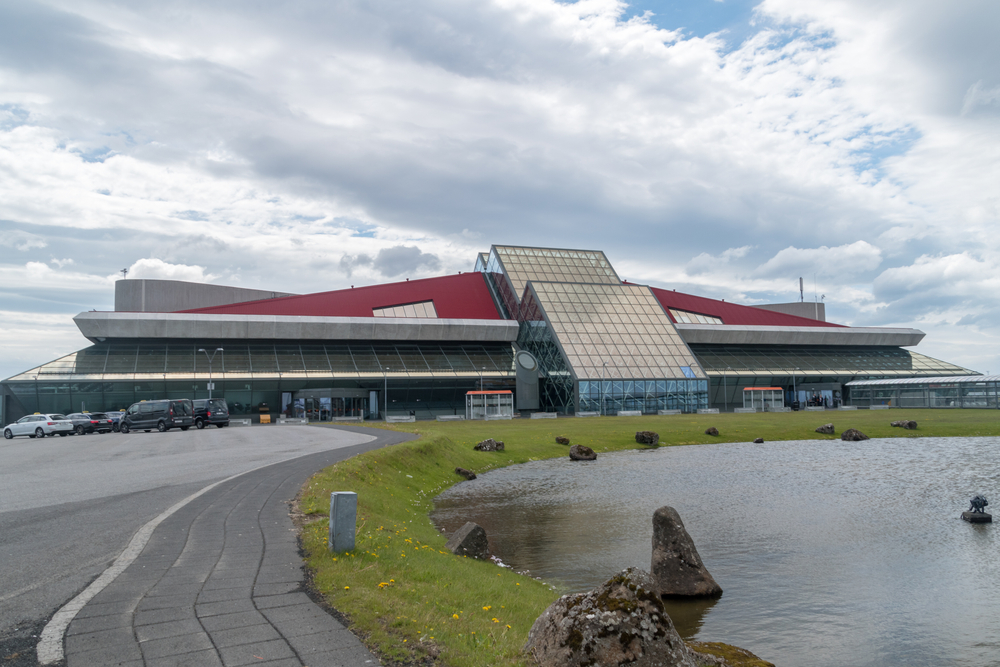
Iceland, on the other hand, has Keflavík International Airport with daily flights from North America, Europe, and beyond. Flights run year-round, and getting in and out of the country is easy.
Once you land, you can pick up a rental car and be on the road within minutes.
Culture: Nordic vs. Indigenous
Culturally, Iceland and Greenland are very different.
Iceland is closely connected to other Nordic and European countries. The culture is modern, but deeply rooted in Viking history, literature, and nature.
Greenland has a strong Indigenous culture, especially in smaller villages. Larger towns like Nuuk have more Nordic (mainly Danish) influence, while remote communities preserve traditional ways of life tied closely to the land and sea.
Because of their closeness, you’ll still find some overlap, including Icelandic food products and familiar brands in Greenland.
Greenland is part of the Kingdom of Denmark and is geographically considered part of North America, even though it feels worlds apart from most places on the continent.
Nature: Both Incredible, One Easier to Explore
There’s no question both Greenland and Iceland have extraordinary nature.
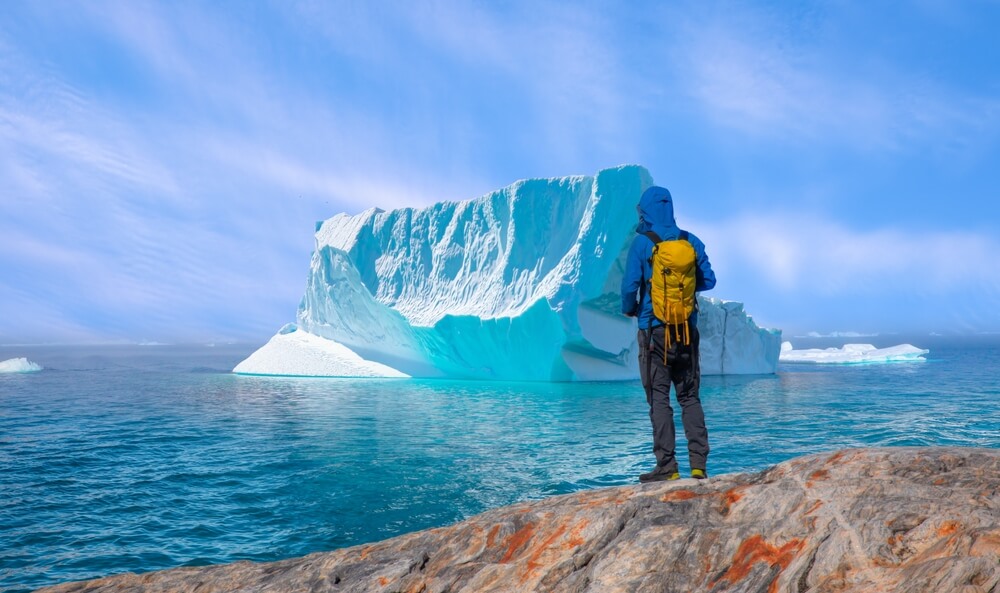
Greenland’s landscapes are raw, vast, and extreme. Massive fjords, towering icebergs, and untouched wilderness dominate the scenery. But reaching these places often requires guided tours, boats, or flights.
Iceland’s nature is just as unique, but far more accessible. You can stand next to a waterfall, soak in a natural hot spring, walk on a glacier, and drive along black sand beaches. All easily done in one trip, without a guide.
That accessibility is what makes Iceland ideal for self-drive travel.
Climate Differences
Iceland is warmer than most people expect, thanks to the Gulf Stream. Winters are cold, but manageable, and summers are cool and comfortable.
Greenland is much colder overall. Large glaciers and mountains block sunlight during the Arctic winter, and temperatures stay low even in summer.
Fun fact: Despite this Greenland has mosquitoes while Iceland is mosquito free.
So… Which One Should You Travel To?
The difference between Iceland and Greenland comes down to:
- Geography
- Climate
- Culture
- Infrastructure
- Transportation
Greenland is fascinating, but it’s a destination for experienced, adventure-focused travelers with flexible schedules and higher budgets.
Iceland is far more practical. You get dramatic landscapes, Arctic nature, rich culture, and modern comfort — all connected by roads.
That’s why renting a car in Iceland makes such a big difference. It gives you freedom, flexibility, and access to places you simply couldn’t reach otherwise.
If you want to explore at your own pace, stop when something catches your eye, and experience the country beyond a fixed itinerary, Iceland is the clear choice.
And with a reliable local car rental, the journey becomes just as memorable as the destination.
Iceland vs Greenland: A Practical Comparison for Travelers
|
Category |
Iceland |
Greenland |
|
Geographic size |
Large island |
World’s largest island |
|
Population |
~400,000 |
~55,000 |
|
Landscape |
Volcanoes, waterfalls, glaciers, black sand beaches, hot springs |
Massive ice sheet, glaciers, fjords, Arctic wilderness |
|
Glaciers |
Many, smaller and easily accessible |
Dominant feature, extremely large and often remote |
|
Road network |
Modern road system covering the whole country |
No road network between towns |
|
Self-drive travel |
Possible and popular year-round |
Not possible |
|
Transportation |
Rental cars, buses, domestic flights |
Boats, small planes, helicopters |
|
Accessibility |
Easy to explore independently |
Travel often requires guides and advance planning |
|
Main airport |
Keflavík International Airport with global connections |
Limited international access, mainly via Iceland or Denmark |
|
Cities and towns |
Towns and services around the entire island |
Few towns, mostly on south and west coast |
|
Culture |
Nordic and European influence |
Strong Indigenous culture with Nordic influence in larger towns |
|
Climate |
Milder due to the Gulf Stream |
Much colder, Arctic climate |
|
Best for |
Self-drive trips, flexible itineraries, first-time Arctic travel |
Expedition-style travel and experienced adventurers |
|
Cost of travel |
More affordable and predictable |
High costs and limited options |
|
Rental cars |
Widely available and essential |
Not available |
Why Renting a Car in Iceland Makes All the Difference
One of the biggest reasons Iceland is easier to travel than Greenland is simple: you can drive almost everywhere. And that freedom only works if you have the right rental car and local support.
Blue Car Rental is a local Icelandic company built around self-drive travel. The service is designed for real road conditions in Iceland, not generic rentals.
With locations at Keflavík International Airport and in Reykjavík, you can pick up your car right after landing and start your trip without delays. Online check-in and key box pickup mean you’re on the road fast, even if you arrive late or early.
The fleet is modern and well maintained, with options for:
- Small ccars for city driving and short trips
- SUVs and 4x4 vehicles for the Ring Road and rural areas
- Larger 4x4s for longer drives and more demanding conditions
Insurance is another key part of stress-free travel. Blue Car Rental offers full coverage options that are tailored to Iceland, including protection against gravel damage, sand and ash, and harsh weather. That matters when driving in a country where conditions can change quickly.
Support doesn’t stop once you leave the parking lot. Blue Car Rental provides 24/7 assistance, local expertise, and tools like the On the Road Safety app to help you stay informed while traveling. Whether it’s weather updates, road conditions, or general driving tips, you’re never left guessing.
In a country built for self-drive adventures, having a local rental partner makes a real difference. It turns Iceland into a destination you can explore fully on your own schedule, at your own pace.
 WHY EXCELLENT CUSTOMER SERVICE MATTERS IN ICELAND CAR RENTAL