
This is a day-by-day 7-day self-drive itinerary for Iceland's Ring Road (Route 1), written for travellers renting a car and driving the loop themselves. Each day lists the route, the distance in km, the named stops, roughly how long you'll be driving and where to sleep, followed by how the plan changes in summer, autumn, winter and spring, and what a week on the road costs. A week is enough to drive the Ring Road at a comfortable pace if you match the vehicle and the season to the route. If you only have six days, our faster 6-day Ring Road plan squeezes the loop into less time; this page is the relaxed one-week version.
Is 7 days enough to self-drive the Ring Road?
Yes, for most travellers. Route 1 circles the country and connects nearly all of Iceland's best-known sights, and a week gives you enough time to complete the loop without long, tiring driving days. The itinerary below covers roughly 1,650 to 1,700 km over seven days, which works out to 200 to 350 km of driving on any given day, manageable if you start reasonably early and don't overpack the sightseeing schedule.
The trip is easiest between May and September, when daylight lasts close to 20 hours (nearly 24 hours at the height of summer) and the whole Ring Road, plus most side roads, is open. Outside that window it's still doable, but winter travel (roughly October to March) means shorter daylight, occasional road closures, and a plan that needs to stay flexible around the weather rather than fixed to a script. For a deeper look at cold-season conditions, see our guide to driving in Iceland in winter.
Below you'll find the day-by-day route with distances, named stops and overnight towns, followed by notes on how each season changes the plan, a cost table, and the mistakes first-time Ring Road drivers most often make.
What you need to know before you set off
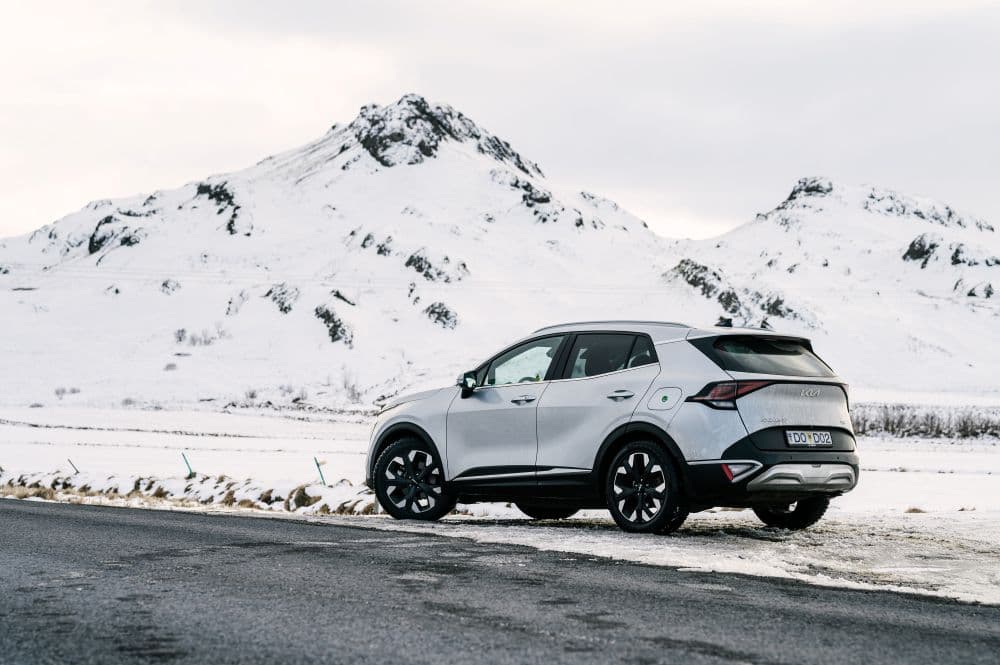
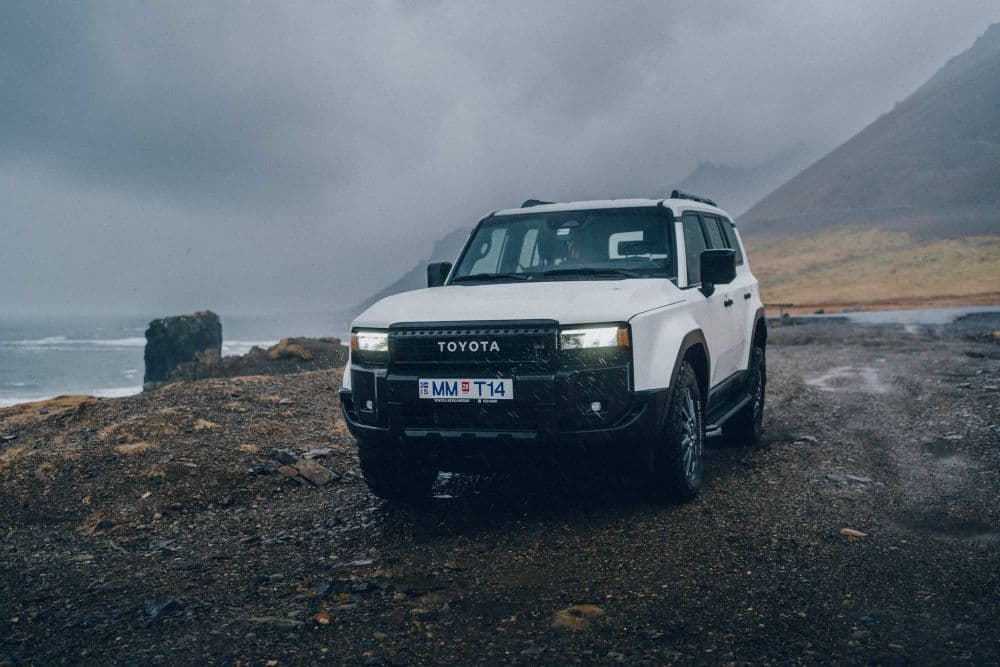
Route 1 is fully paved apart from a few short gravel sections, and a standard 2WD car handles it comfortably in summer for most drivers. A 4x4 becomes more useful, and in winter, advisable, once snow, ice, or wind enter the picture, and it's required by law if you plan to leave the Ring Road for any F-road into the highlands. If Kjölur (road 35) or Landmannalaugar (F208) are on your wish list, budget extra days and read our F-roads guide before adding them to a 7-day plan, since the Ring Road itself already fills the week.
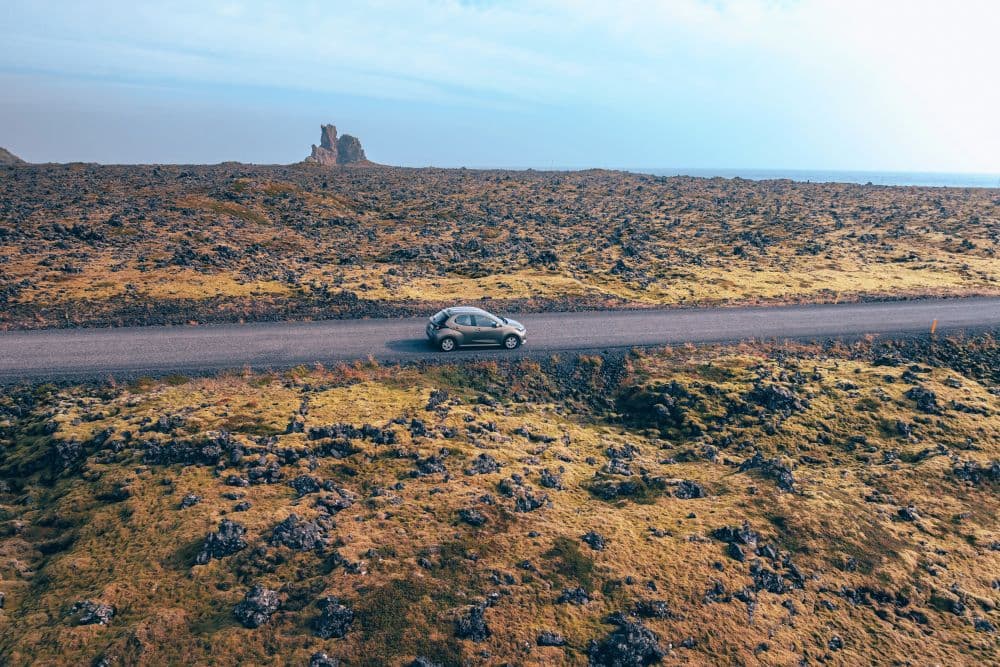
Whichever vehicle you choose, decide it based on season and route rather than habit. Blue Car Rental's 2WD and 4x4 fleet covers both categories, so the choice can follow the season, and our breakdown of when a 2WD is enough and when it isn't walks through the trade-offs in more detail. Picking up the car is usually the least stressful part of the trip: Blue Car Rental offers online check-in and key-box collection (for customers who add the Liability Waiver and complete online check-in) at Keflavik Airport, so you can go straight from baggage claim to the vehicle without waiting in a rental counter queue, see our Keflavik pickup guide for how the process works.
What to pack
A base kit works across most of the year: a waterproof jacket and trousers, warm layers, sturdy boots, and a swimsuit for hot springs along the route. In summer, an eye mask helps if you're sensitive to the near-constant daylight. Season-specific extras (thermal layers, a headlamp, binoculars) are covered in the seasonal notes below.
Daily road and weather check
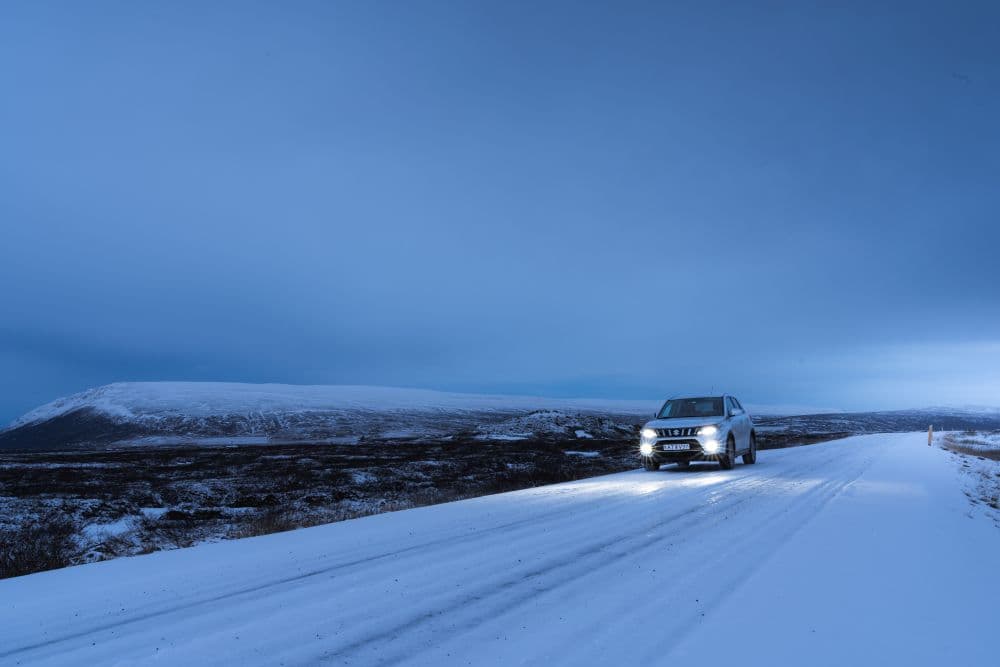
Road and weather conditions change quickly and should always be checked before you drive, not just before you book. The Icelandic Road Administration (umferdin.is and the Icelandic Met Office (vedur.is) publish daily updates, and safetravel.is is worth checking for any active weather warnings along your route.
Stay on marked roads
Off-road driving is illegal anywhere in Iceland and damages ground that takes decades to recover, so stay on marked roads and tracks, park only in designated areas, take all waste with you, and give wildlife and other travellers space. If a road is closed or the authorities advise against travel, follow that advice rather than the itinerary; a day lost to weather is normal on a week-long loop.
The 7-day Ring Road itinerary
This route runs clockwise from Reykjavik, following the classic sequence of south coast, east, north, and Snæfellsnes before returning to the capital. It's built around a summer driving pace; in winter, the same stops apply but should be treated as a loose plan you're ready to adjust, and many winter travellers instead follow the south-focused alternative described later in this guide.
| Day | Route | Highlights | Distance |
|---|---|---|---|
| 1 | Reykjavik → Golden Circle → Vík | Þingvellir, Geysir, Gullfoss, Seljalandsfoss, Skógafoss | ~270 km |
| 2 | Vík → Skaftafell → Jökulsárlón → Höfn | Reynisfjara, Skaftafell National Park, glacier lagoon, Diamond Beach | ~270 km |
| 3 | Höfn → Eastfjords → Egilsstaðir | Vestrahorn, Stokksnes, small fishing villages | ~250 km |
| 4 | Egilsstaðir → Dettifoss → Mývatn | Stuðlagil Canyon, Dettifoss waterfall, Hverir, Mývatn Nature Baths | ~230 km |
| 5 | Mývatn → Akureyri | Goðafoss waterfall, Akureyri town and pools | ~90 km |
| 6 | Akureyri → Hvítserkur → Snæfellsnes | Tröllaskagi coastal road, Hvítserkur rock formation | ~350 km |
| 7 | Snæfellsnes → Reykjavik | Kirkjufell, Snæfellsjökull National Park, Hraunfossar, Deildartunguhver | ~200 km |
Day 6 is the longest leg by far, so if you're travelling in winter or simply prefer shorter driving days, consider splitting it into two nights, one around Akureyri or Blönduós, and one on Snæfellsnes, and trimming a stop elsewhere to compensate.
Day 1: Reykjavik → Golden Circle → Vík
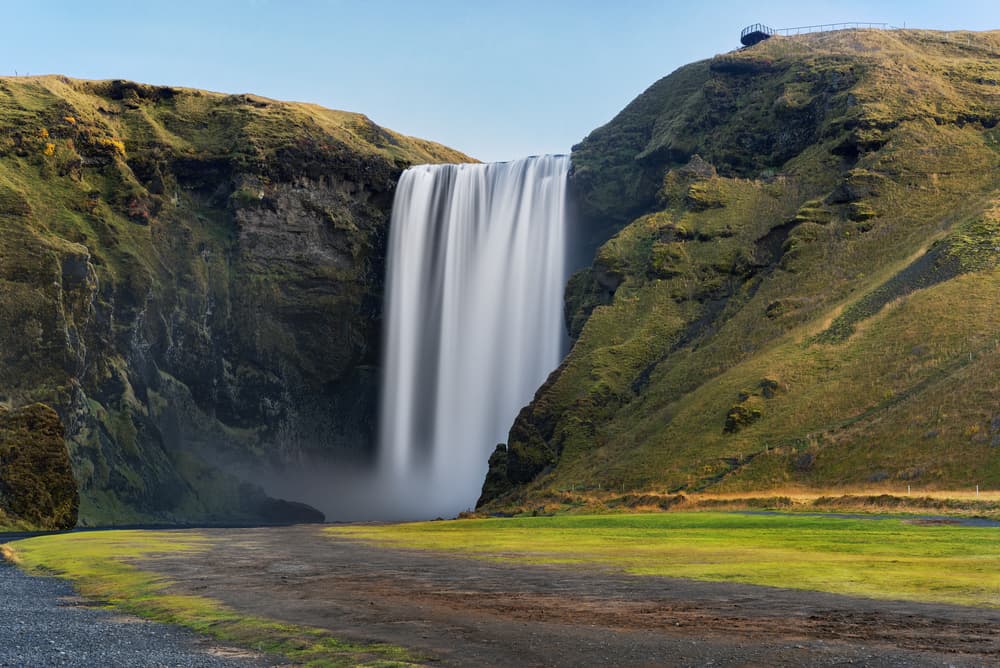
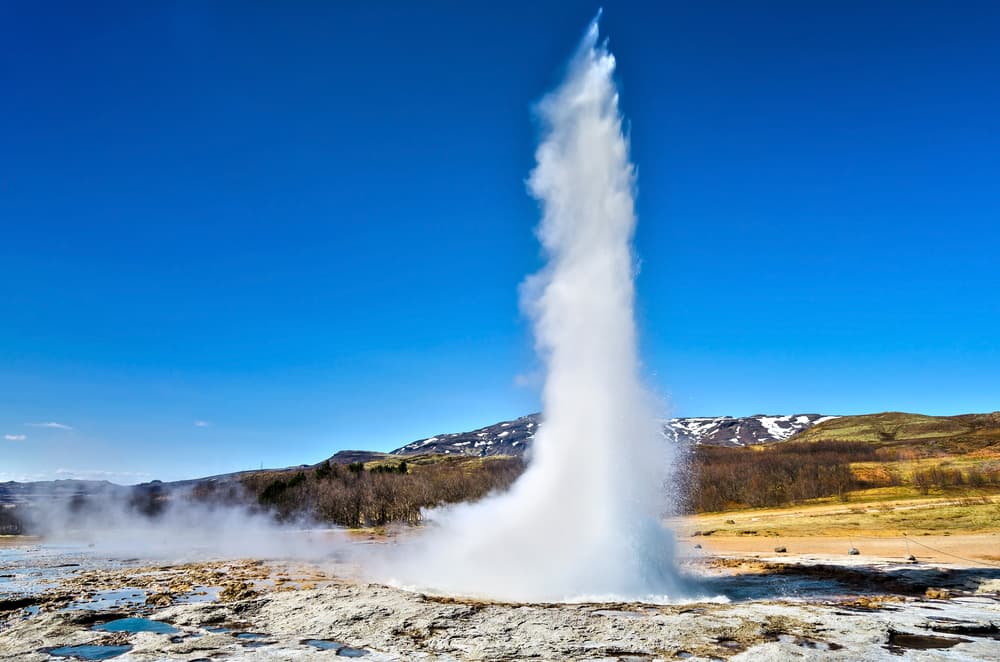
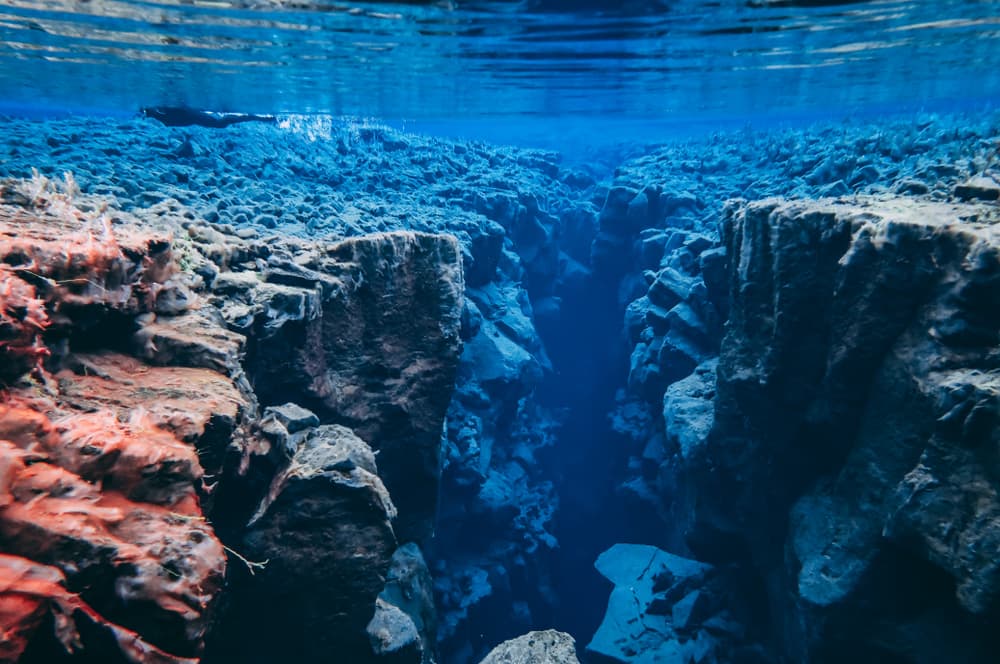
Pick up your rental in Reykjavik and head straight for the Golden Circle. Stop at Þingvellir National Park, watch Strokkur erupt at Geysir, and feel the spray at Gullfoss waterfall. From there, the road runs south to the coast, where Seljalandsfoss and Skógafoss waterfalls make a natural pair of late-afternoon stops, Seljalandsfoss can be walked behind, and Skógafoss is a short walk from the car park. Overnight in Vík. Distance is ~270 km, roughly 4 hours of driving before stops. Tip: this is the busiest day-one route on the island, so an early start from Reykjavik buys you quieter photos at Gullfoss and Geysir before the tour buses arrive.
Day 2: Vík → Skaftafell → Jökulsárlón → Höfn
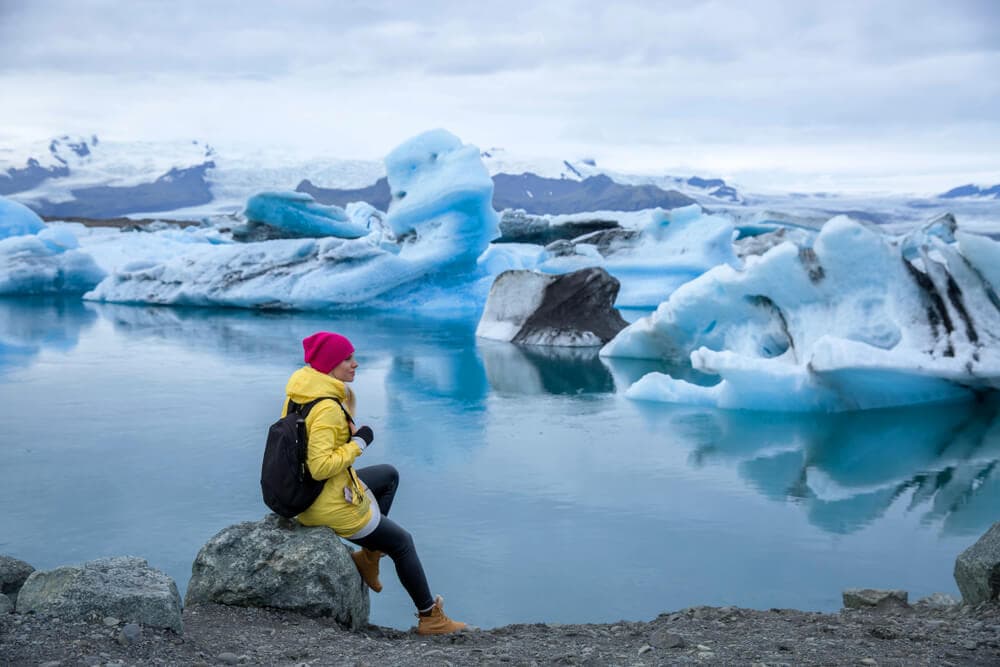
Start at Reynisfjara black sand beach and the Dyrhólaey promontory, both a short detour off the Ring Road near Vík. Continue east to Skaftafell National Park for a short hike among glacier tongues, then push on to Jökulsárlón Glacier Lagoon and Diamond Beach, where icebergs drift across the lagoon and wash up on the black sand on the seaward side of the road. Overnight in Höfn. Distance is ~270 km, roughly 4 hours of driving before stops. Tip: allow at least an hour here; the lagoon and Diamond Beach sit on opposite sides of the Ring Road bridge, and both deserve a proper stop.
Day 3: Höfn → Eastfjords → Egilsstaðir
This is the quietest driving day of the week, winding through the Eastfjords past tiny fishing villages and dramatic sea cliffs. Stop at Vestrahorn mountain and the Stokksnes peninsula for one of the most photographed mountain backdrops on the route, and keep an eye out for reindeer, which are spotted in this part of the east if you're lucky. Overnight in Egilsstaðir. Distance is ~250 km, roughly 4 hours of driving before stops. Tip: fuel and food options thin out along this stretch, so top up the tank in Höfn before you leave.
Day 4: Egilsstaðir → Dettifoss → Mývatn
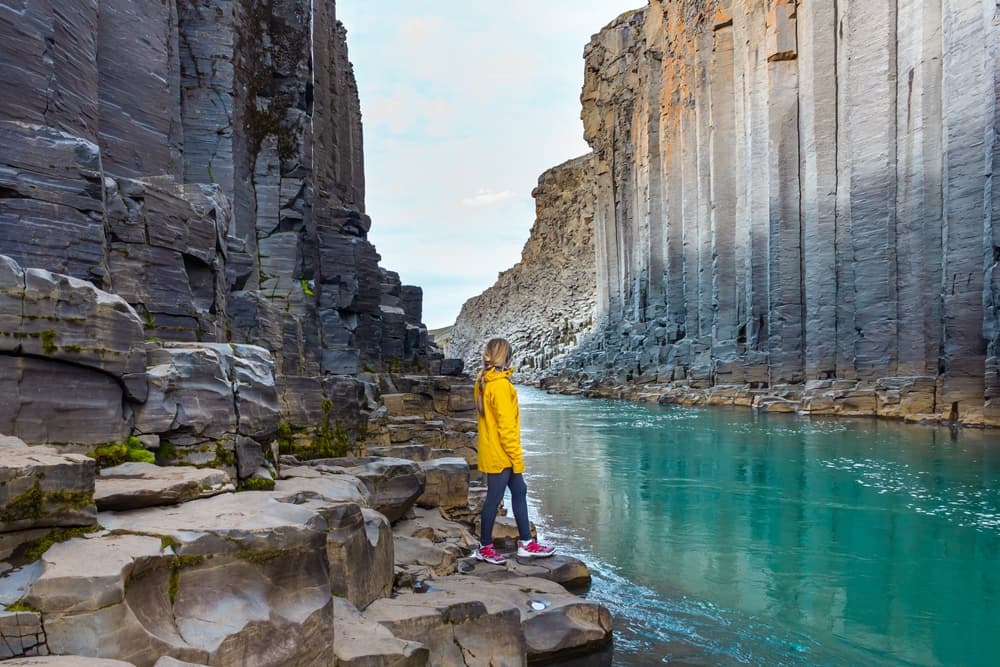
Detour to Stuðlagil Canyon or Hengifoss waterfall before continuing toward Dettifoss, one of Europe's most powerful waterfalls. From there the road reaches the Mývatn area, where the geothermal fields at Hverir steam with mud pots and vents, and Mývatn Nature Baths offer a geothermal soak at the end of the day. Overnight around Lake Mývatn. Distance is ~230 km, roughly 4 hours of driving before stops. Tip: the access road to Dettifoss can be gravel and rough in places, so check umferdin.is before you commit to a route on either side of the canyon.
Day 5: Mývatn → Akureyri
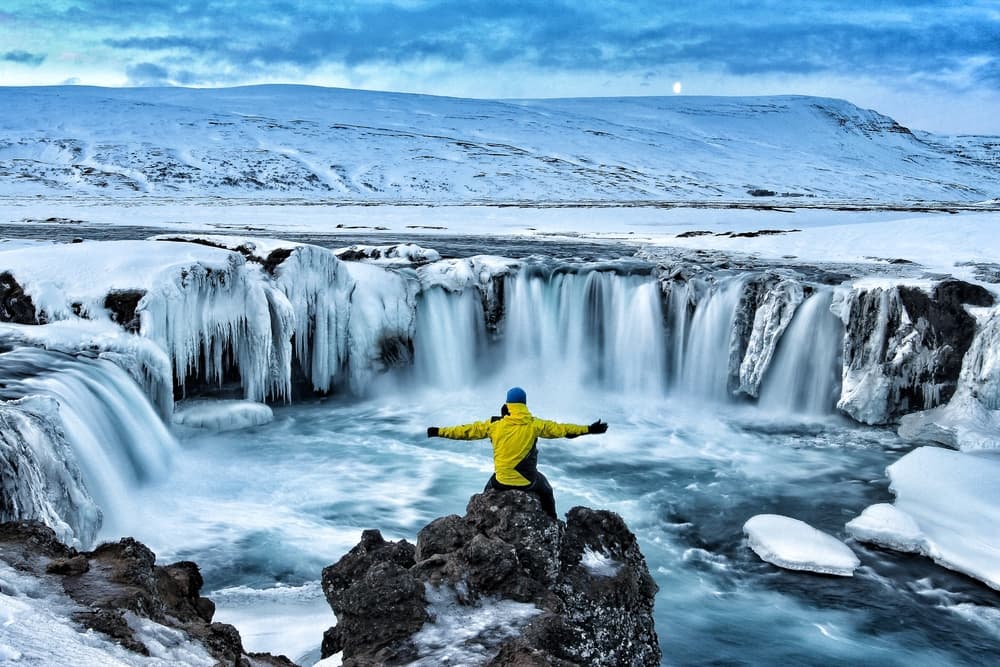
A short, relaxed driving day. Stop at Goðafoss waterfall on the way north, then spend the afternoon in Akureyri, Iceland's "capital of the north," with its botanical gardens, art galleries, and geothermal swimming pools. Travellers with extra time sometimes add a whale-watching tour from nearby Dalvík. Overnight in Akureyri. Distance is ~90 km, roughly 1.5 hours of driving before stops. Tip: with the shortest drive of the week, this is a good day to do laundry, restock groceries, and slow down before the long Day 6 leg.
Day 6: Akureyri → Hvítserkur → Snæfellsnes
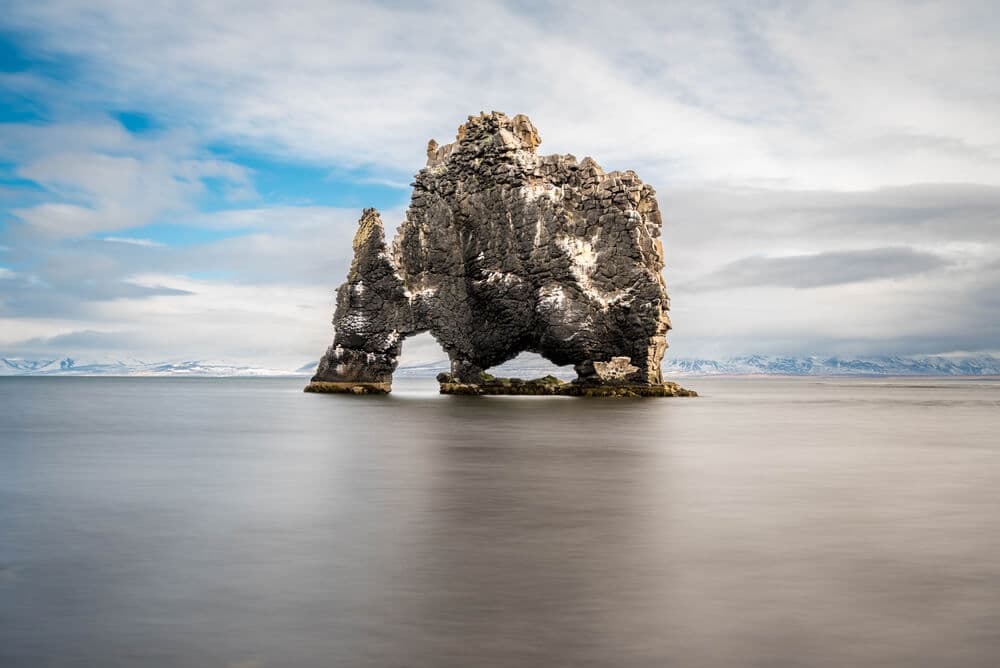
The longest day of the itinerary, travelling via the scenic Tröllaskagi peninsula coastal road with a detour to see Hvítserkur, the basalt sea stack nicknamed the "dinosaur rock." From there the route continues to Snæfellsnes, often called "Iceland in miniature" for packing glaciers, lava fields, and coastline into one peninsula. Overnight in Grundarfjörður or nearby. Distance is ~350 km, roughly 5 to 6 hours of driving before stops. Tip: given the distance, consider splitting this day into two nights, one near Akureyri or Blönduós and one on Snæfellsnes, especially outside summer.
Day 7: Snæfellsnes → Reykjavik
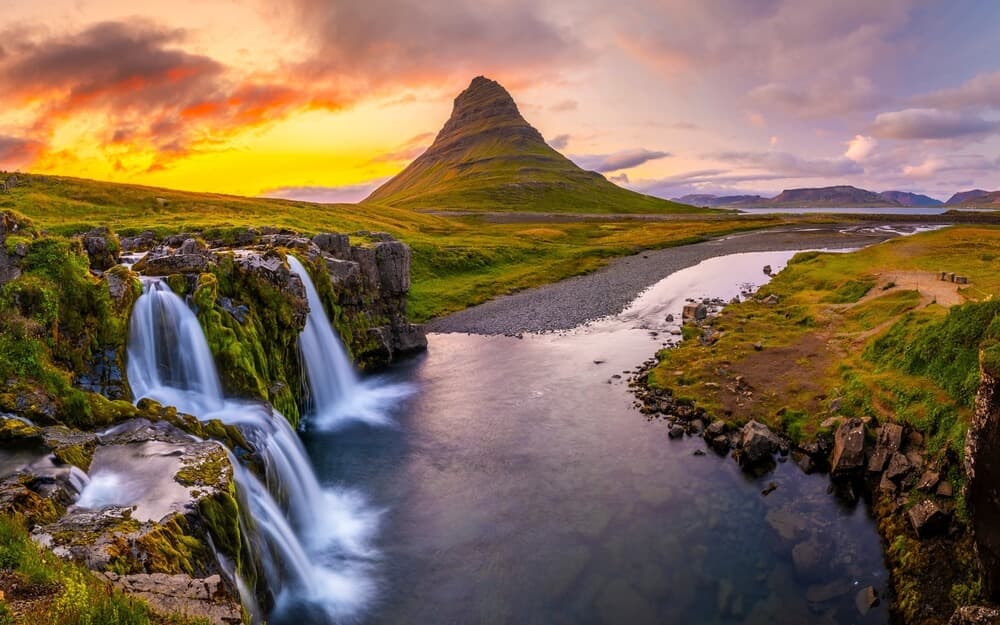
Visit Kirkjufell mountain, the much-photographed peak above Grundarfjörður, and explore Snæfellsjökull National Park before turning back toward the capital. On the way back, stop at Barnafoss and Hraunfossar, where the water pours out of the edge of a lava field, and at the Deildartunguhver hot springs. Finish back in Reykjavik. Distance is ~200 km, roughly 3 hours of driving before stops. Tip: build in time for this last leg rather than rushing it, Snæfellsnes has enough short stops to fill a full morning before the drive back.
Where to sleep along the route
Overnight stops in this plan are Vík, Höfn, Egilsstaðir, the Lake Mývatn area, Akureyri and Grundarfjörður, with Reykjavik at each end. The towns are small, so in summer book each night early, and outside summer book ahead because many guesthouses in the east and north close or cut their hours. Hostels, guesthouses, hotels and campsites all appear along the loop, which is what gives the accommodation range below its wide spread.
How the plan changes by season
The Ring Road stays technically open in some form most of the year, but what's comfortable to drive changes a great deal between June and January. This table gives a quick comparison so you can match your expectations, and vehicle choice, to when you're actually travelling.
| Season | Months | Daylight | Road conditions | Vehicle to consider |
|---|---|---|---|---|
| Summer | June–August | ~20–24 hours | Ring Road fully open, some gravel and single-lane bridges | 2WD usually sufficient |
| Autumn | September–October | Shortening, aurora season begins | Main road open, weather increasingly changeable | 4x4 worth considering as season progresses |
| Winter | November–March | ~4–7 hours | Snow and ice possible on all routes; some sections exposed to closures | 4x4 recommended |
| Spring | Late March–May | Lengthening | Main Ring Road generally open; highland roads still closed; freeze-thaw potholes | 2WD or 4x4 depending on timing |
Check umferdin.is and vedur.is each morning of the trip whatever the season; the notes below describe what typically changes, not what any given week will look like.
Summer (June to August)
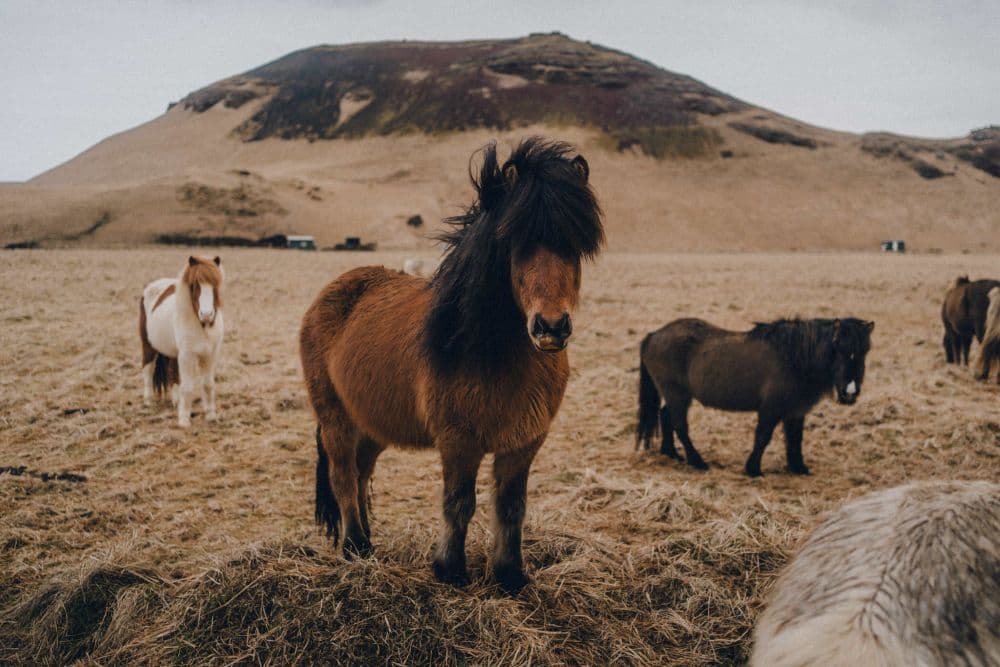
With daylight close to 24 hours at the peak of the season, you can realistically sightsee late into the evening and still get an early start the next day, just budget proper rest so the long light doesn't turn into a long, tiring drive. Expect daytime temperatures in the range of 8 to 18°C, so layers matter even in July. Sheep roam freely near the road all summer, slow down whenever you see animals close to the verge, and the Ring Road's single-lane bridges require you to give way according to the posted signs. This is also the best season for glacier hikes at Skaftafell and on Vatnajökull, and puffins are visible on coastal cliffs from May to August.
Autumn (mid-September to early November)
Autumn brings golden birch leaves, moss turning deep green, and the first aurora sightings of the season starting in September. Daylight is still generous early in the season but shortens noticeably by November. Frost becomes common on roads from late September onward, and sheep round-ups mean livestock may be moving along rural roads, so drive cautiously through farming areas. Many rural guesthouses reduce hours or close from October, so book ahead once your dates are set. It's also a good season to try seasonal harvest produce, skyr and lamb feature at regional markets along the route.
Winter (October to March)
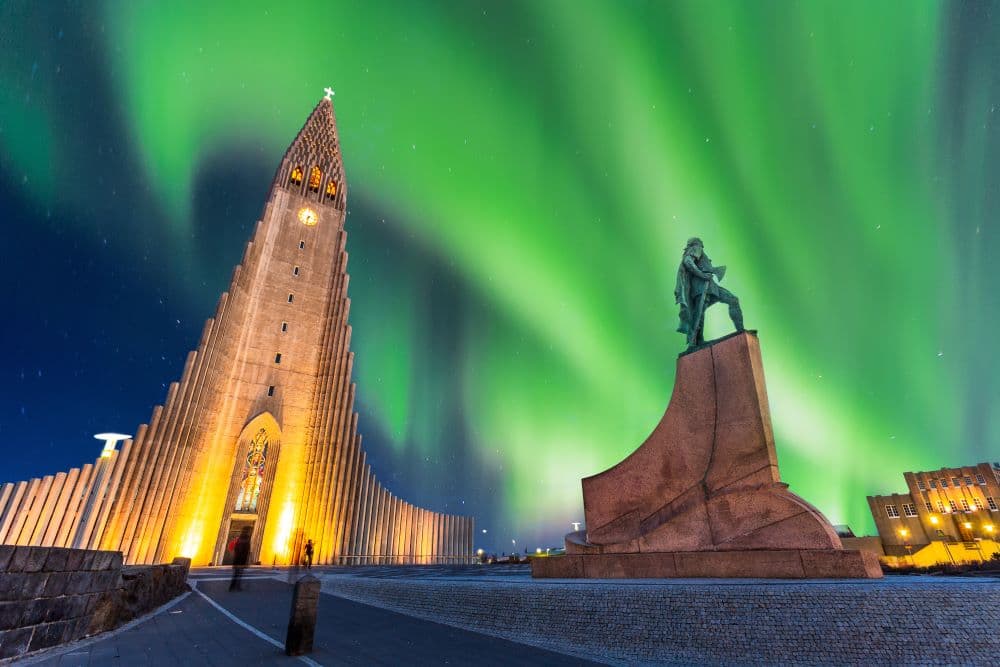
Winter's short days, roughly 4 to 7 hours of usable daylight, mean the full clockwise loop above is harder to complete comfortably, and many winter travellers instead spend the week concentrated on the southwest and south coast. A typical winter week looks like this: Day 1, arrival and the Blue Lagoon, overnight in Reykjavik; Day 2, the Golden Circle (Þingvellir, Gullfoss, Geysir); Day 3, south coast highlights (Seljalandsfoss, Skógafoss, Reynisfjara), overnight near Vík; Day 4, Jökulsárlón Glacier Lagoon and Diamond Beach, overnight near Vatnajökull; Day 5, an ice cave tour at Vatnajökull with a chance of northern lights after dark; Day 6, return toward Reykjavik via Fjaðrárgljúfur canyon or other sites; Day 7, a Reykjavik day exploring Hallgrímskirkja church and the city's museums. Pack a headlamp and a power bank alongside your winter layers, since low light and cold both drain devices and daylight faster than expected.
Spring (late March to May)
Spring is a shoulder season in the best sense: fewer crowds, improving roads, and waterfalls running at full power from snowmelt. Freeze-thaw cycles leave potholes on some stretches, and morning frost is common even as afternoons warm up, so check conditions daily rather than assuming yesterday's road is the same today. Lambs and migrating birds start appearing along rural roads from April, puffins begin arriving that same month, and whale-watching tours restart for the season. Pack binoculars for the birdlife and sunglasses, spring sunlight is noticeably stronger than in winter.
Activities worth booking ahead
Most natural stops on this itinerary are free, but a few experiences need a reservation: glacier hikes at Skaftafell and on Vatnajökull in summer, whale watching from Dalvík or Akureyri from spring into early autumn, ice cave tours at Vatnajökull in winter only, and northern lights hunting, which is possible from September to April when the skies are clear. Geothermal pools and nature baths along the route, from Mývatn Nature Baths to the town pools in Akureyri, work in every season and make a good end to a driving day. Puffin colonies are a summer-only sight, roughly May to August, and the first birds arrive in April.
What does a 7-day Ring Road trip cost?
Costs vary with season, vehicle class, and travel style, so treat the following as a starting range rather than a quote, always check current pricing before booking. As of May 2025, typical daily costs for a self-drive Ring Road trip looked roughly like this:
| Expense | Typical range |
|---|---|
| Car rental (2WD or 4x4) | €60–€130 per day |
| Accommodation | €40–€180 per night |
| Food (self-catered / restaurant) | €10–€25 / €25–€60 per meal |
| Fuel for the full loop | €250–€400 total |
| Activities (glacier hikes, whale watching, etc.) | €50–€200 per tour |
Fuel and accommodation are usually the two biggest variables, cooking some of your own meals and booking accommodation early both help keep the trip within budget. The rental figure is not hiding a compulsory insurance add-on: every Blue Car Rental booking includes CDW, SCDW, Gravel Protection, Theft Protection and Third-Party Liability as standard (details on the insurance options page), and Blue takes a credit-card imprint as security rather than a deposit, so no funds are held on your card. Outside summer, car rental and accommodation prices generally ease, though a winter trip may need a 4x4, which sits at the higher end of the rental range. For a fuller breakdown of what's included in a rental quote versus what can catch travellers out, see our guide to car hire costs and what to expect.
How to keep the trip within budget
Book the car and accommodation early, especially for June to August, when both fill up fast. Cooking some meals yourself cuts food costs sharply, and hostels, guesthouses and campsites sit at the lower end of the accommodation range. Many natural attractions on the route are free to visit, so the paid extras are mostly the tours listed above. In autumn, winter and spring, rental and accommodation rates generally drop, but some rural services keep shorter hours, so carry snacks and water on the longer legs in the east and north.
Mistakes to avoid on a first Ring Road self-drive
Most problems on a 7-day Ring Road trip come from underestimating time, not distance. A few patterns come up often enough to flag directly:
- Overpacking the daily schedule. Photo stops, single-lane bridges, and roadworks all eat into driving time faster than the map suggests, build in slack rather than a tight hour-by-hour plan.
- Treating gravel roads and F-roads the same way. F-roads legally require a 4x4, and driving off marked roads anywhere in Iceland is illegal and damages fragile ground, see why off-road driving is against the law.
- Skipping the daily road check. Conditions on mountain passes and the Eastfjords road can shift within hours in shoulder season and winter; check umferdin.is and vedur.is each morning, not just before the trip.
- Booking a 2WD for a winter loop by default. It may be fine for the south coast alone, but the full Ring Road in winter is a different proposition, read our winter driving guide before deciding.
- Assuming accommodation is available on the fly outside summer. Many guesthouses along the north and east coast reduce hours or close in winter, so book ahead once your itinerary is set.
- Ignoring sheep and seasonal wildlife on the road. Sheep roam freely in summer and are actively rounded up in autumn, both situations call for slowing down well before you reach the animals.
The real question behind the plan
If you're weighing up whether a week is "enough," the honest answer is that it's enough to see the Ring Road properly, not to rush it. The itinerary above is built to be driven without long, fatiguing days, and it flexes with the season rather than fighting it. Choose a vehicle that fits your route and time of year, check road and weather conditions each morning, and the loop is a manageable, well-trodden self-drive tour rather than a gamble.
 RENTING A CAR IN REYKJAVÍK: A COMPLETE GUIDE FOR TRAVELERS