Drive safely in
Drive Safely In Iceland
Iceland is a very unique country. We have a saying, if you don‘t like the weather, just wait five minutes. Driving in Iceland is also unique. Gravel roads, narrow roads, hurricane like winds and one-lane bridges are just a few of the things that might impact your trip. To us at Blue Car Rental, safety is our number one priority. We put a lot of emphasis on providing relevant and important information to ensure your safety on the road.
At the time of pick up, we will hand you our safety manual. We highly encourage you to go through it. It is based on years of experience and is full of useful information.
Before that, here are our top tips so that your trip in Iceland is memorable only due to the wonderful things you experienced and not due to unpleasant incidents or unnecessary costs
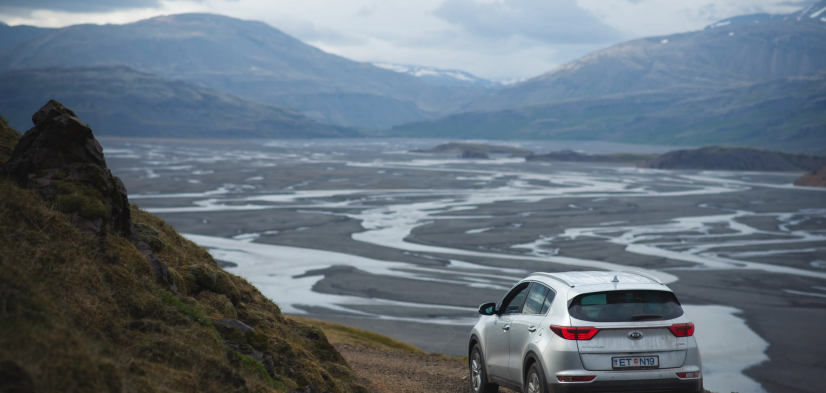
Summer
Driving in Iceland is a unique experience and there is no better time to travel in the land of fire and ice than summer. In summer driving around Iceland is quite easy, especially when compared to winter. The weather is usually calm and there is no risk of snow and ice.
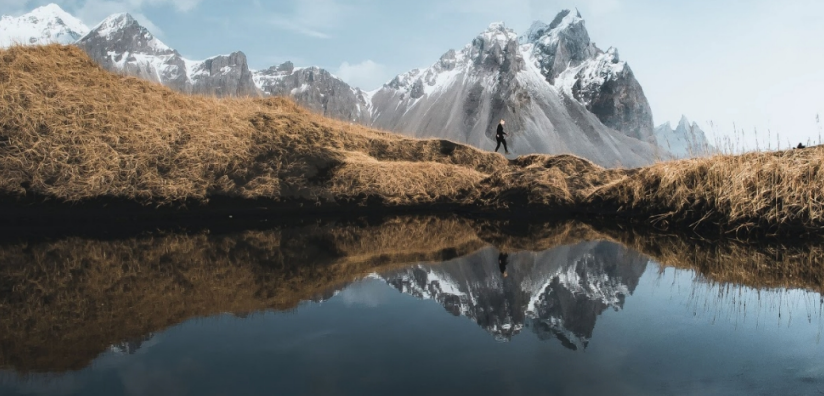
Winter Driving
Travelling during the winter time in Iceland is a completely different experience. It almost feels like you are experiencing a different country between the summer and the winter. The landmarks and attractions simply do not look the same when in their winter costume.
The Road
Animals
Please be prepared for farm animals grazing by the roadside and straying into or crossing the road. Drivers who cause injury or death to such animals may be liable to claims for compensation.
Off Road Driving
Off-roading is strictly forbidden in Iceland. The amazing Icelandic nature is sensitive so let´s treat it gently and with respect. F-Road and Off-road driving is not the same.
River Crossing
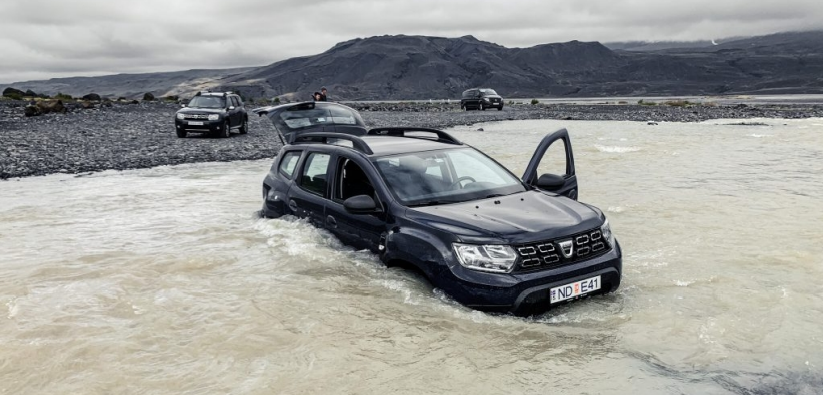
Before crossing a river or a water make sure that no other route is possible! Be extremely careful when crossing rivers or water as it can be dangerous and the simplest mistake can drown the car. Keep in mind that damages caused by water or river crossing aren´t covered by insurances.
Blind Crest
When driving in the country you will come across blind crests. Some of them are without any markings at all. Many of them however, are marked with the warning sign "OTHER DANGER" above the word "BLINDHÆÐ" (BLIND CREST). Please show extra caution when crossing blind crests.
Gravel roads
Please drive extra carefully on gravel roads. Many roads outside the urban areas in Iceland are gravel roads. The speed limit is lower on gravel roads for a good reason. Please slow down.
Narrow bridges - One lane bridges
Many bridges are too narrow to allow more than one car to cross at a time. Before entering one lane bridges please slow down and make sure that another vehicle coming from the opposite direction is not entering the bridge.
Speed limits
The general speed limit is 50 km/h in urban areas, 80 km/h on gravel roads in rural areas and 90 km/h on hard-surfaced roads. Please note: special warning signs indicate danger ahead, such as sharp bends, narrow bridges, blind hill but there is generally no separate sign to reduce speed.
Cyclist
When passing a cyclist on the road, the legal requirment is to have a minimum of 1.5 meters of space between the vehcile and the cyclist
Your Safety
Driving Tired
Beware of getting too tired at the wheel. Iceland may look small on a map of the world, but distances that seem short on the map may take a long time to cover by car. So please take long journeys in easy stages and enjoy them to the full.
Drinking & Driving
It is forbidden to drive a motor vehicle in Iceland after drinking alcoholic beverages.
Stopping the Car
Stopping the car on the side of the road can be dangerous and should be avoided unless there is an emergency. Please note: Stopping the car on the middle of the road for photo shooting can be extremely dangerous. Choose your photo locations carefully.
Child Seats
The driver is responsible that all children in the car use appropriate child seats. Blue Car Rental has top of the line child seats for rent.
Seat Belts
Seat belts are mandatory in Iceland. All travellers are obliged to use safety seatbelts. This applies to those sitting in the back seats as well.
The Car
Wind and Doors
Be very careful when opening doors because they can easily be damaged by strong gusts or wind. Keep in mind that damages caused by wind blowing up the door are not covered by insurances.
Is it allowed to sit on the car?
No. Although it makes a good picture it is totally forbidden to stand or sit on the car in any circumstances.
Fuel
There are two type of fuel in Iceland, diesel and petrol. Make sure to use the correct fuel type. It can be very expensive and time consuming mistake if you pump the wrong fuel. Normally the diesel pump is black and petrol is green.
Headlights
Drivers are obliged to drive with headlights on at all times. If a passing car is flashing you, it means that you do not have your headlights on.
BREAKDOWN OR EMERGENCY
Breakdowns and other emergencies can unexpectedly occur on the road. In such unfortunate situations it is important to react correctly.
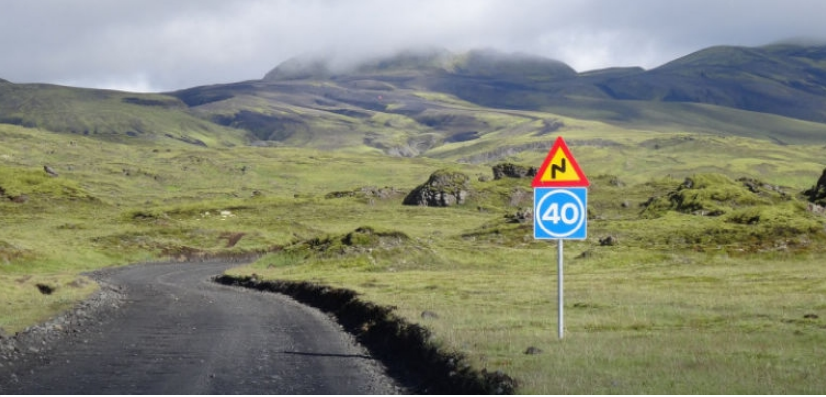
ROAD AND TRAFFIC SIGNS
Like anywhere else in the world, traffic signs play an important role when driving in Iceland. There are a lot of them, and we do not expect all foreign visitors to recognise them all. Fortunately, most of them explain themselves. It is important that drivers respect them and drive accordingly.
F-Roads
The F-Roads of Iceland, where should we begin. They are the most of everything. They take you to the most amazing places in the Highlands of Iceland while at the same time being the most dangerous roads to drive.
Ev self-drive tour
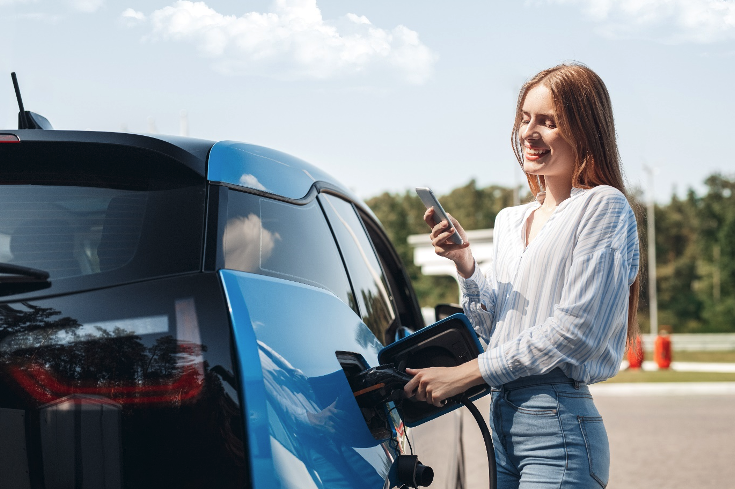
If you ‘re looking for an eco-friendly vacation in Iceland, you are in luck. We got just the right option for you!