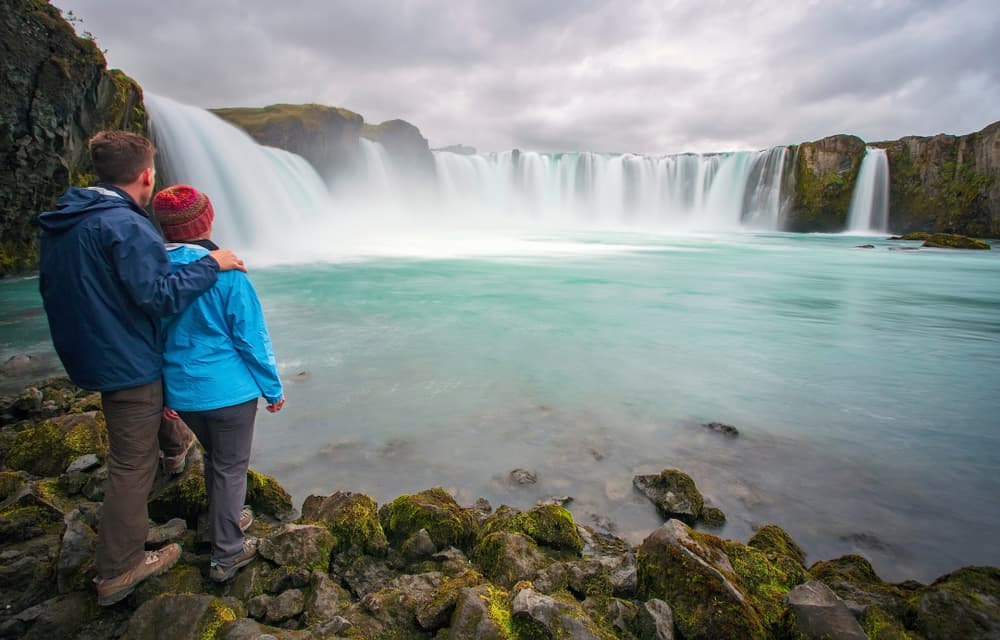

Godafoss is one of the easiest major waterfalls in Iceland to reach by rental car, sitting right off the Ring Road (Route 1) between Akureyri and Lake Mývatn. The main question most self-drive travellers have isn't whether to visit, it's which side to park on, and whether they need to budget for a parking fee.
Short answer: Godafoss has two separate car parks, one on the west bank, one on the east bank, and both sides offer good views of the falls. As of this writing, parking at both lots is free, though car parks at Icelandic attractions do occasionally introduce or adjust fees over time, so it's worth checking signage on arrival. Most visitors park on the west side, since it's closer to the main viewpoint and has the only facilities.
Where is Godafoss and how do you get there
Godafoss sits just off Route 1 near a small site called Fosshóll, roughly midway between Akureyri and Lake Mývatn. The road is paved and maintained year-round, which makes this one of the more straightforward waterfall stops on a Ring Road itinerary.
Approximate drive times:
- From Reykjavík: around 6 hours (430 km)
- From Akureyri: about 45 minutes (50 km)
- From Lake Mývatn: about 35 minutes (50 km)
Because it sits directly on the Ring Road, most travellers doing a full loop of Iceland or a North Iceland detour will pass Godafoss naturally without needing to plan a special side trip.
Godafoss east or west parking, which side should you choose
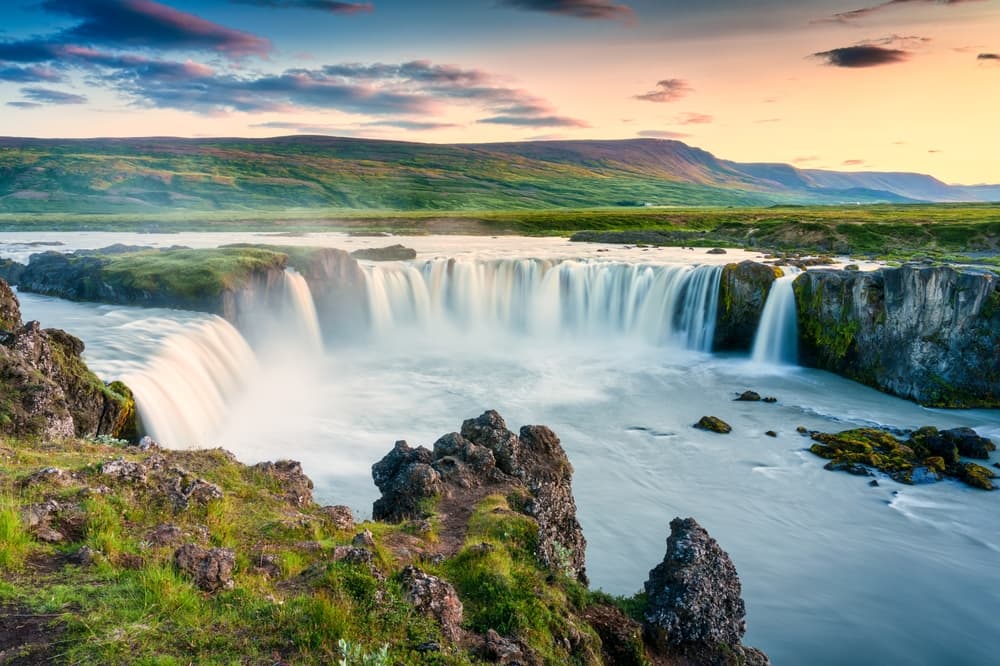
Both car parks are free to use and both give you a view of the horseshoe-shaped falls, but they suit slightly different visitors. The west bank is the default choice for most people because it's closer to the main viewpoint and has the only toilets and café in summer. The east bank is quieter, offers a wider panoramic angle, and appeals more to photographers or anyone wanting to avoid the busier lot.
A footbridge connects the two sides, so if you have time and sturdy footwear, parking on one side and walking the loop to the other is the most complete way to see Godafoss.
| West bank parking | East bank parking | |
|---|---|---|
| Distance to viewpoint | Very short walk | Slightly longer walk |
| View | Frontal view of the falls | Wider, panoramic angle |
| Facilities | Toilets and café (summer) | None |
| Crowd levels | Busier, most tour buses stop here | Quieter |
| Accessibility | Easier for limited mobility | More uneven ground |
| Best for | First-time visitors, quick stops | Photography, fewer crowds |
If you only have 20–30 minutes, the west side alone covers the essentials. If you have closer to an hour, park on one side and walk the loop across the bridge to see both angles.
Is Godafoss parking free?
Yes, both the east and west car parks at Godafoss are free to use, with no fee charged for parking as of this writing. This is one of the reasons Godafoss remains an easy, low-friction stop on a self-drive itinerary compared to attractions elsewhere in Iceland that have introduced paid parking in recent years.
That said, parking arrangements at Icelandic attractions can change over time as visitor numbers grow, so it's sensible to glance at any signage when you arrive rather than assume nothing has shifted since your research. If you're mapping out a wider North Iceland loop and want a general sense of how parking works elsewhere in the country, our guide to parking in Iceland covers the broader picture, including Reykjavík's paid zones, which are a different system entirely from rural waterfall car parks like this one.
How long should you spend at Godafoss?
Most travellers spend 30 to 60 minutes at Godafoss, which is enough time to walk to the main viewpoint, cross the bridge, and see the falls from both banks. If you're combining it with a stop in Fosshóll village or continuing on to Lake Mývatn or Akureyri the same day, 30–45 minutes is usually sufficient.
Photographers or anyone visiting at sunrise or sunset for softer light often prefer 45–60 minutes to walk both sides at a slower pace. Godafoss doesn't require a half-day commitment the way some Highland attractions do, it's a focused stop that fits comfortably into a longer driving day.
Safety and timing at the falls
Once you've parked, the main things to watch are underfoot. Ropes and marked barriers exist near the riverbank and viewpoints for a reason, the rock can be uneven, and edges near the falls are not always obvious, especially in wet or icy conditions. Stay behind marked barriers rather than approaching the edge for a closer photo.
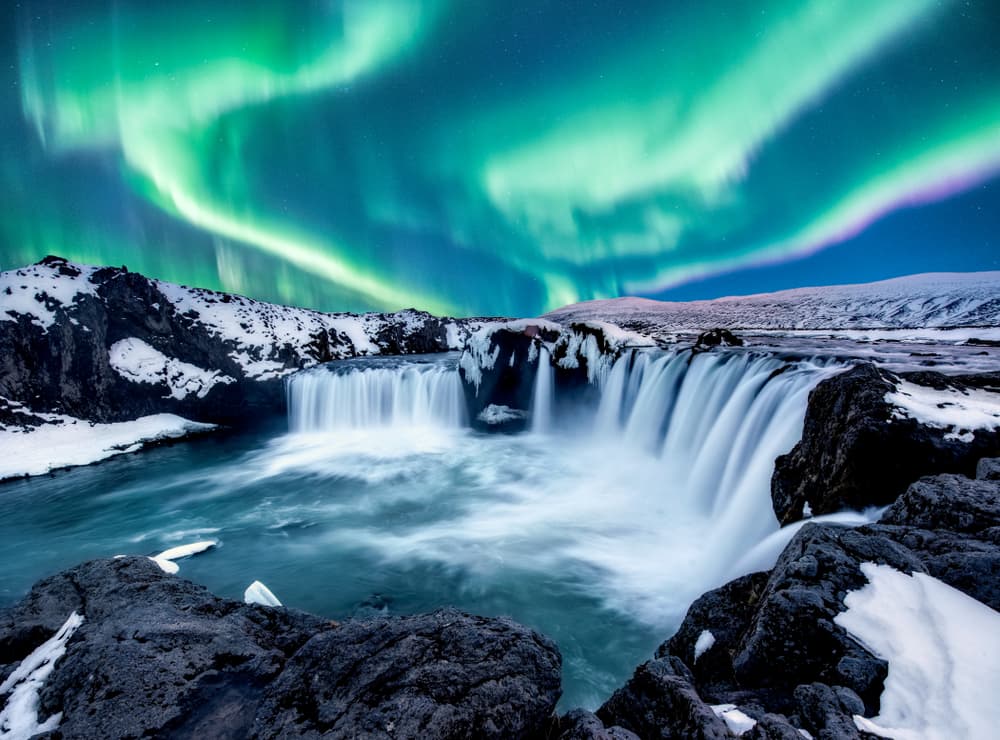
In winter, paths on both sides can turn icy even when the road itself is clear, since Route 1 near Fosshóll is generally kept plowed. Sturdy footwear with grip, or trail spikes in colder months, makes a real difference on the walk between the two viewpoints. If you're planning a winter visit to North Iceland more broadly, our guide to driving in Iceland in winter covers what to expect on the roads themselves, separate from the walking conditions at the site. Before a longer winter drive in North Iceland, check umferdin.is for road conditions and vedur.is for the forecast.
One other thing worth knowing before you park: the west-side car park is the one most tour buses use, so if you're travelling in high season and want a calmer experience, arriving early morning or later in the evening, or simply choosing the east lot, tends to help.
Combining Godafoss with the rest of North Iceland
Because Godafoss sits directly on the Ring Road, it pairs naturally with a day exploring the wider region rather than standing as an isolated stop.
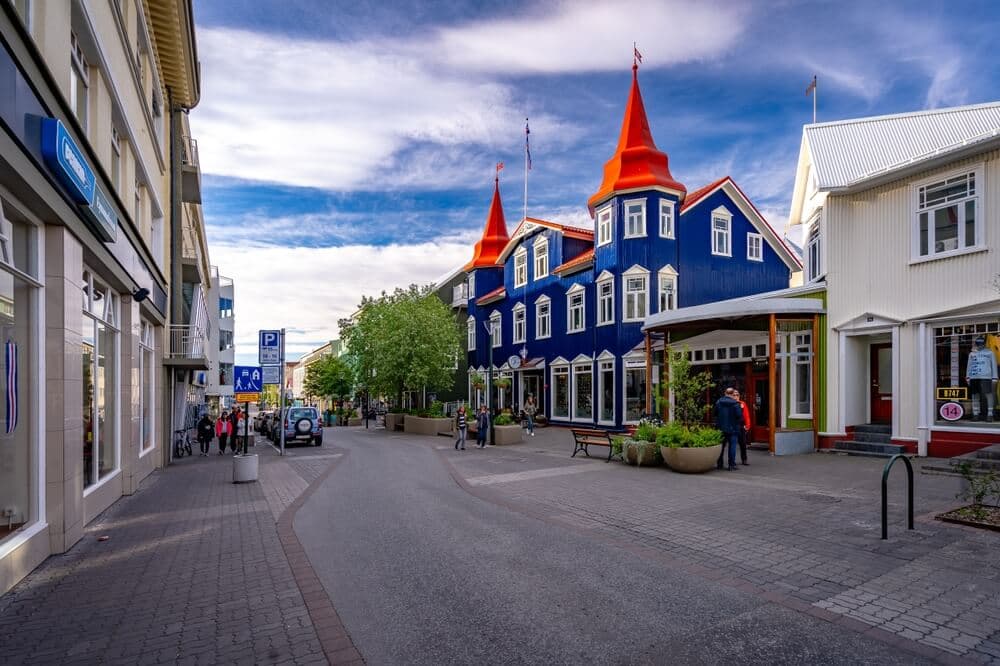
- Akureyri, Iceland's northern capital, about 45 minutes away, with restaurants, museums, and a botanical garden.
- Lake Mývatn, around 35 minutes away, known for geothermal areas, lava fields, and the Mývatn Nature Baths.
- Húsavík, a further drive north, popular for whale watching.
- Aldeyjarfoss, a basalt-column waterfall reached via a gravel detour off the main road; a 4x4 is recommended for this stretch rather than the paved route to Godafoss itself. If you're unsure whether your rental is suited to gravel detours like this, our post on whether you need a 4x4 in Iceland walks through the decision.
This flexibility is really the advantage of a self-drive trip through North Iceland: you can linger at Godafoss for the full loop trail, then decide on the spot whether to push on to Mývatn or Akureyri, rather than working around a tour schedule.
Planning your North Iceland self-drive
If Godafoss is part of a longer Ring Road trip, it's worth sorting a few logistics before you land. Picking up your car at Keflavík is smoother with online check-in done in advance, and knowing the pickup location at Keflavík Airport ahead of time avoids any confusion after a long flight.
For a route that includes paved Ring Road driving plus the occasional gravel detour to spots like Aldeyjarfoss, it's worth browsing available vehicles to match the car to your actual route rather than defaulting to the smallest option. Every Blue Car Rental booking includes CDW, SCDW, gravel protection, theft protection and third-party liability as standard, and the Liability Waiver extends to gravel and sand damage as well as legal water crossings, details worth reviewing on the insurance page if your North Iceland route includes unpaved stretches.
Conclusion
Godafoss is one of the more relaxed stops on a North Iceland itinerary: two free car parks, paved access year-round, and no long approach hike required. The real decision is simply east or west, and for most visitors, starting on the west side and walking the loop to the east bank if time allows gives the fullest picture of the falls without any added cost or complication.
 CAN YOU DRINK TAP WATER IN ICELAND?