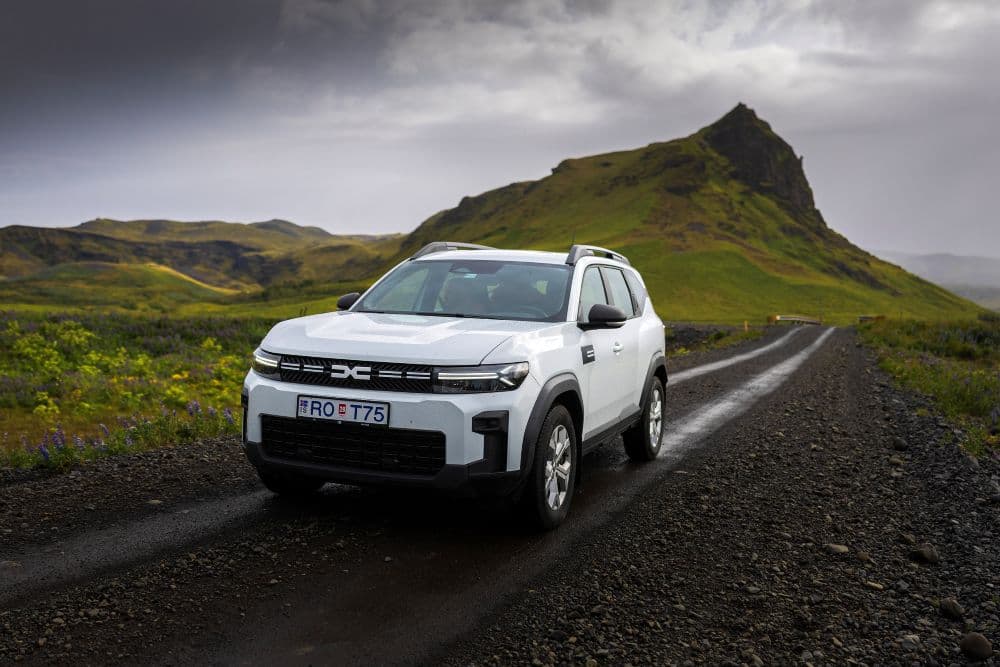

A week is one of the most practical lengths of time to explore Iceland by car rental. It gives you enough days to drive the Ring Road highlights, add a detour into the Westfjords or Snæfellsnes, and still arrive back at Keflavik without feeling like you've rushed every stop. This guide covers what to decide before you book a weekly car rental in Iceland: which vehicle class suits your route, how insurance works, what fuel will cost, and how to think about the overall budget.
How much does a week of car rental in Iceland cost?
Weekly car rental in Iceland varies considerably depending on vehicle class, season, and what's included in the rate. The table below gives a conditional sense of where different vehicle types sit relative to each other, but prices shift substantially with demand and season. Always generate a live quote before planning your budget, as the relative ordering below can also change between peak and shoulder periods.
| Vehicle type | Typical use case | Weekly rate range (approx., verify current rates) |
|---|---|---|
| Small 2WD hatchback | City + paved Ring Road in summer | Lower end of the market (roughly €300–500/week in shoulder season; higher in peak summer) |
| Compact 4x4 / AWD SUV | Ring Road year-round, light highland access | Mid-range (roughly €500–800/week; varies widely by season) |
| Full-size 4x4 (e.g. Toyota RAV4, Kia Sportage) | Ring Road + F-roads in season | Mid to upper-mid (roughly €700–1,000/week at peak) |
| Large 4x4 / expedition (e.g. Land Cruiser, Defender) | Highlands, river crossings, remote routes | Upper end (can exceed €1,000–1,500/week in peak summer) |
| Electric vehicle | Reykjavik, South Coast, summer Ring Road | Broadly comparable to mid-range 4x4; verify current rates |
These figures are approximate and based on general market conditions; actual prices change with availability and booking timing. Check live rates before treating any figure here as a planning number.
Peak summer (late June through August) typically sits at a premium compared with shoulder seasons (May, September) or winter. Booking well in advance generally gives you better availability and steadier pricing. For a broader sense of what the market looks like, the article on car hire costs in Iceland and what to expect breaks down the main cost drivers.
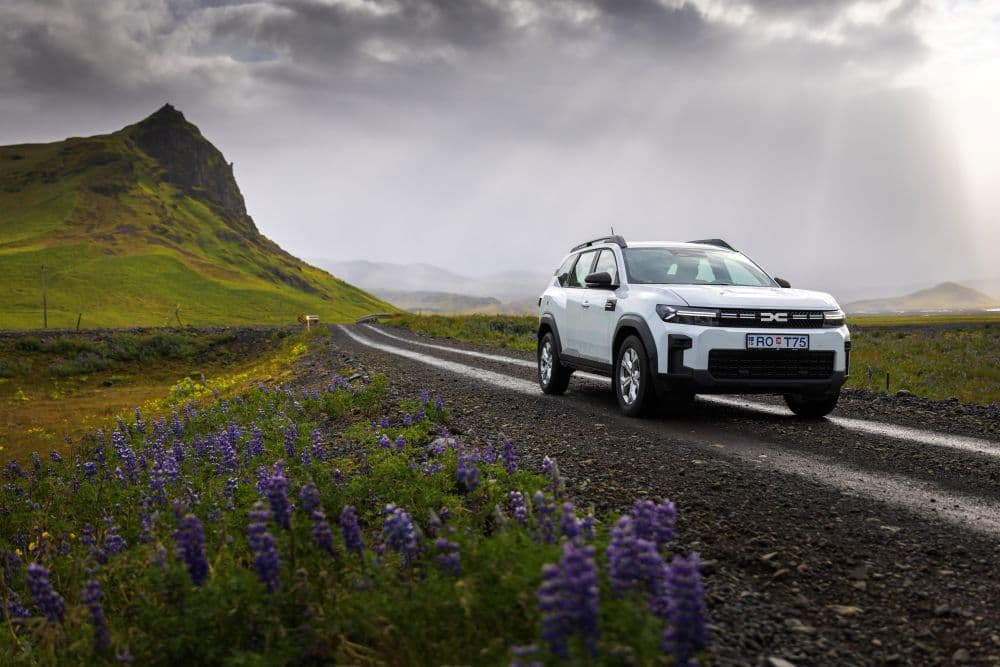
Choosing the right vehicle for a 7-day Iceland trip
Vehicle choice has a bigger effect on your trip than almost any other booking decision. Getting it wrong means either paying for capability you don't need, or being legally and practically unable to reach the roads you planned to drive.
2WD or 4x4?
If you're visiting in summer and sticking to paved roads, including most of the Ring Road, a 2WD vehicle is legal and workable. The moment you plan to drive any F-road, a 4x4 is not just recommended but legally required. F-roads are designated mountain tracks in Iceland's highlands and are off-limits to 2WD vehicles; driving them in a regular car can void your insurance and result in fines. The guide on F-roads and what to know before driving them covers the legal requirements in detail.
In winter, a 4x4 with winter tyres is strongly advisable for most itineraries, even if you're not planning highland routes. Ice, snow, and black ice appear on main roads too.
Which 4x4 for a week?
For most 7-day Ring Road itineraries with occasional F-road detours (say, the F35 Kjölur route or F208 toward Landmannalaugar), a mid-size 4x4 like the Toyota RAV4 automatic or Kia Sportage covers the ground well and carries four passengers with luggage comfortably.
If you're planning serious highland routes with river crossings, routes like the F26 Sprengisandur or remote Westfjords tracks, then a high-clearance expedition vehicle like the Toyota Land Cruiser or Land Rover Defender is the appropriate choice.
Travelling with children? A child car seat can be added as an extra, and passenger vans are worth considering for larger family groups.
What about electric vehicles for a week?
Iceland's charging network has improved steadily, but it remains uneven outside the main routes. An electric vehicle works well for the South Coast, Reykjavik, Snæfellsnes, and a summer Ring Road if you plan charging stops carefully. For highland routes or winter travel in remote areas, a petrol or diesel 4x4 remains more practical. Blue Car Rental has a dedicated page on renting an electric car in Iceland that covers range, charging locations, and what to consider.
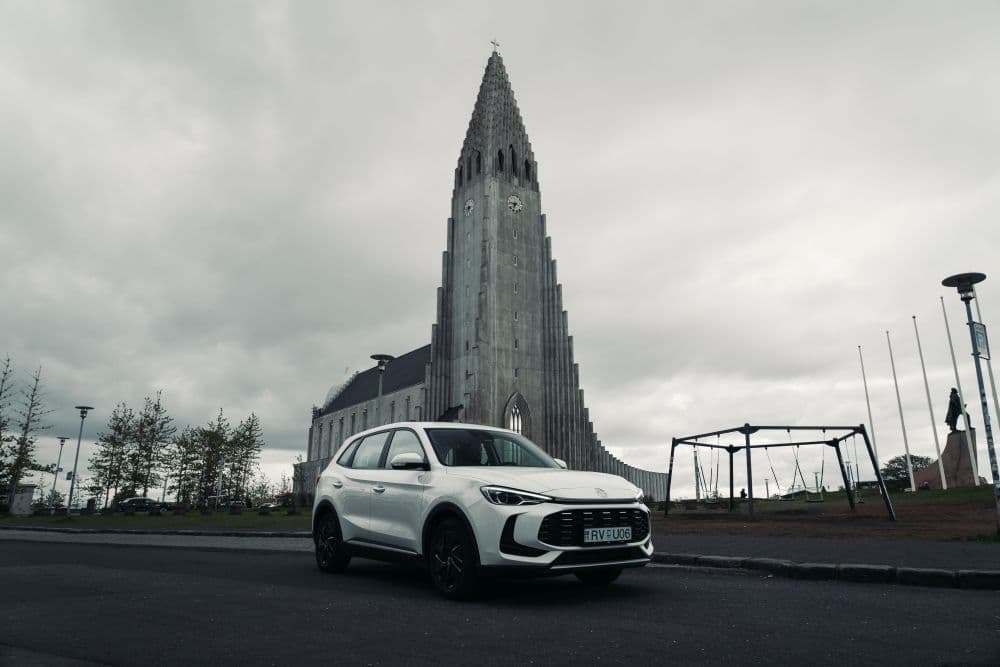
Insurance: what you actually need for a week-long trip
Insurance is where many travellers either overspend through confusion or underspend through overconfidence. Iceland's rental insurance system has several layers, and they matter differently depending on where you're driving.
Basic third-party liability is included as standard with any rental in Iceland. What most travellers need to decide is how much of the vehicle's damage risk they want to cover.
A Collision Damage Waiver (CDW) reduces your financial liability if the car is damaged. Sand and Ash Protection (SAAP) covers damage from volcanic ash and sandstorms, which is a real and specific risk in Iceland, particularly on the South Coast and near the highlands. The SAAP insurance page explains what it covers and when it applies.
The practical question is whether your travel insurance or credit card covers the deductible on a CDW. Many don't, or cover it only partially. It's worth checking your policy wording specifically for Iceland before assuming you're covered. For a clear breakdown of what each option covers, the car rental insurance guide is a useful reference. You can also review the full insurance options available with Blue Car Rental.
One note: no insurance waiver covers damage caused by driving on closed roads, driving an unsuitable vehicle on an F-road, or river crossings that go wrong. Read the policy conditions carefully.

Fuel planning for a week in Iceland
Petrol and diesel are widely available on the Ring Road, but the gaps between stations can be significant in the highlands and the Westfjords. Filling the tank whenever you pass through a town is a sensible habit, especially outside the main tourist corridor.
Fuel prices in Iceland are higher than in most of Europe or North America. For a realistic sense of current pump prices, the article on Iceland fuel prices gives useful context, though prices change frequently so verify at the pump or via current station apps before budgeting.
For a one-week Ring Road trip of roughly 1,300–1,400 km (the full loop), you'll use noticeably less fuel in a compact 4x4 than in a large expedition vehicle. If fuel economy matters to your budget, factor this into your vehicle choice early. Tips on refuelling rental cars correctly are worth reading before you go, particularly around diesel vs. petrol and how payment at unmanned stations works.
Mileage limits, extras, and hidden costs
Most Iceland car rental agreements include unlimited mileage, which is appropriate given that a full Ring Road loop runs to roughly 1,300–1,400 km depending on your exact route. Confirm this before booking. If a rate looks unusually low, check whether it carries a per-kilometre charge.
Beyond the base rate, the costs that catch people off-guard on 7-day rentals include:
- Insurance waivers not included in the quoted price
- Sand and ash protection added late at the counter
- Child car seat or GPS rental fees
- A second driver fee, if applicable
- Road tolls (Iceland has a small number of tolled tunnels)
The article on hidden costs of renting a car in Iceland goes through each of these in practical terms. Reading it before you finalise your booking is time well spent.
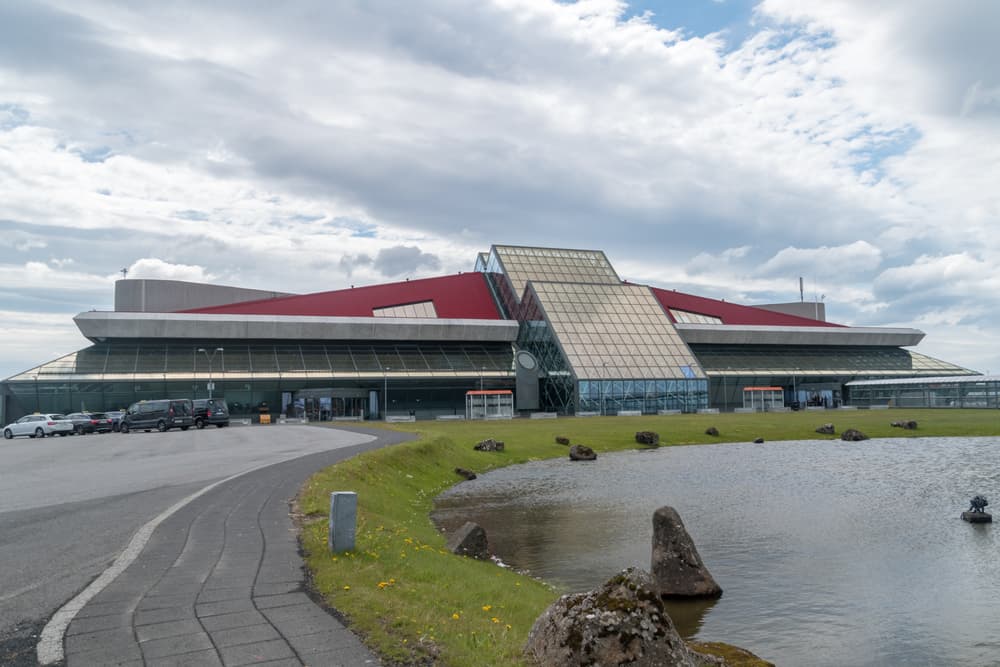
Picking up your car at Keflavik Airport
Most visitors arriving in Iceland land at Keflavik International Airport and want their car immediately. Blue Car Rental's online check-in system lets you complete the paperwork in advance, and key-box pickup at the airport means you can collect your vehicle without waiting for a desk to open, useful after a long transatlantic flight that lands at 5 a.m. The key-box delivery page explains how the process works.
Budgeting for a week: a realistic total
A rough weekly car rental budget for Iceland should include:
- Vehicle rental rate (varies by class and season, confirm current pricing)
- Insurance waivers (CDW, SAAP if relevant to your route)
- Fuel (plan for 1,300–1,600 km depending on itinerary)
- Extras (child seat, additional driver, GPS if needed)
- Tolls (minor, but worth noting for tunnel routes)
Booking directly with a reputable Iceland-based operator is generally the cleaner approach for a week-long rental: no third-party markup, clearer insurance terms, and local support if something goes wrong. Blue Car Rental's roadside assistance covers you across the island, which matters if you're far from Reykjavik on day five of a seven-day trip.
A note on booking timing
Weekly car rental demand in Iceland peaks sharply from late June through August. If your trip falls in that window, booking months in advance is sensible. Shoulder season travellers (May, September, October) have more flexibility, but availability for specific vehicle classes can still tighten. If you're targeting a particular 4x4, don't assume you'll find it available two weeks before travel.
 RENTING A CAR IN REYKJAVÍK: A COMPLETE GUIDE FOR TRAVELERS