
Quick answer: What currency does Iceland use?
Iceland uses the Icelandic króna, usually written as ISK. If you are visiting Iceland, you should expect to pay in Icelandic króna rather than euros, US dollars, British pounds, Indian rupees or another foreign currency.
The good news is that Iceland is a very card-friendly country. Most travelers pay by credit card, debit card or contactless payment throughout their trip, especially in Reykjavík, at hotels, restaurants, shops, gas stations and tourist attractions.
For most visitors, the best payment setup is simple:
-
Bring an international credit or debit card.
-
Make sure your card has a PIN.
-
Choose to pay in ISK when a card terminal offers currency conversion.
-
Carry a small amount of cash only as a backup.
-
Check your bank’s foreign transaction fees before traveling.
If you are renting a car in Iceland, payment planning matters even more. You may need your card for the rental booking, fuel stations, road-related fees, parking apps, EV charging, deposits or insurance options.
Iceland currency quick facts
| Traveler question | Short answer |
|---|---|
| What currency does Iceland use? | Icelandic króna, ISK |
| Does Iceland use euros? | No, Iceland uses ISK |
| Can you use USD in Iceland? | Usually no |
| Can you use rupees in Iceland? | No, use a card or Icelandic króna |
| Do you need cash? | Usually only a small backup amount |
| Can you pay by card? | Yes, in most places |
| Should you pay in ISK or your home currency? | Choose ISK |
What is the money in Iceland called?
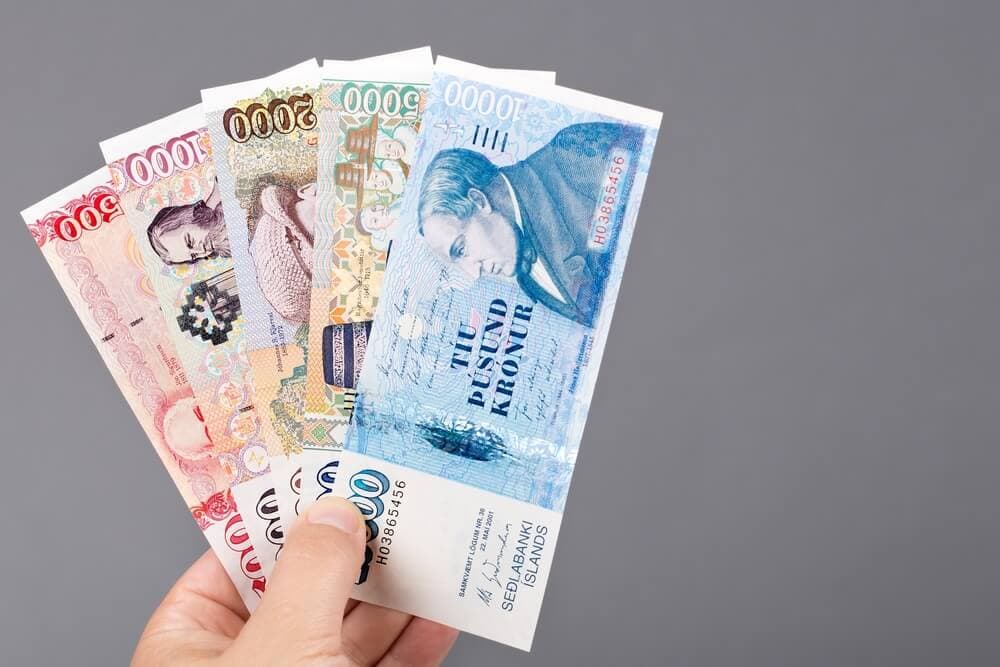
The money used in Iceland is called the Icelandic króna.
You may see it written in different ways:
| Format | Meaning |
|---|---|
| ISK | International currency code |
| kr. | Common local abbreviation |
| Icelandic króna | Full currency name |
| Icelandic krona | Common English spelling without the accent |
The plural form in Icelandic is krónur, but most visitors can simply look for ISK or kr. when checking prices.
For example, a price shown as 2,500 kr. means 2,500 Icelandic króna.
Does Iceland use euros?
No, Iceland does not use the euro as its official currency. Iceland is not in the Eurozone, so everyday prices are normally charged in Icelandic króna.
Some tourism businesses may show estimated prices in euros for convenience, but the final payment is usually processed in ISK. This is especially important when booking hotels, tours, rental cars or travel services online.
If you are specifically wondering whether you can pay for your rental car in euros, read Blue Car Rental’s guide to whether you can pay with euros when renting a car in Iceland.
Should you bring euros to Iceland?
For most travelers, bringing euros is not necessary. A payment card is usually more useful than foreign cash. If you do bring euros, do not assume you can use them directly in shops, restaurants or gas stations. You may need to exchange them into ISK first.

Does Iceland accept USD?
US dollars are not commonly accepted for everyday payments in Iceland. Some airport services or tourist-facing businesses may be familiar with USD, but you should not rely on dollars for normal spending.
If you are traveling from the United States, the easiest option is to use a credit card or debit card that works internationally. You can also withdraw Icelandic króna from an ATM if you want backup cash.
Can you use dollars in Iceland?
In most cases, no. You should expect to pay in Icelandic króna or by card. Even if a business accepts foreign currency, the exchange rate may not be favorable. Paying by card in ISK is usually the cleaner option.
Can you use rupees in Reykjavík or Iceland?
No, Indian rupees are not accepted for normal payments in Reykjavík or elsewhere in Iceland.
If you are traveling from India, the best option is to use an international credit card, debit card or travel card that supports foreign payments. You can also withdraw Icelandic króna after arrival if you want to carry some cash.
This same rule applies to most foreign currencies. Icelandic króna is the local currency, and cards are the most common way for visitors to pay.

What money is used in Reykjavík?
Reykjavík uses the same currency as the rest of Iceland: Icelandic króna.
Reykjavík is very easy for card payments. You can usually pay by card at:
-
Restaurants and cafés
-
Grocery stores
-
Hotels
-
Museums
-
Shops
-
Bars
-
Tourist attractions
-
Parking meters and parking apps
-
Gas stations
-
Car rental offices
That said, some payment situations in Reykjavík are app-based or card-based rather than cash-based. For example, parking in the city often requires travelers to understand local parking zones, payment apps and time restrictions. If you plan to drive in the capital, read this guide to parking in Iceland and Reykjavík with a rental car.
If you are renting a car directly in the city, this guide to things to do when you rent a car in Reykjavík is also useful before you start your trip.
Do you need cash in Iceland?
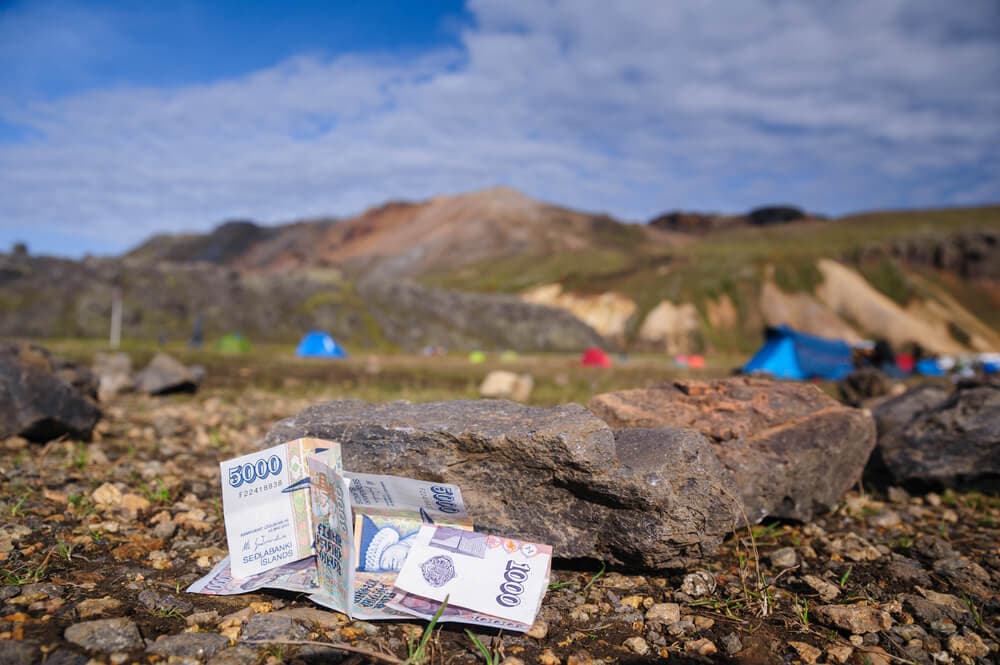
Most travelers do not need much cash in Iceland. Cards are widely accepted, and many visitors complete their entire trip without using physical money.
Still, carrying a small amount of Icelandic króna can be useful as a backup. Cash may help in rare cases such as:
-
Small rural services
-
Unexpected card problems
-
Some local pools or small facilities
-
Tipping-style gestures, although tipping is not required in Iceland
-
Backup spending if your bank blocks your card
A sensible approach is to carry a small amount of ISK but avoid exchanging too much. Iceland is expensive, and unused cash can be inconvenient to convert back after your trip.
Can you pay by card everywhere in Iceland?
You can pay by card in most places in Iceland, but “everywhere” is too strong. In Reykjavík and larger towns, card payments are the norm. In rural areas, cards are still widely accepted, but it is smart to have a backup card and a small amount of cash.
For self-drive travelers, the most important card situations are:
-
Fuel stations
-
Parking
-
Road-related fees
-
Car rental payments
-
Rental deposits
-
EV charging
-
Accommodation check-ins
-
Supermarkets and restaurants
Before your trip, check that your card works internationally and that you know your PIN. This is especially important at unmanned fuel stations, where a PIN may be required.

Local tip from Blue Car Rental
Most payment issues travelers face in Iceland are not about cash. They are usually about card PINs, fuel station pre-authorizations, rental deposits, or choosing the wrong currency on the card terminal.
Before starting your road trip, make sure your card works internationally, that you know the PIN, and that you have a backup payment method. This is especially important if you are picking up your rental car and heading straight from Keflavík Airport toward the countryside, where you may rely on unmanned fuel stations or app-based payment systems.
Card payment tips for fuel stations in Iceland
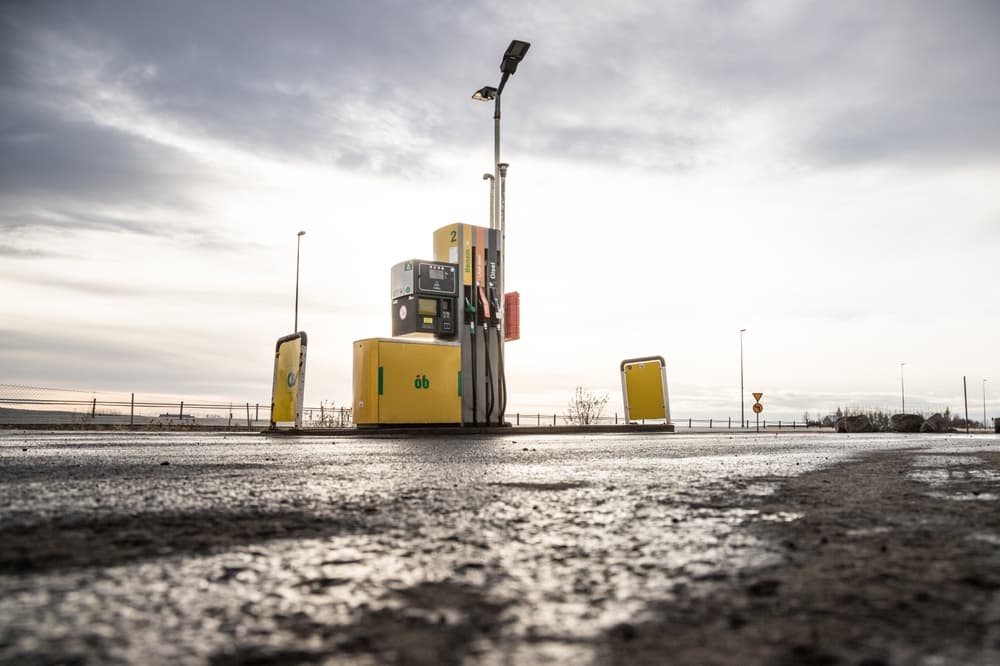
Fuel is one of the most important payment topics for self-drive travelers in Iceland. Many gas stations accept international cards, but unmanned fuel stations can require a PIN. Some stations may also place a temporary pre-authorization hold on your card.
Before driving long distances, especially outside the capital area, make sure you have:
-
A card with a working PIN
-
A backup payment card
-
Enough available balance or credit limit
-
A basic understanding of pre-authorization holds
-
A plan to refuel before remote stretches
For more detail, read Blue Car Rental’s guide to Iceland fuel prices in 2026 and these practical tips to refuel with confidence in Icelandic rental cars.
Self-drive travelers should also understand Iceland’s newer transport-related costs. Blue’s guide to Iceland road tax in 2026 explains what rental customers should know before budgeting for a trip.
Should you choose ISK or your home currency when paying by card?
When a card terminal asks whether you want to pay in Icelandic króna or your home currency, it is usually better to choose ISK.
This is because paying in your home currency often uses a service called dynamic currency conversion. It may look convenient, but the exchange rate or added fees can be less favorable than your bank’s normal conversion.
A simple rule for travelers:
When in Iceland, pay in ISK.
You can still check the approximate price in your own currency using your banking app or a trusted currency converter, but the actual card payment is usually best processed in Icelandic króna.
Paying for rental cars in Iceland
If you are renting a car in Iceland, your payment card may be used for more than the rental price itself. Depending on your booking, rental terms and selected coverage, it may also be relevant for deposits, insurance, fuel, road costs or add-ons.
Before booking, check:
-
Which cards are accepted
-
Whether a deposit is required
-
Whether debit cards are accepted
-
What insurance is included
-
What optional coverage is available
-
Whether there are any hidden local fees
-
How fuel, parking and road-related costs are handled
Blue Car Rental has a detailed guide to Iceland car hire costs in 2026, including what travelers should expect when budgeting for a rental car.
For more pricing transparency, read about transparent pricing at Blue Car Rental and how to avoid the hidden costs of renting a car in Iceland.
Rental deposits, cards and insurance
A common payment question is whether you need a credit card for a rental car deposit in Iceland. The answer depends on the rental company and the coverage you choose.
Some rental companies require a deposit or card hold. Others may offer options that reduce or remove deposit requirements when certain coverage is selected.
Before choosing a car, read Blue’s guide to car rental deposits in Iceland and the overview of car rental insurance in Iceland.
You can also review Blue Car Rental’s official insurance options before booking.
This is especially useful if you are comparing rental prices between companies. A cheaper headline price is not always the cheapest final price if deposits, insurance exclusions or add-on costs are unclear.
Parking, road tolls and local payment situations
Currency planning in Iceland is not only about shops and restaurants. If you are driving, you may also need to pay for parking, road-related costs or specific local services.
In Reykjavík and popular visitor areas, parking may require payment through meters, apps or online systems. Rules vary by zone, day and location, so always check signs before leaving your car.
Useful payment-related guides include:
Having a working payment card makes these situations much easier.
How much money should you budget for Iceland?
Iceland is known as a relatively expensive travel destination, but your total cost depends on your travel style, season, vehicle choice, accommodation and itinerary.
Your biggest costs are usually:
-
Flights
-
Accommodation
-
Rental car
-
Fuel or charging
-
Food
-
Activities and tours
-
Parking and road-related costs
-
Insurance and travel protection
For a full trip budget, read Blue Car Rental’s guide to how much a trip to Iceland costs.
If you want to reduce daily travel costs, food is one of the easiest places to save. This guide to supermarkets in Iceland explains how travelers can spend less while still eating well.
You can also read these travel tips for cheaper Iceland with a rental car.
Watch: How to save money while traveling in Iceland
Planning your payment method is only one part of managing your Iceland travel budget. In this video from Blue Car Rental, we share practical ways to save money in Iceland, including tips for food, transport, rental cars and everyday travel costs.
Key takeaways from the video:
- Plan your route carefully to avoid unnecessary fuel costs.
- Shop at supermarkets instead of relying only on restaurants.
- Choose the right rental car for your itinerary and season.
- Check what is included in your rental price before booking.
- Use local travel tips to avoid common tourist expenses.
For more budget advice, read these travel tips for cheaper Iceland with a rental car and this guide to supermarkets in Iceland.
Should you exchange money before visiting Iceland?
Most travelers do not need to exchange money before visiting Iceland. If you have an international payment card, you can usually pay by card after arrival and withdraw ISK from an ATM if needed.
However, you may want to exchange or withdraw a small amount of ISK if:
-
Your bank charges high ATM fees abroad
-
You prefer having emergency cash
-
You are traveling far into rural areas
-
You have only one payment card
-
You are unsure whether your card will work internationally
Avoid carrying large amounts of cash. Iceland is card-friendly, and losing cash while traveling is harder to solve than replacing or freezing a card.

Iceland currency conversion tips
Exchange rates change daily, so it is best to check current rates close to your travel date. The Central Bank of Iceland publishes official reference exchange rates for the Icelandic króna, but your actual card, bank, or ATM rate may differ.
When planning your budget, remember:
-
Exchange rates move daily.
-
Your bank may charge foreign transaction fees.
-
ATMs may charge withdrawal fees.
-
Card terminals may offer dynamic currency conversion.
-
Paying in ISK is usually better than letting the terminal convert to your home currency.
For quick mental budgeting, use round numbers only. Exact conversions should always be checked near the time of purchase.
Common payment mistakes travelers make in Iceland
1. Assuming Iceland uses euros
Iceland is in Europe, but it does not use the euro. The local currency is Icelandic króna.
2. Bringing too much foreign cash
Euros, dollars and other foreign currencies are not practical for everyday payments. Cards are usually more useful.
3. Forgetting the card PIN
A PIN can be important at fuel stations and some payment terminals.
4. Choosing home-currency conversion
When possible, pay in ISK instead of your home currency.
5. Traveling with only one card
Bring a backup card in case your main card is declined, blocked or lost.
6. Ignoring fuel and parking costs
Rental car travelers should include fuel, parking, tolls or road-related fees in the total budget.
7. Comparing rental prices without checking deposits and insurance
Look beyond the daily rental price. Deposit rules, insurance coverage and included services can change the true cost.
Best way to pay in Iceland: simple recommendation
For most travelers, the best way to pay in Iceland is with an international credit or debit card in Icelandic króna.
A good setup is:
-
One main credit card
-
One backup card
-
A card PIN
-
Mobile wallet if your card supports it
-
A small amount of ISK cash
-
Clear knowledge of rental car deposit and insurance terms
This setup works well for Reykjavík, road trips, fuel stations, supermarkets, restaurants, parking and most travel services.

Final travel money checklist for Iceland
Before you travel to Iceland, make sure you have:
-
An international payment card
-
A backup card
-
A card PIN
-
Mobile payment set up if you use it
-
A small amount of ISK if you want backup cash
-
Your bank’s foreign fee information
-
A clear rental car payment plan
-
Knowledge of fuel, parking, road tax and insurance costs
Iceland is one of the easiest countries for card payments, but smart preparation helps you avoid stress, extra fees and payment problems during your trip.
 HOW BLUE CAR RENTAL SUPPORTS LOCAL COMMUNITIES IN ICELAND